

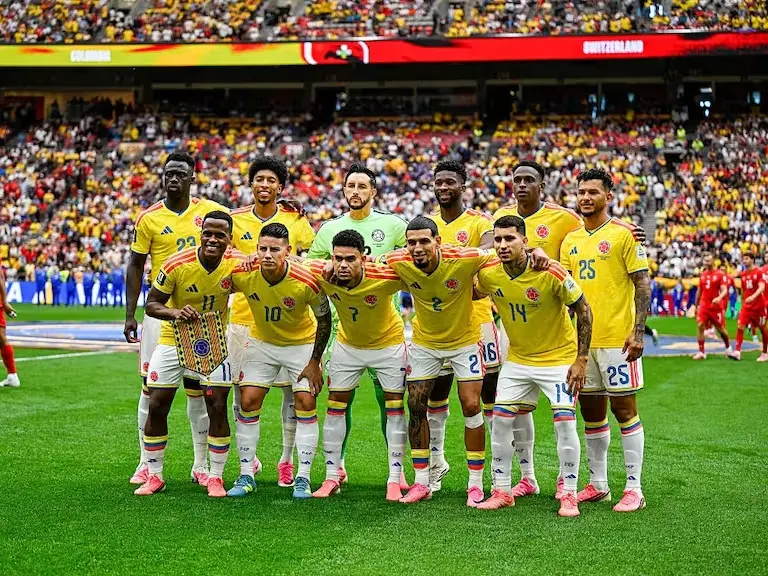
BALTIMORE & MIAMI — As the global football calendar pivots toward a fresh international cycle, the Colombian Football Federation (FCF) has officially locked in a demanding double-header for the upcoming FIFA windows. Following weeks of intense negotiations and speculation, the senior men’s national team has confirmed a marquee matchup against old regional rivals Mexico, scheduled for September 26 in Baltimore, Maryland. This fixture will be swiftly followed by a high-profile showdown against South American adversaries Peru on October 6 at the iconic Hard Rock Stadium in Miami, Florida.
These high-octane friendlies represent far more than routine exhibition matches on North American soil. They serve as the foundational building blocks for a new era under the tactical guidance of Argentine manager Néstor Lorenzo. Tasked with steering the Tricolor through a transformative generation, Lorenzo views these autumn fixtures as the absolute genesis of a meticulously planned four-to-six-year project. The overarching objective is clear: forge a resilient, dynamic squad capable of conquering the Copa América in 2028 and making a profound impact at the FIFA World Cup in 2030.
With the disappointment of recent qualification cycles now firmly in the rearview mirror, Colombian football stands at a crucial crossroads. The matches against Mexico and Peru will offer the technical staff an invaluable laboratory to test tactical innovations, integrate emerging domestic and international talent, and establish a winning culture that marries the traditional flair of Colombian football with modern tactical discipline.
Main Facts: The North American Tour and Strategic Horizon
The logistical framework for the autumn international break is now firmly established, bringing clarity to the FCF’s strategic planning for the remainder of the year.
- The Mexico Fixture: The Tricolor will first lock horns with El Tri on September 26 at a yet-to-be-fully-disclosed major venue in Baltimore, Maryland. This fixture pits two of CONCACAF and CONMEBOL’s most passionate fanbases against one another in an atmosphere traditionally resembling a home game for both sides, given the immense Latino diaspora in the mid-Atlantic region of the United States.
- The Peru Clash: Exactly ten days later, on October 6, Colombia will travel south to the global entertainment hub of Miami, Florida. The venue is the world-class Hard Rock Stadium, a frequent host of elite international soccer matches and major cultural events. There, they will face a familiar and historically difficult rival in the Peruvian national team.
- The Mastermind: Both matches will be orchestrated from the sideline by Néstor Lorenzo. Having previously served as an astute assistant to José Pékerman during Colombia’s golden era in the 2014 and 2018 World Cup cycles, Lorenzo returns to the national setup with a comprehensive understanding of the Colombian footballing psyche, the pressures of the jersey, and the exact physical and psychological demands required to succeed at the highest international tier.
- The Ultimate Objective: While friendly matches are ostensibly played without points on the line, the internal metrics for Lorenzo’s coaching staff are strict. The ultimate parameters for success in these fixtures are player evaluation, tactical cohesion, and the establishment of a cohesive leadership core designed to peak during the 2028 Copa América and the grueling South American qualifiers for the 2030 World Cup.
Chronology: Path to the Autumn Window and the Evolution of the Project
To fully understand the significance of the upcoming September and October friendlies, it is essential to trace the timeline of events that brought Colombian football to this specific juncture.
Phase 1: The Transition and Appointment of Néstor Lorenzo
The journey toward the 2030 World Cup effectively began in the wake of Colombia’s failure to qualify for the 2022 FIFA World Cup in Qatar—a bitter pill to swallow for a nation that had grown accustomed to competing on the global grand stage. Recognizing the need for continuity mixed with a fresh tactical vision, the FCF leadership initiated a comprehensive search for a manager who understood the DNA of Colombian players.
In mid-2022, Néstor Lorenzo was officially unveiled as the new head coach. Lorenzo, who had spent the intervening years building his managerial credentials at clubs like Melgar in Peru—where he won domestic plaudits for his possession-based, aggressive style of play—accepted the challenge. His appointment was met with cautious optimism by fans and sports analysts alike, who valued his deep familiarity with the country’s footballing infrastructure.
Phase 2: Early Tests and Identity Building
Upon taking charge, Lorenzo immediately set out to stabilize the squad, balancing the integration of legendary veterans—such as James Rodríguez and Juan Guillermo Cuadrado—with the introduction of a new wave of hungry, European-based youngsters. Initial friendlies served as a testing ground where Lorenzo experimented with different defensive blocks and high-press mechanisms.
The team showed flashes of brilliance during these early exhibitions, displaying an aggressive verticality and renewed defensive solidity. However, the technical staff quickly realized that to truly challenge the elites of world football, the player pool needed to be significantly deepened.
Phase 3: Securing the North American Showcase
By mid-year, negotiations spearheaded by the FCF commercial department successfully finalized agreements with promoters in the United States to secure matches against top-tier opponents. Playing in the U.S. serves a dual purpose: it maximizes commercial revenues for the federation while placing the team in high-pressure, neutral-venue environments that closely mirror the conditions of major international tournaments.
The confirmation of Mexico in Baltimore and Peru in Miami completed the puzzle for the autumn window. These fixtures were deliberately chosen because they represent contrasting styles of play: Mexico’s swift, technical, possession-oriented approach, and Peru’s notoriously stubborn, defensively organized, and physical dark-arts style.
Supporting Data: Historical Rivalries and Statistical Breakdown
Matches between Colombia and Peru are rarely straightforward. They are deeply rooted in South American footballing folklore, characterized by intense tactical chess matches, physical duels, and razor-thin margins.
Head-to-Head Statistics: Colombia vs. Peru
- Total Encounters: 62 official and friendly matches played across history.
- Colombia Victories: 21 wins.
- Draws: 24 stalemates.
- Peru Victories: 17 wins.
At first glance, the historical ledger favors the Tricolor, who boast more victories than their Andean neighbors. However, a deeper dive into recent history reveals a concerning trend that has not gone unnoticed by Néstor Lorenzo and his analytical team.
The Recent Drought
While Colombia historically holds the upper hand, the Tricolor has failed to secure a single victory against the Peruvian national team in their last three official and friendly encounters.
This recent statistical deadlock highlights a tactical thorn in Colombia’s side. Peruvian sides, traditionally renowned for their tactical discipline, low defensive blocks, and devastating counter-attacking efficiency, have consistently frustrated Colombian attacking arrays. In their most recent competitive fixtures, Peru demonstrated an uncanny ability to disrupt Colombia’s creative rhythm, forcing the ball out wide and neutralizing the central playmaking zones.
For Lorenzo, this drought is not merely a statistical footnote; it is a primary tactical challenge. Breaking this negative streak against the Incas in Miami is viewed internally as a psychological hurdle that the new generation of Colombian players must overcome if they are to establish continental dominance.
Official Responses: Inside the Camp and the Federation’s Vision
The announcement of the fixtures has triggered widespread commentary across South American sports media, drawing official reactions from federation executives, coaching staff members, and senior players.
Néstor Lorenzo’s Tactical Philosophy
Speaking to regional media outlets following the confirmation of the matches, Néstor Lorenzo emphasized the developmental nature of the upcoming window. The manager was keen to manage public expectations regarding immediate results while firmly stressing the long-term ambition of his project.
"We are not just assembling a team for the next weekend; we are architecting the future of Colombian football," Lorenzo stated. "Matches against opponents of the caliber of Mexico and Peru provide us with the exact diagnostic tools we need. We want to see how our players handle the pressure, how they adapt to tactical shifts mid-game, and who possesses the mental fortitude to wear this jersey through the grueling years ahead leading to 2030."
Lorenzo also addressed the necessity of expanding the player pool, noting that the modern international game requires absolute squad depth.
"No team wins a Copa América or qualifies through South America with just eleven players. We need twenty-five to thirty players who understand our tactical language inside and out. These games in Baltimore and Miami will give minutes to those who have been knocking on the door."
Federation Backing and Commercial Strategy
The Colombian Football Federation (FCF) has thrown its full weight behind Lorenzo’s long-term vision. Privately and publicly, federation executives have reiterated that the stability of the coaching staff is paramount. Unlike previous cycles, where panic buttons were pressed at the first sign of turbulent results, the FCF administration is committed to a process-oriented approach.
Furthermore, the choice of venues in the United States highlights a lucrative and strategic commercial roadmap. Playing in front of massive expatriate communities in Baltimore and Miami guarantees financial influx for grassroots football development in Colombia, while also building a global brand identity that transcends South American borders.
Implications: Building the Foundation for 2028 and 2030
The overarching significance of the September and October international dates extends far beyond the final scorelines flashed on the scoreboards at the Hard Rock Stadium or in Maryland. These fixtures carry profound structural, tactical, and psychological implications for the future of Colombian soccer.
1. Tactical Evolution: Moving Beyond Predictability
For years, critics of the Colombian national team pointed to a historical reliance on individual brilliance rather than cohesive, modern tactical systems. Under Lorenzo, the emphasis has shifted heavily toward positional play, fluid defensive transitions, and aggressive pressing structures.
The match against Mexico will test Colombia’s ability to maintain defensive compactness against a side that loves to dominate possession in tight spaces. Conversely, the fixture against Peru will challenge Colombia’s patience, probing ability, and creativity against a low, stubborn defensive block. Successfully navigating these tactical riddles will prove whether the Tricolor is truly evolving into a modern, multi-dimensional powerhouse.
2. Generational Turnover and Squad Depth
Football in South America is notoriously unforgiving. The physical toll of the World Cup qualifiers—frequently described as the toughest qualification road in world football—demands an extraordinarily deep pool of talent capable of enduring high-altitude matches in La Paz, grueling humidity in Barranquilla, and intense physical battles away from home.
The September and October windows will act as an audition stage for a new generation of players. Youngsters plying their trade in both European leagues and the emerging domestic Liga BetPlay will be thrust into the spotlight. How these young prospects handle the intense scrutiny of international football will dictate whether Lorenzo can successfully execute the generational handover necessary to keep Colombia competitive through 2030.
3. Restoring Fan Confidence and Cultural Momentum
Football in Colombia is not merely a sport; it is a vital part of the national cultural fabric. The psychological scars left by missing the 2022 World Cup are healing, but they require sustained periods of good performances and clear sporting transparency to completely vanish.
A cohesive, energetic performance in the United States—highlighted by tactical bravery, blooding new talent, and breaking the winless streak against Peru—will go a long way toward revitalizing the passionate fanbase. It will signal to the nation that the Tricolor is not just participating, but building toward a glorious future.
Conclusion
As the autumn leaves begin to fall and the international calendar approaches its critical juncture, all eyes in South American football will be fixed on Néstor Lorenzo and his Colombian side. The matches against Mexico in Baltimore on September 26 and Peru in Miami on October 6 are much more than routine friendlies; they are the crucible in which the next great chapter of Colombian football history will be forged.
With a clear eye on the horizons of the 2028 Copa América and the 2030 FIFA World Cup, the Tricolor embarks on this North American tour bearing the hopes, dreams, and expectations of an entire nation. The work has begun, the blueprint is drawn, and the journey toward international glory is officially underway.


Leave a Reply