

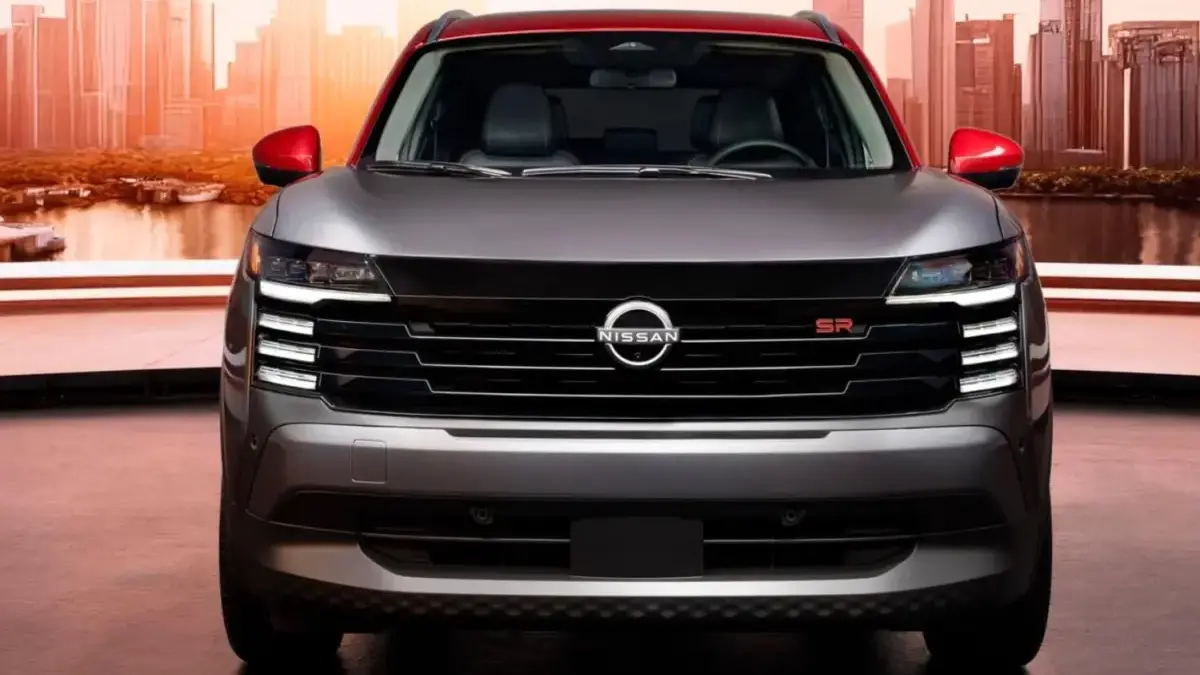
LONDON — In a decisive maneuver to fortify its footprint in the fiercely competitive European automotive sector, Japanese carmaker Nissan has officially confirmed that its global compact SUV, the Nissan Kicks, is finally crossing the Atlantic. Long rumored and eagerly anticipated by industry analysts, the second-generation Kicks will not only make its debut on European soil but will do so carrying the brand’s acclaimed and distinctive e-POWER hybrid technology.
Even more significantly, Nissan has announced a £170 million (approximately €200 million) investment to localise production of the European-spec Kicks at its historic Sunderland manufacturing plant in the United Kingdom. This strategic milestone arrives as the facility celebrates its 40th anniversary, having rolled out more than 12 million vehicles since opening its doors in 1986.
Positioned neatly between the quirky Juke and the immensely popular Qashqai, the Kicks is expected to carve out a vital niche for buyers looking for modern styling, space, and electrification without the complexities of plugging in.
Main Facts
The arrival of the Nissan Kicks in Europe represents a major expansion of the brand’s high-riding portfolio. Key highlights of the announcement include:
- Global Pedigree, European Production: The Kicks is a proven global success story, having accumulated over 1.8 million sales across more than 70 countries. While earlier iterations and current models are built in regions like Japan, Mexico, and Brazil, the European-market versions will roll exclusively off the lines at Sunderland, exporting to the UK, continental Europe, and Turkey.
- The Sunderland Milestone: The Kicks will become the tenth distinct model produced at Sunderland since 1986. The £170 million plant overhaul will equip the facility with advanced machinery and tooling specifically adapted for the Kicks and its hybrid architecture. It will share the floor with core models like the Qashqai, Juke, and the all-electric Leaf.
- Next-Generation e-POWER Technology: The European Kicks will feature Nissan’s third-generation e-POWER system. Unlike traditional hybrids where both the combustion engine and electric motor drive the wheels, e-POWER uses a petrol engine strictly as a power generator to feed a battery and electric motor. The electric motor is solely responsible for propelling the vehicle, delivering an EV-like driving experience without the need for external charging cables.
- Dimensions and Positioning: Measuring roughly 4.36 meters long, 1.80 meters wide, and 1.63 meters tall, the Kicks bridges the gap between traditional B-SUV and C-SUV segments. It sits directly in the crosshairs of rivals such as the Toyota Yaris Cross, Peugeot 2008, Renault Symbioz, and Kia Niro.
Chronology of the Nissan Kicks and European Expansion
To understand the magnitude of this announcement, it is essential to trace the journey of both the vehicle and Nissan’s manufacturing hub in the UK.
The Evolution of the Kicks
- 2016–2023 (First Generation): Originally conceived as a concept car before entering production, the first-generation Nissan Kicks was initially targeted at emerging markets like South America and later expanded globally, proving exceptionally popular in North America, Japan, and parts of Asia.
- 2024–2025 (Second-Generation Global Launch): Nissan unveiled a completely redesigned second generation, featuring sharper styling, increased dimensions, and advanced technical capabilities, continuing its march across global markets.
- September 2026 (European Confirmation): Nissan officially confirms that the Kicks is heading to Europe, backed by a £170 million injection into the Sunderland plant and paired exclusively with the e-POWER powertrain.
- Late 2026 / Early 2027 (Market Rollout): Production is scheduled to kick off at Sunderland in the second half of 2026, with order books opening soon and the first customer deliveries expected to commence late in the year or early 2027.
Sunderland’s 40-Year Heritage of Electrification
- 1986: Sunderland opens its doors, famously manufacturing its very first vehicle, the Nissan Bluebird.
- Decades of Production: Over the past 40 years, the plant has manufactured iconic nameplates including the Primera, Micra, Almera, and Note, cementing its status as a cornerstone of European manufacturing.
- The Electrification Era: Sunderland has already built roughly 200,000 units of the Qashqai e-POWER, proving that the workforce and plant infrastructure are deeply familiar with Nissan’s unique hybrid technology. The introduction of the Kicks acts as a stepping stone toward the upcoming third-generation, fully electric Juke, which is also slated for production in Sunderland starting in 2027.
Supporting Data & Technical Insights
While Nissan has yet to release the official, region-specific homologation figures for the European Kicks, global specifications offer a clear window into what buyers can expect under the skin.
The e-POWER Mechanics Explained
The third-generation e-POWER system, which made its debut in 2025 and is already utilised in updated versions of the Qashqai, is engineered for maximum efficiency and refinement.
- The Powertrain Setup: In global configurations, the e-POWER system pairs a 1.4-litre three-cylinder petrol engine (acting purely as a generator) with a front-mounted electric motor producing 143 horsepower. The petrol engine typically outputs around 98 horsepower to generate electricity.
- All-Wheel Drive Option (e-4ORCE): Select markets benefit from Nissan’s advanced e-4ORCE all-wheel-drive system, which integrates a secondary 68-horsepower electric motor on the rear axle, giving the compact SUV legitimate light off-road credentials and superior handling in adverse weather conditions.
- Battery Capacity: The system relies on a compact 2.06 kWh battery pack, which rapidly charges and discharges via the petrol generator and regenerative braking.
Interior Layout and Practicality
On the inside, the Kicks leans heavily into modern digital integration. European models are expected to feature dual 12.3-inch displays for the instrumentation and infotainment clusters, complemented by tactile physical buttons for the climate control system and a traditional automatic gear selector. Premium trims will likely feature specialized audio options, such as integrated headrest speakers developed by BOSE.
In non-hybrid global formats, the cargo space boasts an impressive capacity of up to 850 liters, though engineers will have to balance packaging constraints once the e-POWER battery pack is integrated into the floor architecture.
Official Responses and Strategic Vision
Nissan executives have emphasized that the Kicks is not just another utility vehicle, but a vital instrument in tailoring the brand’s offerings to modern consumer demands.
Massimiliano Messina, President of Nissan for the AMIEO (Africa, Middle East, India, Europe, and Oceania) region, underlined the core philosophy driving the decision:
"The introduction of the Kicks to Europe demonstrates that ‘electrification with choice’ is precisely what our customers are asking for. European drivers want efficiency, style, and practicality without being forced down a single technological path. By leveraging our world-class manufacturing expertise in Sunderland, we are delivering a product that meets these exact demands while securing the future of our British manufacturing base."
Industry analysts note that the move shields Nissan from some of the volatility surrounding pure-electric vehicle adoption rates in Europe. By offering a hybrid system that mimics the driving dynamics of a battery-electric vehicle (BEV) without range anxiety or charging infrastructure dependency, Nissan has positioned the Kicks as a low-friction transition vehicle for mass-market buyers.
Market Implications and Competitive Landscape
The entry of the Nissan Kicks into the European B-SUV / C-SUV crossover segment arrives at a time of fierce rivalry.
Sizing Up the Competition
The B-SUV sector is arguably the most fiercely contested battleground in Europe. The Kicks will have to fend off established powerhouses such as:
- Toyota Yaris Cross & Toyota C-HR: Toyota dominates the hybrid space, making its crossover duo the benchmark for fuel efficiency and resale value.
- Peugeot 2008 & Renault Symbioz: French contenders offering striking design and versatile internal combustion and hybrid powertrains.
- Kia Niro & Volkswagen T-Roc: Heavy hitters capturing massive market share through practicality, diverse powertrain configurations, and brand loyalty.
Despite this stiff competition, Nissan believes its unique selling proposition—the e-POWER driving experience—combined with rugged, muscular styling (including plastic body cladding, a floating roof design, and distinctive rear LED light signatures) will give the Kicks a clear identity.
Economic and Industrial Impact
By investing £170 million into Sunderland, Nissan is also reaffirming its commitment to the UK manufacturing sector post-Brexit, ensuring robust supply chains for local and continental markets alike. With the plant gearing up for the Kicks in 2026 and the all-electric Juke in 2027, Sunderland is cementing its status as Nissan’s primary EV and electrified vehicle powerhouse outside of Asia.
Outlook
As the automotive industry awaits final pricing, trim level breakdowns, and official fuel economy certifications closer to the launch date, one thing is certain. The Nissan Kicks e-POWER is poised to shake up the European compact SUV market, offering a compelling blend of global styling, clever hybrid engineering, and British manufacturing muscle. If pricing hits the sweet spot between the Juke and the Qashqai, Nissan may well have another runaway success on its hands.

Leave a Reply