

Main Facts: The Ultimate Test of Endurance, Machinery, and Solidarity
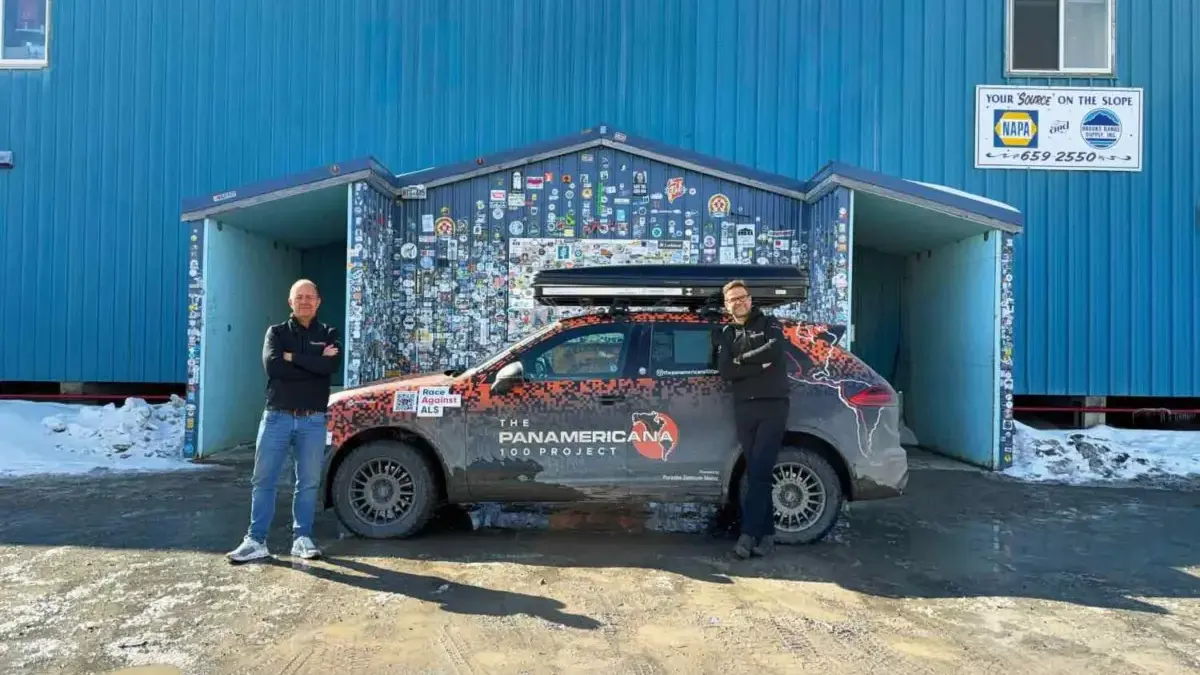
In an era defined by fast-paced air travel and digital connectivity, two lifelong friends chose a path far less traveled to conquer one of the ultimate terrestrial routes on the planet. Rainer Behrendt, a 54-year-old German national and president of the Porsche Club Mainz, alongside his 57-year-old Dutch friend Jan Bongers, embarked on a monumental expedition: traversing the entire length of the Americas from the jagged southern tip of Argentina to the industrial expanse of northern Alaska.
Dubbed #ThePanamericana100Project, the grueling expedition spanned 41,600 kilometers across 15 distinct countries over the course of roughly 100 days. Operating a second-generation Porsche Cayenne Diesel equipped with a 100-liter fuel tank, Behrendt and Bongers subjected both machine and body to punishing geographical extremes. They battled oxygen-starved high-altitude Andean passes, shifting political borders, scarce mechanical resources, and unpredictable fuel supplies.
However, this transcontinental odyssey was far more than an ambitious automotive endurance test or a sightseeing tour. The core driving force behind the expedition was deeply personal and profoundly humanitarian. The mother-in-law of Rainer Behrendt tragically passed away the previous year from Amyotrophic Lateral Sclerosis (ALS), a cruel, progressive, and invariably fatal neurodegenerative disorder. Seeking to transform grief into meaningful action, the duo utilized their high-profile journey to raise critical global awareness and secure vital financial donations for ALS research. Adorned with striking "Race against ALS" livery and equipped with easily accessible digital donation QR codes, their trusty Porsche Cayenne served not just as an off-road transport vehicle, but as a rolling beacon of hope for thousands suffering from the disease.
Chronology: From the "End of the World" to the Arctic Tundra
Phase 1: Launching from Ushuaia and Navigating the Roof of the World
The expedition officially kicked off in March 2026 in Ushuaia, Argentina—poetically and geographically referred to as "the end of the world." From this windswept southern outpost, the travelers pointed the nose of their Cayenne northward, charting a relentless course through Argentina and deep into the heart of the Andes mountains.
It was during this initial phase that the expedition encountered its first major hurdles. Operating at altitudes exceeding 4,500 meters, the thin mountain air robbed the diesel engine of sufficient oxygen, severely impairing the vehicle’s particulate filter regeneration cycle. Consequently, the Cayenne entered an emergency limp-home mode, capping engine output at a frustrating 2,000 revolutions per minute and severely compromising climbing performance on steep mountain passes.
Compounding the vehicular strain, Jan Bongers suffered severe altitude sickness between Salta, Argentina, and San Pedro de Atacama, Chile. Overwhelmed by nausea, debilitating dizziness, and rapid cognitive fatigue, Bongers relied on preventive medication prescribed prior to the trip. The duo made the prudent decision to descend immediately to San Pedro de Atacama at 2,500 meters, enforcing a mandatory three-day rest period to allow for full physiological recovery.
Phase 2: Fuel Shortages, Bolivia, and the Road to Lima
Crossing into Bolivia introduced a new logistical labyrinth: strict government regulations governing fuel sales to foreign nationals. Finding a filling station with available diesel fuel became an exhausting treasure hunt; on one particularly trying day, the pair had to visit six distinct gas stations before securing a fuel source.
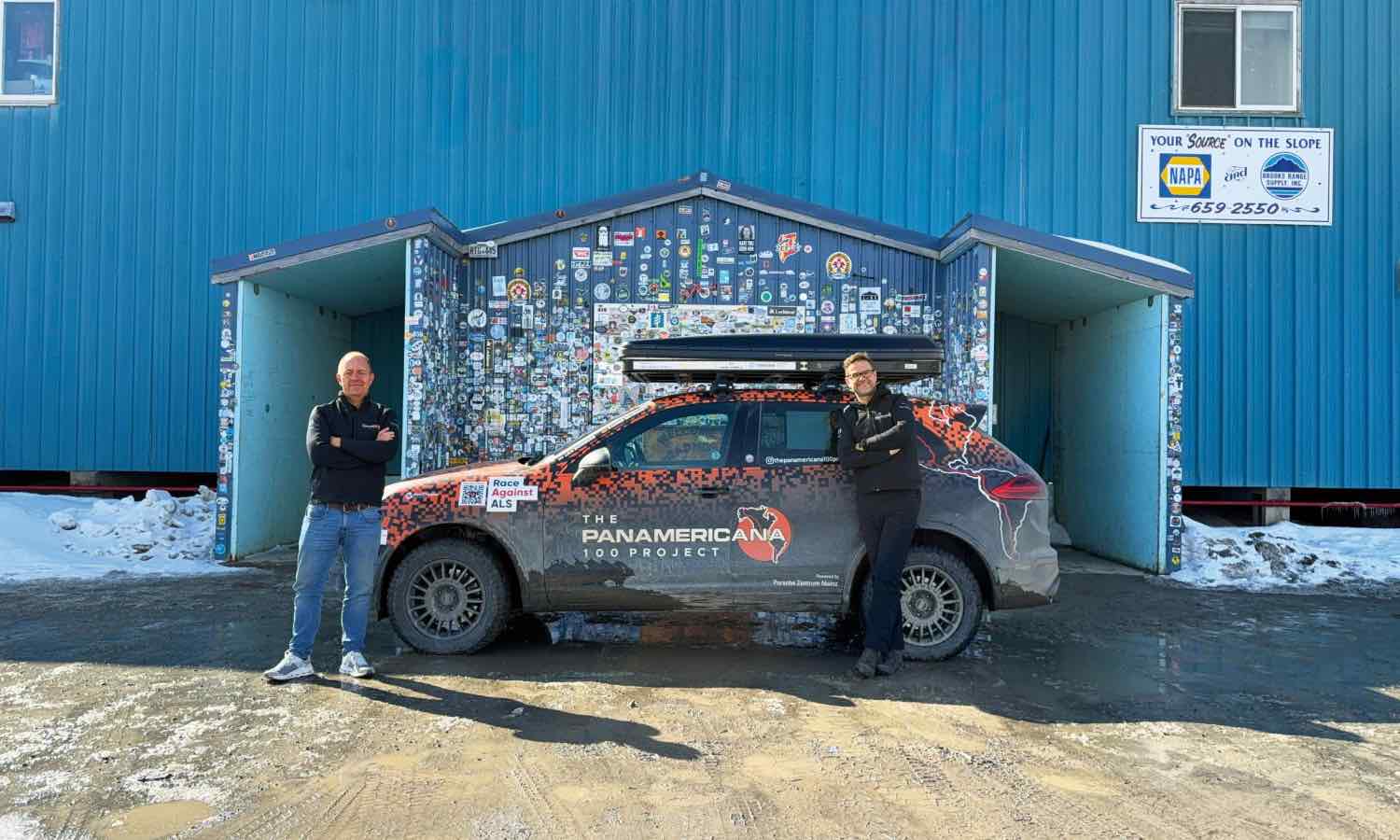
Despite these setbacks, they successfully navigated the surreal white expanse of the Salar de Uyuni before climbing further to La Paz at an altitude of 4,000 meters. There, they marveled at the city’s innovative cable car transit system, which radically slashes traditional hour-long urban commutes down to a mere ten minutes.
Departing La Paz under continued reduced engine power, the travelers pushed onward toward Lima, Peru—a grueling 1,500-kilometer stretch. Upon arrival, technicians at the local Porsche Center successfully regenerated the particulate filter, installed a brand-new lambda sensor, and lifted the emergency engine restrictions. During their brief layover in the Peruvian capital, they connected with Luis Fischer, president of the Porsche Club Peru, who instrumentalized a side excursion to Machu Picchu, one of the modern wonders of the world.
Phase 3: AdBlue Deserts, Central American Borders, and the Darién Gap
As the expedition pressed northward into Ecuador, a new technical obstacle arose: a widespread scarcity of AdBlue. The urea-based fluid essential for modern diesel emissions control was virtually nonexistent in local automotive shops and service stations. With less than 1,000 kilometers of driving range remaining before the vehicle’s electronic control unit would permanently lock the ignition and prevent engine startup, the drivers had to resort to keeping the engine idling during short stops to avoid being stranded. They finally sourced the elusive fluid in Quito, averting a major mechanical crisis.
Moving through Colombia, the travelers visited Medellín, a city that has dramatically overhauled its global image into a modern metropolis despite its turbulent narcotics-trafficking past. Their itinerary included a controversial visit to the Pablo Escobar House Museum, where they briefly met Roberto Escobar, the cartel boss’s former financial chief who spent over a decade behind bars.
Because the infamous Darién Gap—a dense, roadless swathe of jungle separating South and Central America—makes overland passage impossible, the Cayenne and its occupants were forced to load onto a cargo ship to bypass the impassable terrain and enter Panama.
Phase 4: Volcanoes, Clubs, and the Final Push to Alaska
Through Central America, the journey transformed into a vibrant cultural exchange. Local Porsche enthusiasts, regional clubs, and spontaneous roadside helpers rolled out the red carpet in Costa Rica, Honduras, El Salvador, Guatemala, and Mexico. These local networks proved invaluable, guiding the travelers through chaotic urban traffic, offering secure parking, and providing vital logistical support.
In Nicaragua, despite tense political climates creating rigid and prolonged border checks, the warmth and friendliness of everyday citizens left a lasting impression. In Guatemala, the duo took a brief pause from driving to scale the active Acatenango volcano, witnessing the fiery spectacles of neighboring Volcán de Fuego.
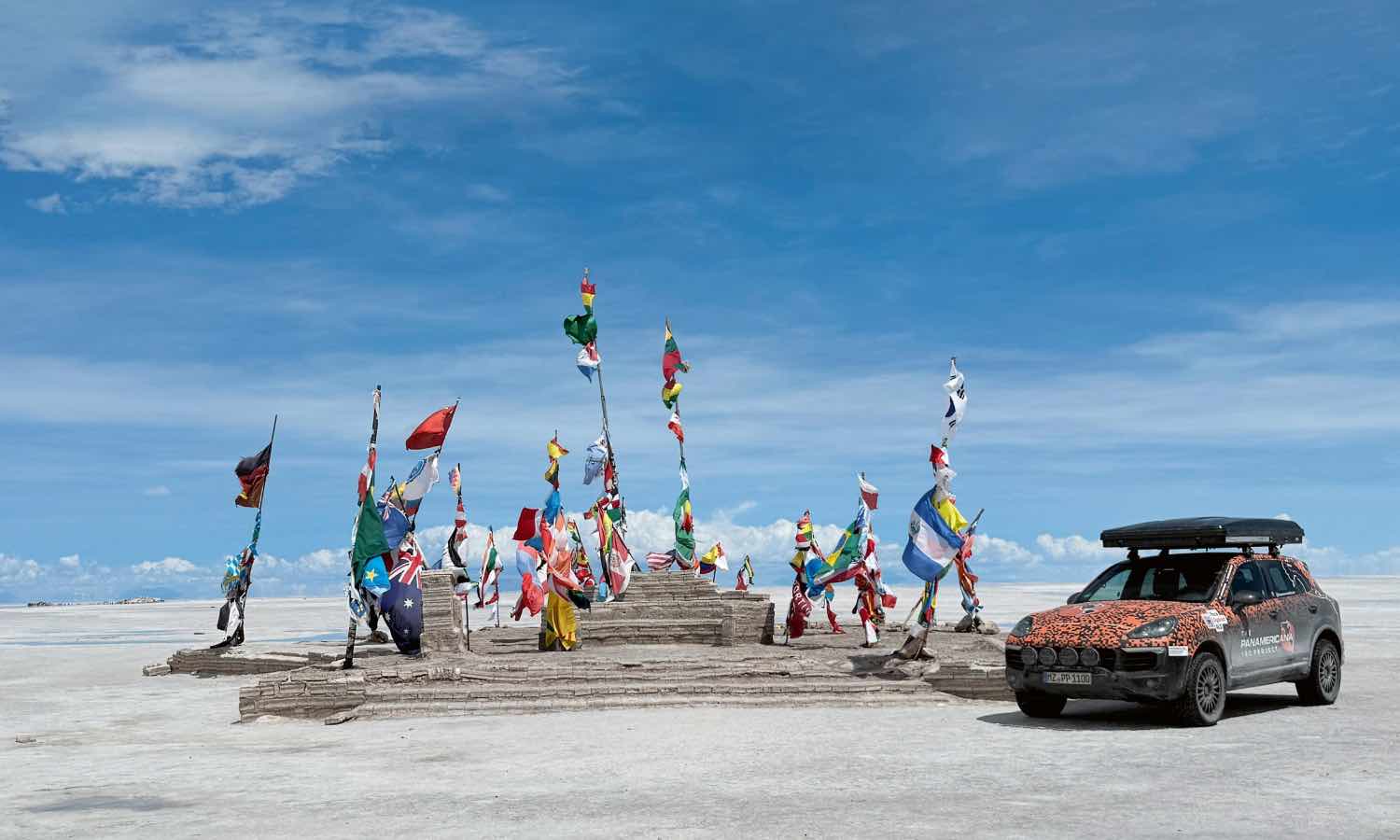
Entering the United States smoothly, Behrendt and Bongers made notable stops at the Porsche Experience Center in Los Angeles to test off-road tracks, followed by a thrilling passenger lap in a Porsche Taycan at the legendary Laguna Seca raceway.
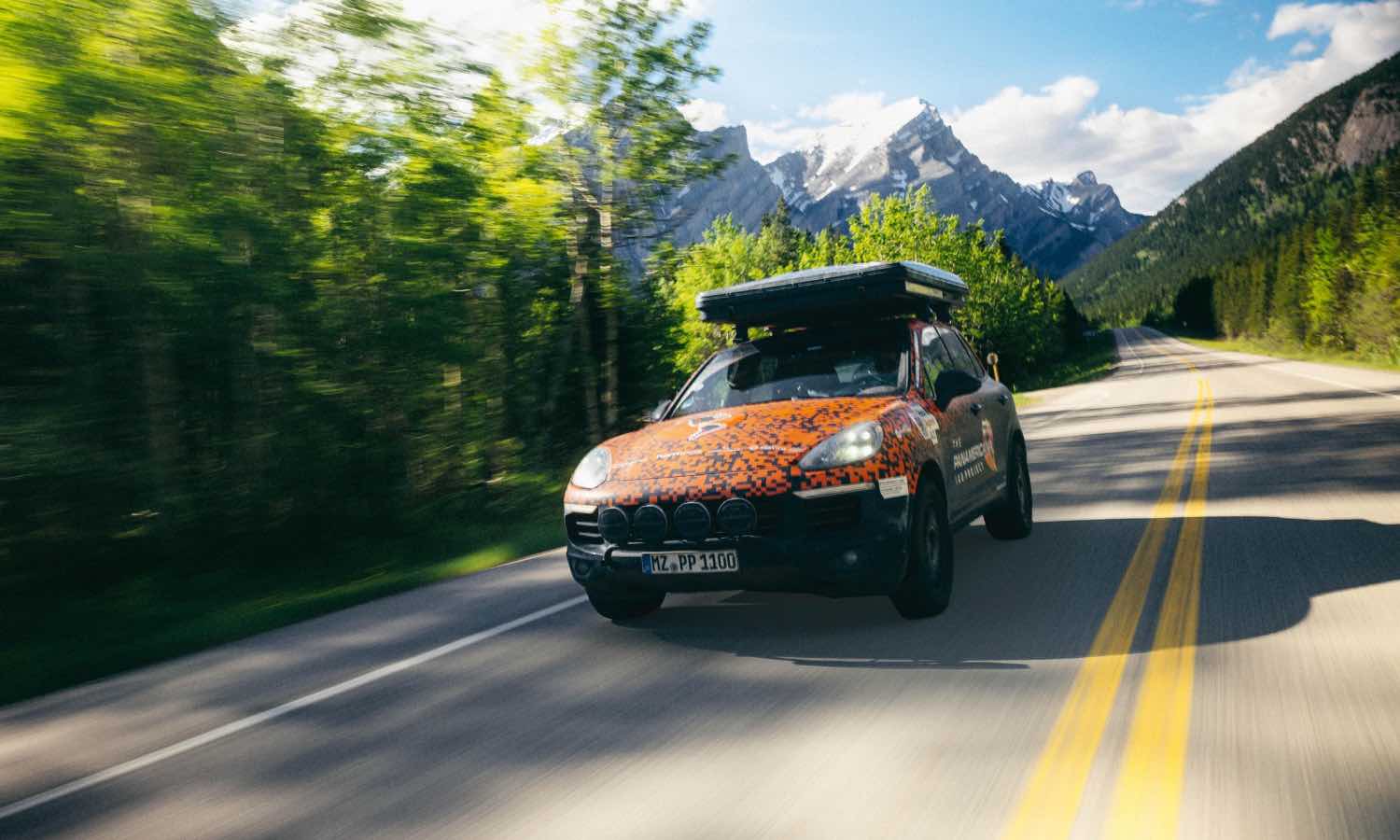
They then crossed the border into Canada, immersing themselves in the rugged wilderness of Vancouver Island, spotting bears, moose, and bisons, and pausing to absorb the majestic sights of the Rocky Mountains and Lake Louise. By June, the travelers officially crossed into Alaska, penetrating the Arctic Circle where the midnight sun meant the daylight never faded, and finishing their epic voyage at Deadhorse—a stark, industrial hub of containers and oil extraction.
Supporting Data: The Numbers Behind #ThePanamericana100Project
To fully comprehend the sheer scale of Rainer Behrendt and Jan Bongers’ achievement, the quantitative metrics of the expedition speak volumes:
- Total Distance Covered: Approximately 41,600 kilometers.
- Duration: Completed in roughly 100 days of active driving (excluding international transit legs).
- Countries Crossed: 15 sovereign nations (Argentina, Chile, Bolivia, Peru, Ecuador, Colombia, Panama, Costa Rica, Honduras, Nicaragua, El Salvador, Guatemala, Mexico, United States, and Canada).
- Vehicle Platform: Second-generation Porsche Cayenne Diesel, featuring a robust 100-liter long-range fuel tank.
- Maximum Operating Altitude: Over 4,500 meters above sea level in the high Andes.
- Primary Media Documentation: Detailed in Christophorus magazine, Issue 420, featuring journalism by Matthias Kriegel and photography by Tobiah Lui, Musuk Nolte, and freedom_wanted.
Official Responses and Human Encounters
While the technical hurdles of the journey—such as clogged diesel particulate filters, altitude sickness, and missing AdBlue supplies—tested the mettle of the two drivers, the human element of the expedition provided its most enduring memories.
Throughout the 15 countries, the global Porsche community mobilized in remarkable ways. Regional club presidents and individual aficionados stepped up to offer shelter, mechanical advice, food, and companionship. These interactions broke down cultural barriers and transformed an isolating long-distance driving test into a warm community-driven celebration.
However, the interactions tied to the "Race against ALS" campaign resonated the most profoundly with the drivers. The QR code plastered across the Cayenne’s bodywork served as an immediate conversation starter and catalyzed spontaneous acts of generosity and solidarity from strangers:
- In San Diego, California, a man approached the vehicle to share that his family had suffered three separate losses due to ALS, expressing deep gratitude for the awareness campaign.
- At a breakfast stop in Fairbanks, Alaska, an ordinary long-haul truck driver handed over a twenty-dollar bill as a direct donation toward the cause.
- In another instance, a couple personally affected by the neurodegenerative disorder quietly paid for the travelers’ restaurant bill.
Reflecting on the conclusion of the trip, Rainer Behrendt noted the complex emotional mixture of reaching Deadhorse. While the destination itself—a bleak, functional, and freezing industrial outpost—offered a somewhat melancholy end to the road, the realization of what had been accomplished far outweighed the bleakness of the final mile marker. Jan Bongers echoed this sentiment, emphasizing a newly awakened global perspective and a profound sense of pride. Both men affirmed that while the driving was over, their active commitment to supporting ALS research would continue indefinitely.
Implications: A Legacy Beyond the Destination
The completion of #ThePanamericana100Project leaves a multifaceted legacy that extends far beyond the impressive mileage logged by a diesel-powered SUV.
First, it underscores the extraordinary durability and touring capability of modern, high-performance utility vehicles. Pushing a luxury diesel SUV through oxygen-starved Andean passes, unpaved tropical tracks, and Arctic permafrost without catastrophic engine failure proves that modern engineering—when properly maintained—can withstand the planet’s most hostile environments.
Second, the journey serves as a powerful reminder of the potential for grassroots advocacy. By leveraging an automotive hobby and a grand adventure for a philanthropic purpose, Behrendt and Bongers successfully turned thousands of casual onlookers into active participants in the fight against a terminal illness. The donations gathered from casual encounters in diners, gas stations, and highway rest stops demonstrated that compassion transcends linguistic and geographical boundaries.
Ultimately, the 41,600-kilometer trek from Ushuaia to Deadhorse will be remembered not merely as a line drawn across a map, but as a testament to lifelong friendship, human endurance, and the enduring power of turning personal tragedy into a global campaign for a cure.



Leave a Reply