

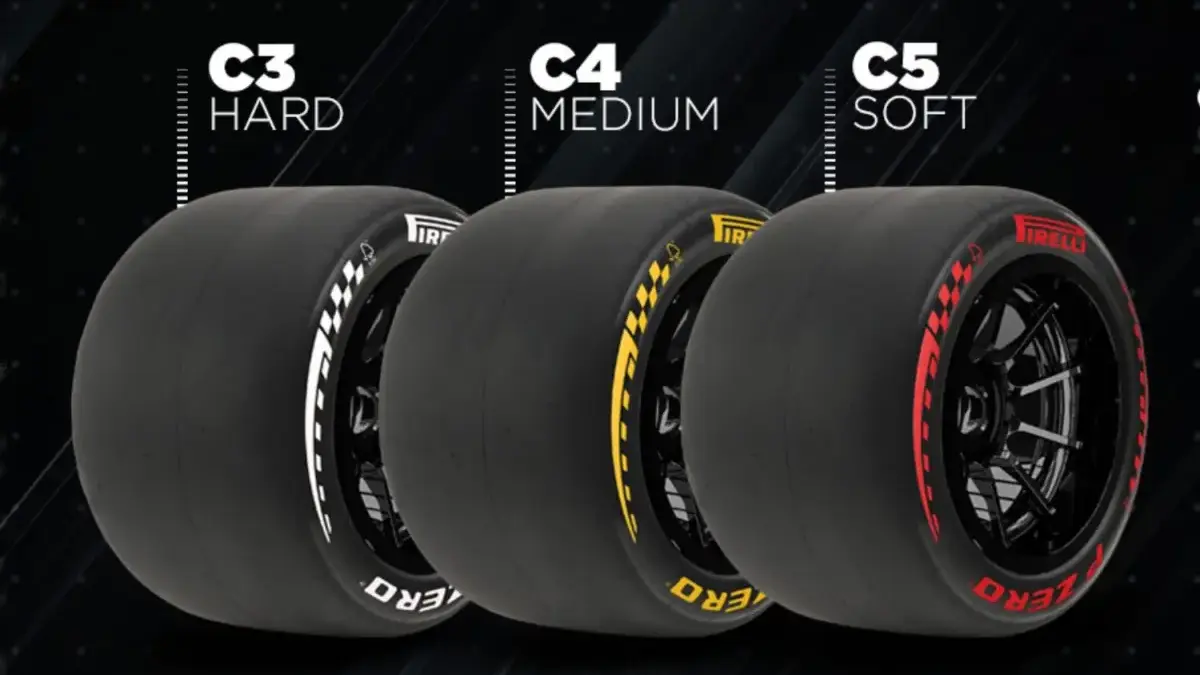
MILAN — As the motorsport world looks toward a transformative technical horizon, Pirelli is wasting no time laying the groundwork for its most ambitious undertaking to date. The Italian tire manufacturer is currently immersed in an intensive, high-intensity testing schedule as it prepares to shoulder the mantle of exclusive sole tire supplier for both the FIA Formula 1 World Championship and the F1000/MotoGP premier class starting in 2027.
This dual-front development campaign represents a massive logistical and engineering feat. Recently, Pirelli’s motorsport division orchestrated two critical, high-profile test sessions: a multi-team Formula 1 evaluation at the historic Autodromo Internazionale Enzo e Dino Ferrari in Imola, Italy, followed by a massive, 18-rider MotoGP collective test at the Red Bull Ring in Spielberg, Austria.
These tracks served as high-speed laboratories where engineers collected terabytes of invaluable telemetry. Instead of chasing headline-grabbing lap records, the primary focus for Pirelli’s technicians was mapping out the thermal degradation limits, assessing structural integrity against phenomena like blistering, and confirming the consistency of next-generation compounds across a vast spectrum of machinery and driving styles.
Main Facts
The scope of Pirelli’s 2027 preparation highlights the sheer magnitude of the challenge facing the Milanese brand. By securing the premier tire supply contracts for both four-wheeled and two-wheeled pinnacle racing, Pirelli will dictate the mechanical grip for the world’s elite drivers and riders simultaneously.
- The Dual-Supply Milestone: Starting in 2027, Pirelli will be the sole tire provider for Formula 1 while simultaneously taking over the premier motorcycle Grand Prix class (MotoGP), succeeding Michelin, and continuing its presence in supporting categories.
- The Imola F1 Test: Ferrari and Racing Bulls deployed high-profile drivers—including Lewis Hamilton, Charles Leclerc, Antonio Giovinazzi, Liam Lawson, and Arvid Lindblad—to evaluate 2027 prototype compounds (C3, C4, and C5 variants). The teams accumulated nearly 2,000 kilometers of testing data.
- The Red Bull Ring MotoGP Test: Pirelli gathered 18 premier-class riders to evaluate new tires built for the incoming 850cc engine regulations and adapted 1000cc machines. Rising star Diogo Moreira reportedly set the unverified benchmark pace.
- Engineering Objectives: Rather than prioritizing raw speed, the tests focused squarely on multi-lap consistency, structural durability under heavy loads, and minimizing adverse thermal degradation effects such as blistering and graining.
- Upcoming Milestones: Testing will continue with a dedicated wet-weather evaluation at Magny-Cours for Formula 1, culminating in a crucial post-season official test in Valencia this December for MotoGP.
Chronology of the Recent Test Sessions
The roadmap to 2027 is moving at a breakneck pace. The recent fortnight saw Pirelli engineers bouncing between iconic European racing venues to analyze data from both four and two wheels.
Phase 1: The Imola Formula 1 Prototyping (Mid-Week Session)
The Italian manufacturer took over the Autodromo Imola for a rigorous two-day test utilizing current-generation test mules modified to simulate future load profiles.
- Day One (Ferrari): Seven-time World Champion Lewis Hamilton and teammate Charles Leclerc strapped into the SF-26 test platform. Hamilton immediately set to work on a specialized run-plan, completing 64 laps, while Leclerc mirrored his workload with 63 laps. Together, the Scuderia drivers covered upwards of 620 kilometers, providing crucial comparative data on the C3, C4, and C5 prototype compounds.
- Day Two (Ferrari & Racing Bulls): Ferrari reserve and development driver Antonio Giovinazzi took over the workload for the Scuderia, concentrating heavily on the medium-hard C3 compound. Demonstrating relentless reliability, Giovinazzi ticked off an astonishing 135 laps, accumulating 663 kilometers. Simultaneously, Racing Bulls deployed Liam Lawson and young talent Arvid Lindblad. Lawson and Lindblad pushed the prototype rubber through various fuel loads and stint lengths, with Lawson clocking a representative best lap of 1:18.471 and Lindblad right on his heels with a 1:18.454. By the end of the Imola test, the combined squads crossed the 400-lap threshold, eclipsing 1,963 total kilometers.
Phase 2: The Red Bull Ring MotoGP Mass Gathering
While the four-wheeled engineers packed up in Italy, Pirelli’s motorcycle racing department was orchestrating a massive undertaking in the Styrian mountains at the Red Bull Ring.
- The Grid Assembles: In a rare and expansive mid-season test, Pirelli assembled 18 MotoGP riders to sample the rubber that will replace Michelin when the new technical regulations—including the shift to downsized 850cc engines—arrive in 2027.
- Mixed Machinery: Riders took to the track aboard current 1000cc transition bikes as well as early-iteration 850cc test mules. The lineup featured heavyweights and race winners, including Marc Márquez, Pedro Acosta, Brad Binder, Maverick Viñales, and Johann Zarco, alongside eager rookies like Izan Guevara and Senna Agius.
- Performance Metrics: While official timing was secondary to data collection, unverified pitlane whispers indicated that Moto2 graduate Diogo Moreira stunned onlookers by setting the fastest unofficial time of the test at 1:28.42, closely followed by Fermín Aldeguer and prodigious talent Pedro Acosta.
Supporting Data and Technical Insights
To understand the complexity of Pirelli’s mission, one must look closely at the physical forces acting upon modern racing tires. In Formula 1, cars generate unprecedented levels of downforce, pushing rubber compounds to their thermal limits through high-speed corners like Imola’s Acque Minerali. In MotoGP, extreme lean angles exceeding 60 degrees mean that a tire’s contact patch is reduced to an area no larger than a credit card, requiring exceptional edge grip and predictable breakaway characteristics.
Formula 1 Data Breakdown (Imola Test)
- Total Distance Covered: 1,963 kilometers.
- Total Laps Completed: Over 400 laps across two days.
- Compounds Evaluated: C3, C4, and C5 experimental 2027 prototypes.
- Standout Mileage: Antonio Giovinazzi alone accounted for 135 laps (663 km) on a single day, offering Pirelli a clean, undisturbed baseline dataset for compound degradation curves.
MotoGP Data Breakdown (Red Bull Ring Test)
- Total Riders Participating: 18 premier-class competitors.
- Engine Displacement Focus: Transitionary 1000cc setups and upcoming 850cc powerplants.
- Fastest Unofficial Benchmark: Diogo Moreira (1:28.42), showcasing the immediate competitiveness and baseline speed of Pirelli’s rubber on heavy prototype machinery.
Official Responses and Stakeholder Reactions
The feedback loop between trackside drivers/riders and Pirelli’s milan-based R&D department is critical. Early returns from both camps have been overwhelmingly positive, easing early anxieties regarding the massive transition.
Giorgio Barbier, Director of Pirelli Racing, expressed immense satisfaction following the Austrian test session. In an official statement, Barbier remarked:
"The opinions and qualitative feedback we have successfully recabrated from the riders confirm the exceptionally high level of performance we are aiming for. Specifically, the stability under heavy braking zones and the progressive lateral grip on lean angles have exceeded our initial baseline simulations. We are laying a very strong foundation for the 2027 championship."
Formula 1 team engineers also praised the transparent approach to testing. By utilizing current race drivers rather than purely dedicated test drivers, Pirelli ensured that the data collected directly mirrored the physiological and mechanical inputs of top-tier professionals fighting at the absolute limit.
Similarly, MotoGP riders voiced pleasant surprises regarding how quickly Pirelli has adapted its motorcycle racing DNA—honed through decades in WorldSBK and Moto2/Moto3—to the brutal demands of the premier Grand Prix class.
Strategic Implications for the Future of Motorsport
Pirelli’s dual-championship monopoly in 2027 marks a monumental shift in the global motorsport ecosystem. Never before in modern history has a single manufacturer shouldered the responsibility of defining the performance envelope for both the pinnacle of open-wheel car racing and the pinnacle of motorcycle road racing simultaneously.
1. Unified Brand Synergy
By supplying both F1 and MotoGP, Pirelli stands to gain unprecedented marketing synergy and technological cross-pollination. Data analytics tools developed for analyzing thermal degradation in high-downforce F1 cars can theoretically inform structural carcass design for high-lean-angle motorcycle tires, and vice versa.
2. The 2027 Regulatory Shift
For Formula 1, the 2027 season coincides with sweeping aerodynamic and power unit regulations designed to make cars lighter and more agile. Pirelli’s early testing with modified mules is crucial to ensuring that the tires do not become a limiting factor in the sport’s entertainment value. For MotoGP, the arrival of 850cc engines is designed to curb top speeds and improve safety; Pirelli’s tires must safely manage this transition without compromising the ferocious racing spectacle fans expect.
3. Next Steps on the Horizon
The development wheel never stops spinning. Pirelli’s immediate schedule includes a specialized, highly controlled wet-weather test at the Circuit de Nevers Magny-Cours to refine extreme-weather compounds for Formula 1. Meanwhile, the grand finale for the two-wheeled division will take place in early December at the official post-season test in Valencia, Spain. There, the entire 2027 MotoGP grid will hit the tarmac simultaneously, providing the ultimate stress test before the winter development freeze.
As the winter months approach, Pirelli remains firmly on track. The data secured in Imola and Spielberg has given engineers the empirical roadmap needed to finalize their compounds, ensuring that when the lights go out in 2027, the rubber hitting the road will be nothing short of revolutionary.

Leave a Reply