

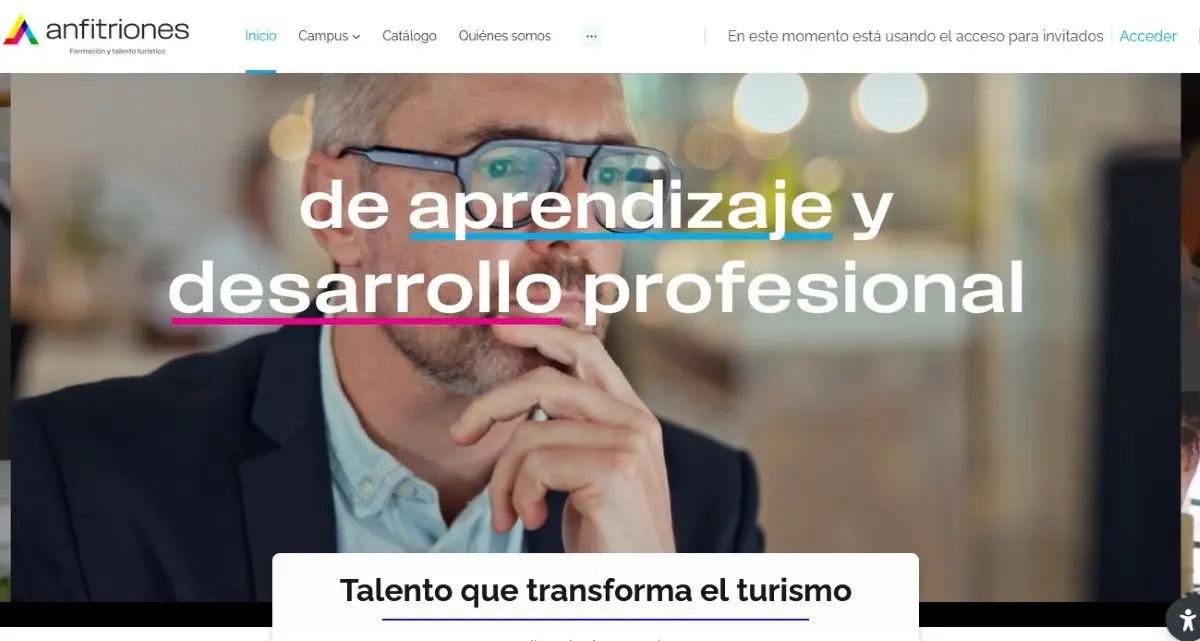
MADRID — In a definitive push to future-proof one of the world’s most competitive tourism markets, the Spanish Ministry of Industry and Tourism has officially inaugurated a brand-new, highly anticipated edition of its flagship educational initiative, the Anfitriones Program. Spearheaded by the Secretariat of State for Tourism, this comprehensive global learning system has returned with a transformative upgrade designed to tackle the structural challenges of the modern travel economy.
At the heart of this latest rollout is the introduction of a cutting-edge specialized division: the Smart Tourist Destinations Campus (Campus DTI). Alongside strategic enhancements to its existing digital architecture—including the recently integrated Open Campus (Campus Abierto)—the revamped Anfitriones program aims to upskill thousands of industry professionals, public managers, and organizations across Spain, equipping them with the practical tools needed to navigate sustainability, digitalization, and evolving consumer demands.
With registration currently open and a continuous learning calendar stretching through June 23, the initiative reinforces Spain’s steadfast commitment to maintaining global leadership in tourism quality, innovation, and sustainable destination management.
Main Facts: What is New in the Anfitriones Program?
The 2024–2025 edition of the Anfitriones program introduces a series of structural expansions tailored to address the most urgent operational and strategic hurdles facing modern tourism ecosystems.
The Birth of Campus DTI (Smart Tourist Destinations)
The standout addition to this edition is the Campus DTI, a specialized training hub engineered to prepare destination managers and public sector stakeholders for the realities of smart governance. The curriculum within this new campus dives deep into high-impact, contemporary subjects:
- Accessibility: Ensuring destinations are inclusive, barrier-free, and welcoming to all demographic groups.
- Artificial Intelligence in Public Management: Leveraging machine learning and data-driven insights to streamline administrative workflows, optimize visitor flows, and enhance municipal decision-making.
- Climate Change Adaptation: Formulating resilient strategies to mitigate environmental vulnerabilities and protect coastal, rural, and urban destinations from climate volatility.
- Crisis Management: Building robust frameworks to safeguard traveler safety, maintain business continuity, and rapidly recover from unforeseen disruptions or geopolitical shocks.
- Circular Economy in Destinations: Implementing waste-reduction models, resource optimization, and sustainable urban metabolism principles within tourism-heavy regions.
Expansion of Campus Abierto
Launched earlier in the year, the Open Campus has been further enriched with advanced modules that complement the DTI initiative. It now features an expansive catalog addressing digital transformation and modern business needs, such as:
- Data visualization and business analytics.
- Digital marketing strategies for niche tourism segments.
- Sustainable development models and eco-friendly business practices.
- Innovative tourism experience design.
In total, Campus Abierto now provides an exhaustive portfolio of 110 distinct training courses. These cover an expansive spectrum of professional competencies, ranging from cybersecurity, digital literacy, sustainability frameworks, and productivity tools, to leadership, team management, commercialization, responsible procurement, and strategic planning.
Six New Learning Pathways
To streamline the user experience and prevent educational fatigue within such a vast catalog, the program has introduced six new learning pathways (itinerarios formativos). These curated educational tracks intelligently connect multiple related courses, allowing learners to follow structured, goal-oriented roadmaps tailored to specific professional profiles—whether they are scaling a small rural hotel, managing municipal tourism boards, or directing digital marketing strategies for regional agencies.
Chronology: Evolution of the Anfitriones Initiative
The launch of the Campus DTI and the expansion of the Open Campus represent the latest milestones in a long-standing government strategy to professionalize and modernize Spain’s tourism sector.
- Early 2000s – Laying the Foundations: Recognizing tourism as the cornerstone of the national economy, the Spanish government begins developing centralized frameworks to standardize service quality across hospitality and destination management.
- The Birth of Anfitriones: Conceptualized as a holistic global learning ecosystem, the Anfitriones program is rolled out to bridge the gap between academic theory and practical, frontline tourism operations. It establishes specialized learning channels, historically anchored by initiatives like the Campus SICTED (focusing on the Integral Spanish System of Tourist Quality in Destinations).
- Early 2024 – The Integration of Campus Abierto: In response to the post-pandemic digital boom and the rapid acceleration of online consumer behaviors, the Secretariat of State for Tourism introduces Campus Abierto, dramatically expanding the platform’s digital and managerial catalog.
- September 23, 2024 – Official Launch of the New Edition: The current edition of Anfitriones officially kicks off, introducing the groundbreaking Campus DTI alongside enhanced digital resources and simplified navigational functionalities.
- September 2024 – June 2025 (Continuous Enrollment): For the first time, the educational cycle remains operational without interruption. Registration stays open continuously, allowing professionals to enroll at their convenience until the current academic window closes on June 23, 2025.
- Upcoming Months (2024–2025): Throughout the remainder of this edition, the Secretariat plans to deploy continuous updates, introducing new technological features, enhanced user dashboards, and refined interface designs to optimize the digital learning experience.
Supporting Data: Impact and Reach of Anfitriones
The enduring success of the Anfitriones program is reflected in its impressive quantitative footprint across Spain’s autonomous communities and business sectors. Government metrics highlight the program’s massive penetration within the national tourism landscape:
- 20,000+ Registered active users utilizing the platform for continuous professional development.
- 98,834 Total course inscriptions recorded across all three specialized channels (Campus Abierto, Campus SICTED, and the newly minted Campus DTI).
- 43,100+ Officially validated, certified completions issued to participants who successfully met the rigorous academic standards of the courses.
- 110 Individual training modules currently active within the Open Campus catalog alone.
- Three Pillars: The program’s comprehensive architecture is now distinctly organized into three core educational channels: Campus Abierto, Campus SICTED, and Campus DTI.
- Zero Cost: True to its public service mission, 100% of the training provided through Anfitriones is entirely free of charge, fully certified, and universally accessible.
Official Responses and Stakeholder Perspectives
While the Ministry of Industry and Tourism has framed this expansion as a vital evolution in state-backed educational policy, industry observers and public officials have widely praised the targeted inclusion of smart destination principles.
The Role of the Secretariat of State for Tourism
In official communications released alongside the launch, the Secretariat of State for Tourism emphasized that the ultimate goal of the Anfitriones program is to democratize high-level knowledge. By removing financial barriers through free, certified online education, the government ensures that micro-enterprises, independent hoteliers, and small municipal councils have access to the exact same strategic insights as large multinational tourism conglomerates.
"The tourism sector of today cannot be managed with the tools of yesterday," a spokesperson for the Secretariat noted. "The challenges posed by climate change, over-tourism in specific urban centers, and the rapid integration of artificial intelligence require a workforce that is agile, digitally literate, and deeply committed to sustainability. Campus DTI and our expanded Open Campus are direct answers to these systemic needs."
Industry Reception
Private sector associations, regional hotel chains, and destination management organizations (DMOs) have enthusiastically welcomed the program’s restructuring. Industry leaders point out that small-and-medium-sized enterprises (SMEs)—which make up the vast majority of Spain’s tourism fabric—frequently lack the capital required to send employees to private executive training programs.
By offering rigorous, flexible, and modular courses in digital marketing, cybersecurity, and crisis management, Anfitriones fills a critical market gap. Furthermore, the inclusion of circular economy and climate adaptation modules has been lauded by environmental groups and regional authorities striving to meet the European Union’s stringent green-transition targets.
Implications: Shaping the Future of Spanish and Global Tourism
The deployment of the updated Anfitriones program—and particularly the launch of Campus DTI—carries profound implications for the future trajectory of tourism in Spain and serves as a benchmark for international destination management.
1. Elevating the "Smart Destination" Benchmark
Spain has long been recognized as a global pioneer in the Smart Tourist Destination (DTI) methodology, championed by institutions like SEGITTUR. However, having smart infrastructure alone is insufficient; human capital must match technological deployment. By embedding AI management, data analytics, and accessibility directly into a national training curriculum, Spain is ensuring that its municipal leaders and local operators know how to practically apply these concepts on the ground.
2. Bridging the Digital Divide in Rural and Peripheral Areas
One of the historical challenges in tourism education has been the concentration of resources in major metropolitan hubs like Madrid, Barcelona, or regional capitals. Because the Anfitriones program operates entirely online with flexible, continuous enrollment, hospitality workers in rural inland regions, remote mountain villages, and smaller islands have equal access to world-class instruction. This democratization of knowledge helps combat rural depopulation by fostering sustainable, high-value local tourism economies.
3. Fostering Resilience Against Global Crises
Recent global events—from pandemics and geopolitical conflicts to extreme weather anomalies—have exposed the fragility of global travel. The inclusion of specialized crisis management and climate adaptation courses within the curriculum represents a proactive shift from reactive crisis response to proactive risk mitigation. Professionals trained under these frameworks will be better prepared to safeguard assets, protect local communities, and maintain traveler confidence during turbulent times.
4. Setting a Precedent for Public Sector Educational Policy
As governments worldwide grapple with how to regulate and nurture their tourism sectors post-pandemic, Spain’s model offers a compelling blueprint. By combining quality accreditation (SICTED), broad professional skills (Campus Abierto), and advanced future-focused governance (Campus DTI) into a single, cohesive, taxpayer-funded platform, the Spanish government demonstrates how public policy can successfully drive industry competitiveness and sustainability.
Conclusion and Call to Action
With its doors open continuously until June 23, 2025, the revitalized Anfitriones program stands ready to shape the next generation of tourism leaders. Professionals, public servants, and organizations operating within any subsector of the tourism industry are encouraged to explore the catalog, select their tailored learning pathways, and register for courses at no cost through the official portal. As the global tourism landscape grows increasingly complex, initiatives like Anfitriones ensure that Spain remains not only a destination of choice for millions of travelers worldwide, but a beacon of innovation, sustainability, and operational excellence.




Leave a Reply