


By Global Environmental & Economic Desk
Published: October 2023
Main Facts
As global water scarcity reaches critical flashpoints, the World Bank has launched a transformative strategic initiative known as "New Water." This sweeping framework is designed to help governments pivot away from absolute reliance on traditional hydrological cycles—such as rivers, lakes, and unpredictable rainfall—and embrace non-conventional water resources (NCWR). At the core of this initiative are advanced technological solutions, chiefly seawater desalination and wastewater regeneration and reuse.
With global population growth, rapid industrialization, and intensifying climate change compounding the strain on finite freshwater reserves, the World Bank’s initiative provides a comprehensive five-volume technical guide. This manual aims to assist policymakers, institutional leaders, and utility managers in integrating non-conventional water systems sustainably, affordably, and equitably.
Unlike traditional freshwater management, which remains hostage to shifting meteorological patterns and protracted droughts, "New Water" systems offer continuous, climate-independent supply. By decoupling water security from the weather, nations can insulate their agricultural sectors, industrial developments, and urban populations from environmental shocks. However, transitioning to these capital-intensive systems requires significant regulatory overhauls, innovative financing, and structured public-private partnerships (PPPs) to avoid fiscal pitfalls.
Chronology of the Crisis and the Response
The journey toward institutionalizing "New Water" has unfolded against a backdrop of escalating global water stress over the past three decades.
- The Late 20th Century (Emergence of Tech): Desalination and wastewater treatment technologies matured, transitioning from costly, niche methodologies utilized primarily in arid, oil-rich Gulf states to viable industrial processes. However, high energy requirements and prohibitive capital costs limited their adoption in developing regions.
- The 2010s (Cost Reductions and Heightened Stress): Rapid advancements in membrane technology, energy recovery devices, and renewable-powered treatment plants dramatically reduced the operational costs of desalination and water reuse. Concurrently, severe multi-year droughts crippled major metropolitan and agricultural hubs globally—from Cape Town and California to parts of Latin America and the Middle East—demonstrating the vulnerability of conventional supply chains.
- The Early 2020s (The Policy Vacuum): Despite technological readiness, many governments failed to successfully integrate non-conventional water projects due to obsolete legal frameworks, poor institutional coordination, and a lack of financial modeling. This frequently resulted in stranded assets, costly white elephants, and a failure to reach vulnerable populations.
- The Present Day (The World Bank’s Five-Volume Guide): Recognizing the systemic risks of fragmented water governance, the World Bank formulated a definitive, five-volume operational roadmap. This strategic intervention seeks to bridge the gap between technological potential and institutional execution, laying the groundwork for a standardized global approach to "New Water."
Supporting Data and Technical Architecture
To operationalize "New Water," the World Bank’s framework breaks down the implementation process into five distinct, highly specialized volumes. Each addresses a specific structural pillar required for sustainable resource integration:
1. Legal and Regulatory Harmonization (Volume 1)
Traditional water laws are typically built around surface water rights and groundwater extraction permits. Volume 1 addresses how national laws must be adapted to legally integrate desalinated and regenerated water into existing water rights frameworks, addressing issues of ownership, quality standards, and third-party discharge regulations.
2. Institutional Governance and Private Sector Engagement (Volume 2)
Managing non-conventional water requires sophisticated administrative capabilities. This volume outlines the restructuring of public water institutions and establishes mechanisms for collaborative management, defining clear boundaries for public-private partnerships (PPPs) and community-level participation.
3. Economic Viability and Modern Portfolio Theory (Volume 3)
One of the most innovative aspects of the World Bank’s initiative is the application of Modern Portfolio Theory (MPT) to water resource management. Traditionally applied to financial investments, MPT is used here to optimize the mix of traditional and non-conventional water sources. By balancing risk, cost, and reliability, planners can avoid over-reliance on expensive sole-source solutions and build resilient, diversified supply portfolios.
4. Financial Structuring and Long-Term Viability (Volume 4)
Because non-conventional water projects require substantial upfront capital expenditures (CapEx) matched with predictable operational expenditures (OpEx), Volume 4 explores advanced financial structures. These include blended finance, sovereign guarantees, green bonds, and performance-based contracts designed to attract international capital and ensure project longevity.
5. Decentralized Solutions for Vulnerable and Remote Communities (Volume 5)
Desalination and water reuse are often perceived as mega-projects suited exclusively for large coastal cities. Volume 5 focuses on scaling down these technologies, detailing the implementation of small-scale, decentralized desalination plants and localized wastewater recycling systems tailored for off-grid rural regions, arid interior communities, and economically disadvantaged populations.
Official Responses and Stakeholder Perspectives
International development experts, economists, and environmental policymakers have lauded the World Bank’s proactive stance, viewing the "New Water" initiative as a paradigm shift from emergency crisis management to long-term strategic resilience.
According to water governance specialists at multilateral financial institutions, the primary danger in the current rush toward desalination is the lack of standardized regulatory oversight. Without rigorous economic evaluations, cash-strapped municipalities risk entering into unfavorable, long-term procurement contracts that can bankrupt local utilities or price impoverished communities out of a basic human right.
"The era of treating water as an infinite, cyclical gift that requires zero management sophistication is over," notes a senior water economist involved in the World Bank initiative. "Through ‘New Water,’ we are not simply building treatment plants; we are designing an entirely new economic architecture for survival. By providing governments with a step-by-step manual on regulation, portfolio diversification, and inclusive financing, we are ensuring that technological innovation directly translates into social equity and economic stability."
Furthermore, private sector investors have welcomed the institutional clarity provided by the guidelines. Historically, international capital has hesitated to enter the water sector due to political interference, unclear cost-recovery mechanisms, and regulatory ambiguity. By establishing transparent governance models and robust financial risk-mitigation structures, the World Bank’s framework creates a predictable environment that incentivizes sustainable, long-term private investment.
Implications for Global Security and the Future
The widespread adoption of the World Bank’s "New Water" framework carries profound implications for geopolitics, economic development, and environmental sustainability:
Economic Stability and Industrial Growth
Water scarcity is increasingly recognized as a ceiling on economic development. Industrial sectors—ranging from semiconductor manufacturing and energy production to agribusiness—require absolute supply certainty. By incorporating climate-independent sources into national portfolios, countries can shield their GDPs from the devastating financial impacts of agricultural collapses and industrial shutdowns caused by droughts.
Geopolitical De-escalation
Water disputes have historically served as catalysts for regional conflict, both within national borders (such as agricultural versus urban competing interests) and across international boundaries involving transboundary river basins. "New Water" decouples supply from shared geographic water bodies, reducing transboundary tensions by offering nations self-reliance through coastal desalination and localized wastewater reclamation.
Social Justice and Vulnerable Populations
A critical objective of the World Bank’s guidelines is preventing the marginalization of low-income communities. Historically, advanced infrastructure projects often bypass rural or informal settlements in favor of high-yield urban centers. Volume 5’s emphasis on decentralized, small-scale technologies ensures that remote and impoverished populations are not left behind in the global transition toward water security.
Environmental Considerations and Sustainable Engineering
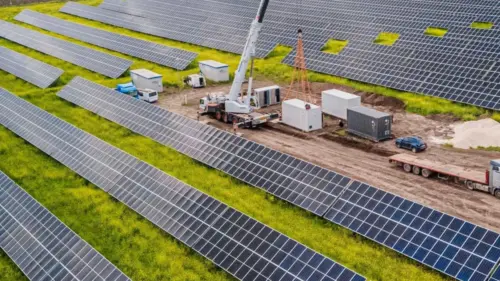
While desalination and wastewater reuse offer unmatched supply reliability, critics have historically pointed to their high energy demands and the environmental impact of saline brine discharge. Modern iterations of "New Water" projects increasingly integrate renewable energy sources (such as solar-powered desalination) and advanced brine-minimization technologies, aligning water security goals with global decarbonization targets.
Conclusion: A Resilient Paradigm Shift
Ultimately, the World Bank’s "New Water" initiative represents a decisive departure from reactive crisis management. By weaponizing modern technology, advanced financial portfolio theory, and robust legal frameworks, governments are now equipped to construct water systems that are resilient, economically viable, and socially equitable. As climate change continues to stress-test traditional natural systems, the institutionalization of "New Water" may well define the boundary between systemic collapse and sustainable human progress in the 21st century.


Leave a Reply