

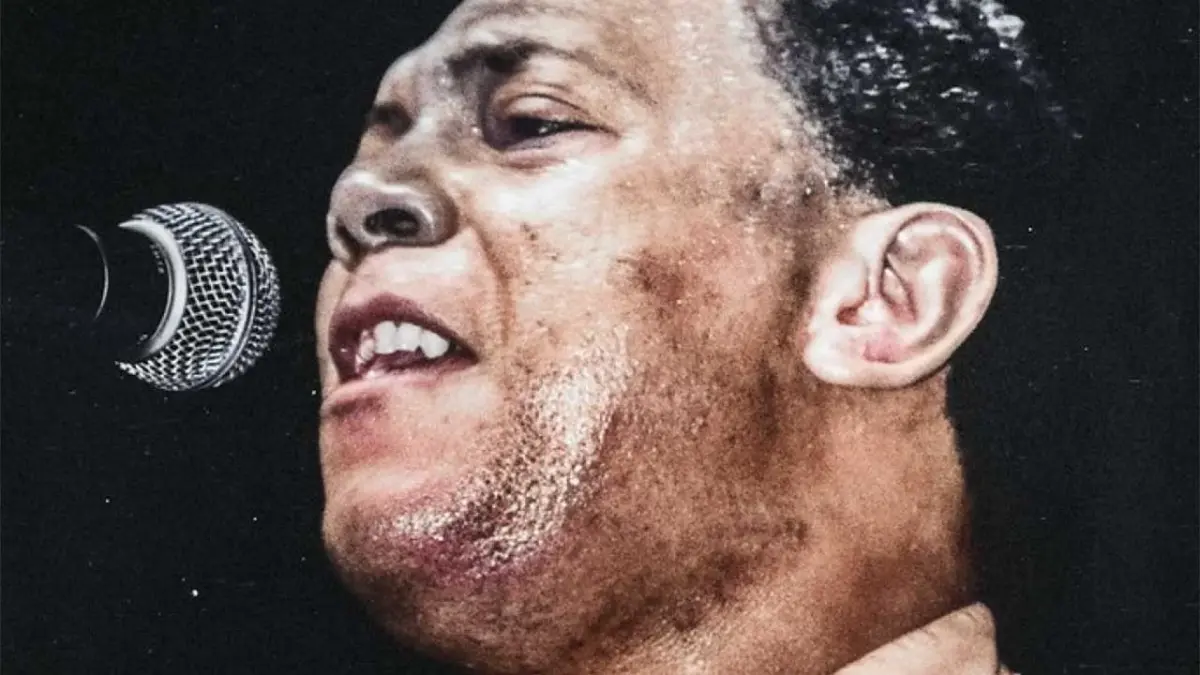
Fifteen years after his physical departure, the legacy of Álvaro José Arroyo González—universally known simply as "Joe"—remains as vibrant, influential, and deeply embedded in the cultural fabric of Colombia and the broader Caribbean as it was during the zenith of his tumultuous career.
1. Main Facts: The Indelible Legacy of a Caribbean Legend
Time does little to diminish the stature of true giants. As the cultural landscape of Colombia marks the passage of fifteen years since the silencing of its most resonant voice, the memory of Joe Arroyo burns brighter than ever. Born in Cartagena on November 28, 1955, Arroyo was not merely a singer; he was an institutional force, a cultural architect, and the undisputed voice of the Colombian Caribbean.
His ability to fuse African ancestral rhythms with the diverse sounds of the Latin American Caribbean birthed an entirely unique genre colloquially and affectionately known as "joesón". He was a pioneer of salsa, a master of tropical music, and a creative powerhouse whose vocal cords possessed an unmistakable, soaring timbre that many critics and fans have rightfully likened to a masculine iteration of the legendary Celia Cruz.
Throughout a career that spanned over three decades of relentless artistic output, Arroyo recorded more than 300 songs across roughly 40 albums. Among these are approximately 100 original compositions, with over 60 tracks soaring to the very top of national and international charts. His contributions to music were so profound, and his dominance during the Barranquilla Carnival so absolute, that organizers had to invent an entirely new accolade specifically for him: the Supercongo de Oro.
Yet, the magnitude of Joe Arroyo cannot be measured in awards or chart positions alone. He walked a razor’s edge between transcendent genius and deep human frailty. Marked by intense professional triumph and profound personal tragedy, his life was a cinematic storm of wild bohemian nights, brush-with-death medical emergencies, fierce loves, and an enduring artistic passion that somehow survived it all. Fifteen years after his passing on July 26, 2011, Colombia continues to dance to his anthems, proving that while the man is gone, the myth—and the music—are immortal.
2. Chronology: From the Streets of Cartagena to Global Stardom
The trajectory of Álvaro José Arroyo González reads like a classic epic of prodigious talent meeting raw, unyielding street grit. His ascent to the pinnacle of tropical music is a journey defined by rapid artistic evolution and an unquenchable thirst for musical exploration.
Early Beginnings and the Prodigy from Cartagena
Long before he was packing stadiums and commanding dance floors, Joe was a child prodigy singing in the vibrant, sometimes unforgiving alleyways of Cartagena’s historic neighborhoods. Recognizing an extraordinary vocal gift, he began performing at a remarkably young age.
The Teenage Leap: Fruko y sus Tesos
Arroyo’s formal entry into the big leagues of Colombian music happened at a breathtakingly young age. After brief, formative stints passing through the orchestras of Rubén Darío Salcedo and the ensemble La Protesta, the 16-year-old cartagenero was recruited by Fruko y sus Tesos.
In the 1970s, Fruko y sus Tesos was the most vital and influential salsa powerhouse in Colombia. Within this powerhouse, the teenage Arroyo did not just fit in; he dominated. He injected his unique vocal inflections, attitude, and compositional flair into the group, instantly creating timeless tracks that catapulted him into national consciousness.
The Collective Journey and Solo Ascension
Following his monumental era with Fruko, Arroyo refused to be creatively boxed in. He lent his legendary voice to a revolving roster of the era’s most prestigious tropical collectives, including:
- The Latin Brothers
- Los Líderes
- Los Bestiales
- La Integración
- Pacho Galán’s Orchestra
By the late 1970s and 1980s, armed with a deep understanding of Caribbean arrangements and African polyrhythms, Arroyo took the definitive leap into a solo career. Over the next thirty years, primarily recording for legendary labels like Discos Fuentes and Sony Music, he forged his own path, redefining salsa, tropical music, and the sonic landscape of the Colombian Carnival.
3. Supporting Data: The Numbers Behind the Myth
To understand Joe Arroyo’s dominance is to look at the staggering statistics of his musical career. His artistic output was both prolific and remarkably high in quality, capturing the hearts of millions across generations.
- Discography: Over 40 albums released throughout his storied career.
- Catalog: More than 300 recorded songs bearing his unmistakable vocal signature.
- Songwriting: Approximately 100 original compositions written entirely by Arroyo.
- Chart Success: More than 60 number-one hits dominating radio airwaves across Colombia and Latin America.
- The Anthem of a Culture: "Rebelión" (released in 1986) remains a foundational pillar of Afro-Colombian identity, telling the story of a 17th-century African slave couple (Ebelec Cuero and his wife) fighting for their freedom in Cartagena against Spanish oppression.
An Unrivaled Musical Repertoire
Arroyo’s catalog is a masterclass in tropical composition. His own penned classics include:
- "La noche"
- "Rebelión"
- "Echao pa’lante"
- "En Barranquilla me quedo"
- "Te quiero más"
- "Mary"
- "Por ti no moriré"
- "El trato"
- "Fuego en mi mente"
- "Musa original"
- "Tumbatecho"
- "A mi Dios todo le debo"
- "Noche de arreboles"
- "La fundillo loco"
Furthermore, his peerless interpretation breathed immortal life into songs written by other great composers, turning them into definitive standards of tropical music:
- "Pa’l bailador"
- "Yamulemau"
- "Con gusto y gana"
- "El ausente"
- "El caminante"
- "El son del caballo"
- "Nadando"
- "Confundido"
- Numerous traditional carnival medleys.
4. Official Responses and Critical Perspectives: The Biographers and Historians Speak
The duality of Joe Arroyo’s existence—the celestial height of his art versus the earthly torment of his personal demons—has been meticulously documented by cultural historians and biographers.
In his definitive biography, "Joe Arroyo, el Centurión de la Noche. Una vida cantada", esteemed writer Mauricio Silva Guzmán captures the essence of the artist with haunting precision:
"Arroyo, possibly the most talented of the popular creators and interpreters that Colombia has produced, was a man marked at the same time by success and by misfortune: consecrated by the musical genius he inherited from his African ancestors and which he knew how to conjugate with the rhythms of the tropics, applauded by that unmistakable voice that many qualify as the masculine version of Celia Cruz, but, likewise, condemned by vice, beaten by family tragedies, and diminished by illnesses from which on more than one occasion he was saved by a true miracle."
Cultural critics and institutional bodies across Colombia have consistently echoed Silva’s sentiments. Upon every anniversary of his birth or passing, the Ministry of Culture, national media outlets, and regional institutions unite to recognize that Arroyo was not merely a pop star, but an anthropologist of sound. He bridged the gap between the palenques of San Basilio and the modern recording studio, taking traditional folkloric expressions and packaging them with sophisticated orchestral arrangements that could captivate both street-corner sound systems (picós) and elite international venues.
When the city of Barranquilla created the Supercongo de Oro specifically to honor his repeated, unmatched victories at the Carnival’s orchestrations contests, it was an official acknowledgment that traditional paradigms of award-giving were simply too small to contain his artistic weight.
5. Implications: The Cultural and Societal Echo of Joe Arroyo Today
Fifteen years after his death on July 26, 2011, the implications of Joe Arroyo’s life and work resonate deeply within contemporary Colombian society. His legacy extends far beyond nostalgia; it serves as a cornerstone for modern national identity and a roadmap for subsequent generations of musicians.
The Voice of Afro-Colombian Resistance and Pride
Through tracks like "Rebelión", Arroyo did something revolutionary for mainstream Colombian music: he placed the Afro-Latino experience, historical resistance, and racial dignity at the absolute center of the commercial dance floor. Long before intersectional discourse became mainstream in media, Joe was singing about African heritage, slavery, and dignity with an infectious rhythm that made the entire nation dance while they reflected on their roots. "Rebelión" is taught, analyzed, and sung as a cultural manifesto of the Colombian Caribbean.
The Blueprint for Tropical Fusion
Modern tropical artists in Colombia—from Systema Solar and ChocQuibTown to Carlos Vives and a new wave of alternative salsa orchestras—owe an undeniable debt to the sonic laboratory that Joe Arroyo pioneered. By proving that local Caribbean sounds, Antillean salsa, Colombian cumbia, and African soukous could merge seamlessly into "joesón," he shattered rigid genre boundaries. He demonstrated that Colombian music could be simultaneously deeply local and aggressively universal.
The Immortal Spirit of the Carnival
Whenever February rolls around and the drums of the Barranquilla Carnival begin to beat, the ghost of Joe Arroyo presides over the festivities. His absence is palpable, yet his presence is absolute. From the sound systems blaring "En Barranquilla me quedo" to millions dancing to "La noche", the collective soul of the Colombian Caribbean remains tethered to his vocal cords.
As we commemorate a decade and a half without his physical presence, the overarching reality remains clear: Joe Arroyo is not a relic of the past, but a living, breathing pulse of the Colombian nation. He remains, eternally, the Centurion of the Night.
Related reading: Lenín Bueno Suárez: el aniversario 80 de ‘Leabus’




Leave a Reply