

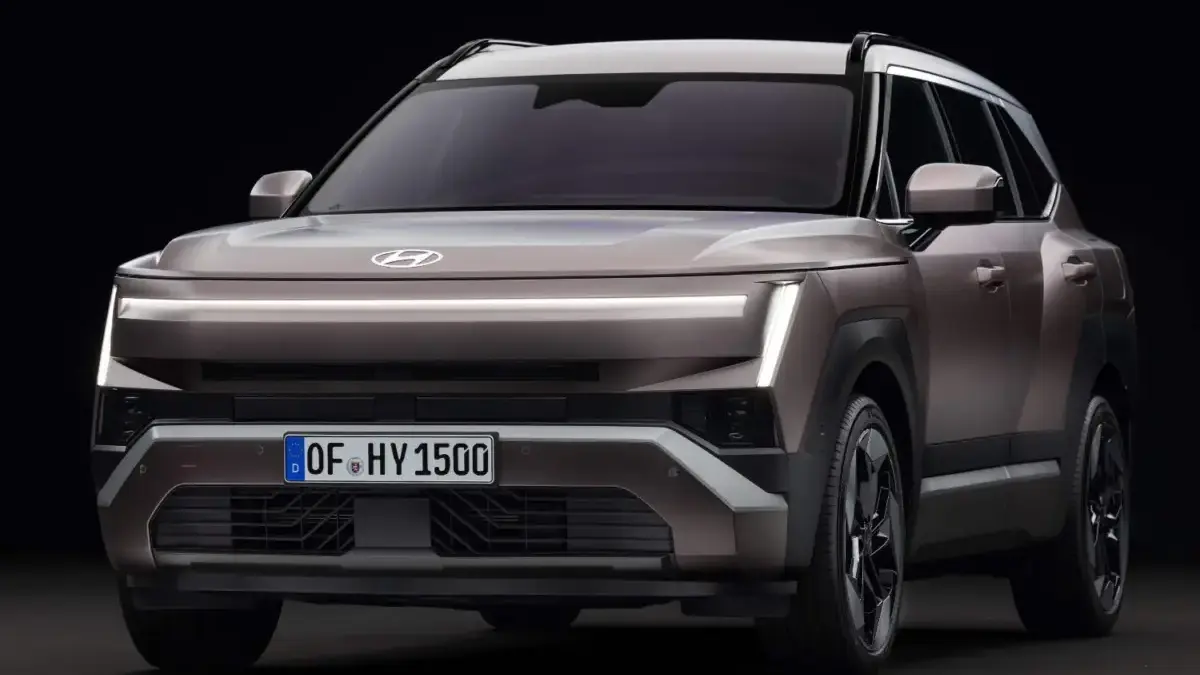
NEW YORK — In the highly competitive compact SUV landscape, few vehicles command the universal market dominance of the Hyundai Tucson. Since its global inception in 2004, the Korean automaker has shifted over 11 million units worldwide, establishing the Tucson as a foundational pillar of its global portfolio. Rather than settling for a safe, evolutionary mid-cycle refresh, Hyundai has taken a bold leap forward.
During a high-profile global broadcast event streamed live from New York on October 1, the automaker pulled the wraps off the entirely redesigned, fifth-generation Hyundai Tucson. Slated for a global rollout culminating in 2027, this next-generation iteration represents a radical departure from its predecessor. Infused with a revolutionary design language, cutting-edge software architecture, expanded physical dimensions, and a heavily electrified powertrain lineup, the 2027 Tucson is engineered not just to keep pace with the shifting automotive landscape, but to redefine the benchmark for modern family crossovers.
Main Facts: A Total Reinvention from the Ground Up
The fifth-generation Tucson is a comprehensive overhaul that touches virtually every metric of the vehicle—from its exterior shell and chassis dimensions to its cockpit layout and computational power.
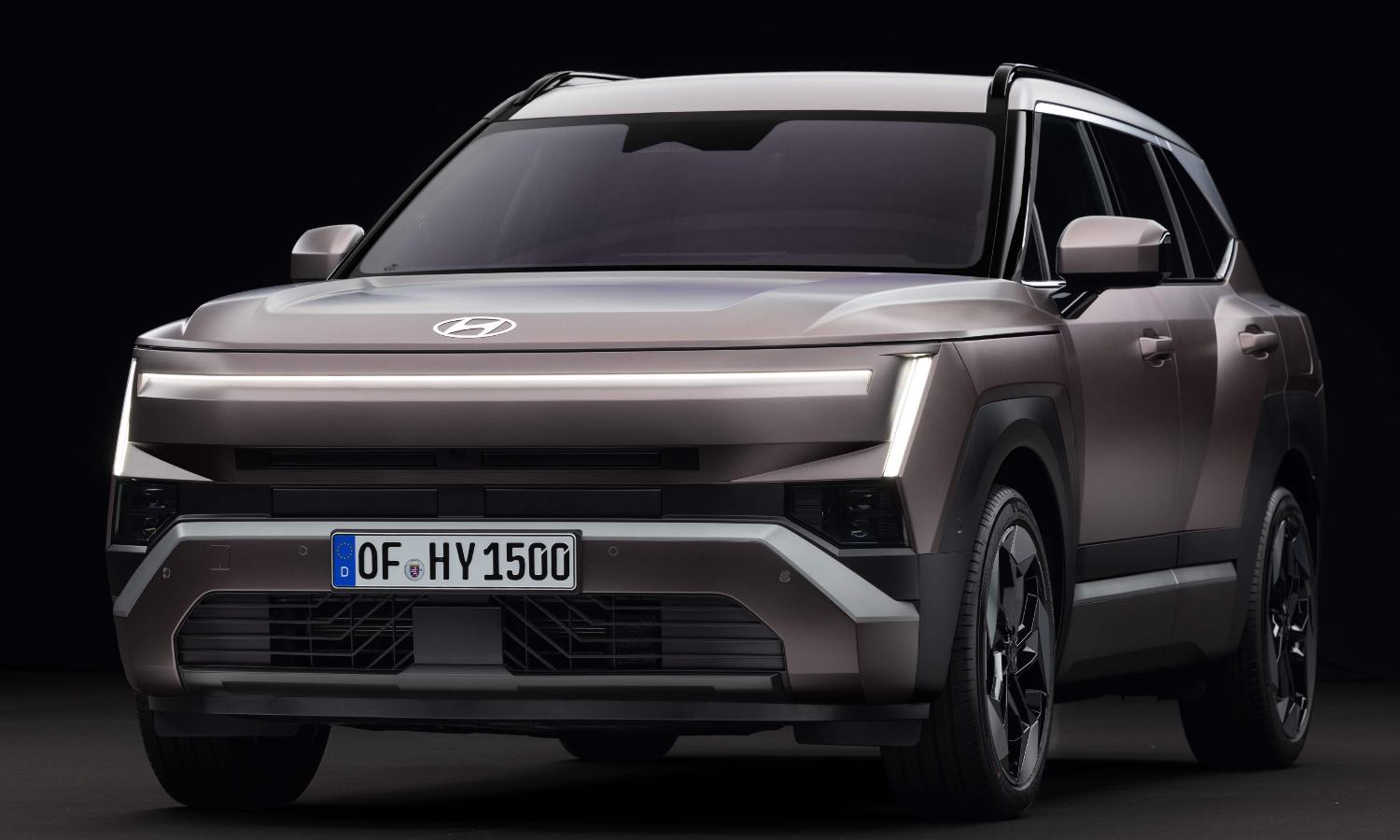
Underpinning the new model is a fresh interpretation of Hyundai’s design philosophy, dubbed "Art of Steel." Gone are the soft, flowing curves of the outgoing fourth generation. In their place are crisper, more muscular contours, sharply defined character lines, and widened wheel arches that lend the SUV a commanding, athletic stance.
Dimensionally, the vehicle has expanded in every conceivable direction. The long-wheelbase variant now stretches to 4.70 meters (185 inches) in length, 1.905 meters (75 inches) in width, and 1.685 meters (66.3 inches) in height, boasting a wheelbase of 2.785 meters (109.6 inches). This translates to an additional 6 centimeters of overall length, 4 centimeters of width, 2 centimeters of height, and a 3-centimeter stretch between the axles compared to the outgoing model.
Inside, the cabin has undergone a seismic digital transformation centered around the "Curve of Upholstery" architecture, featuring advanced multi-tier dashboards, high-end sustainable materials, and native Android Automotive integration via the newly minted Pleos Connect infotainment system. Mechanically, the SUV embraces comprehensive electrification, offering traditional combustion engines, 48-volt mild-hybrid systems, traditional full hybrids, and a vastly improved Plug-In Hybrid (PHEV) variant capable of up to 81 kilometers (50 miles) of pure electric range.
Chronology: The Journey to the 2027 Tucson
To understand the magnitude of the 2027 model, it is crucial to look at the vehicle’s historical trajectory and the timeline that brought it to this juncture:
- 2004: Hyundai launches the first-generation Tucson, entering the burgeoning compact SUV market with a rugged, affordable, and practical utilitarian vehicle.
- 2009–2015 (Generations 2 & 3): The Tucson matures rapidly, adopting sleeker styling and establishing a foothold in European and North American markets as a genuine alternative to legacy Japanese and American crossovers.
- 2020: The fourth-generation Tucson debuts with its revolutionary "Parametric Dynamics" design language, hidden lighting elements, and polarizing yet hugely successful aesthetic, which goes on to shatter sales records globally.
- October 1, 2026: Hyundai officially broadcasts the world premiere of the fifth-generation (2027) Tucson from New York, showcasing the "Art of Steel" design direction and next-generation software architecture.
- Late 2026: Production ramps up at manufacturing facilities, with the vehicle making its commercial debut in its home market of South Korea.
- Spring 2027 (Projected): The European-spec and North American variants begin hitting dealership floors, likely accompanied by a prominent European auto show appearance, such as the Paris Motor Show.
Supporting Data: Dimensions, Powertrains, and Capabilities
A deep dive into the engineering specifications of the 2027 Hyundai Tucson reveals substantial mechanical and structural advancements across all trims:
Exterior Lighting and Aerodynamics
- H-Edge Frontal Signature: A reimagined lighting layout that integrates seamlessly into the geometric grille structure.
- Prism Rear Lamps: Distinctive, multi-faceted rear light clusters that provide a three-dimensional visual signature.
- Micro Pixel Lighting: Available on upper trims, this advanced system incorporates 25,600 individual LED pixels capable of dynamic animations and customized lighting patterns. Indirect projection technology is utilized to soften the light beam, preventing glare for oncoming traffic.
Interior Accommodations and Cargo Capacity
- Digital Cockpit: Features a streamlined 9.9-inch digital instrument cluster mounted high near the base of the windshield to minimize driver eye travel, paired with a central touchscreen measuring either 12.9 or 17 inches depending on the selected trim level.
- Cargo Space: The vehicle offers a cavernous 695 liters of boot capacity in standard configuration, expanding up to 1,067 liters with the rear seats folded flat.
- Connectivity: Dual 15-watt wireless smartphone charging pads, high-output USB-C ports capable of delivering up to 100 watts of power, and a column-mounted electronic gear selector free up substantial center console real estate.
Powertrain Matrix
- 1.6-Liter Turbocharged Gasoline: Serves as the entry-level combustion engine, producing 150 horsepower in European markets, paired with an 8-speed automatic transmission. Available with optional 48-volt mild-hybrid technology.
- Full Hybrid (HEV): Generates approximately 233 horsepower for the North American market and roughly 238 horsepower for European variants, paired with a specialized 6-speed automatic gearbox. Includes the innovative HEV Stay mode, which keeps the climate control, audio system, and accessory charging active while shutting down the internal combustion engine to save fuel when stationary.
- Plug-In Hybrid (PHEV): Outputs an impressive 288 to 292 horsepower depending on regional tuning. Utilizes a robust 17.1 kWh battery pack, delivering a class-leading all-electric range of up to 81 kilometers (50 miles). Features a built-in 7.2 kW onboard charger.
Off-Road and Capability Metrics
- Ground Clearance: Standard variants maintain a ground clearance of 7.1 inches.
- XRT Pro Variant: Geared toward adventure-seekers, this trim elevates ride height to 8.3 inches and equips the vehicle with rugged all-terrain tires, integrated heavy-duty recovery hooks, and advanced mechanical all-wheel drive.
- Smart Terrain Assist: Exclusive to the XRT Pro, this real-time surface-recognition software scans terrain conditions to optimize traction across snow, mud, sand, and rock. It also includes an off-road crawl control system operating between 2 km/h and 25 km/h, alongside a Ground View Monitor that projects a digital feed of the terrain directly beneath the vehicle’s front bumper.
Official Responses: What Hyundai Executives Are Saying
Hyundai’s leadership team has emphasized that the fifth-generation Tucson is a statement of intent regarding the brand’s technological maturity and design confidence.
Speaking during the global digital unveiling in New York, senior design executives highlighted the transition from the previous model’s softer, parametric aesthetic to the crisp, structural rigidity of the "Art of Steel" philosophy. "We wanted to create a vehicle that looks as though it has been carved from a single block of high-tensile metal," noted a lead spokesperson during the presentation. "The fifth-generation Tucson does not merely follow automotive trends; it establishes a bold new architectural identity for the brand."
Furthermore, engineering leads underscored the conscious decision to retain certain physical controls—such as tactile dials for climate and audio management—despite the heavy integration of software like Gleo AI, an advanced conversational assistant powered by artificial intelligence. "Technology should reduce cognitive load, not increase it," corporate representatives noted. "By combining the raw processing power of Android Automotive with intuitive physical interfaces, we have achieved a harmonious balance between digitalization and ergonomic safety."
Market Implications: Setting a New Standard for the Compact SUV Segment
The arrival of the 2027 Hyundai Tucson carries profound implications for the global automotive market, particularly within the fiercely contested C-SUV segment dominated by vehicles like the Toyota RAV4, Volkswagen Tiguan, and Kia Sportage.
- Redefining Compact Practicality: By expanding its physical footprint—pushing length to 4.70 meters and expanding cargo capacity to nearly 700 liters—the Tucson is effectively blurring the lines between traditional compact crossovers and larger mid-size SUVs. This provides families with D-segment interior space while retaining C-segment maneuverability.
- The Tech Arms Race: The integration of Android Automotive via Pleos Connect, coupled with deep AI integration through Gleo AI, places Hyundai at the bleeding edge of infotainment software. The inclusion of safety systems like the second-generation Forward Collision-Avoidance Assist, Highway Driving Assist 2, and the innovative Memory Reverse Assist (which automatically retraces low-speed steering inputs in reverse) raises the bar for active safety in mainstream vehicles.
- A Pragmatic Approach to Electrification: While many competitors are rushing toward purely battery-electric (BEV) architectures that often command premium price tags, Hyundai’s balanced approach—offering ICE, mild-hybrid, full hybrid, and a highly efficient PHEV with 81 kilometers of EV range—ensures that the Tucson remains accessible to a broad demographic of buyers navigating varying regional charging infrastructures.
Outlook and Pricing Expectations
While official pricing has not yet been locked in, market analysts anticipate that the fifth-generation Tucson will see a modest price adjustment to account for its expanded dimensions, upgraded material quality, and advanced technological suite. For reference, the outgoing fourth-generation model starts at approximately €35,525 in Spain and around $27,500 in North America.
With production slated to kick off in South Korea by late 2026 before expanding to international markets in the spring of 2027, consumers won’t have to wait much longer to see how this ambitious new crossover performs on the open road. If the specifications and design ethos translate successfully from the presentation stage to real-world asphalt, Hyundai’s best-seller is well-positioned to retain its crown for years to come.



Leave a Reply