

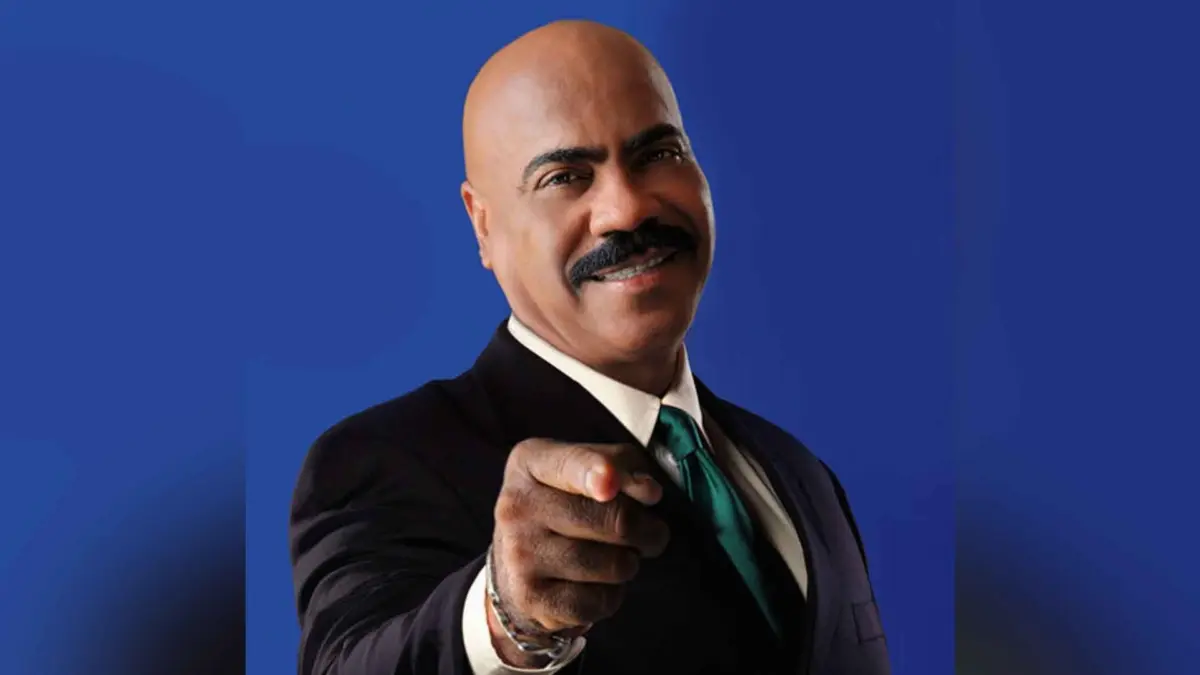
Main Facts: The Life, Legacy, and Sudden Departure of a Vallenato Pioneer
The final act of a life often serves as its most faithful summary. For Lenín Alfonso Bueno Suárez, the circumstances of his passing encapsulated the very essence of his character: passionate, enthusiastic, and profoundly connected to the vibrant cultural heartbeat of Colombia’s Caribbean coast.
In November 2019, inside his home in Barranquilla, Bueno Suárez suffered a fatal heart attack directly in front of his television set. He was not merely watching a broadcast; he was in the throes of celebration. His beloved Atlético Junior had just secured its qualification to the finals of the Torneo Finalización against Deportes Tolima. True to form, the man known professionally and affectionately as "Leabus"—a composite of his names—departed this world while experiencing the unbridled joy that defined his entire existence.
A renaissance man of the Colombian Caribbean, Bueno Suárez left an indelible mark as a radio broadcaster, sociologist, composer, and cultural archivist. Though his name might not carry the same household ubiquity as some of the performers who sang his lyrics, his fingerprints are permanently embedded in the golden age of vallenato music. He was the catalyst behind legendary artistic partnerships, a master of the radio waves, and a tunesmith whose compositions were immortalized by the giants of Colombian folk music.
As the cultural community reflects on a figure whose contributions helped shape the identity of modern tropical music, his life stands as a testament to the power of camaraderie, artistic vision, and regional pride.
Chronology: From the Shores of Riohacha to the Cultural Epicenter of Barranquilla
The Early Years and Roots in La Guajira
Lenín Alfonso Bueno Suárez was born on June 16, 1946, in Riohacha, the sun-baked capital of Colombia’s northernmost department, La Guajira. Growing up in the cradle of Caribbean folklore, he was immersed early on in the oral traditions, poetry, and accordion-driven rhythms that would eventually become his life’s work.
Before establishing his permanent professional base in Colombia, a young Bueno Suárez spent a period living in neighboring Venezuela. However, driven by a sense of civic duty and a desire to anchor himself closer to home, he returned to Colombia to complete his mandatory military service. This brief international sojourn imbued him with a broader regional perspective, which would later inform his sociological studies and his deep appreciation for Caribbean integration.
Arrival in "La Arenosa" and Radio Stardom
In 1968, Bueno Suárez made the definitive move to Barranquilla, affectionately known as La Arenosa (The Sandy City). It was here that his creative and professional trajectory exploded. Armed with a sharp intellect and an engaging voice, he transitioned smoothly into the burgeoning world of commercial radio.
He launched a specialized, highly successful program titled Festival Vallenato. Initially broadcast on Emisora Atlántico, the show later found a home on La Voz de Barranquilla. Through this platform, Bueno Suárez became an essential curator of the vallenato genre, championing traditional sounds while giving a vital megaphone to emerging talents. Radio was not merely a job for him; it was a pulpit from which he preached the gospel of Caribbean culture.
The Historic Night of June 1976
Perhaps one of the most significant, yet understated, contributions Bueno Suárez made to Colombian music history occurred within the walls of his own home during a casual gathering in June 1976.
At the time, the landscape of vallenato was shifting. A young singer named Rafael Orozco had recorded a couple of works alongside accordionist Emilio Oviedo, while accordionist Israel "El Pollo" Romero had been accompanying vocalist Daniel Celedón. During a night of music, drinks, and camaraderie at Bueno Suárez’s residence, Orozco and Romero were conceptualized as an artistic duo for the very first time.
Sensing the immense potential of pairing Orozco’s golden, romantic voice with Romero’s precise, elegant accordion stylings, Bueno Suárez engineered their formal partnership. He successfully negotiated a concert booking for Orozco in the municipality of Sabanalarga, stipulating as an absolute condition that his musical accompaniment must be Israel Romero.
That pivotal arrangement birthed Binomio de Oro, one of the most successful, influential, and enduring institutions in the history of tropical and vallenato music.
Musical Ventures and "Leabus"
While championing others, Bueno Suárez actively pursued his own musical artistry. In the early 1970s, he formed his own vallenato ensemble under his pseudonym, Leabus, recording several singles of his own composition for prestigious record labels such as Discos Fuentes and Tropical. Tracks like "La huelga" (The Strike), "Qué vaina" (What a Nuisance), and "Parece mentira" (It Seems Impossible) showcased his clever lyricism and observational humor.
Later, he expanded his stylistic reach by joining forces with the iconic tropical group Los Sabaneros. As both a singer and songwriter, he collaborated alongside former members of the legendary Corraleros de Majagual, including Nacho Paredes, Luis Pérez Cedrón, and César Castro, further solidifying his versatility across different Caribbean musical formats.
Supporting Data: The Songbook of Lenín Bueno Suárez
To fully comprehend the magnitude of Bueno Suárez’s creative output, one must examine the vast catalog of songs he penned under the moniker Leabus. His compositions were not mere filler tracks; they became massive radio hits, critical darlings, and deep cuts that defined the emotional landscape of generations of Colombians.
The Binomio de Oro Connection
Given his instrumental role in uniting Rafael Orozco and Israel Romero, it is fitting that Bueno Suárez contributed vital repertoire to the early years of Binomio de Oro. Among his most notable compositions for the group are:
- "El que espabila pierde": A lively, philosophical track that became a fan favorite. Its reach extended far beyond Colombia’s borders when it received a sophisticated, stylized orchestral adaptation by the renowned French orchestra led by Raymond Lefevre.
- "La parranda es pa’ amanecé": An absolute anthem of coastal celebration. This track achieved massive crossover success, notably recorded and popularized across Latin America by the celebrated Venezuelan tropical orchestra Los Melódicos.
Collaborations Across the Vallenato Pantheon
Bueno Suárez’s pen was in high demand across the entire spectrum of vallenato royalty. His sociological insight and poetic ear allowed him to write songs that ranged from lighthearted parrandas to deeply poignant social narratives:
- Los Hermanos Zuleta: Recorded his witty and festive track "Soy parrandero y qué" (I’m a Partier, So What?) and the introspective "Nostalgia estudiantil" (Student Nostalgia).
- Julio Rojas and Ricardo Maestre: Achieved considerable radio success with his evocative composition "Pena y dolor" (Grief and Pain).
- Los Betos: Brought their characteristic energy to his humorous and quirky composition "El loco de mamá" (Mama’s Crazy Boy).
- Romualdo Brito: Interpreted "El diario de mi vida" (The Diary of My Life), turning it into a staple of romantic vallenato radio programming.
- Jorge Oñate and Raúl "Chiche" Martínez: Collaborated on the powerful recording of "Siempre unidos" (Always United).
- Jairo Serrano: Recorded the emotive track "Más que amigos" (More Than Friends).
- Adanís Díaz: Enjoyed significant chart success with "Estrella fugaz" (Shooting Star).
The Masterpiece: "Drama Provinciano"
Perhaps the crowning jewel of his compositional legacy is "Drama provinciano", released in 1981 by the ensemble El Doble Poder. Structured almost like a miniature choral novel or a theatrical tragedy set to an accordion rhythm, the song explored the trials of rural life and heartbreak.
What makes "Drama Provinciano" a monumental piece of Colombian musical lore is its vocal lineup. The song featured the seasoned voices of Daniel Celedón and Mélida Yara, alongside a ten-year-old child prodigy named Jorge Celedón, who would grow up to become one of Colombia’s most celebrated international vallenato stars and a Latin Grammy winner. This early exposure provided by Bueno Suárez marked the initial stepping stone in a legendary career.
Official Responses and Testimonials: Remembering "El Hombre Alegre"
The measure of a man is frequently found in how he is remembered by those who shared his creative trenches. Decades after their initial meeting, contemporaries and friends vividly recall the warmth, generosity, and irrepressible spirit that Lenín Bueno Suárez brought to the artistic community of Barranquilla.
Fernando Meneses, a legendary composer whose classics were likewise immortalized by the Binomio de Oro, offered a touching reflection on his lifelong friendship with Bueno Suárez:
"Lenín was a supremely amable man, very sensitive, joyful, full of jokes, a wonderful partier, and above all, an excellent friend whom I met in 1976 when I arrived to work in Barranquilla."
Meneses recalled how effortlessly their bond formed, facilitated by geographic proximity. Upon arriving in the Caribbean capital, Meneses moved into the exact same apartment building where Bueno Suárez resided, living near another monumental figure of the era, accordionist Israel Romero. This residential hub became an informal salon where ideas were exchanged, songs were vetted, and the future of tropical music was forged over late-night conversations and impromptu acoustic sessions.
Colleagues in radio broadcasting similarly remembered Bueno Suárez as a tireless advocate for regional culture. In an era before the hyper-commercialization and digitization of music, broadcasters like Leabus acted as cultural gatekeepers and historians, ensuring that the folkloric roots of the Magdalena River valley and the Guajira Peninsula were preserved, respected, and broadcast to an eager public.
Implications: Preserving the Cultural Architect of the Caribbean
The passing of Lenín Alfonso Bueno Suárez in November 2019, followed by the institutional retrospectives honoring what would have been his 80th birthday on July 16, prompts a crucial discussion regarding the preservation of Colombia’s intangible cultural heritage.
The Unsung Heroes of Folklore
In the grand narrative of Latin American music, the spotlight almost invariably shines brightest on the performers—the charismatic lead singers and the dazzling accordion virtuosos who command the stage. Yet, the ecosystem of genres like vallenato relies entirely on a complex infrastructure of sociologists, broadcasters, lyricists, and cultural impresarios who work behind the scenes.
Bueno Suárez occupied a unique space at the intersection of these disciplines. As a sociologist, he understood the structural importance of music in binding communities together. As a broadcaster, he provided the distribution network necessary for regional sounds to achieve national prominence. As a composer, he provided the raw emotional material that allowed performers to achieve immortality. His legacy underscores the vital importance of recognizing these "architects of culture" who often operate outside the glare of the main stage.
Bridging Traditionalism and Modernity
Through projects like Festival Vallenato on the radio and his collaborative groups like Los Sabaneros, Bueno Suárez bridged the gap between the rustic, rural origins of traditional vallenato and the burgeoning urban commercial markets of cities like Barranquilla, Bogotá, and Medellín. He recognized that for folk music to survive, it had to evolve, adapt, and find a home in the modern urban landscape without losing its authentic soul.
A Lasting Cultural Blueprint
Today, as new generations of vallenato artists experiment with fusion, reggaeton beats, and international collaborations, the foundational blueprint laid by figures like Lenín Bueno Suárez remains profoundly relevant. His songs—whether exploring the humorous chaos of everyday life or the deep melancholy of lost love—continue to serve as a mirror for Caribbean identity.
When we look back at the life of Leabus—a man who dedicated his days to sociology, radio, and poetry, and who drew his final breath while cheering for his soccer team amidst the vibrant chaos of Barranquilla—we see more than just an individual biography. We see the very spirit of the Colombian Caribbean: resilient, deeply musical, eternally passionate, and fundamentally alive until the very end.

Leave a Reply