

Main Facts
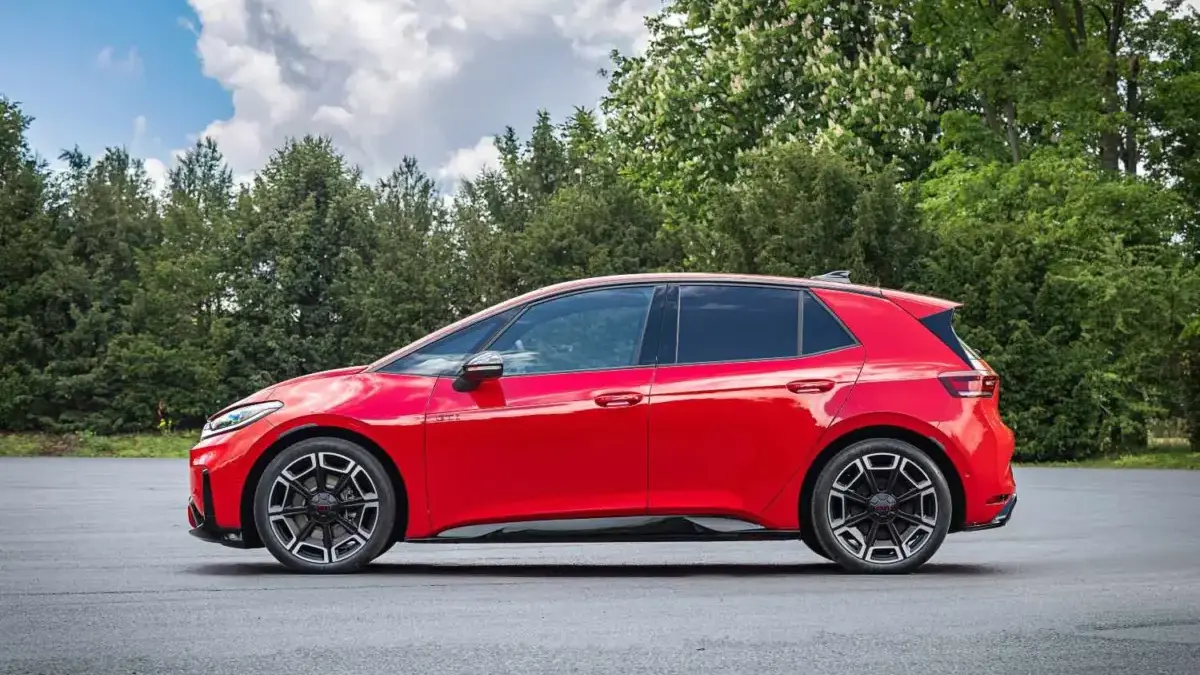
Volkswagen has officially lifted the curtain on one of its most anticipated and symbolically significant electric vehicles to date: the new Volkswagen ID.3 GTI. Unveiled at the exclusive "True Volkswagen" event in Hamburg, Germany, this zero-emission hot hatch serves as a centerpiece celebration for the 50th anniversary of the legendary GTI badge, which first revolutionized the automotive landscape with the original Golf GTI in 1976.
Departing entirely from the short-lived GTX nomenclature for this specific model line, the ID.3 GTI makes history by becoming the first-ever electric GTI to feature rear-wheel drive. Furthermore, it proudly claims the title of the most powerful series-production GTI in Volkswagen’s storied history.
Built upon the foundations of the heavily updated ID.3 Neo, the vehicle is propelled by a state-of-the-art permanent-magnet synchronous motor—internally designated as the APP550. This advanced drivetrain unleashes a formidable 240 kW (326 horsepower) and an instant 545 Nm of torque. Inherited directly from its mechanical predecessor, the ID.3 GTX Performance, this setup rockets the hatchback from 0 to 100 km/h in just 5.6 seconds, aided by a standard Launch Control system. To ensure safety and stability on everyday roads, top speed is electronically restricted to 200 km/h.
Energy is stored in a net 79 kWh battery pack, which yields an impressive WLTP-certified driving range of up to 601 kilometers. When it is time to recharge, the ID.3 GTI supports direct current (DC) fast charging at speeds up to 183 kW, allowing the vehicle to replenish its state-of-charge from 10% to 80% in approximately 29 minutes.
Chronology of an Electric Transformation
The journey toward the ID.3 GTI has been a calculated evolutionary step for Volkswagen, reflecting the brand’s broader pivot toward e-mobility without abandoning its high-performance DNA.
- 1976: Volkswagen introduces the original Golf GTI, inventing the accessible hot hatch segment and cementing a cultural phenomenon built around lightweight agility, red trim accents, and everyday usability.
- 2019–2020: Volkswagen launches the ID.3, the pioneer of its modular electric drive matrix (MEB) platform, introducing the world to the mass-market electric era. While praised for efficiency and interior packaging, enthusiasts openly yearn for a true enthusiast-focused derivative.
- 2023–2024: Volkswagen tests the waters of electric performance by introducing the GTX branding across various ID models, culminating in iterations like the ID.3 GTX Performance. However, purists argue that GTX lacks the emotional weight and distinct styling heritage of the historical GTI badge.
- Late 2025 – Early 2026: Volkswagen engineers and design teams finalize the transformation of the ID.3 Neo platform, deciding to retire the GTX label for compact sport hatchbacks and pivot entirely to reviving the GTI nomenclature for the EV era.
- September 2026: The Volkswagen ID.3 GTI makes its world debut at the "True Volkswagen" event in Hamburg, exactly on the cusp of the 50th anniversary milestone of the GTI lineage.
- Early 2027 (Projected): Official order books and pre-sales open globally.
- April 2027 (Projected): The first customer deliveries are scheduled to hit European dealerships, marking a new chapter in the history of affordable sports cars.
Supporting Data and Technical Specifications
To fully appreciate how the ID.3 GTI translates traditional hot-hatch dynamics into the electric age, a detailed look at its technical architecture is required.
| Technical Parameter | Specification |
|---|---|
| Drivetrain Layout | Rear-Wheel Drive (RWD) |
| Motor Type | APP550 Permanent-Magnet Synchronous Motor |
| Maximum Power | 240 kW (326 hp) |
| Peak Torque | 545 Nm |
| Acceleration (0–100 km/h) | 5.6 seconds (with standard Launch Control) |
| Top Speed | 200 km/h (electronically limited) |
| Battery Capacity (Net) | 79 kWh |
| WLTP Driving Range | Up to 601 kilometers |
| DC Fast Charging Peak | 183 kW |
| Charging Time (10% to 80%) | Approximately 29 minutes |
| Trunk Capacity | 385 liters |
Exterior Design: Heritage Meets Modern Aerodynamics
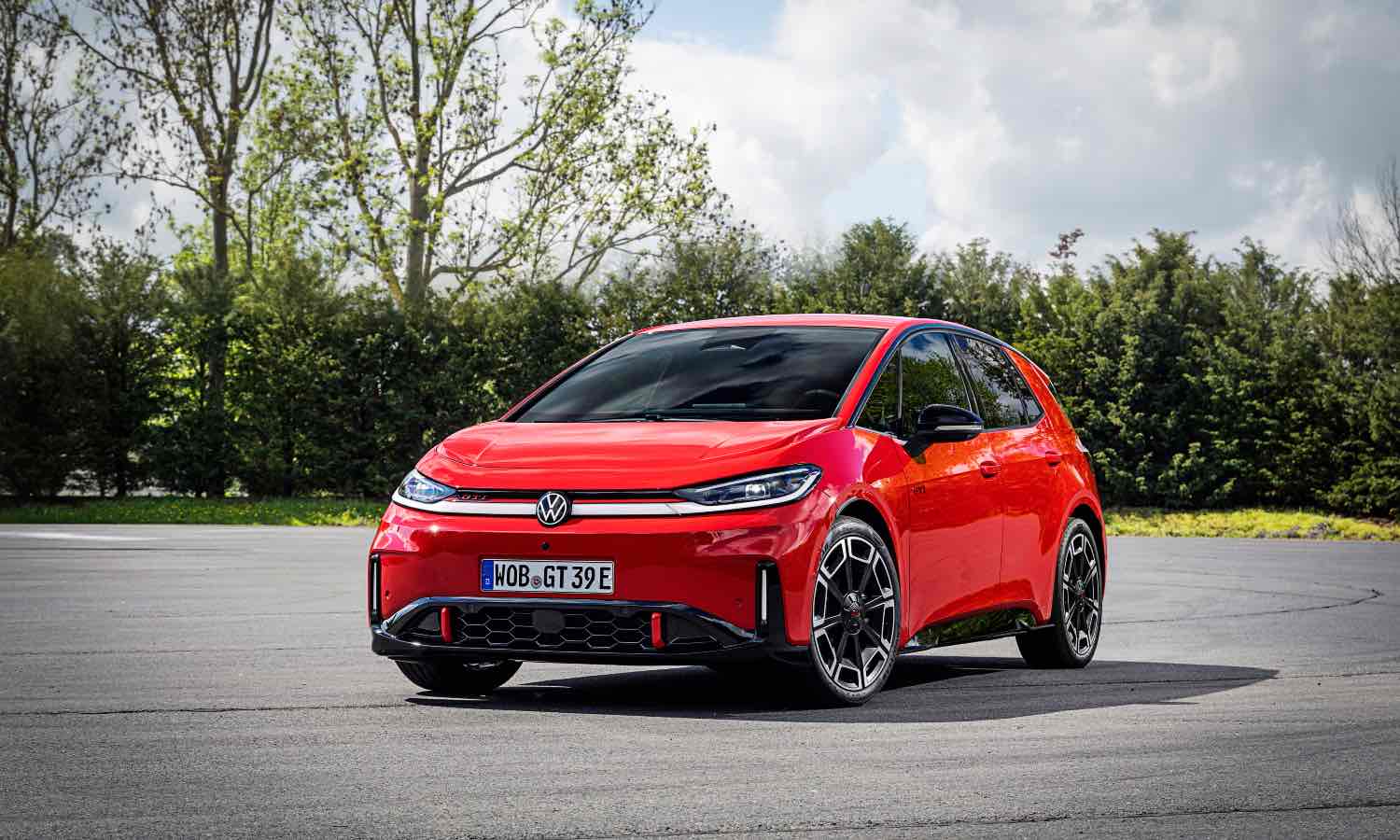
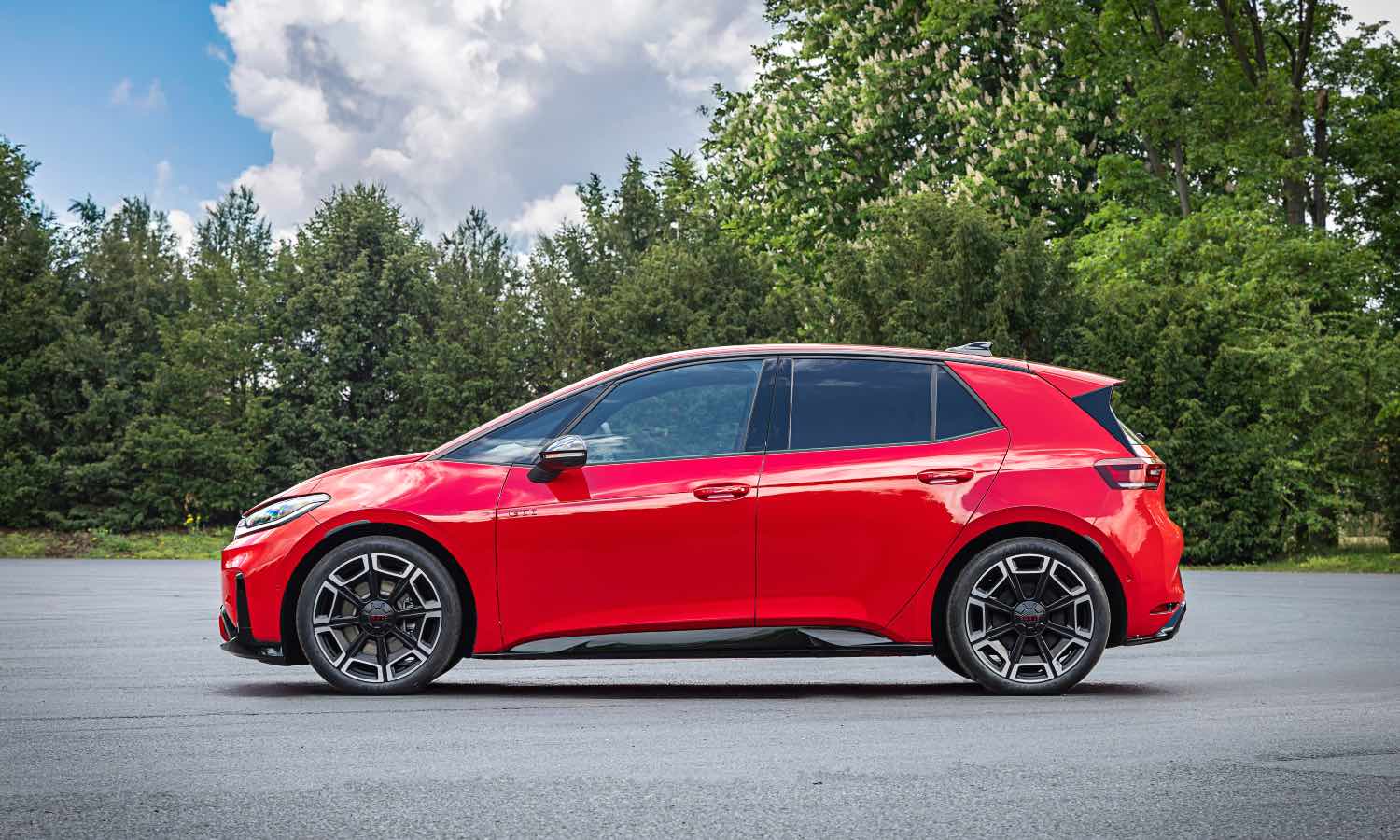
The exterior styling bridges half a century of design cues with modern aerodynamic demands. The front fascia is meticulously divided into three distinct horizontal levels. At the apex, IQ.LIGHT LED matrix headlamps are bridged by an illuminated light strip and Volkswagen emblem. Hovering just above is the iconic red grille stripe—a direct nod to the 1976 Golf GTI.
The aggressive front bumper houses a high-gloss black air intake featuring a honeycomb pattern, flanked by dual vertical LED elements and striking red openings that mimic competition tow hooks, all underlined by a functional front splitter.
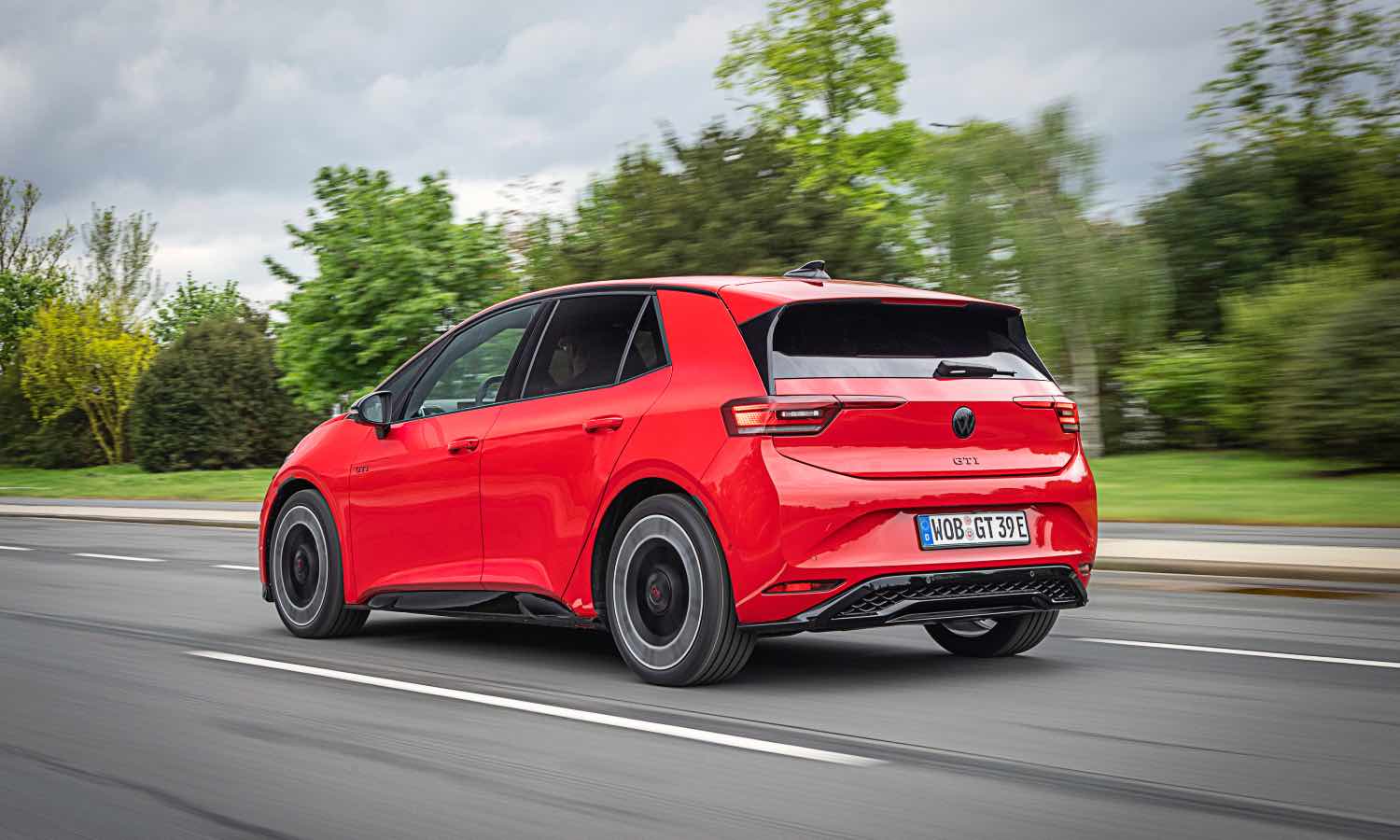
In profile, the vehicle rides on standard 20-inch “Wörthersee” double-spoke wheels with diamond-cut finishes. Gloss-black trim accents the side moldings and mirrors. Departing from the two-tone black roofs seen on earlier GTX models, the ID.3 GTI paints its roof, rear spoiler, and tailgate in the body color. This visual trick elongates the car’s silhouette, bringing its proportions closer to traditional internal combustion hatchbacks. Five exterior paint options will be offered: red, gray, silver, black, and white.
Interior Craftsmanship and Technology
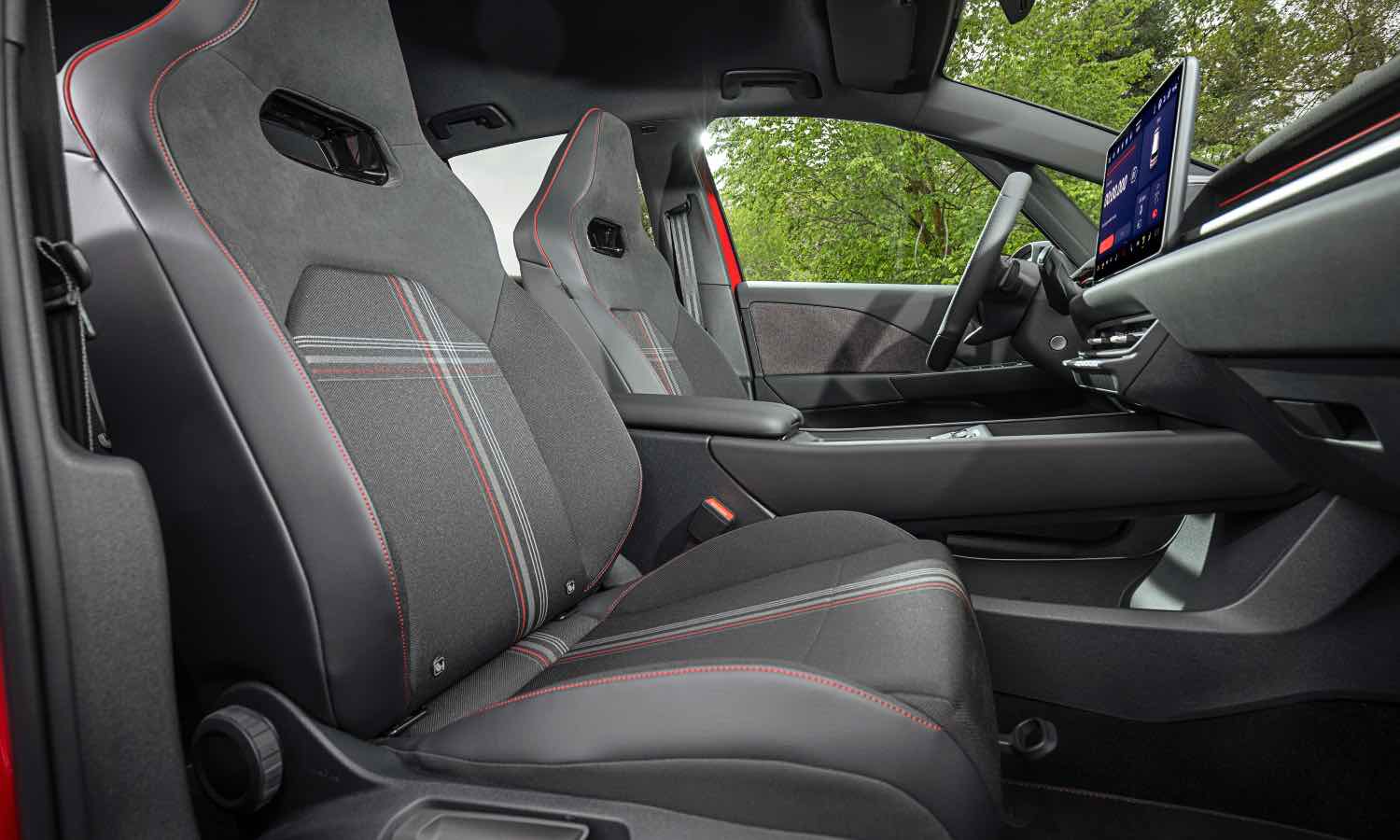
Inside, the cabin takes full advantage of the ID.3 Neo’s revised ergonomics, notably incorporating a greater number of physical buttons to appease critics of touch-only controls. A continuous horizontal red line accents the dashboard, while the flat-bottomed sports steering wheel features a centered red alignment mark at the 12 o’clock position.
Paying homage to the past, the standard sports seats feature a modern reinterpretation of the legendary "Superclark" plaid fabric, interwoven with ArtVelours Eco Soul microfibra and accented by embroidered GTI logos on the integrated headrests.
Technology-wise, the cockpit relies on a 10.25-inch Digital Cockpit paired with a central 13-inch Innovision infotainment screen. Beneath the central screen, physical toggle switches govern climate control, while the center console features a tactile rotary dial for volume and track selection. Practicality is preserved with a generous 385-liter trunk capacity.
Official Responses and Engineering Insights
Speaking at the unveiling in Hamburg, Volkswagen’s lead vehicle dynamics engineers emphasized that transitioning to electricity did not mean compromising driving engagement.
"The challenge was not merely to make an electric car fast in a straight line, but to capture the playful, communicative handling that has defined GTI models for five decades," noted a senior Volkswagen powertrain spokesperson during the press conference. "By pairing the potent APP550 rear motor with a meticulously tuned chassis and our new dedicated GTI driving profile, we have created a hot hatch that feels alive, agile, and unmistakably connected to the driver."
Engineers highlighted the integration of the GTI Mode, activated via an illuminated satellite button at the base of the steering wheel. When engaged, this profile synergizes the vehicle’s adaptive chassis control (DCC), progressive steering calibration, and power delivery map.
To address the emotional void often left by silent electric motors, Volkswagen has incorporated a digitally synthesized acoustic generator. This system projects a dynamic soundtrack mimicking a high-revving internal combustion engine directly correlated with throttle inputs, specifically tailored for drivers nostalgic for the visceral roar of traditional mechanical powertrains.
Implications for the Market and Industry
The launch of the Volkswagen ID.3 GTI carries profound implications for the European automotive market and the broader hot hatch segment.
1. The Realignment of Performance Sub-Brands
By phasing out the GTX label on compact models in favor of the sacred GTI badge, Volkswagen is acknowledging the immense marketing power of heritage. While GTX will likely remain reserved for larger all-wheel-drive crossovers and SUVs within the ID family, GTI is being firmly repositioned as the emotional torchbearer for driver-focused electric hatchbacks.
2. Redefining the Electric Hot Hatch Niche
Until now, mainstream electric performance has largely been defined by heavy, dual-motor all-wheel-drive configurations focused primarily on straight-line acceleration figures. By choosing a rear-wheel-drive layout with a single, highly efficient yet powerful motor, the ID.3 GTI prioritizes chassis balance, lower weight, and driver feedback. This approach could sway skeptical driving enthusiasts who view heavy EVs as devoid of agility.
3. Pricing and Market Positioning
While Volkswagen has yet to announce the official pricing structure, industry analysts estimate the ID.3 GTI will debut around the 50,000-euro mark, placing it at a slight premium over the outgoing GTX Performance. Pre-sales are slated to begin in early 2027, with physical units arriving in showrooms by April of that year.
Ultimately, the success of the ID.3 GTI will hinge on whether traditional driving enthusiasts are willing to embrace a battery-powered future, and whether Volkswagen can successfully merge zero-emission practicality with the raw, emotional soul that built the GTI legend over the last fifty years.

Leave a Reply