

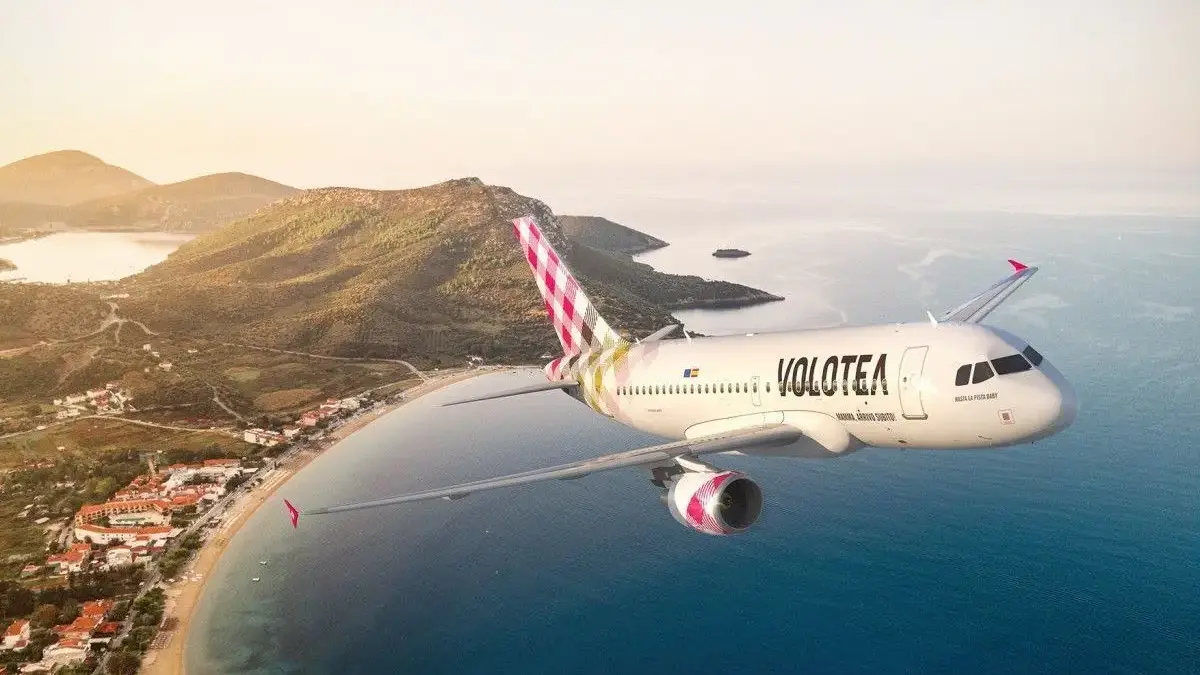
BARCELONA — In a decisive move to secure its long-term viability, European low-cost carrier Volotea has officially activated a pre-insolvency process under Spanish bankruptcy legislation. Filed at the Commercial Court No. 9 of Barcelona, the legal maneuver is designed to grant the airline a mandatory breathing period—typically lasting up to four months—to shield ongoing negotiations with financial institutions, key creditors, and state entities.
The aviation sector has watched closely as the carrier, heavily pressured by a combination of spiraling operational costs and pandemic-era debt obligations, seeks to comprehensively overhaul its financial architecture. Despite the pre-insolvency filing, Volotea’s management has maintained that all flight operations, ticket sales, and route schedules are running with absolute normality.
Main Facts
The core of Volotea’s current crisis stems from a compounding mix of macro-level economic headwinds and internal balance sheet strains. The airline currently shoulders a total debt burden hovering around 356 million euros.
The single largest creditor is the Spanish State-owned Industrial Participation Agency (SEPI), which extended a critical 200-million-euro participatory loan to the carrier in 2022 to help it navigate the post-pandemic recovery phase. Other major financial stakeholders include private equity and industry partners such as Aegean Airlines, PAR Capital, and Alaeo—the investment vehicle controlled by the carrier’s management team and spearheaded by founder and CEO Carlos Muñoz.
To weather the storm, Volotea’s executive team has mapped out a multi-pronged recovery strategy that combines legal protection, financial engineering, and severe operational downsizing:
- The Pre-Insolvency Shield: By filing the preconcurso de acreedores, Volotea legally halts potential enforcement actions by creditors, giving leadership the necessary leverage to restructure its debt maturities and negotiate write-downs or extensions.
- Capital Injection: The airline is preparing a substantial capital increase aimed at drawing fresh liquidity from both existing shareholders and prospective new investors.
- Fleet Rationalization: Volotea plans to aggressively downsize its operating capacity. Its current fleet of 44 aircraft—primarily Airbus A320s—is slated to be reduced to a leaner footprint of 30 to 35 planes.
- Labor Adjustments: The capacity cuts will have an immediate human cost, triggering a targeted restructuring that involves the elimination of approximately 50 jobs within specific administrative and operational departments at the company’s Barcelona headquarters.
Chronology of the Crisis
To understand how Volotea arrived at this critical juncture, it is essential to trace the timeline of events that transformed a manageable post-pandemic recovery into an existential liquidity test.
2020–2021: The Pandemic Shockwave
Like all carriers globally, Volotea faced an unprecedented grounding of its fleet as international travel ground to a halt. While the airline successfully pivoted its model to capture domestic and intra-European regional leisure traffic faster than many legacy carriers, the prolonged nature of travel restrictions severely depleted its cash reserves.
2022: State Intervention and the SEPI Loan
In an effort to safeguard regional connectivity and strategic transport infrastructure, the Spanish government stepped in through SEPI. Volotea secured a vital 200-million-euro injection via a participatory loan. This lifeline allowed the carrier to scale back up as travel restrictions lifted, but it also cemented a massive debt obligation onto a balance sheet already strained by pandemic-era losses.
2023–Early 2024: The Geopolitical Energy Shock
Even as passenger numbers rebounded strongly, external macroeconomic factors began to squeeze operating margins. Following ongoing geopolitical conflicts in Eastern Europe and the Middle East, jet fuel prices experienced extreme volatility. Volotea reports that since March alone, the cumulative impact of soaring fuel costs and energy market instability has cost the company approximately 150 million euros. What leadership initially budgeted for as a temporary, cyclical shock crystallized into a structural burden that severely eroded profitability.
Late 2024: The Pre-Insolvency Activation
Facing tightening liquidity thresholds and impending debt deadlines, Volotea’s board concluded that standard bilateral refinancing talks were insufficient. In a bid to force a comprehensive, binding agreement across all financial stakeholders, the company officially filed for pre-insolvency protection in Barcelona, setting a hard internal deadline to wrap up negotiations by December.
Supporting Data and Financial Metrics
A closer examination of Volotea’s financial and operational metrics highlights the delicate balancing act required to secure the airline’s survival:
- Debt Exposure: ~€356 million total liabilities.
- Largest Creditor: SEPI, holding the €200 million 2022 participatory loan.
- Fuel Cost Impact: ~€150 million in cumulative negative pressure since March due to energy market volatility.
- Fleet Reduction Target: A drop from 44 aircraft down to 30–35 units (a reduction of roughly 20–25% in active capacity).
- Workforce Impact: ~50 administrative and operational layoffs concentrated at the Barcelona corporate offices.
- Key Shareholders: Aegean Airlines, PAR Capital, and Alaeo (management investment vehicle led by CEO Carlos Muñoz).
- Target Resolution Window: December of the current fiscal year.
Official Responses and Stakeholder Positions
As news of the pre-insolvency filing broke across financial and aviation circles, spokespersons for Volotea moved quickly to manage market perceptions and reassure passengers, employees, and suppliers.
Management and Leadership
In internal communications and statements to the press, Volotea’s leadership has emphasized that the pre-insolvency step is entirely preventive. CEO Carlos Muñoz and his executive team have framed the legal protection not as a step toward liquidation, but as a strategic "clean-slate" mechanism. By using the Spanish legal framework to pause creditor pressure, management aims to negotiate a sustainable repayment timeline while concurrently closing the aforementioned capital increase.
"Our operations remain completely unaffected," reiterated a company spokesperson. "The goal is to align our financial structure with the new reality of structural energy costs, ensuring that Volotea can continue to connect underserved European regional markets efficiently for years to come."
Creditors and Institutional Stakeholders
SEPI, as the dominant public sector creditor, has remained circumspect, though state-backed restructuring frameworks in Spain typically prioritize long-term corporate viability and the preservation of strategic employment over immediate default declarations. Private financial institutions and lending syndicates have reportedly entered constructive dialogues with Volotea’s restructuring advisors, recognizing that a chaotic insolvency would yield lower recovery rates than a successfully negotiated debt-to-equity swap or maturity extension.
Market Implications and Future Outlook
Volotea’s predicament serves as a bellwether for the broader European low-cost aviation sector. While post-pandemic travel demand has generally remained robust, carriers relying on regional point-to-point models face unique vulnerabilities compared to mega-airlines with diversified long-haul portfolios.
1. The Burden of Structural High Costs
Volotea’s plight illustrates that the era of ultra-cheap jet fuel is definitively over. Airlines that cannot easily pass rising energy and carbon-tax expenses onto price-sensitive leisure travelers are seeing their profit margins squeezed to the breaking point. The structural nature of these costs means that operational efficiency and disciplined capacity management are no longer optional—they are matters of survival.
2. Impact on the European Regional Aviation Market
If Volotea successfully slashes its fleet from 44 to 30–35 aircraft, it will inevitably pull back from certain unprofitable or marginal routes. This contraction could reduce competition in secondary European airports, potentially leading to higher fares for consumers on those specific regional corridors. However, it will also allow Volotea to concentrate its reduced assets on its highest-yielding, core bases, thereby stabilizing its unit economics.
3. The December Deadline: A High-Stakes Timeline
With the pre-insolvency clock ticking down toward its December target, all eyes are on Barcelona. The success of the restructuring hinges entirely on whether current and prospective investors are willing to inject fresh equity alongside debt relief from banks and SEPI. If management can successfully syndicate the capital increase and negotiate a haircut or maturity push-back on the 356 million euro debt stack, Volotea could emerge as a leaner, financially hardened carrier. Failure to reach a consensus, however, could push the airline deeper into formal insolvency proceedings, reshaping the map of European low-cost aviation.