

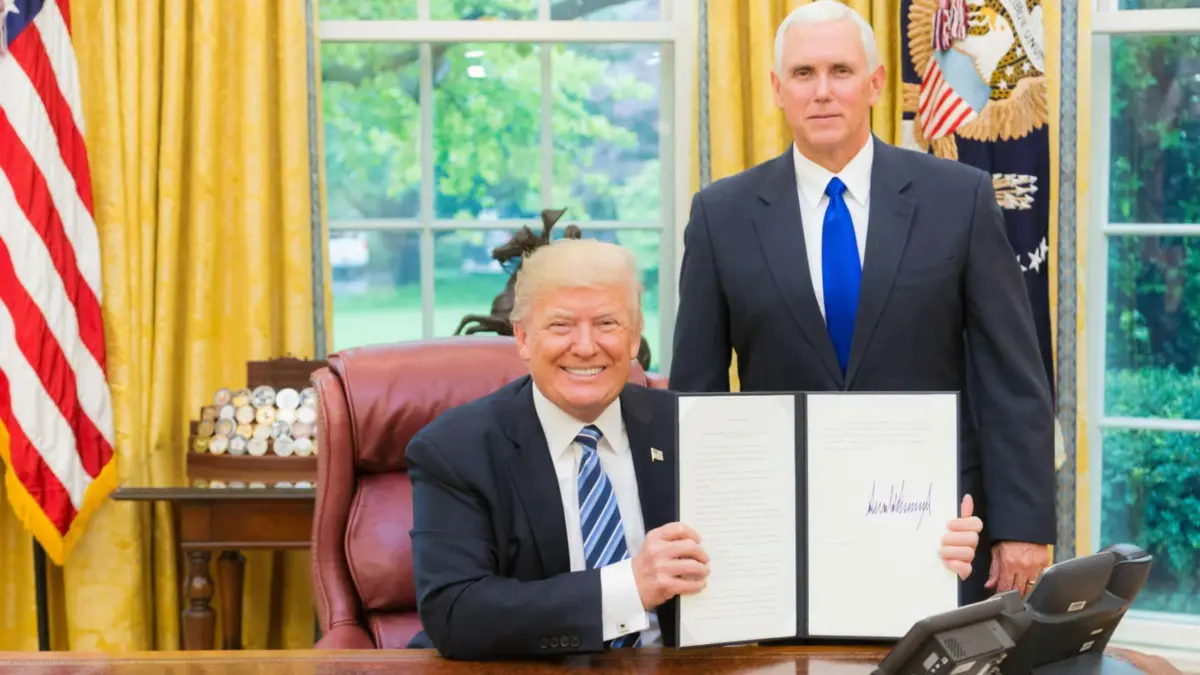
WASHINGTON, D.C. — Marking a significant diplomatic milestone in Eurasian geopolitics, the United States Department of State has officially commemorated the first anniversary of the historic Joint Declaration signed by Armenia and Azerbaijan. The landmark agreement, forged under the direct mediation of U.S. President Donald Trump at the White House, successfully brought an end to decades of bloody territorial disputes between the two nations, setting a new precedent for conflict resolution through economic integration and infrastructural diplomacy.
In an official statement released this weekend, U.S. Secretary of State Marco Rubio praised the successful diplomatic intervention, underscoring the Trump administration’s broader foreign policy doctrine centered on proactive international mediation. The anniversary serves not only as a celebration of localized peace in the South Caucasus, but also as a showcase for Washington’s ambitious blueprint for regional development, known as the Trump Route for International Peace and Prosperity (TRIPP).
1. Main Facts
The core of the diplomatic breakthrough centers on resolving decades of hostilities that plagued the South Caucasus, evolving from the late-20th-century wars over Nagorno-Karabakh into a protracted stalemate over transit rights and territorial sovereignty concerning the exclave of Nakhchivan.
Under the mediation of President Trump, Azerbaijani President Ilham Aliyev and Armenian Prime Minister Nikol Pashinyan met in Washington, D.C., exactly one year ago to sign a comprehensive Joint Declaration. This document effectively dismantled decades of military blockades and diplomatic standoffs by replacing geopolitical friction with shared economic infrastructure.
The cornerstone of this post-conflict stabilization is the TRIPP (Trump Route for International Peace and Prosperity) initiative. Designed as a multimodal transit corridor, the project aims to modernize railway networks, highways, energy pipelines, and digital fiber-optic lines across the region. Crucially, the initiative bypasses previous sovereignty deadlocks by establishing a neutral transit corridor under Armenian sovereign territory, managed by a private international consortium backed by U.S. financial institutions.
Key highlights of the agreement’s first-year implementation include:
- The Transcaspian Enterprise Fund: Fully operational with an initial U.S. investment of $201 million.
- Infrastructure Progress: Advanced engineering studies for the Armenia-Azerbaijan railway are underway, and construction on a critical regional highway is nearing completion.
- Diplomatic Consolidation: Continuous engagement from Washington to ensure compliance and deep bilateral economic integration.
2. Chronology of a Breakthrough
To understand the magnitude of the current peace, it is necessary to examine the trajectory of the conflict and the rapid acceleration of diplomacy under the current U.S. administration:
- Late 20th Century to 2020: The dissolution of the Soviet Union triggers intense armed conflict between Armenia and Azerbaijan, primarily over the disputed region of Nagorno-Karabakh. Successive wars, localized skirmishes, and deep-seated ethnic animosities result in thousands of casualties and the total militarization of borders.
- Post-2020 Stalemates: Following the 2020 Nagorno-Karabakh war, geopolitical tensions shift toward transport links. Azerbaijan demands an unhindered land corridor (the Zangezur Corridor) connecting mainland Azerbaijan to the exclave of Nakhchivan through Armenian territory in the Syunik province. Armenia fiercely resists, arguing that an extraterritorial corridor would gravely violate its national sovereignty.
- Early 2025: Entering his second term, President Trump’s foreign policy team aggressively pivots toward active intervention in frozen conflicts globally, branding the administration’s approach as "peace through strength and economic prosperity."
- One Year Ago (Early 2025): President Trump hosts President Aliyev and Prime Minister Pashinyan at the White House. Intense, high-level diplomatic pressure and the promise of substantial U.S. infrastructure investment culminate in the signing of the historic Joint Declaration.
- The Past 12 Months (2025–2026): The U.S. State Department, alongside private and public stakeholders, rolls out the TRIPP framework. Engineering teams begin surveying the railway and highway routes, while the Transcaspian Enterprise Fund injects vital capital into regional commercial ventures.
- Present Day: Both nations observe the one-year anniversary of the treaty, transitioning from fragile ceasefire signatories to active partners in regional trade and infrastructure development.
3. Supporting Data and Economic Framework
The sustainability of the Armenia-Azerbaijan peace accord relies heavily on financial incentives and institutional backing rather than mere political goodwill. The U.S. government has structured the peace process to make cooperation significantly more lucrative than conflict.
- Initial Capital Injection: The U.S. launched the Transcaspian Enterprise Fund with an initial capital allocation of $201 million, designed to stimulate cross-border commerce, private enterprise, and joint ventures between Armenian and Azerbaijani entities.
- Multimodal Transit Metrics: The TRIPP corridor integrates four distinct infrastructure pillars:
- Railways: Modernization of tracks to seamlessly connect the Caspian Sea basin with the Black Sea and European markets.
- Highways: High-speed vehicular arteries bypassing historic transit blockades.
- Energy Pipelines: Secure corridors for oil, natural gas, and green energy transmission.
- Digital Connectivity: High-capacity fiber-optic cables bridging digital divides in the Caucasus.
- Global Trade Integration: By serving as a vital link in the wider Trans-Caspian International Transport Route (the "Middle Corridor"), the TRIPP bypasses traditional northern routes through Russia, offering an economically viable, secure alternative for East-West commerce.
4. Official Responses and Global Reactions
The anniversary has elicited strong reactions from both domestic political figures in the United States and international observers, highlighting the polarizing yet impactful nature of Washington’s foreign policy under President Trump.
The Washington Perspective
Secretary of State Marco Rubio heavily emphasized the personal diplomatic triumph of President Trump during the anniversary briefings.
"Today marks one year since President Trump sealed peace between Armenia and Azerbaijan by welcoming President Aliyev of Azerbaijan and Prime Minister Pashinyan of Armenia to the White House to sign a historic Joint Declaration," Rubio stated.
Highlighting the tangible progress of the past twelve months, Rubio added:
"In the past 12 months, the U.S. collaborated closely with Armenia and Azerbaijan to turn that promise into progress. The TRIPP, a multimodal transit corridor that will modernize rail, road, energy, and digital infrastructures, is well on its way to becoming reality."
President Trump himself has frequently underscored his administration’s record as a global peacemaker, asserting involvement in resolving numerous active conflicts worldwide upon taking office. His administration’s assertiveness in international diplomacy has positioned the White House as a central hub for conflict resolution, though it has occasionally drawn scrutiny from traditional multilateral institutions.
Regional Reactions
Leadership in both Yerevan and Baku have publicly acknowledged the indispensable role played by the United States in breaking the decades-long diplomatic deadlock. While domestic nationalist factions in both countries occasionally express caution regarding foreign corporate influence over strategic transit routes, the overwhelming sentiment among business communities and the general populace is relief and optimism regarding the economic dividends of peace.
5. Implications for Regional and Global Geopolitics
The successful implementation of the Armenia-Azerbaijan peace agreement and the TRIPP initiative carries profound implications that extend far beyond the borders of the South Caucasus:
- Redefining Regional Connectivity: For decades, the closure of borders between Armenia and Turkey/Azerbaijan stifled economic growth in the region. The opening of transit corridors normalizes trade patterns, effectively integrating the South Caucasus into broader Eurasian supply chains.
- The Decline of Exclusive Regional Hegemonies: By inserting robust American and Western economic backing into a zone historically dominated by Russian and Iranian influence, the TRIPP framework recalibrates the geopolitical balance of power in Eurasia. Iran, in particular, has watched the developments closely, as the secure transit arrangements through southern Armenia alter regional trade dependencies.
- A New Paradigm for Peacebuilding: The transition from militarized borders to privately managed, neutral infrastructure consortia offers a potential case study for resolving other protracted territorial disputes globally. It demonstrates that economic interdependence can successfully safeguard sovereignty while satisfying the security and commercial demands of historically warring states.
As the Armenia-Azerbaijan accord enters its second year, the focus will inevitably shift from diplomatic parchment to poured concrete and operational railways. If the TRIPP initiative continues on its current trajectory, the South Caucasus may permanently shed its legacy as a geopolitical flashpoint, transforming instead into one of Eurasia’s most dynamic commercial bridges.



Leave a Reply