

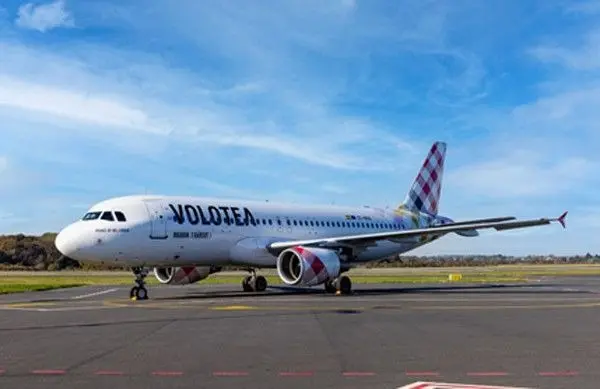
MADRID — In a decisive move to fortify its financial foundation against a backdrop of enduring macroeconomic headwinds and escalating operational costs, European carrier Volotea is currently engaged in complex, high-stakes negotiations with the state-backed holding company SEPI (Sociedad Estatal de Participaciones Industriales) and other key creditors. The airline is actively pursuing a comprehensive restructuring of its long-term debt, running in parallel with a strategic capital increase.
Compounding these financial maneuvers, the Barcelona-headquartered carrier has announced plans to right-size its operations. This operational contraction involves trimming its aircraft fleet down from 44 to between 30 and 35 units—predominantly Airbus A320 models—and executing a targeted workforce reduction affecting approximately 50 administrative and support positions at its corporate headquarters.
Despite these internal adjustments, executive leadership has maintained a steady public stance, assuring passengers, travel trade partners, and airports that standard operations, ticket sales, and future network scheduling remain entirely uninterrupted. Volotea anticipates finalizing its debt restructuring framework by December.
1. Main Facts: Financial Overhaul, Fleet Shrinkage, and Workforce Adjustments
The core of Volotea’s current restructuring strategy rests on a triad of defensive and proactive measures designed to shield the company from external market shocks:
- Debt Restructuring Negotiations: Volotea is in active talks with SEPI and various private creditors to renegotiate the terms of its long-term liabilities. At the center of these discussions is the 200-million-euro state-backed rescue loan authorized by the Spanish government in June 2022. This financing was originally channeled through the Solvency Support Fund for Strategic Companies, managed by SEPI, and was structured as a participatory loan slated to mature in 2029.
- Capital Increase: To inject fresh liquidity and strengthen its balance sheet, the airline is orchestrating a capital expansion. Alaeo, the investment vehicle representing Volotea’s executive management team and spearheaded by founder and CEO Carlos Muñoz, has already committed to participating in the round. Meanwhile, Aegean Airlines—which holds a strategic 21% stake in Volotea—has yet to formally disclose its intentions regarding participation in the new capital call.
- Fleet Rationalization: Operationally, Volotea is downsizing its footprint. The carrier will scale back its fleet from 44 aircraft to a leaner operational capacity of 30 to 35 planes, focusing primarily on the highly efficient Airbus A320 family.
- Corporate Workforce Optimization: The structural adjustments will impact personnel. Approximately 50 employees working within specific departments at the company’s Barcelona offices face redundancy or role reallocations.
- Operational Continuity: Emphasizing business-as-usual, Volotea leadership reiterates that ticket sales, flight execution, and the rollout of future seasonal timetables are proceeding precisely as planned, with zero disruption to the traveling public.
2. Chronology of Events: From Pandemic Rescue to Current Crisis
To understand Volotea’s current strategic pivot, it is necessary to examine the timeline of financial and operational milestones that have shaped the airline over the past half-decade:
- 2011 (Inception): Volotea is founded by aviation veterans Carlos Muñoz and Lázaro Ros—both renowned for previously establishing low-cost pioneer Vueling. The airline carves out a unique market niche by focusing on point-to-point connectivity between small and medium-sized European cities, bypassing congested mega-hubs.
- June 2022 (State Aid Approval): In the wake of the devastating global travel restrictions caused by the COVID-19 pandemic, the Spanish government authorizes a vital financial lifeline. Volotea is granted a 200-million-euro rescue package under the auspices of SEPI’s Strategic Solvency Support Fund, structured as a participatory loan due in 2029.
- 2023–2025 (Operational Recovery and Growth): Following the post-pandemic travel rebound, Volotea demonstrates robust top-line operational recovery. According to company disclosures, its operating results climb steadily:
- 2023: 96 million euros
- 2024: 146 million euros
- 2025: 164 million euros
- March – September 2026 (The Turning Point): A prolonged period of geopolitical instability across Eastern Europe and the Middle East, combined with severe volatility in global energy markets, exerts immense pressure on European carriers. Fuel cost spikes severely erode profit margins across the industry.
- September 2026 (Restructuring Announcement): Confronting an estimated 150-million-euro financial impact driven purely by escalating fuel expenditures, Volotea formally initiates talks with SEPI to restructure its long-term debt, announces its upcoming capital increase, and outlines plans for fleet and workforce reductions, targeting a finalized agreement by December 2026.
3. Supporting Data: The Financial and Operational Metrics
An analytical breakdown of Volotea’s metrics reveals a paradox of strong underlying commercial demand juxtaposed against punishing macro-level cost pressures:
The Fuel Price Burden
Volotea’s management points directly to the commodity markets as the primary catalyst for the current restructuring. The sustained escalation of jet fuel prices over recent quarters has dealt a heavy blow to the carrier’s cost structure, resulting in an estimated 150-million-euro negative financial impact. In a low-cost operating environment defined by razor-thin margins and intense intra-European competition, absorbing a cost shock of this magnitude without structural adjustments proves unsustainable.
Profitability Trajectory vs. Cost Pressures
The necessity for restructuring is particularly striking given the company’s recent operational performance. Volotea successfully grew its operating income from €96 million in 2023 to €146 million in 2024, culminating in a healthy €164 million in 2025. These figures demonstrate that the airline’s core business model—connecting secondary European cities—remains structurally sound and highly attractive to consumers. However, exogenous shocks in the energy markets have outpaced even this positive operational earnings trajectory.
Network and Fleet Projections for 2026
Despite scaling back its active aircraft count from 44 down to a projected 30–35 units, Volotea’s network ambitions for the immediate future remain surprisingly expansive. The airline’s operational roadmap for 2026 outlines ambitious growth targets:
- Total Airports Served: Operating across 110 European airports.
- Operational Bases: Maintaining strategic bases in 22 European cities.
- Route Network: Offering more than 450 routes.
- Seat Capacity: Releasing over 13 million seats to the market—representing a 4% year-on-year increase compared to 2025.
- Flight Volume: Executing more than 75,000 commercial flights throughout the year.
- Total Workforce: Sustaining a total workforce of over 2,250 employees across its European network, ensuring that the 50-person administrative adjustment in Barcelona represents a minor fraction of its total human capital.
4. Official Responses and Leadership Perspectives
Navigating public perception during a complex financial restructuring requires careful communication. Volotea’s executive leadership has moved swiftly to provide clarity and reassurance to stakeholders.
CEO Carlos Muñoz on Market Realities and Continuity
Carlos Muñoz, founder and Chief Executive Officer of Volotea, addressed the media and market analysts by framing the restructuring as a prudent, forward-looking adjustment to an increasingly volatile industry landscape.
"The current context of the aviation industry demands that we remain agile, disciplined, and proactive," Muñoz stated. "While external macroeconomic factors—particularly energy market volatility and geopolitical uncertainty—have created undeniable headwinds, our core business model is exceptionally resilient."
Muñoz strongly emphasized that the restructuring measures should not be interpreted as a sign of operational distress or contraction in customer service.
"Volotea continues to operate with absolute normality," he affirmed. "We are maintaining our schedule for new route openings, ticket sales are performing robustly, and our planning for upcoming flight seasons is proceeding uninterrupted. Our primary goal with these financial and fleet measures is to secure a rock-solid foundation that guarantees our long-term continuity and preserves the vital regional connectivity our passengers rely upon."
Stakeholder and Creditor Posture
While SEPI has not issued an independent detailed statement regarding the ongoing private negotiations, state-backed entities handling pandemic-era solvency loans typically engage constructively with strategic companies demonstrating viable core commercial demand. The willingness of Alaeo—the management investment vehicle—to commit fresh capital to the upcoming capital increase sends a powerful signal of internal confidence to external creditors like SEPI and private banks, significantly raising the likelihood of a successful debt rescheduling agreement by the target deadline of December.
5. Strategic Implications: What Lies Ahead for Volotea and European Aviation
The structural maneuvers underway at Volotea carry significant implications not only for the airline itself but also for the broader European low-cost aviation sector.
A Masterclass in Fleet Agility
By reducing its fleet size from 44 to a targeted 30–35 Airbus A320 aircraft, Volotea is temporarily contracting its capacity to optimize load factors, reduce maintenance overheads, and eliminate underperforming routes. This leaner posture allows the airline to concentrate its assets on high-yield, proven markets. Crucially, because the remaining fleet will consist overwhelmingly of standardized Airbus A320 aircraft, the airline preserves high operational efficiency, simplifying crew training, maintenance protocols, and spare parts management.
The Regional Connectivity Imperative
Volotea occupies a vital space in the European transport ecosystem. By focusing heavily on point-to-point connections between secondary and tertiary cities—routes frequently neglected by legacy carriers and major low-cost giants alike—Volotea acts as an indispensable economic engine for regional tourism and commerce. The fact that the airline still projects offering 13 million seats across 450 routes in 2026 indicates that its strategic raison d’être remains entirely intact.
Broader Industry Read-Throughs
Volotea’s situation mirrors wider pressures across the European airline industry. Surging jet fuel prices, persistent supply chain bottlenecks in aircraft manufacturing, and complex geopolitical flashpoints are forcing mid-sized carriers to pivot away from aggressive, capital-intensive expansion toward margin protection, balance sheet fortification, and operational discipline.
As Volotea works toward finalizing its debt restructuring agreement with SEPI and its creditors by December, the ultimate success of these measures will depend on stability returning to energy markets and the successful injection of new equity via its capital increase. If executed smoothly, Volotea will emerge from this transitional period leaner, more resilient, and well-positioned to sustain its unique brand of regional European aviation for the remainder of the decade.




Leave a Reply