

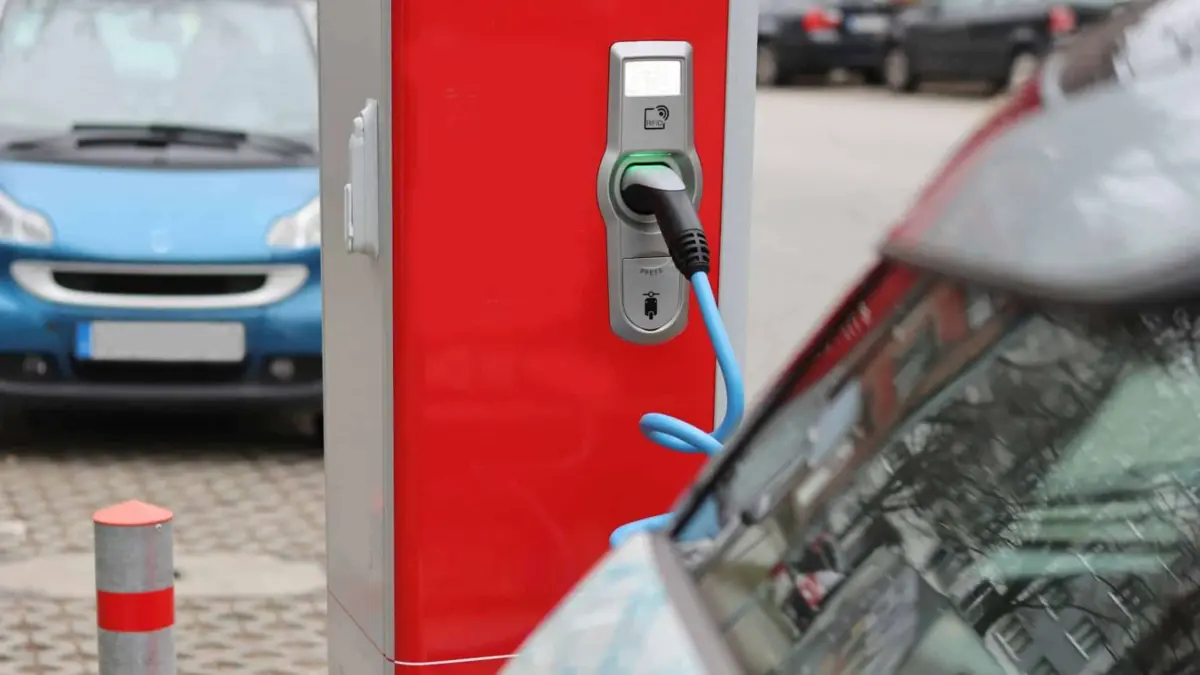
Main Facts: The Acceleration of Sustainable Mobility
The global automotive and energy landscapes are undergoing a profound, once-in-a-generation structural transformation. Driven by an urgent mandate to combat climate change, achieve energy independence, and modernize aging industrial systems, the world is hurtling toward a future defined by clean mobility and widespread electrification.
Recent data compiled by the World Resources Institute (WRI) reveals an extraordinary milestone in this transition: global sales of electric vehicles (EVs) skyrocketed by an astounding 600% compared to baseline figures from the turn of the decade. By the close of last year, the cumulative total of battery-powered automobiles traversing the world’s roads officially surpassed the 20-million-unit threshold. Today, electric vehicles account for more than 25% of all new car registrations globally, signaling that the era of the internal combustion engine is entering its twilight.
However, this transition is not merely confined to personal automobiles. The broader electrification movement encompasses a systemic shift in how humanity powers its homes, businesses, and factories. Yet, the road transportation sector stands out as the vanguard of this technological evolution, outpacing heavy industry and the construction sector in both adoption rates and technological maturity.
This dramatic pivot is fundamentally altering geopolitical alliances, supply chains, and environmental policies. As nations race to meet net-zero carbon targets, the convergence of high-efficiency electric motors, falling battery costs, and increasingly decarbonized power grids has transformed electric mobility from a niche environmental concept into the undisputed cornerstone of twenty-first-century industrial strategy.
Chronology: The Road to Mass Electrification
To understand how the global automotive market reached a tipping point where electric vehicles capture a quarter of new sales, it is essential to trace the historical milestones that catalyzed this industrial revolution.
Early Inception and the Regulatory Spark (2000–2010)
For decades, electric vehicles were viewed as experimental novelties confined to research laboratories and niche enthusiast circles. The modern era of electrification truly began in the late 2000s, spurred by tightening government emissions standards, particularly in California, and growing anxieties over peak oil. The introduction of lithium-ion battery technology—initially developed for consumer electronics—began to trickle down into the automotive sector, offering higher energy densities than traditional lead-acid or nickel-metal hydride alternatives.
The Commercialization Phase and Disruption (2011–2019)
The early 2010s marked the entry of commercially viable, mass-produced plug-in electric vehicles into the global market. Pioneers like Tesla, alongside legacy automakers ramping up hybrid and fully electric platforms, transformed public perception. Governments across Europe and Asia introduced aggressive incentive programs, subsidies, and tax breaks to stimulate consumer demand. Simultaneously, massive investments in charging infrastructure began to alleviate range anxiety among early adopters.
Exponential Growth and Market Maturation (2020–Present)
The turn of the decade served as a massive inflection point. Despite the macroeconomic disruptions of the global pandemic, EV sales decoupled from broader automotive market trends and experienced explosive growth. According to the WRI, sales surged by 600% relative to 2020 projections, propelling global battery-electric fleets past the 20-million mark. During this period, major economies established definitive phase-out dates for the sale of new internal combustion engine vehicles, forcing the global supply chain to fully commit to electric architectures.
Supporting Data: The Global Energy Landscape and Regional Disparities
While transportation is leading the charge, the broader picture of global energy consumption reveals that electrification still has massive room for expansion. Globally, electricity currently accounts for only about 20% of final energy demand across households, commerce, vehicles, and factories. The remaining 80% relies heavily on direct fossil fuel combustion, highlighting the monumental scale of the transition yet to come.
Regional Adoption Rates
The pace of electrification varies wildly across geographic regions, reflecting differing economic priorities, regulatory frameworks, and infrastructure investments:
- China: Undisputed global leader in the clean energy transition. Electricity currently covers nearly 30% of final energy use within Chinese territory, driven by aggressive state-backed industrial policies, massive domestic EV manufacturing, and rapid deployment of renewable generation capacity.
- United States: Secures the second position among major economic blocs, with electricity satisfying approximately 22% of final energy demand. Federal incentives, notably driven by recent clean energy legislation, are accelerating domestic battery manufacturing and grid modernization.
- European Union: Trails closely behind at 21%. While the EU boasts some of the most ambitious climate targets and stringent emissions standards in the world, the transition is challenged by the complexities of harmonizing energy policies across member states and modernizing cross-border transmission grids.
The Efficiency Advantage
The economic and environmental rationale for electrification rests heavily on thermodynamic efficiency. Traditional internal combustion engines (ICE) are notoriously wasteful, dissipating up to 80% of the fuel’s energy as waste heat, with only about 20% actually translated into mechanical motion.
Conversely, electric motors boast a staggering 80% efficiency rate, converting the vast majority of electrical energy directly into kinetic propulsion. In the heating sector, technologies like heat pumps achieve even higher efficiencies by extracting ambient thermal energy from the air or ground rather than burning fossil fuels, vastly outperforming traditional gas-fired heating systems.
Official Responses: International Warnings and Strategic Imperatives
As the global shift toward electrification accelerates, international bodies and energy agencies are issuing critical advisories regarding the speed and scale required to avert catastrophic climate change.
The International Renewable Energy Agency (IRENA) has issued stark warnings regarding the timeline of global decarbonization. To achieve the Paris Agreement’s critical threshold of limiting global temperature increases to 1.5 degrees Celsius above pre-industrial levels, electricity must satisfy more than 50% of total final energy demand by mid-century. Achieving this target requires more than just replacing gasoline cars with electric ones; it demands an absolute overhaul of primary energy generation.
Furthermore, environmental scientists emphasize the crucial nuance of grid decarbonization. The climate benefits of electric vehicles are directly tied to how the electricity fueling them is generated. An EV charged on a coal-heavy electrical grid can paradoxically result in higher lifecycle carbon emissions than a hyper-efficient modern gasoline vehicle. Therefore, official policy responses from governments worldwide increasingly emphasize the simultaneous scaling of renewable energy sources—such as wind, solar, and advanced nuclear power—alongside transportation electrification. Clean mobility is only as green as the plug it connects to.
Implications: Infrastructure Challenges and the Future Grid
The exponential rise of zero-emission mobility introduces unprecedented logistical challenges for electrical grids worldwide. Already strained by rising demands for residential air conditioning, the proliferation of power-hungry data centers driving the artificial intelligence boom, and growing industrial electrification, global power grids face a historic stress test.
Utility companies and public administrators can no longer rely on passive management. To prevent widespread blackouts and infrastructure failure, experts agree that governments and energy providers must execute a simultaneous three-pronged strategy:
- Optimization of Existing Assets: Grid operators must maximize the utility of current physical infrastructure through advanced digital tools. This includes deploying smart grid controls, large-scale battery energy storage systems (BESS), and targeted physical upgrades to bottlenecks.
- Proactive Grid Expansion: Meeting future demand requires massive upfront capital investments in transmission and distribution lines. Utilities must anticipate localized surges in EV charging demand and expand capacity well in advance rather than reacting retroactively.
- Demand-Side Flexibility: Managing peak load times is vital. Through dynamic pricing models, smart charging incentives, and vehicle-to-grid (V2G) technologies, consumers can be encouraged to charge their vehicles during off-peak hours (such as overnight or during peak solar production mid-day), thereby smoothing out consumption curves and stabilizing the grid.
Conclusion
The transition toward a fully electrified, sustainable mobility market is no longer a distant theoretical ideal; it is an unfolding global reality. With over 20 million electric vehicles on the road and sales capturing a quarter of new vehicle registrations, the momentum is irreversible. However, the success of this revolution hinges entirely on our ability to decarbonize energy generation and fortify our electrical grids. Only through synchronized global cooperation, heavy infrastructure investment, and visionary policymaking can we secure a clean, electrified future for generations to come.




Leave a Reply