

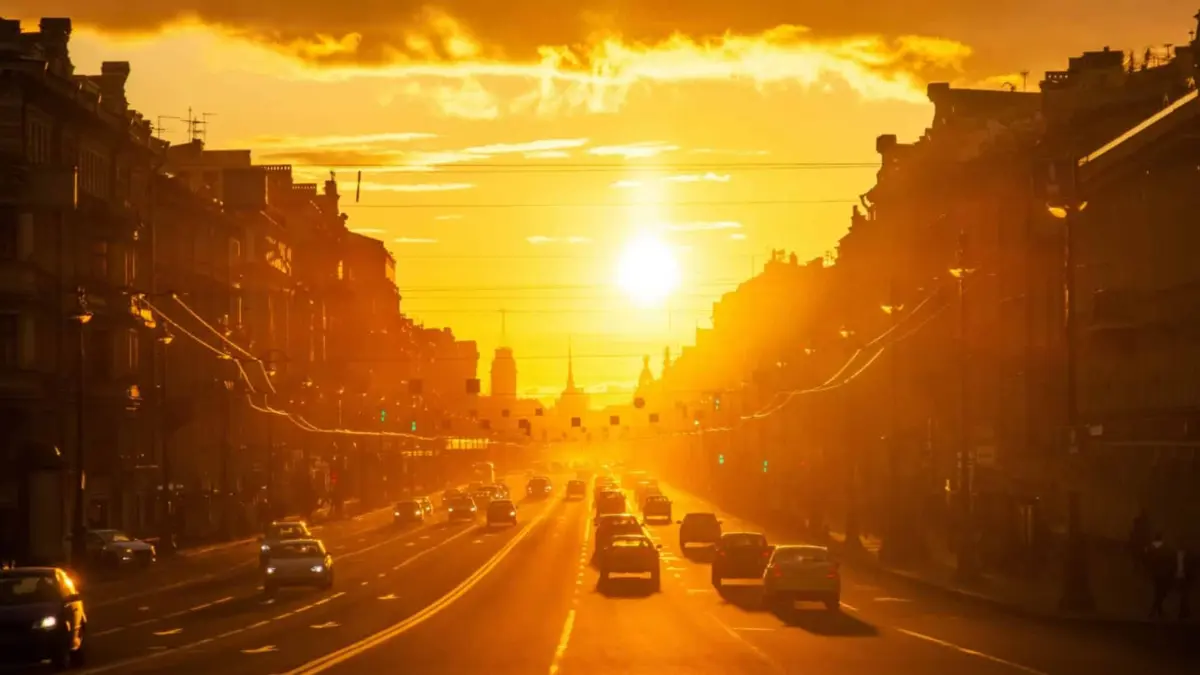
NEW YORK — Following a blistering Saturday marked by unrelenting sunshine and temperatures soaring well past the 80-degree mark, New York City finds itself locked in a severe weather double-whammy. As residents grapple with oppressive humidity and dangerously high heat indices that pushed perceived temperatures toward the triple digits, local authorities and the National Weather Service (NWS) have scrambled to manage a day defined by climatic extremes.
While the daylight hours tested the endurance of millions across the five boroughs with stifling thermal stress and a compromised atmosphere, the metropolis now braces for an abrupt atmospheric shift. A night of anticipated cloud cover, shifting winds, and potential thunderstorms threatens to disrupt the city’s evening routine, even as meteorologists offer a cautious reassurance that the incoming weather will not escalate into widespread catastrophic events.
Main Facts
The current meteorological profile for New York City highlights a volatile convergence of extreme summer elements:
- Current Temperatures and Heat Index: Ambient temperatures hover around a sweltering 83°F (28°C), following a daytime peak where actual thermometer readings surpassed 80°F. However, due to a suffocating 72% relative humidity, the heat index—what the temperature actually feels like to the human body—has surged between 95°F (35°C) and a blistering 100°F (38°C).
- Extreme Weather and Air Quality Alerts: The National Weather Service maintained an active extreme heat advisory for the metropolitan area. Simultaneously, a severe air quality alert remains in effect due to elevated ground-level ozone concentrations, pushing the Air Quality Index (AQI) past the unhealthy threshold of 100.
- The Transition to Night: Temperatures are forecasted to experience a modest drop to a more manageable 74°F (23°C) as evening progresses. However, this cooling trend brings a low (approximately 20%) but persistent chance of localized thunderstorms, accompanied by erratic wind gusts reaching up to 20 mph.
- Emergency Response Status: City officials have elevated health advisories, treating any suspected heat-stroke or heat-exhaustion calls dispatched to 911 as top-priority medical emergencies. Special care directives have been issued for vulnerable populations, including the elderly, chronically ill, and those with pre-existing mental health conditions.
Chronology of a Scorching Day
Morning: The Onset of Extreme Conditions
The day began with early morning forecasts proving entirely accurate, as clear blue skies allowed unbroken solar radiation to rapidly heat the asphalt and concrete canyons of Manhattan, Brooklyn, Queens, the Bronx, and Staten Island. By mid-morning, temperatures climbed past comfortable thresholds, triggering the initial deployment of heat alerts by regional meteorological stations. Outdoor markets, parks, and recreational spaces saw early crowds seeking out shade before the sun reached its zenith, unaware of just how oppressive the afternoon would become.
Afternoon: Peak Thermal Stress and Atmospheric Stagnation
By mid-afternoon, the situation deteriorated. Thermometers locked in around 83°F while the combination of high humidity and trapped urban heat created a thermal blanket. The sensory experience across the city was one of heavy, stagnant air. Citizens walking through open plazas experienced a heat index scaling rapidly toward the 95°F–100°F range.
Concurrently, the stagnant air mass trapped vehicular emissions in the lower atmosphere. Under the blazing sun, these pollutants underwent rapid photochemical reactions, causing ground-level ozone levels to spike. By early afternoon, the city’s air quality deteriorated into the "unhealthy" bracket, prompting warnings for sensitive groups to remain indoors. Despite the discomfort, city parks remained populated with individuals looking to enjoy the weekend, though park rangers and city workers actively distributed advisories encouraging hydration.
Evening: The Ongoing Advisory and Approaching Twilight
As the sun began its descent toward the horizon, the official extreme heat advisory remained fiercely in effect until its scheduled expiration at 8:00 PM. While the immediate threat of direct solar radiation began to wane, residual heat trapped in the city’s massive infrastructure continued to radiate outward, keeping the thermal burden high. Emergency services maintained a heightened state of alert, monitoring hospitals and dispatch centers for an influx of heat-related ailments. The air quality alert, driven by persistent ozone, was scheduled to stretch late into the night, lingering until 11:00 PM to account for the slow dispersion of pollutants.
Supporting Data and Meteorological Analysis
To fully understand the severity of Saturday’s weather event in New York City, one must examine the hard data compiled by the National Weather Service, environmental protection agencies, and municipal emergency management networks.
The Thermal Equation: Temperature vs. Heat Index
While a raw temperature of 83°F might not sound catastrophic to those accustomed to deep summer heatwaves, the addition of a 72% relative humidity fundamentally changes how the human body cools itself. perspiration relies on evaporation; when the air is already saturated with moisture, sweat fails to evaporate efficiently, trapping internal body heat.
[Ambient Temperature: 83°F] + [Relative Humidity: 72%] = [Heat Index: 95°F - 100°F]This discrepancy between the actual air temperature and the "feels-like" temperature is precisely what triggers physiological distress. At a heat index of 95°F to 100°F, prolonged exposure or physical exertion can quickly lead to heat cramps, heat exhaustion, and—if left untreated—heat stroke, a life-threatening condition characterized by the body’s inability to regulate its internal temperature.
Air Quality Index (AQI) Breakdown
The secondary crisis of the day centered on atmospheric chemistry. The AQI measures common air pollutants, including ground-level ozone, particulate matter ($PM2.5$ and $PM10$), carbon monoxide, sulfur dioxide, and nitrogen dioxide.
- AQI 0–50: Good
- AQI 51–100: Moderate
- AQI 101–150: Unhealthy for Sensitive Groups (Where NYC sat for much of the day)
- AQI 151–200: Unhealthy
Driven by heavy weekend traffic and dense urban emissions reacting with intense ultraviolet radiation, the city’s ozone index breached the 100-mark. Ozone at ground level is a powerful respiratory irritant. Inhaling it can trigger chest pain, coughing, throat irritation, and airway inflammation, disproportionately impacting asthmatics, children, and the elderly.
Nighttime Projections
As the night progresses, models indicate the ambient temperature will fall to a more comfortable 74°F. Wind patterns are expected to shift, introducing gusts up to 20 mph. While precipitation probability sits at a relatively low 20%, the clash of the lingering daytime heat mass with incoming cooler, unstable air creates the exact ingredients necessary for isolated, sharp downpours and lightning storms.
Official Responses and Municipal Preparedness
In the face of dual environmental hazards—extreme heat and poor air quality—New York City’s emergency response apparatus swung into high gear, prioritizing public safety through proactive communication and targeted resource allocation.
Health and Emergency Services Mobilization
The New York City Office of Emergency Management (OEM), in coordination with the Department of Health and Mental Hygiene (DOHMH), issued stern directives reminding residents of the dangers of heat stress. Most notably, municipal authorities established a zero-latency protocol for 911 dispatchers: any call reporting symptoms consistent with a heat stroke—such as confusion, cessation of sweating, rapid pulse, or a dangerously high body temperature—was immediately classified as a top-tier medical emergency, ensuring paramedics arrived with maximum urgency.
Furthermore, public health officials emphasized that vulnerability to heat is not distributed equally. Outreach programs were intensified to check on:
- The Elderly: Whose bodies are less efficient at regulating internal temperatures and who may lack adequate air conditioning.
- Chronically Ill Individuals: Particularly those with cardiovascular or respiratory diseases, whose conditions are severely aggravated by combined heat and ozone pollution.
- Mental Health Populations: Certain psychiatric medications can impair the body’s ability to regulate temperature or perceive thirst, placing these individuals at exceptionally high risk during heat waves.
Cooling Centers and Public Infrastructure
While the city boasts an extensive network of designated cooling centers—including public libraries, senior centers, and community spaces—authorities heavily pushed the message that staying indoors in air-conditioned environments remains the single best defense. For those without access to private air conditioning, public facilities remained open late into the evening to provide a thermal refuge before the weather system transitioned.
Environmental protection agencies also worked around the clock to monitor air monitoring stations, feeding real-time data to municipal leaders to decide whether to extend or modify air quality advisories. Public service announcements saturated local radio, television, and digital news feeds, urging citizens to curtail strenuous outdoor exercise, postpone non-essential driving to reduce ozone-forming emissions, and increase fluid intake immediately.
Implications for Public Health, Infrastructure, and Future Preparedness
The convergence of a high-heat day with elevated ozone levels and sudden evening storm threats is more than just a passing weather inconvenience; it serves as a stark case study in the vulnerability of modern urban environments to shifting climatic patterns.
Urban Heat Island Effect and Air Quality
New York City, with its vast expanses of heat-absorbing concrete, asphalt, and towering glass structures, is a textbook example of the Urban Heat Island (UHI) effect. Buildings and pavement absorb the sun’s energy during the day and slowly release it at night, preventing temperatures from dropping to natural baseline levels. This retained heat, combined with high humidity, creates a persistent thermal trap.
When this thermal trap coincides with high vehicular and industrial emissions, the chemical reaction producing ground-level ozone accelerates. The implications for public health are profound. As global temperatures rise and extreme weather events become more frequent and intense, cities like New York face an escalating public health challenge. Respiratory illnesses, emergency room visits for heat-related stress, and strain on municipal power grids (driven by relentless air conditioner usage) threaten to become the norm rather than the exception during summer months.
Shifting Weather Dynamics and Emergency Protocol
Saturday’s rapid transition—moving from a blinding, stifling afternoon heat advisory to a night featuring potential thunderstorms and 20 mph gusts—underscores the volatility of contemporary meteorology. Emergency managers can no longer view weather events through a single-hazard lens. A heatwave is no longer just about high temperatures; it is intricately linked with air quality degradation, sudden convective storm threats, and infrastructure strain.
The efficiency with which New York handled Saturday’s crisis highlights the maturation of urban emergency response frameworks. By treating heat-stroke calls as critical emergencies and enforcing strict air quality warnings, the city successfully mitigated what could have been a much graver public health disaster. However, experts warn that reactive measures alone will not suffice in the long term.
Looking Ahead: Building Resilient Communities
As the city dries out from the night’s approaching squalls and looks toward the remainder of the summer season, the overarching takeaway is clear. Building long-term urban resilience will require sustained investments in:
- Green Infrastructure: Expanding urban tree canopies, green roofs, and cool pavements to actively combat the Urban Heat Island effect.
- Energy Grid Modernization: Ensuring power grids can handle the massive surge in electrical demand without triggering brownouts or blackouts that render home air conditioning useless.
- Equitable Public Health Outreach: Refining networks that protect marginalized and isolated populations who bear the brunt of environmental extremes.
For now, New Yorkers can take a collective sigh of relief as the night air brings a measure of cooling relief, even beneath a sky punctuated by distant lightning and gusty winds. Yet, as summer marches forward, the events of this Saturday serve as a sobering reminder of the power of nature within the urban landscape—and the constant vigilance required to navigate it safely.




Leave a Reply