

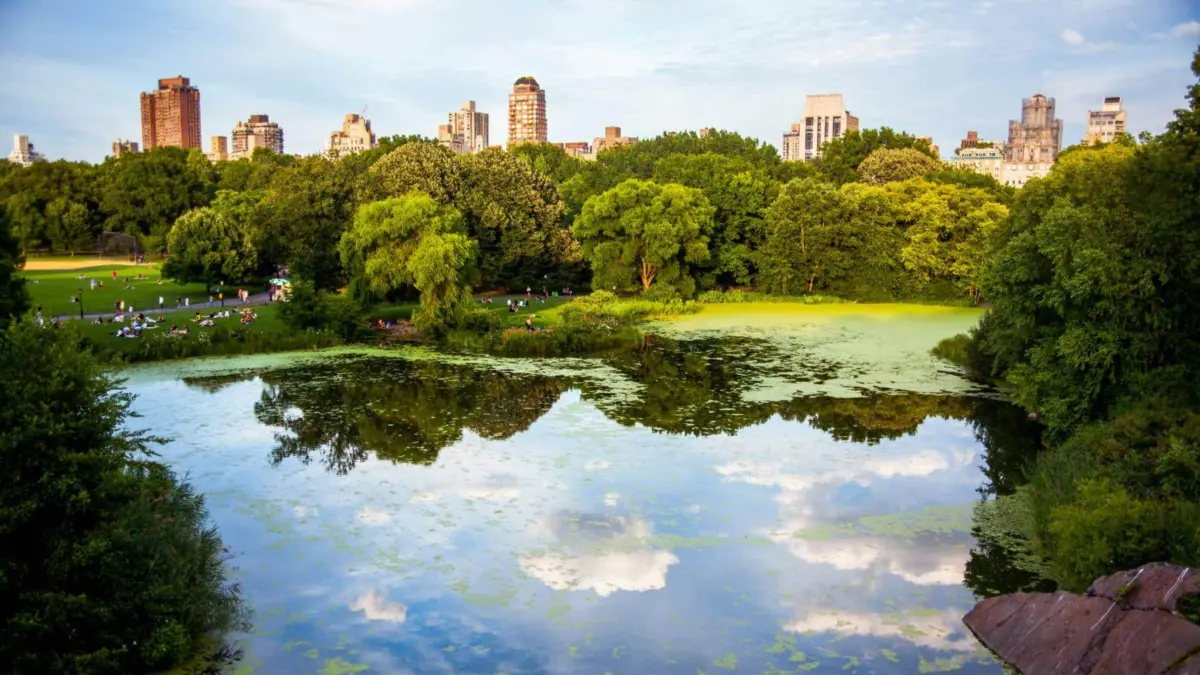
NEW YORK — As global climate change continues to intensify urban weather extremes, the City of New York has officially greenlit a pioneering technological initiative aimed at mitigating surging metropolitan temperatures. The Ayuntamiento (City Council) and local municipal agencies have confirmed full funding for the "Generative Canopy Project," a sophisticated research endeavor spearheaded by academic powerhouse Cornell Tech and advocacy group New Yorkers for Parks.
By merging cutting-edge artificial intelligence, satellite imagery analytics, and 3D laser-scanning technologies, the year-long project seeks to revolutionize how the concrete jungle manages its urban forestry. The overarching goal is clear: strategically expand New York City’s tree canopy to cool down hyper-heated neighborhoods, protect vulnerable populations, and confront the escalating realities of the climate crisis head-on.
1. Main Facts: The Intersection of AI, Urban Forestry, and Public Health
The core of the Generative Canopy Project lies in its deployment of high-tech data modeling to optimize tree planting across New York’s five boroughs. Rather than relying on traditional, generalized approaches to urban greening, this initiative employs advanced machine learning algorithms to cross-reference multiple layers of urban data.
- The Technology: The project leverages Tree Folio NYC, an innovative mapping tool developed by Cornell Tech that utilizes high-resolution aerial imagery, censuses of existing trees, climate forecasts, and 3D laser scanning (LiDAR) to analyze urban morphology.
- The Objectives:
- Accurately map the existing urban canopy down to individual tree structures.
- Quantify the exact cooling capacity and evapotranspiration rates of specific tree species.
- Identify critical geographic areas and micro-neighborhoods suffering from severe heat-island effects.
- Provide an open-access platform allowing the public to monitor urban forestry progress in real time.
- The Stakeholders: Jointly managed by Cornell Tech and New Yorkers for Parks, backed by municipal policy frameworks and a foundational grant of $250,000 for its inaugural one-year research phase.
- The Geographic Focus: Prioritizing historically underserved and heavily paved regions, with an initial emphasis on the Bronx, Queens, and Brooklyn.
2. Chronology of a Crisis: From Scorching Summers to Municipal Action
To understand the urgency behind the Generative Canopy Project, one must trace the timeline of New York’s worsening climate vulnerabilities, culminating in the emergency protocols activated during the recent summer season.
Early Summer 2024: The Warning Signs
As the summer season commenced, meteorological stations across the New York metropolitan area began recording unseasonably early and sustained extreme temperatures. City health officials issued continuous heat advisories, warning residents—particularly the elderly, those with pre-existing health conditions, and outdoor workers—to take immediate precautions. Despite public warnings, temperatures persistently hovered above the 80-degree Fahrenheit mark, setting the stage for a dangerous meteorological cycle.
The Four-Day Heatwave and Tragic Fatalities
The crisis escalated sharply during a brutal, four-day consecutive heatwave that triggered citywide emergency protocols. Municipal authorities mobilized cooling centers, distributed hydration packs, and ramped up public awareness campaigns. Despite these reactive measures, the human toll of the climate emergency became starkly evident. The New York City government officially confirmed that three local residents lost their lives directly due to heat-related illnesses during this brief window.
The Shift Toward Proactive Infrastructure
In the wake of these fatalities, city leaders recognized that temporary cooling centers and short-term emergency alerts were no longer sufficient. City Council President Julie Menin publicly stepped forward to demand "creative solutions" to structurally confront the escalating climate crisis. Municipal researchers and urban planners began evaluating long-term, scalable, and economically viable defenses against urban heat islands.
Through these evaluations, strategic tree planting emerged as the most effective, sustainable, and cost-efficient defense. Trees not only provide physical shade but also generate localized microclimates through evapotranspiration—a natural cooling process where plants release moisture into the atmosphere, significantly lowering ambient air temperatures. This realization paved the way for the formal funding and conceptualization of the Generative Canopy Project.
3. Supporting Data: Environmental Injustice and the Urban Heat Island Effect
The necessity of the Generative Canopy Project is heavily underscored by extensive environmental data highlighting profound spatial and racial disparities in how New York City’s green infrastructure is distributed.
The Citywide Deficit and the Urban Heat Island
While New York City boasts an average tree canopy coverage of approximately 22%, this figure masks deep inequalities at the neighborhood level. Highly dense urban environments characterized by vast expanses of asphalt, concrete, and dark roofing materials absorb solar radiation during the day and re-emit it at night, creating the notorious "Urban Heat Island" (UHI) effect. In these concrete zones, nighttime temperatures fail to drop significantly, compounding health risks for residents.
Geographic Disparities: The Bronx, Queens, and Brooklyn
Municipal data reveals that the worst UHI impacts are heavily concentrated in specific districts, particularly within the Bronx, Queens, and Brooklyn. These three regions suffer from the most pronounced deficits in green coverage across the entire municipality.
- The South Bronx Crisis: Local officials have spotlighted the alarming state of the South Bronx. Council representatives noted that the district’s tree canopy coverage lags 8 to 14 percentage points behind the city average, hovering distressingly low. "We find ourselves consistently among the hottest and most polluted districts of the city," local legislators stated, pointing to a lethal combination of low green coverage and heavy industrial truck traffic.
- Racial Disparities in Canopy Coverage: Socioeconomic and racial mapping studies integrated into urban planning discussions have exposed a stark equity gap. Data indicates that neighborhoods with majority-color populations feature up to 33% fewer trees compared to affluent, predominantly white districts. This environmental racism leaves marginalized communities exponentially more vulnerable to climate-induced heatwaves.
4. Official Responses and Institutional Perspectives
The unveiling of the Generative Canopy Project has drawn praise from academic leaders, civil society advocates, and municipal lawmakers alike, all of whom emphasize the multi-faceted benefits of treating nature as vital urban infrastructure.
Cornell Tech and Green Infrastructure
Speaking on behalf of the academic consortium leading the research, Michael Samuelian of Cornell Tech emphasized the paradigm shift required in modern urban planning.
"Trees are not merely decorative elements; they are critical green infrastructure that can help urban systems adapt to the extreme weather phenomena we are experiencing, ranging from torrential downpours to prolonged heatwaves," Samuelian argued.
By framing trees as functional engineering assets—akin to seawalls or stormwater drainage systems—Cornell Tech aims to quantify their economic and environmental value to convince policymakers to allocate larger capital budgets for large-scale afforestation.
The Legislative Push for Equity
City Council members representing heavily impacted districts have lauded the partnership with Cornell Tech and New Yorkers for Parks, viewing the Generative Canopy Project as a crucial tool for environmental justice.
Councilman Justin Sanchez emphasized that data-driven targeting is the only way to reverse decades of neglect in districts like the South Bronx. Similarly, Councilman Ty Hankerson underscored that addressing the 33% tree deficit in minority neighborhoods is a matter of basic human survival and public health equity.
“We cannot simply plant trees at random and hope for the best,” municipal policy advisors noted during the project announcement. “With advanced AI and high-resolution spatial modeling, we can ensure every single dollar spent yields the maximum possible cooling benefit for the residents who need it most.”
5. Technological Implications and Future Outlook
As the Generative Canopy Project enters its active one-year research phase, its implications extend far beyond the borders of New York City. The integration of cutting-edge technology into municipal forestry management represents a scalable blueprint for cities worldwide facing similar climate threats.
The Role of Tree Folio NYC and 3D Laser Scanning
The deployment of Tree Folio NYC marks a milestone in urban ecology. By utilizing 3D laser-scanning (LiDAR) technology, researchers can move beyond rudimentary two-dimensional counts of tree populations. LiDAR allows scientists to measure:
- Exact leaf-area density and crown volume.
- Canopy density and its specific blocking capacity against solar radiation.
- Interference patterns with existing urban architecture (power lines, buildings, subterranean utilities).
This granular level of data ensures that when a sapling is planted, it is the correct species, placed in the optimal micro-location to maximize shade, stormwater absorption, and air purification.
Public Transparency and Open Science
Crucially, the project is not designed to remain locked inside academic vaults or municipal bureaucratic offices. Through the public-facing components of Tree Folio NYC, citizens, community boards, and grassroots activists will have open access to the data dashboard. This transparency empowers local communities to hold city agencies accountable, track planting progress in their specific neighborhoods, and participate actively in local environmental stewardship.
Looking Ahead
As global temperatures continue to break historical records year after year, New York City’s proactive embrace of artificial intelligence and urban forestry offers a glimmer of hope. The success of the Generative Canopy Project over the coming year could redefine municipal adaptation strategies globally, proving that the ancient remedy of planting trees, when supercharged by modern artificial intelligence, remains humanity’s most powerful ally against the heating planet.



Leave a Reply