

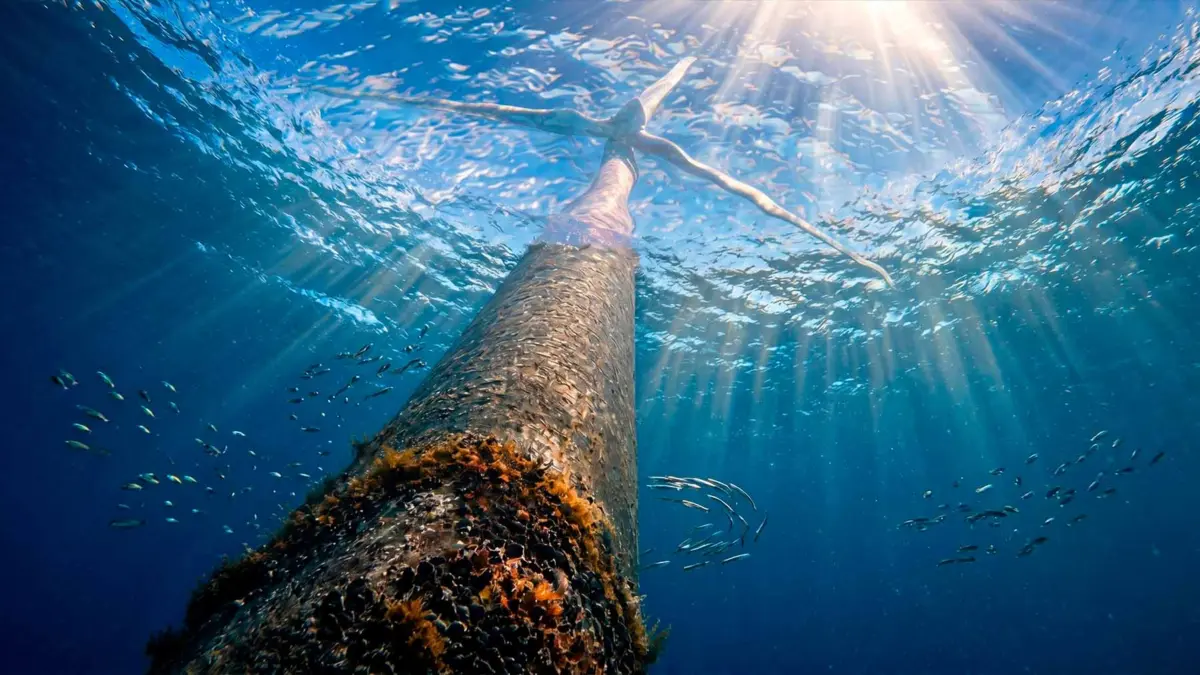
GLOBAL — As nations across the globe race to decarbonize their energy grids, offshore wind farms have emerged as a cornerstone of the renewable energy revolution. Towering rows of massive turbines now pierce the horizons of coastal waters worldwide, hailed as silent saviors of a warming climate.
Yet, far beneath the crashing waves, a profound transformation is taking place long before these industrial giants generate their very first kilowatt of electricity. The introduction of massive steel monopiles, concrete foundations, and tons of protective rock armor is fundamentally reshaping quiet, sedimentary ocean floors. While these installations quickly sprout vibrant underwater communities rich in mussels, crabs, and fish, scientists urge caution. The rapid artificial reef effect of offshore wind farms is not a simple victory for nature; it is a complex ecological redistribution that is actively rewriting marine food webs in ways researchers are only just beginning to understand.
Main Facts: The Submerged Transformation of Wind Farms
When engineers plan an offshore wind farm, they typically target flat, sandy, or muddy expanses of the continental shelf. Ecologically speaking, these sandy benthic zones function much like underwater deserts. While they support specialized communities adapted to shifting sediments, they exhibit relatively low structural complexity and limited biomass compared to rocky reefs.
That baseline changes overnight with the arrival of heavy construction vessels.
- Artificial Hard Substrates: The driving of massive steel piles into the seabed, coupled with the dumping of millions of tons of boulders to prevent bottom currents from scouring the foundations, introduces millions of square meters of hard surface area to environments that have remained soft and featureless for millennia.
- The Colonization Timeline: Within days of installation, microscopic bacteria and pioneer algae coat the foreign metal and stone surfaces. Weeks later, barnacles, anemones, and blue mussels take hold, utilizing the hard substrate to anchor themselves against relentless ocean currents.
- The Food Web Magnet: Over the months, these biological attachments transform cold, sterile steel into highly complex micro-habitats filled with crevices. Crabs, worms, and shrimp move in to graze and hide, which in turn acts as a dinner bell for larger pelagic fish, marine predators, and scavengers.
- The Mussel Effect: Among the most impactful colonizers are blue mussels. As filter feeders, dense colonies process massive volumes of seawater, stripping out suspended nutrients and organic matter, and depositing nutrient-rich waste down to the seabed below. This process aggressively links the water column to the ocean floor in ways that naturally rarely occur.
According to groundbreaking modeling published in the scientific journal Nature, these localized shifts in biomass and nutrient cycling do not just impact the immediate footprint of the turbine; they have the potential to reorganize food webs across surprisingly broad geographic scales.
Chronology: From Barren Seabed to Thriving Artificial Reef
Understanding the lifecycle of an offshore wind farm requires looking at the step-by-step ecological succession that occurs underwater from the moment construction begins.
Phase 1: Pre-Construction and Disturbance (Months 0–6)
Before a single blade spins, the benthic ecosystem experiences significant disruption. Sonar mapping, geological core-sampling, and anchor-dropping disturb the local sediment. When heavy machinery drives large-diameter steel monopiles deep into the seabed, it displaces sediment and creates localized turbidity spikes. The immediate dumping of massive granite boulders—intended to stabilize the base against hydrodynamic stress—permanently buries the native soft-bottom communities beneath a mantle of hard rock.
Phase 2: Microbial Colonization and Pioneer Species (Months 6–18)
Nature wastes no time reclaiming the foreign structures. Within days, organic films composed of bacteria and diatoms adhere to the steel and stone. By the end of the first year, fast-growing pioneer species establish dominance. Hydroids, filamentous algae, and early generations of barnacles blanket the submerged shafts, creating a sticky, textured biological matrix that alters the micro-currents sweeping around the pile.
Phase 3: Climax Communities and Trophic Cascades (Years 1–3)
As the artificial reef matures into its second and third years, structural complexity peaks. Dense colonies of blue mussels and anemones dominate the upper and middle zones of the turbine pillars. Their presence attracts mobile invertebrates, including crabs, sea stars, and amphipods, creating a high-density foraging ground. Small fish species, such as pout and gobies, take up residence among the shell matrices to escape predators, drawing in apex commercial fish species like cod, bass, and various elasmobranchs.
Phase 4: Long-Term Ecosystem Integration (Years 3 and Beyond)
By year four, the artificial structure operates as a mature, self-sustaining micro-ecosystem. However, this is also when the broader systemic implications become apparent. The continuous rain of organic waste (pseudofeces and feces) from millions of filter-feeding mussels alters the benthic nutrient composition, fundamentally changing the baseline biology of the surrounding soft sediment.
Supporting Data: What the Models Tell Us
While marine biologists are fascinated by the rapid explosion of life surrounding offshore wind foundations, empirical data collection remains challenging. Monitoring open-ocean environments 24 hours a day across sprawling multi-gigawatt wind energy zones is economically and logistically prohibitive.
To bridge this data gap, researchers rely heavily on sophisticated computer simulations and ecological modeling, such as those featured in Nature. These models simulate nutrient flows, hydrodynamic changes, and trophic energy transfers over multi-year periods.
Key insights derived from these models include:
- Vertical Connectivity: Natural sandy plains maintain a strict separation between pelagic (water column) and benthic (seabed) ecosystems. Wind turbine structures bridge this gap, accelerating the vertical export of organic carbon to the seafloor by up to 300% in localized zones.
- Biomass Concentration vs. Production: A central debate among marine scientists is whether wind farms actually increase regional biological productivity or simply aggregate existing mobile marine life from surrounding areas. Current data suggests a hybrid reality: while filter feeders like mussels undoubtedly increase total local organic production, mobile predators like fish are frequently drawn away from natural habitats, concentrating populations within the safety exclusion zones surrounding the wind farms where commercial fishing is restricted.
- Hydrodynamic Shadowing: The physical presence of hundreds of massive towers creates a drag on ocean currents. This "wake" effect alters local mixing patterns, temperature gradients, and larval dispersal routes, impacting plankton distribution over miles of ocean.
Official Responses and Scientific Caution
Governments, energy developers, and environmental regulatory agencies have largely welcomed offshore wind as an indispensable tool in mitigating global carbon emissions. Major economies in Europe, North America, and Asia have streamlined permitting processes to accelerate buildouts. However, the scientific community is counseling a more nuanced approach to marine spatial planning.
The Developer Perspective
Energy conglomerates argue that offshore wind farms provide an unexpected ecological bonus. By restricting commercial bottom-trawling—a notoriously destructive fishing practice that plows up the seabed—within wind farm perimeters, these areas inadvertently function as marine protected areas (MPAs). Representatives from major offshore wind developers point to thriving populations of fish and crustaceans as proof that clean energy infrastructure and marine life can coexist harmoniously.
The Conservationist and Marine Scientist Stance
Marine ecologists, conversely, urge caution against viewing wind farms as universal ecological restoration projects. Regulatory bodies, such as environmental ministries in regions expanding their offshore portfolios, are beginning to mandate rigorous pre- and post-construction environmental monitoring programs.
Scientists emphasize several critical unknowns:
- Microbial Shifts: Little is known about how the introduction of foreign hard substrates impacts deep-sea microbial communities, which are the fundamental drivers of marine nutrient recycling and global biogeochemical cycles.
- Invasive Species Vectors: Artificial structures can act as "stepping stones" for invasive non-native species, allowing aggressive algae, tunicates, and invertebrates to hop from one wind farm to another across vast stretches of open ocean, ultimately displacing native marine flora and fauna.
- Ecosystem Baseline Alteration: Altering a natural soft-bottom habitat into a hard-bottom habitat inherently favors reef-dwelling species while penalizing organisms uniquely adapted to sandy or muddy substrates. This represents a qualitative shift in biodiversity, not a universal net gain.
Implications: Balancing the Energy Transition with Marine Stewardship
The expansion of offshore wind energy forces a profound paradigm shift in how humanity interacts with the marine environment. It highlights a vital truth: in the Anthropocene, human interventions in nature rarely come without trade-offs.
Transforming vast coastal expanses into clean energy powerhouses is non-negotiable if global climate targets are to be met. Yet, the hidden ecological footprints of these structures demand that environmental stewardship extends far beneath the surface.
To ensure that renewable energy does not inadvertently destabilize the oceans it aims to protect, future offshore wind projects must incorporate comprehensive ecological safeguards. This includes:
- Designing for Biodiversity: Developing turbine foundations with textured surfaces, perforated designs, or integrated micro-habitats specifically engineered to support threatened or locally native species rather than aggressive generalists.
- Strategic Spatial Planning: Avoiding sensitive spawning grounds, migration corridors, and fragile benthic habitats when siting wind farm leases.
- Long-Term Monitoring Frameworks: Funding decades-long independent scientific studies that track seabed health, microbial shifts, and food-web dynamics before, during, and long after construction concludes.
Offshore wind turbines are far more than towering sentinels of clean electricity. They are massive physical interventions that permanently alter the blue heart of our planet. As humanity races to power the future with renewable energy, ensuring that our green transition remains genuinely respectful of the natural world is one of the defining challenges of our time.


Leave a Reply