

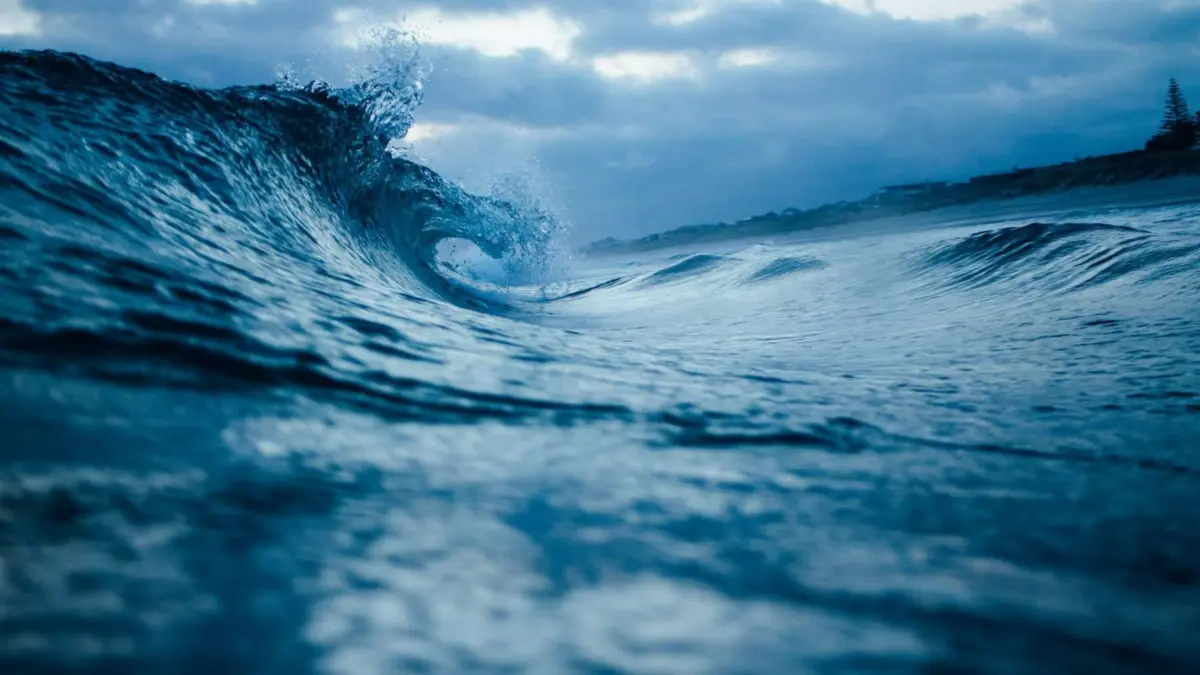
GLOBAL — In a landmark development for planetary health, the international community has officially reached a long-awaited conservation milestone: 10% of the world’s oceans are now formally designated as protected and conserved areas.
According to recent reports released by the United Nations Environment Programme (UNEP), this achievement represents a measurable leap forward from just two years prior, when marine protection hovered at a little over 8%. Over the past 24 months alone, global conservation coalitions and coastal nations have safeguarded approximately 2 million square miles of ocean habitat.
While environmental scientists and policymakers are celebrating this crucial step, the overarching sentiment among researchers is one of cautious optimism. Reaching the 10% threshold—originally targeted under international agreements for the year 2020—arrived six years late. More importantly, as the climate crisis accelerates and marine ecosystems face unprecedented pressures from warming waters, overfishing, and pollution, experts warn that this hard-won 10% is merely a drop in the ocean compared to what is urgently needed to stabilize the Earth’s climate.
Main Facts: The State of Global Marine Conservation
The ocean is the life support system of the planet. Covering roughly 71% of the Earth’s surface, it produces more than half of the oxygen we breathe, absorbs a massive share of anthropogenic carbon dioxide emissions, and regulates global weather patterns. Furthermore, scientists estimate that an astounding 95% of the Earth’s habitable volume resides in the open sea, making it the largest biosphere on the planet.
Key takeaways from the latest UNEP assessments include:
- The 10% Milestone: Officially, one-tenth of the global ocean is now under some form of legal protection, up from roughly 8% two years ago.
- The Recent Surge: Approximately 2 million square miles of marine environment have been successfully designated as protected areas since 2022.
- The 2030 Imperative: Governments are now racing against the clock to meet the ambitious "30×30" target—a commitment to protect 30% of the world’s land and marine areas by the end of the decade.
- The Climate Buffer: Oceans continue to act as the primary thermal sponge for global heating, absorbing excess atmospheric heat and carbon, which in turn causes severe ecological disruptions locally.
Chronology of Commitments: From Delayed Goals to the 2030 Horizon
The path to securing 10% of the world’s oceans has been marked by missed deadlines, political friction, and a slow-moving bureaucratic machinery that has often lagged behind the rapid pace of environmental degradation.
- The Aichi Biodiversity Targets (2010): During the Convention on Biological Diversity (CBD) summit in Nagoya, Japan, international leaders established the Aichi Targets. Target 11 explicitly called for the conservation of at least 10% of coastal and marine areas by the year 2020. However, political inertia, lack of funding, and competing economic interests meant the deadline came and went without the target being met.
- The Post-2020 Delay (2020–2022): Throughout the early 2020s, global marine protection stagnated around the 8% mark. While individual nations established localized marine reserves, a synchronized global push was lacking, exacerbated by the global disruptions of the COVID-19 pandemic.
- The Kunming-Montreal Global Biodiversity Framework (December 2022): Recognizing that the previous 10% goal was insufficient and overdue, delegates from nearly 200 countries gathered at the UN Biodiversity Conference (COP15) in Montreal. They forged a historic pact known as the Kunming-Montreal Global Biodiversity Framework. The centerpiece of this agreement was the "30×30 target": a binding pledge to effectively conserve 30% of terrestrial, inland water, and coastal and marine areas by 2030.
- The Current Milestone (2026): UNEP reports confirm that global efforts have finally cleared the delayed 10% hurdle for marine protection. However, with less than four years remaining until the 2030 deadline, the international community faces a monumental task to scale up protection from 10% to 30%.
Supporting Data: The Expanding Gap Between Ambition and Reality
Despite the celebratory tone surrounding the 10% milestone, environmental analysts emphasize that percentages can be misleading. "Protection" on paper does not always equate to strict conservation in practice. Many designated marine areas are subject to lax enforcement, allowing industrial fishing, oil and gas exploration, and shipping lanes to degrade habitats that are supposedly safeguarded.
Furthermore, the scale of human impact dwarfs current conservation metrics:
- The 30% Gap: Moving from the current 10% to the mandated 30% by 2030 means the global community must triple its protected marine acreage in under four years. This requires designating millions of additional square miles of open ocean and coastal ecosystems annually.
- Accelerating Ocean Warming: According to climate monitoring bodies like Copernicus, ocean temperatures are rising at unprecedented rates. The combination of historical greenhouse gas emissions, cyclical climate phenomena like El Niño, and rapid glacial melting is pushing marine systems past dangerous tipping points.
- Sea-Level Rise: Thermal expansion of seawater, driven by global heating, along with the influx of water from melting polar ice sheets, has accelerated sea-level rise. This directly threatens low-lying coastal communities, island nations, and marine-dependent economies.
Official Responses and Expert Perspectives
Environmental leaders, scientific bodies, and international agencies have offered mixed reactions to the 10% milestone—praising the diplomatic and ecological cooperation required to get this far, while issuing stern warnings about the road ahead.
UNEP representatives highlighted the achievement as proof that multilateral agreements can yield tangible results, noting that the addition of 2 million square miles of protected waters in just two years demonstrates what is possible when political will aligns with scientific urgency.
However, marine biologists and independent conservation scientists have been quick to temper the celebration. Critics point out that achieving a numerical target is meaningless if the protected areas are merely "paper parks"—zones designated as protected on maps but left entirely vulnerable to extractive industries.
"We are treating a systemic illness with a Band-Aid," remarked one leading marine ecologist. "Reaching 10% is a psychological milestone, but the physics and chemistry of the ocean do not care about political milestones. The ocean is changing faster than our policies can keep up. If we do not drastically accelerate the implementation of truly enforced marine reserves, we will lose the very systems that sustain human civilization."
Implications: What the Future Holds for Marine Ecosystems and Human Societies
The implications of failing to bridge the gap between current conservation efforts and the 2030 targets extend far beyond the horizon, directly touching the lives of billions of people.
1. Economic and Food Security for Coastal Communities
Millions of people worldwide—particularly in the Global South and small island developing states—depend directly on the ocean for their daily sustenance, employment, and economic stability. Artisanal fisheries, coastal tourism, and marine commerce are all vulnerable to the collapse of marine food webs. Coral bleaching, acidification, and fish stock depletion driven by climate change threaten to trigger severe humanitarian and economic crises if habitats are not aggressively rehabilitated.
2. The Carbon Sink Capacity
The ocean is Earth’s largest natural carbon sink, having absorbed roughly 25% of all anthropogenic carbon dioxide emissions and captured over 90% of the excess heat generated by global climate change. However, as oceans warm and acidify, their capacity to absorb carbon diminishes, risking a devastating feedback loop where a degraded ocean releases stored carbon back into the atmosphere.
3. Biodiversity Collapse
Marine biodiversity is disappearing at an alarming rate. From deep-sea ecosystems threatened by prospective deep-seabed mining to coastal mangroves and seagrass meadows facing urban encroachment, the web of life in the sea is fraying. Without legally binding, highly and fully protected marine reserves that allow ecosystems to recover and regenerate, the loss of species will become irreversible.
Conclusion
The official protection of 10% of the world’s oceans is a testament to what international diplomacy can achieve when forced to confront global crises. Yet, as the countdown to 2030 ticks away, this milestone must serve less as a finish line and more as an urgent wake-up call. The next four years will determine whether humanity can rise to the challenge of scaling marine protection to the levels required to ensure a stable climate, thriving biodiversity, and a secure future for generations to come.


Leave a Reply