

Main Facts
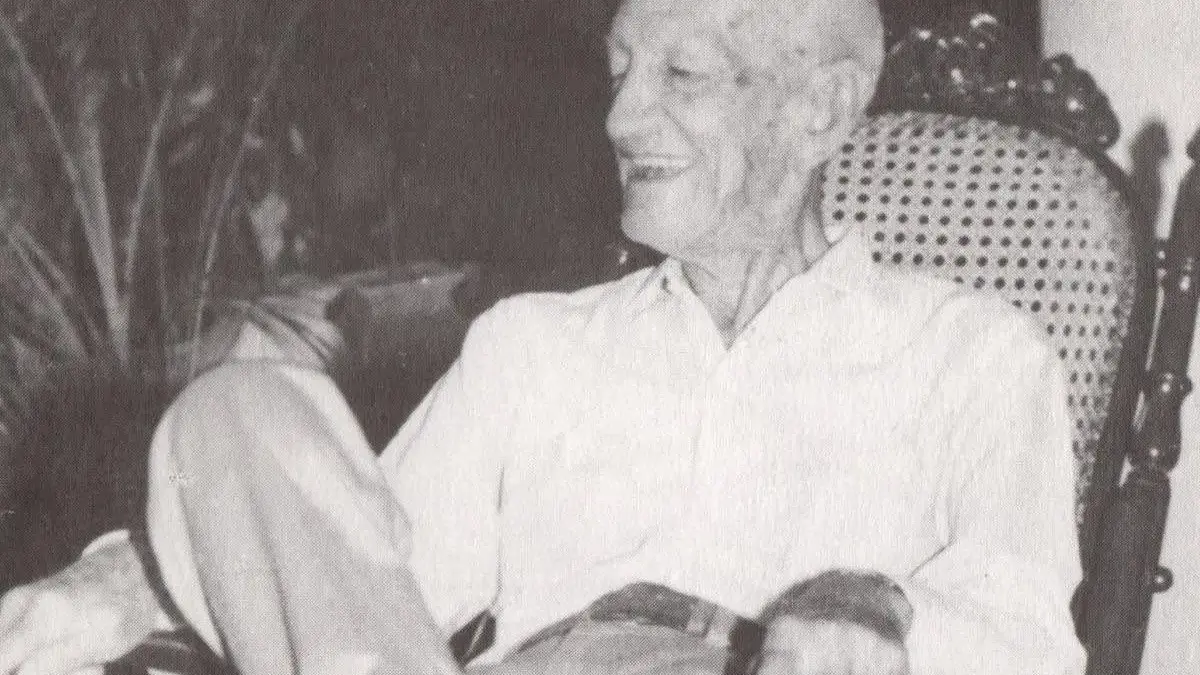
In the rich and colorful tapestry of Colombian folklore, few figures loom as large or as gracefully as Tobías Enrique Pumarejo Gutiérrez, universally revered as “Don Toba.” Born on August 8, 1906, in Valledupar—then part of the Magdalena department—Don Toba was much more than a scion of a prosperous cattle-ranching family. He was a pioneering troubadour, a master lyricist who never learned to play a musical instrument, and a cultural catalyst who fundamentally shaped the trajectory of vallenato music.
As celebrated researcher Julio Oñate Martínez describes him in his seminal book Cuando Matilde camina, dedicated to the history of vallenato songs, Pumarejo was “a famous vallenato troubadour, romantic and fond of all-night parties, a descendant of landowners, who had a great fondness for sorrel horses, fine hats, and women with penetrating eyes.”
Though his professional life was rooted in the management of his family’s sprawling estate, El Otoño, Don Toba’s true vocation was poetry and song. He authored over 150 compositions, navigating effortlessly through traditional vallenato airs, rancheras, valses, and pasillos. Crucially, long before the accordion-driven genre became globally recognized for its heartbreak and poetic introspection, Don Toba was already planting the seeds of romantic and lyrical vallenato.
His crowning achievement as a songwriter came in 1948 when he handed the legendary interpreter Guillermo Buitrago a masterclass in festive melancholy: the timeless merengue vallenato “La víspera de año nuevo” (“New Year’s Eve”). To this day, this single track serves as the undeniable soundtrack to the holiday season across Colombia and vast swathes of Latin America.
Don Toba passed away in Barranquilla on April 8, 1995, at the age of 88. Marking what would have been his 120th anniversary (factoring in historical milestones and cultural retrospectives), this deep dive into his life, times, and artistic footprint honors a man who opened the high-society doors of the Valledupar Club to accordion music and mentored foundational legends like Rafael Escalona and Gustavo Gutiérrez.
Chronology: The Life and Times of Don Toba
Early Years and the Genesis of a Troubadour (1906–1920s)
Tobías Enrique Pumarejo Gutiérrez entered the world on August 8, 1906, into a privileged elite deeply entrenched in the cattle industry of northern Colombia. Recognizing the need for formal education, his family sent him away during his youth to attend high school at the prestigious Liceo Antioqueño of the University of Antioquia in Medellín.
It was in the Andean hub of Medellín—far from the scorching heat and acordeón-filled plazas of his Caribbean homeland—that Pumarejo’s identity as a cultural ambassador crystallized. Alongside fellow costeño luminaries, including future governor Pedro Castro Monsalvo, Pumarejo formed an amateur collective dedicated to disseminating Caribbean music known as the Orquesta Magdalenense. It was within this collegiate crucible that Don Toba first began to hone his skills as a lyricist and composer, utilizing his distance from Valledupar to fuel a profound nostalgia for his roots.
The Era of El Otoño and Legendary Parrandas (1930s–1940s)
Upon returning to the Caribbean lowlands, Pumarejo took over the administration of El Otoño, the family estate situated near El Copey in the Cesar department. Here, his legendary status as a host took root. El Otoño became synonymous with legendary parrandas—marathon vallenato celebrations that could famously last up to fifteen days.
While his love for music was fierce, it ran a close second to his lifelong passion for horses. Animals like his beloved sorrels inspired iconic tracks such as “Los tres caballos,” “Mi potrerito,” and “El alazanito” (the latter notably recorded by Alfredo Gutiérrez). More importantly, El Otoño served as an informal academy. Don Toba frequently recounted mentoring future giants of the genre, giving foundational composition lessons to disciples who would safeguard and expand his legacy, such as Rafael Escalona and Gustavo Gutiérrez.
The Anthem of a Continent (1948)
The year 1948 marked a watershed moment not only for Pumarejo’s career but for Colombian cultural history. Don Toba ceded the rights to his composition “La víspera de año nuevo” to the iconic troubadour Guillermo Buitrago.
The song rapidly transcended regional boundaries, embedding itself into the collective consciousness of the Latin American diaspora. As cultural critic José I. Pinilla Aguilar eloquently notes in Cultures of Colombian Music:
“Mixed feelings pour into every breast upon hearing the explosions of firecrackers that like giant fireflies streak the skies on the joyous nights when one year dies and another is born (…). Superstitions of travel carrying a suitcase walking around the house, grapes, glasses of wine, feasts, drinks, and a thousand other things intermingle in all the social fabrics that populate the universe, with the song of ‘La víspera de año nuevo.’”
Later Years and Cultural Stewardship (1960s–1995)
As vallenato transitioned from localized folkloric expressions to a formalized national phenomenon, Don Toba remained a central pillar of its aristocracy. In 1968, his authority and deep knowledge of the genre were recognized when he was appointed as a judge for the inaugural edition of the Festival de la Leyenda Vallenata (Festival of the Vallenato Legend).
Leveraging his social standing and financial comfort, Pumarejo broke long-standing class barriers by successfully opening the doors of the exclusive Club de Valledupar—previously reserved for the regional elite—to accordion music, helping bridge the gap between traditional folk culture and high society. Don Toba passed away on April 8, 1995, leaving behind a legacy cemented by more than 150 recorded and unrecorded masterpieces.
Supporting Data: The Artistic Catalog of Don Toba
While “La víspera de año nuevo” remains his most universally recognized commercial export, Pumarejo’s songwriting catalog is vast, diverse, and surprisingly eclectic. Spanning over 150 compositions, his work defies the monolithic view that early vallenato was strictly rural or one-dimensional.
Notable Compositions by Tobías Enrique Pumarejo:
- “La víspera de año nuevo” (Popularized by Guillermo Buitrago)
- “Mírame Fijamente” (Featuring verses inspired by a cuplé heard in a Sarita Montiel film)
- “Muchacha patillalera”
- “La cita”
- “Nueve de mayo”
- “Alma de Valledupar”
- “Desolación”
- “Sabana sanjuanera”
- “Ojos penetrantes”
- “La Muerte de Pedro Castro” (Also known as “Tres de marzo”)
- “Mala suerte”
- “Los tres caballos”
- “Mi potrerito”
- “El alazanito” (Recorded by Alfredo Gutiérrez)
Musical Diversity
Remarkably, despite lacking formal technical training on any musical instrument, Don Toba possessed an intuitive melodic genius. His catalog was not confined purely to traditional paseos or merengues; he seamlessly incorporated foreign and cross-genre influences into his writing, penning heartfelt rancheras, elegant valses (waltzes), and rhythmic pasillos.
Official Responses and Cultural Commemorations
The cultural resonance of Tobías Enrique Pumarejo continues to be actively preserved by literary historians, musicologists, and institutions dedicated to safeguarding Colombian heritage.
In his comprehensive study Cuando Matilde camina, researcher Julio Oñate Martínez elevates Don Toba beyond a mere composer, framing him as an archetype of the Caribbean romanticism that defined an era. Oñate Martínez emphasizes how Pumarejo’s lifestyle—balancing agrarian wealth with poetic sensitivity—typified the golden age of the Magdalena grande region.
Furthermore, cultural foundations across the Cesar and Magdalena departments regularly use milestones such as his August birth anniversary to re-examine his contributions. Academics point out that without Don Toba’s social influence—such as integrating accordion music into the Valledupar Club and officiating as a founding juror of the Festival de la Leyenda Vallenata in 1968—vallenato might have faced a much steeper, slower climb toward institutional legitimacy and national pride.
Cultural preservationists note that modern tributes serve as vital reminders to younger generations of musicians that today’s commercial vallenato industry stands squarely on the shoulders of self-taught aristocrats-turned-troubadours who valued poetic nuance above all else.
Implications: The Birth of Romantic Vallenato
The historical weight of Don Toba Pumarejo extends far beyond nostalgia or historical trivia; it touches directly on the structural evolution of Latin American popular music.
1. The Precursor of Lyrical and Romantic Vallenato
For decades, early vallenato was viewed primarily through the lens of journalistic reportage (crónicas cantadas), historical chronicling, or rustic party songs (parrandas). While masters like Rafael Escalona painted vivid pictures of regional landscapes and local characters, Don Toba injected an unprecedented level of vulnerability, psychological introspection, and metropolitan romanticism into his verses.
By drawing inspiration from Spanish cinema (Sarita Montiel’s cuplés) and channeling deep emotional longing, Pumarejo laid the foundational groundwork for the romantic vallenato movement. This stylistic shift was later perfected by his direct discipular lineage, most notably Gustavo Gutiérrez, and subsequently commercialized by global acts in the decades that followed.
2. Democratization of Elite Spaces
Pumarejo’s unique social standing carried profound socio-cultural implications for Colombia’s Caribbean coast. Born into a wealthy landowning family at a time of rigid social stratification, Don Toba used his class capital to legitimize a genre that was historically marginalized by the upper echelons of society. By hosting multi-week parrandas at El Otoño and forcing the doors of the Valledupar Club open to accordion players and troubadours, he effectively bridged the gap between folk art and high culture. This social fusion paved the way for vallenato to eventually become Colombia’s quintessential national export.
3. Permanence in the Global Consciousness
The ultimate implication of Pumarejo’s life work is best observed every December 31st. When millions across the globe celebrate the turning of the year to the strains of “La víspera de año nuevo,” they participate in a collective ritual engineered by a nineteenth-century-born cattle rancher who could not read a sheet of music. Don Toba’s legacy proves that true cultural resonance bypasses the need for formal academic training, surviving instead through emotional authenticity, poetic grace, and an undying love for the land, the rhythm, and the people of the Colombian Caribbean.


Leave a Reply