

By Global News Desk
Published: October (Updated)
Main Facts
The city of Pereira, Colombia, is experiencing a profound cultural and economic reckoning following a destructive earthquake on August 10. The disaster abruptly silenced the vibrant auditory landscape that once defined the region’s bustling commercial and social hubs. In the immediate aftermath, traditional melodies, live acoustic performances, and background rhythms echoing from cafes, bars, and restaurants were replaced by the harrowing wails of emergency sirens, the heavy clanking of industrial rescue machinery, and the hushed urgency of rescue workers picking through the rubble.
For the thousands of creatives and technical workers who rely on the live entertainment industry for their livelihoods, the disaster translated into an immediate, devastating loss of income. Venues were shuttered due to structural damage or diverted resources, leaving singers, instrumentalists, sound engineers, lighting technicians, DJs, and booking agents stranded without performance spaces or financial safety nets.
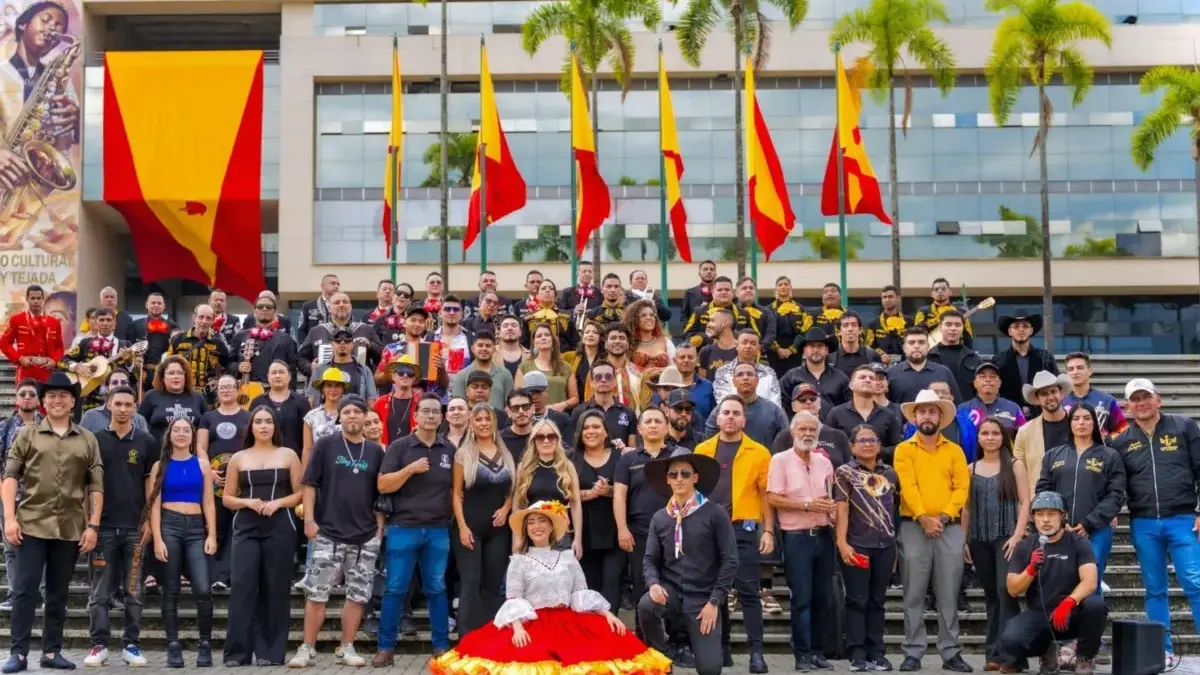
Out of this profound silence and shared trauma, a grassroots movement known as Pereira Resuena (Pereira Resonates) was born. Rather than retreating into isolation, local artists decided to mobilize. Rejecting the notion that music was inappropriate or insensitive during a period of mourning, the collective redefined art as an essential tool for psychological healing and community rebuilding.
Through initiatives like "Tarimas para Todos" (Stages for All), the collective is mapping out the city’s creative workforce, creating a comprehensive talent portfolio, and building strategic bridges with the private sector, municipal institutions, and commercial establishments. Their ultimate goal is clear: to transition from emergency relief to sustainable economic reactivation, ensuring that Pereira’s cultural heartbeat never falls silent again.
Chronology: From Catastrophe to Collective Action
Phase 1: August 10 – The Day the Music Stopped
At the moment the earthquake struck Pereira, the city’s cultural infrastructure suffered a dual blow. Physically, primary performance venues, independent theaters, bars, and restaurants sustained varying degrees of structural compromise. Culturally, the city was thrust into a state of shock.
For the first few weeks, the auditory environment of Pereira transformed entirely. The cheerful hum of conversation and live instrumentation gave way to heavy industry. In this climate of grief, performing music felt to many like an impossibility. Artists questioned the appropriateness of their craft while grappling with the immediate reality of rent, food insecurity, and professional displacement.
Phase 2: Late August – Finding a Voice in the Silence
As the initial rescue phase shifted toward recovery, a core group of local musicians and cultural agents began to hold clandestine virtual meetings and socially distanced gatherings. They faced a philosophical dilemma: How does a community sing when it is broken?
The consensus among the founding members of Pereira Resuena—including artists like Juan Gufo and Aguasanta Carreyo—was that music should not be viewed as a superficial layer of celebration, but rather as a fundamental human necessity. They realized that art serves as a mirror for pain and a catalyst for social cohesion. They chose to organize not to demand immediate handouts for themselves, but to ask what they could offer a fractured citizenry. Their guiding philosophy became: "We sing because we are alive, and we sing for those who cannot."
Phase 3: September – Mapping the Crisis and Organizing the Scene
By early September, the movement transitioned from philosophical discussions to logistical mobilization. Recognizing that a handful of isolated charity concerts would not solve systemic unemployment, the collective aligned its efforts with local government data collection while launching its own independent census of the creative sector.
Artists who had historically worked in isolation, competing fiercely for limited slots in a fragmented market, began sharing contact lists, pooling resources, and meeting regularly around the same table. Veteran performers established mentorship paradigms, pledging to bring emerging acts onto their own stages to democratize exposure and income.
Phase 4: Present Day – Establishing Roots and Forging the Future
Today, one month past the seismic event, Pereira Resuena is actively engaging with public institutions, private investors, and business associations to secure sustainable performance dates. The movement is no longer just a short-term disaster relief effort; it is evolving into a permanent advocacy organization dedicated to the formalization, dignification, and structural strengthening of Pereira’s entire music industry.
Supporting Data and Industry Vulnerability
The earthquake did not create the economic vulnerability of Pereira’s cultural sector; rather, it exposed a pre-existing reality that cultural workers have faced for decades. The live entertainment industry is heavily characterized by informal labor, weekly or per-gig pay structures, and a total absence of traditional labor protections, health insurance, or unemployment benefits. When physical venues collapse, the entire house of cards falls with them.
Statistical data provided by Pereira Resuena and cross-referenced with municipal reports illustrate the sheer scale of the disruption:
- Total Registered Impacted Workers: By early September, the Secretariat of Culture of Pereira registered approximately 1,119 cultural workers who had actively reported direct impacts from the emergency.
- Estimated Broader Sector Size: Industry insiders and municipal databases estimate that the broader cultural and artistic ecosystem of Pereira encompasses over 7,000 active individuals, highlighting that many more remain unregistered or fall outside formal safety nets.
- Financial Distress Metrics: Out of the initial pool of respondents registered by the Secretariat, between 700 and 800 individuals explicitly declared severe, immediate economic distress.
- Musicians Affected: Within that distressed demographic, approximately 500 are working musicians, vocalists, and instrumentalists whose daily trade requires physical access to open venues.
These numbers underscore why Pereira Resuena refuses to rely solely on sporadic charity events. Without a predictable, rotating stream of commercial gigs, hundreds of local families face prolonged destitution.
Official Responses and Institutional Engagement
The response from municipal and regional authorities has been a critical component of the post-earthquake recovery, though organizers emphasize that bureaucratic processes must be accelerated to match the urgency on the ground.
The Role of the Secretariat of Culture
The Secretariat of Culture of Pereira has taken a proactive stance by opening communication channels with grassroots initiatives like Pereira Resuena. By deploying census efforts early in September, the Secretariat attempted to quantify the human cost of the disaster. This data has served as the baseline for mapping out emergency relief funds and directing institutional aid toward the most vulnerable creative households.
Public-Private Partnerships
Discussions are currently underway to establish a unified financial pool—a shared fund backed by both public municipal resources and private sector contributions from Pereira’s commercial and hospitality associations. This fund aims to subsidize public performances, park concerts, and pop-up events in commercial spaces, turning the city’s economic recovery into a collaborative civic project.
Business owners and restaurant associations have expressed cautious optimism, recognizing that the return of live music is an essential psychological driver that will coax hesitant consumers back into commercial establishments, thereby accelerating the recovery of the entire local economy.
Implications: Beyond the Rubble
The emergence of Pereira Resuena carries deep sociological, economic, and cultural implications for the region and serves as a blueprint for how creative communities can navigate sudden natural disasters.
1. Breaking Down Industrial Silos
For years, Pereira’s music scene was marked by hyper-competition. Artists frequently operated within rigid genre silos, competing aggressively for a finite number of weekend gigs in a limited number of venues. The earthquake acted as a great equalizer. By stripping away all commercial infrastructure overnight, the crisis forced artists to realize that their survival depended on solidarity rather than competition. The sharing of stages, contacts, and mentorship models represents a permanent cultural shift toward a more collaborative ecosystem.
2. Redefining the Role of Art in Crisis Management
Traditional disaster relief focuses almost exclusively on physical reconstruction: repairing roads, restoring electrical grids, and rebuilding collapsed houses. Pereira Resuena challenges this purely materialist paradigm by insisting that emotional and spiritual reconstruction is just as vital. Music acts as social glue, offering a safe space for collective mourning, psychological decompression, and community solidarity.
3. Institutionalizing Informal Labor
One of the long-term strategic goals of the collective is to leverage this moment of crisis to push for structural reform in how cultural workers are treated under Colombian labor laws. By mapping the sector, categorizing talent pools, and formalizing a comprehensive directory, Pereira Resuena is laying the groundwork for a formalized trade union or professional guild that can advocate for health benefits, better contracts, and institutional safety nets long after the physical scars of the earthquake have healed.
4. A Call to Action for the Commercial Sector
Ultimately, the success of this movement hinges on civic participation beyond the artistic community. The collective has issued an open call to business owners, shopping mall administrators, restaurant operators, and corporate leaders across the Coffee Triangle: Become a bridge.
By opening doors to local artists, integrating live performances into daily business models, and committing to fair compensation, the commercial sector can actively participate in the renaissance of the city.
Conclusion
Pereira’s identity has always been tied to its warmth, its energy, and its rhythm. While the August 10 earthquake left deep physical and psychological scars across the urban landscape, it failed to break the spirit of those who create its soundtrack.
Through the tireless organizing of Pereira Resuena, the city is proving that rebuilding a community involves much more than pouring concrete and clearing debris. It requires restoring the rhythms of everyday life, honoring those who were lost, and creating spaces where people can gather, listen, and heal together.
In Pereira today, when an artist steps up to a makeshift microphone and the city pauses to listen, it is not merely a song filling the air—it is the sound of a resilient city refusing to be silenced.


Leave a Reply