

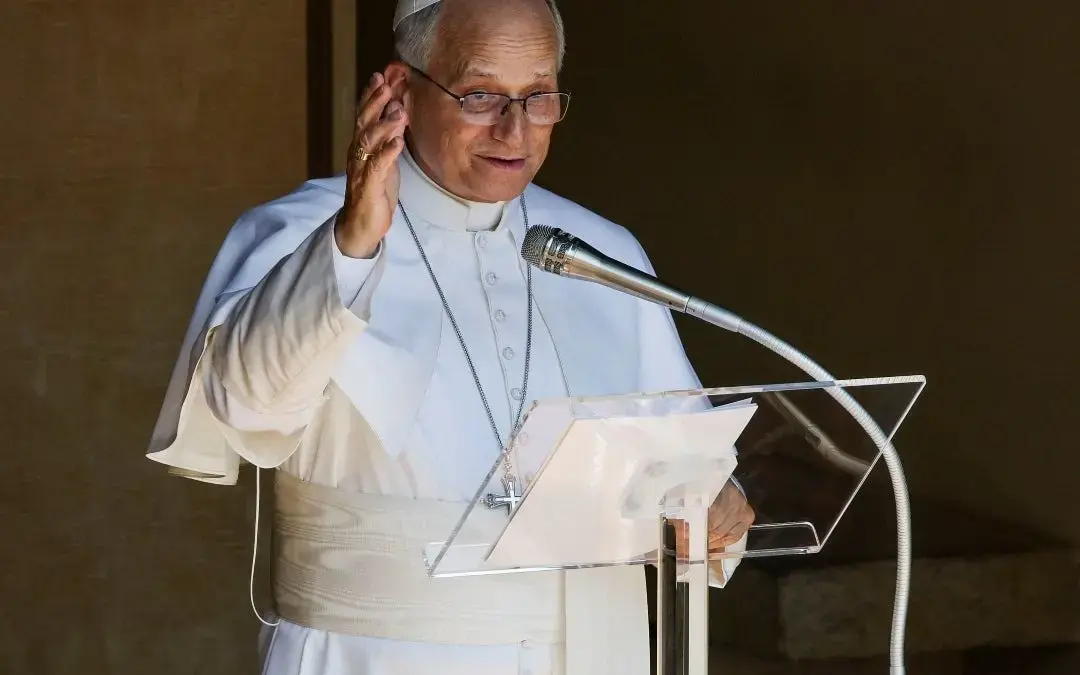
MONTEVIDEO / VATICAN CITY — In a momentous gathering at the heart of the Roman Catholic Church, the full delegation of the Uruguayan Episcopal Conference convened on Friday for a private audience with Pope Leo XIV. The high-stakes meeting—held during the bishops’ mandated quinquennial ad limina apostolorum visit—served not only as a formal administrative checkpoint for the South American ecclesiastical body, but also as a crucial staging ground for the Pontiff’s upcoming apostolic journey to the Southern Cone this coming November.
Against a backdrop of rising regional anxiety, institutional transformation, and cultural shifting, the discussions spanned a broad spectrum of urgent topics. From the devastating socioeconomic and security impacts of transnational drug trafficking to the delicate boundaries of modern state secularism, the Uruguayan prelates brought the unfiltered reality of their homeland directly to the desk of the Bishop of Rome.
Main Facts
The core of Friday’s audience centered on a comprehensive briefing regarding the state of Uruguayan society, delivered collectively by the nation’s bishops and spearheaded by the Archbishop of Montevideo, Cardinal Daniel Sturla.
- The Security Crisis: The Uruguayan delegation placed special emphasis on the alarming escalation of violence linked to drug cartels. Cardinal Sturla detailed how the tentacles of international narcotraffic are increasingly penetrating Uruguayan society, destabilizing communities, and mirroring broader institutional challenges observed across the Latin American region.
- The Papal Visit to Uruguay: The audience functioned as a logistical and spiritual preparation for Pope Leo XIV’s historic upcoming visit to Uruguay, scheduled for November 6, 7, and 8. The itinerary will take the Pontiff to three distinct cities: Montevideo, Paysandú, and Florida. The Pope is also slated to visit neighboring Argentina and Peru during the same regional tour.
- Cultural Concerns and Secularism: The bishops raised apprehensions regarding the erosion of religious dimensions in public life. Specifically, they cautioned that a healthy historical tradition of state laicism—which guarantees freedom of religion and pluralism—risks devolving into an aggressive secularism that systematically marginalizes faith from the public square.
- Spiritual Offerings and National Gifts: True to the synodal spirit of listening, the bishops presented the Pope with a vast compilation of written testimonies, hopes, dreams, expectations, and personal drawings and letters crafted by Uruguayan children. Additionally, the delegation gifted the Pontiff a comprehensive cultural volume titled Architecture, Art, and Heritage in the Churches of Uruguay, authored by Miguel Álvarez Montero with photography by Julio Testoni.
Chronology: The Road to Rome and the Path to November
To fully understand the gravity and timing of Friday’s Vatican encounter, one must trace the timeline of events connecting Montevideo, the Holy See, and the prospective itinerary for November.
Early 2024 – Mid 2025: Planning the Ad Limina and Papal Itinerary
The scheduling of the ad limina visit—a canonical obligation wherein bishops from around the world report on the status of their dioceses to the Pope every five years—coincided strategically with the Vatican’s preliminary planning for Pope Leo XIV’s broader South American tour. Months of diplomatic coordination between the Apostolic Nunciature in Montevideo and the Secretariat of State in the Vatican culminated in the autumn arrival of the Uruguayan bishops in Rome.
Monday through Thursday: The Ad Limina Process
Before their audience with Pope Leo XIV, the members of the Uruguayan Episcopal Conference spent days traversing the various dicasteries of the Roman Curia. They presented detailed reports on pastoral challenges, seminary formations, charitable works, and financial sustainability within their respective dioceses. These bureaucratic consultations laid the groundwork for the holistic picture presented to the Pontiff on Friday.
Friday: The Private Audience and Policy Briefings
The culmination of the week occurred on Friday morning in the Apostolic Palace. The private dialogue moved fluidly from spiritual encouragement to hard geopolitical and sociological realities. Following the audience, Cardinal Sturla briefed international and Italian media outlets, characterizing the days spent in Rome as a "great gift from God" (un regalazo de Dios) that prefigures the spiritual renewal expected in November.
November 6–8: The Anticipated Apostolic Journey
Looking ahead, the chronology points directly to the first week of November. Pope Leo XIV will touch down in Uruguay for a whirlwind three-day pastoral visit.
- November 6: Arrival in Montevideo, meetings with civil authorities, and initial public masses.
- November 7: Travel to the interior, visiting the department of Florida—home to the national sanctuary of the Virgin of los Treinta y Tres, the patroness of Uruguay—and Paysandú along the western border.
- November 8: Concluding masses and departure for Argentina.
Supporting Data: The Socio-Political Realities of Uruguay
To contextualize the warnings delivered by the Uruguayan bishops regarding drug trafficking and secularism, it is necessary to examine the socio-political indices and cultural landscape of the South American nation.
The Escalation of Narco-Violence
While historically boasting some of the lowest crime rates and highest institutional stability in Latin America, Uruguay has experienced a troubling paradigm shift over the past decade.
- Homicide Rates: According to regional security barometers, homicides linked to organized crime and territorial drug disputes have placed unprecedented pressure on law enforcement agencies.
- The Port of Montevideo: Geographically positioned as a natural logistical hub for trade connecting the Río de la Plata basin to the Atlantic, the port has increasingly been exploited by international cartels as a transit point for cocaine moving from the Andean region to European markets.
- Social Fabric: The bishops’ warning to Pope Leo XIV highlights how local consumption and micro-trafficking (bocas de pasta base) are devastating vulnerable urban neighborhoods, fracturing family structures, and drawing youth into cyclical violence.
The Paradox of Uruguayan Secularism
Uruguay is famously recognized as the most secular nation in Latin America, a status cemented by the Constitution of 1917, which officially separated Church and State and secularized public education under the intellectual guidance of José Pedro Varela.
- The Fine Line: As Cardinal Sturla articulated to the Pope, the Uruguayan Church largely respects and defends a positive laicism that ensures civic equality for all beliefs.
- The Threat of Militant Secularism: However, the episcopate remains vigilant against an intolerant laicism (laicismo militant) that seeks to scrub religious symbols from hospitals, schools, and public discourse, effectively relegating faith to the private conscience and denying its historical and ethical contributions to the common good.
Official Responses and Statements
The dialogue between the Holy Father and the Uruguayan hierarchy yielded profound spiritual reflections and explicit policy encouragements, as detailed in official readouts from the Holy See Press Office and statements from the Uruguayan delegation.
Cardinal Daniel Sturla on the Initiative of the People’s Letters
Speaking to the press following the audience, Cardinal Sturla emphasized the bottom-up nature of the gifts presented to the Pope:
"It is a deeply moving and beautiful initiative. It allows us to place directly into the hands of the Holy Father the genuine thoughts, spiritual searches, questions, and heartfelt experiences of the ordinary people of Uruguay. When he steps onto our soil in November, he will not be arriving as a stranger to our collective soul; he will already hold our children’s drawings and our people’s deepest dreams against his heart."
Pope Leo XIV on Peace and Social Harmony
Responding to the bishops’ expression of gratitude for his global advocacy as a "messenger of peace," Pope Leo XIV urged the pastors to remain steadfast in their mission of social cohesion. The Pontiff stressed that peace is not merely the absence of war, but the fruit of justice, solidarity, and the recognition of human dignity. He encouraged the Uruguayan Church to actively foster a culture of encounter in a polarized world.
The Vatican Statement on Family and Society
According to a communiqué released by the Vatican following the audience, the discussions also heavily prioritized the institution of the family. Pope Leo XIV noted that the health of any society is inextricably linked to the strength of its familial bonds. He called upon the bishops to offer robust pastoral support to families suffering from economic precarity, migration pressures, and moral confusion.
Implications: What the Papal Visit Means for Church and State in Uruguay
The intersection of the ad limina visit, the confidential briefings on organized crime, and the upcoming November pilgrimage carries profound implications for the future of Uruguay.
1. Strengthening the Moral Authority of the Church
By engaging directly with the Pope on issues that keep everyday citizens awake at night—such as cartel violence and community safety—the Uruguayan episcopate is positioning the Church not merely as an administrative religious body, but as an indispensable moral actor in national defense and social healing. In a secularized society, this moral clarity serves to elevate the public profile of religious faith.
2. A Catalyst for National Dialogue Ahead of November
The upcoming arrival of Pope Leo XIV is expected to temporarily transcend political polarization in Uruguay. By focusing the papal itinerary on three distinct regions—Montevideo (the political and demographic engine), Paysandú (representing the littoral and agricultural heartland), and Florida (the spiritual epicenter of national identity)—the visit will force a national conversation on values, community solidarity, and historical heritage.
3. Addressing Institutional Vulnerabilities
The frank admissions made to Pope Leo XIV regarding the infiltration of narcotraffic underscore the reality that no nation in the region is immune to transnational crime. The Vatican’s moral backing of the Uruguayan bishops provides spiritual fortification to judges, law enforcement officers, social workers, and clergy members who risk their lives daily on the front lines of anti-drug initiatives in marginalized neighborhoods.
4. Navigating the Boundaries of Pluralism
Finally, the discourse on secularism versus laicism sets the stage for ongoing intellectual and cultural debates within Uruguay. As the nation prepares to host the Pontiff, the Church will undoubtedly use the platform to advocate for a pluralistic public space where faith-based institutions can continue to operate schools, hospitals, and charitable soup kitchens without facing bureaucratic marginalization or ideological hostility.
As the days tick down to November 6, the spiritual momentum generated in Rome this week promises to ripple across the Río de la Plata, transforming what could have been a routine administrative visit into a historic prelude of hope, renewal, and resilience for the people of Uruguay.


Leave a Reply