

By Global Environmental Desk
Published: October 2023
Main Facts
The global imperative to mitigate environmental degradation has reached a critical juncture. For decades, the relentless accumulation of pollution—driven by unchecked industrial processes and biological waste—has degraded ecosystems and threatened human health. In response, global climate strategies have increasingly pivoted toward deep decarbonization, centered heavily on the pillars of electrification and a comprehensive energy transition.
According to a comprehensive analysis released by the International Renewable Energy Agency (IRENA), achieving a sustainable, net-zero global energy system requires far more than incremental changes. It demands an unprecedented, multi-sectoral restructuring of how humanity generates, distributes, and consumes energy.
The core findings of the IRENA report emphasize that transitioning away from fossil fuels—petroleum, coal, and natural gas—must be accelerated significantly by the year 2035 to align with the Paris Agreement targets and the outcomes of the historic UAE Consensus reached at COP28. However, generating clean, green electricity is fundamentally counterproductive if heavy industry, commercial transport, and residential infrastructure continue to rely on hydrocarbons.
To bridge this gap, IRENA projects that electricity must account for approximately 35% of total final energy consumption by 2035, scaling rapidly to 50% by 2050. This massive transformation cannot occur organically; it requires a complete overhaul of global electricity grids, massive capital injections, digital modernization, international cooperation, and targeted regulatory frameworks tailored to regional economic realities.
Chronology of the Transition: From Past Commitments to 2035 and Beyond
The pathway toward global electrification and systemic decarbonization has evolved through a series of critical international milestones, laying the groundwork for the ambitious targets set for 2035 and 2050.
- Pre-2015: The Fossil Fuel Era and Early Warnings
Decades of industrial expansion without environmental accountability led to critical pollution thresholds. While early climate accords acknowledged the danger of greenhouse gases, global energy grids remained overwhelmingly dependent on coal, oil, and gas. Renewable energy sources like solar and wind were viewed as supplementary rather than foundational. - 2015–2020: The Paris Agreement and the Rise of Renewables
The signing of the Paris Agreement at COP21 established a universal framework to limit global warming to well below 2°C. During this period, the cost of solar photovoltaic (PV) and wind technologies plummeted, making renewables economically competitive with fossil fuels for the first time. Governments began establishing early renewable portfolio standards, though systemic grid modernization lagged behind. - 2023: COP28 and the UAE Consensus
A watershed moment occurred at the UN Climate Change Conference (COP28) in Dubai. The First Global Stocktake and the resulting "UAE Consensus" explicitly called for global efforts to transition away from fossil fuels in energy systems in a just, orderly, and equitable manner. It set the stage for organizations like IRENA to outline the precise economic and structural requirements needed to make this vision a reality by 2035. - 2026–2035: The Critical Decade of Accelerated Investment
As outlined by IRENA, this current decade represents the most crucial window for action. To meet 2035 targets, global investments in electrical grids must double immediately. This period requires the systematic phase-out of inefficient fossil fuel subsidies, the rollout of smart, digitized grids, and the widespread adoption of electric mobility and electric heating. - 2036–2050: Consolidation and Deep Decarbonization
The final stretch toward the 2050 net-zero goals will focus on hard-to-abate sectors. With primary grids fully modernized and running on clean energy, remaining industrial processes will rely on advanced green hydrogen, sustainable bioenergy, and sophisticated energy storage systems to achieve complete economic decarbonization.
Supporting Data and Financial Metrics
The realization of IRENA’s electrification roadmap hinges entirely on capital allocation. The agency’s data highlights a profound mismatch between current financial commitments and the capital required to build a resilient, modernized, and electrified global economy.
The Investment Gap in Electrical Grids
Historically, investments in transmission and distribution infrastructure have grown linearly, while renewable energy generation has grown exponentially. This imbalance has created grid bottlenecks where clean energy cannot be efficiently transported to demand centers.
To rectify this, IRENA stresses that global grid investments must be doubled:
- Current Baseline: Approximately $0.5 trillion annually.
- Period 2026–2035: Must scale to $1 trillion annually.
- Period 2036–2050: Must scale to $1.2 trillion annually.
- Total Cumulative Investment Required: A staggering $29 trillion over the coming decades.
Consumption and Storage Targets
- 35%: The targeted share of electricity in total final energy consumption by 2035.
- 50%: The targeted share of electricity in total final energy consumption by 2050.
- Demand Flexibility and Storage: Alongside physical wire expansion, the multi-trillion-dollar grid investment must fund massive expansions in global battery storage capacity and smart-grid demand response systems. Without these technologies, variable renewable sources (like wind and solar) will destabilize regional power grids during peak demand hours.
Official Responses and Strategic Frameworks
Governments, international bodies, and financial institutions have responded to IRENA’s analysis by emphasizing that the energy transition is no longer merely an environmental concern, but a matter of national security, economic competitiveness, and social equity.
The Multisectoral Approach
Official frameworks derived from recent international climate dialogues underscore that isolated environmental policies are doomed to fail. IRENA’s leadership points out that a holistic, cross-government strategy is mandatory. Key components of this official strategy include:
- Regulatory Timelines: Establishing legally binding phase-out dates for internal combustion engine vehicles, coal-fired power plants, and unabated industrial gas usage.
- Innovative Financing Mechanisms: Utilizing multilateral development banks (MDBs) to de-risk green investments in developing nations, where capital costs remain prohibitively high.
- Human Capital and Education: Fostering specialized educational programs and vocational training to supply the millions of skilled workers required for grid modernization, solar installation, battery manufacturing, and software-driven energy management.
- Digitalization: Integrating artificial intelligence, the Internet of Things (IoT), and automated smart meters to balance supply and demand in real-time across vast continental power grids.
Implications of the Transition
While the roadmap provided by IRENA offers a clear scientific and economic trajectory toward a sustainable future, it also highlights complex regional challenges and hard truths about certain industrial sectors.
The Challenge of Hard-to-Abate Sectors
A critical realization in modern energy economics is that not all economic activities are immediately electrifiable. Sectors such as long-haul aviation, global maritime shipping, heavy cement production, and certain high-heat industrial processes are fundamentally incompatible with current battery-electric technologies.
For these industries, the transition away from fossil fuels cannot rely solely on overhead power lines or lithium-ion batteries. Instead, they will depend on alternative energy carriers, such as:
- Green Hydrogen: Produced via the electrolysis of water using renewable electricity.
- Sustainable Bioenergy: Derived from organic waste and non-food biomass.
Regional Disparities and Economic Realities
The pace and success of the energy transition will not be uniform. IRENA notes that shifting from fossil fuels to advanced energy networks depends entirely on the economic structure and natural resource availability of each region. Developing nations, while rich in renewable potential (such as solar in Africa or wind in Latin America), often lack the sovereign credit ratings and domestic capital required to fund multi-billion-dollar grid overhauls.
Without robust international cooperation, technology transfers, and concessional finance, the global transition risks leaving vulnerable economies behind, exacerbating global inequality even as aggregate emissions fall.
Beyond the Solar Panel: A Modernized System
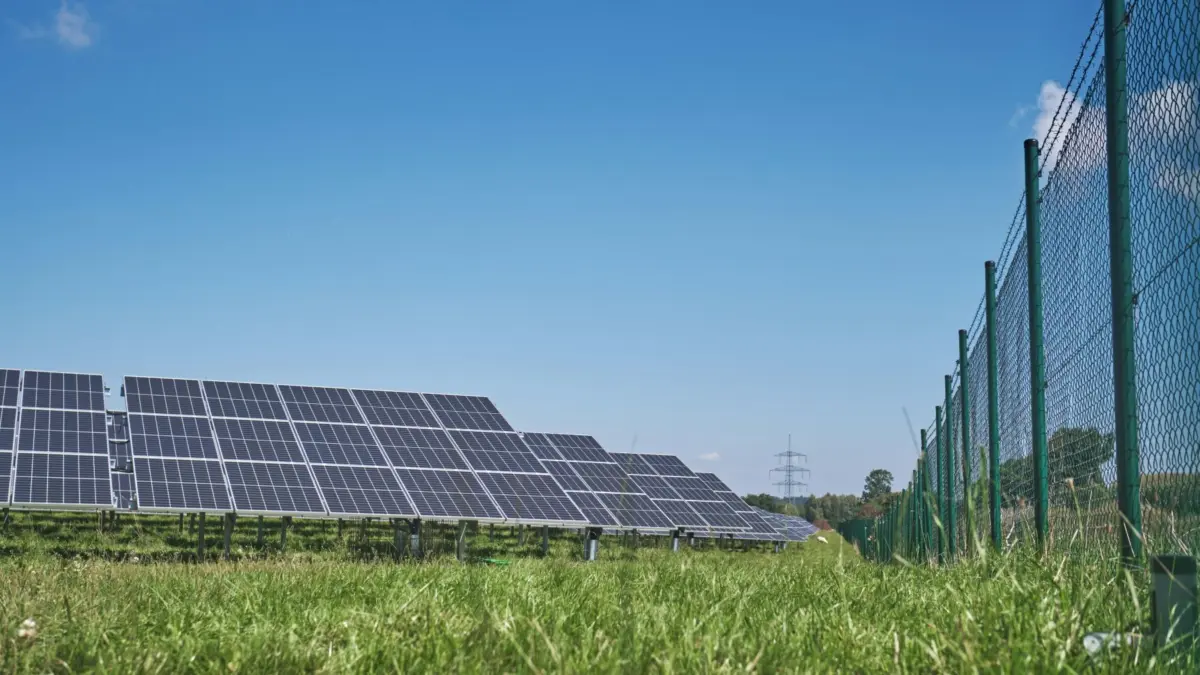
Ultimately, the transition to a sustainable global ecosystem is far more complex than simply installing residential solar panels to offset local electricity bills. As IRENA’s extensive analysis demonstrates, safeguarding the planet while maintaining modern industrial output requires an aggressive, highly funded, and structurally integrated transformation of the world’s electrical grids.
Only through a coordinated global commitment to massive grid expansion, demand flexibility, regulatory reform, and targeted sector-specific solutions can humanity successfully abandon the fossil fuel era without compromising global energy security or economic stability.




Leave a Reply