

By Fitness & Science Desk
Published: February 2025
Main Facts
When fitness enthusiasts step into a gym, home workout space, or athletic training facility, every single repetition performed against a resistance load is traditionally broken down into a push or a pull. However, biomechanically, every complete repetition consists of three distinct phases: a phase where the load is actively moved, a phase where the load is decelerated back to the starting position, and an intermediary phase bridging the two.
These components are scientifically classified as the concentric phase, the eccentric phase, and the isometric (or transition) phase, respectively.
While the vast majority of gym-goers focus exclusively on the concentric phase—the explosive moment of lifting, pressing, or driving the weight upward—a landmark new scientific review reveals that the eccentric phase is equally, and in many cases more, important for long-term physiological adaptations.
According to a comprehensive systematic review and meta-analysis published in The Journal of Strength and Conditioning Research, emphasizing the eccentric (lowering) phase yields superior muscle hypertrophy outcomes, particularly in the upper extremities, and triggers faster initial structural adaptations than concentric training alone.

Despite these profound findings, millions of trainees continue to treat the descent of a weight as merely a passive transition, leaving the most potent part of the muscle-building stimulus on the table.
Chronology
To understand how the fitness community arrived at this paradigm shift regarding muscle actions, it is helpful to trace the historical progression of resistance training science and the recent milestones that led to the 2025 meta-analysis.
- Early 20th Century (The Era of Empirical Bodybuilding): Early strength pioneers like Eugen Sandow and later Golden Era bodybuilders recognized the visual benefits of controlled lifting speeds, often intuitively slowing down the descent of weights. However, training methodologies were largely anecdotal, driven by trial-and-error rather than empirical data.
- Late 20th Century (Emergence of Isokinetics and Negative Training): Exercise physiologists began isolating eccentric muscle actions—often referred to as "negatives." Researchers discovered that human skeletal muscle could produce significantly more force during lengthening contractions than during shortening contractions. However, practical application was largely restricted to specialized rehabilitation clinics or advanced bodybuilding protocols due to equipment limitations.
- The 2010s (The Micro-Focus on Concentric Volume): As commercial fitness expanded, standard hypertrophy programming heavily prioritized total volume, sets, repetitions, and concentric failure. The eccentric phase was largely relegated to a secondary "tempo" note in training logs (e.g., a 3-second descent), lacking robust, large-scale comparative data against pure concentric training.
- December 2024 / January 2025 (The Definitive Meta-Analysis): A team of researchers published a rigorous systematic review and meta-analysis in The Journal of Strength and Conditioning Research (da Silva et al., 2025). Comprising data from 26 high-quality studies and 682 healthy adult participants, this comprehensive paper directly compared eccentric versus concentric muscle actions on hypertrophy, providing the highest level of scientific evidence to date and shifting the modern conversation on workout programming.
Supporting Data
The scientific weight behind the eccentric phase is no longer a matter of mere speculation; it is backed by gold-standard empirical data.
The 2025 review by da Silva and colleagues represents the pinnacle of evidence-based research—a systematic review paired with a meta-analysis. By aggregating data from 26 distinct, high-quality studies encompassing 682 healthy adult participants, the researchers were able to isolate and directly compare the muscular adaptations resulting from concentric versus eccentric contractions.
Key data points and findings from the literature include:

- Superior Upper-Limb Hypertrophy: When isolating upper extremity muscle groups, eccentric training consistently outperformed concentric training in eliciting greater increases in cross-sectional muscle area.
- Accelerated Initial Adaptations: Participants engaging in structured eccentric protocols demonstrated faster initial structural and neural adaptations, making this phase invaluable for time-constrained scenarios.
- Supramaximal Force Capacities: Human skeletal muscle exhibits a unique physiological architecture allowing it to handle loads during the eccentric phase that are 20% to 40% greater than what the same muscle can lift concentrically. For instance, an athlete capable of a concentric press of 100 kilograms can safely absorb and control eccentric loads ranging from 120 kg to 140 kg.
- The "Tempo" Sweet Spot: Current kinesiological recommendations suggest that combining a rapid concentric phase with a controlled, deliberate eccentric phase lasting approximately three seconds creates the optimal mechanical tension and time-under-tension profile for maximum hypertrophic response.
Official Responses and Expert Perspectives
As the fitness and sports science community digests the implications of the da Silva et al. (2025) meta-analysis, leading strength and conditioning coaches, physical therapists, and exercise physiologists have weighed in on how this data alters conventional training paradigms.
Dr. Marcelo F. Tasinafo Júnior, one of the co-authors of the recent review, emphasized the clinical and athletic significance of the findings:
"We have long known that eccentric actions are mechanically distinct, but this meta-analysis confirms that their impact on muscle protein synthesis and structural remodeling goes beyond mere preparation for the next lift. Practitioners who ignore the lowering phase are operating at a distinct disadvantage."
Renowned personal trainers and strength coaches have also echoed the need to reform standard gym programming. Leading voices in sports rehabilitation note that because eccentric training allows for supramaximal loading without a concurrent spike in cardiorespiratory demand, it serves as an indispensable tool in clinical settings.
Physical therapists utilizing eccentric protocols report remarkable success in treating tendonopathies and rebuilding muscle mass in patients recovering from severe atrophy, noting that controlled deceleration safely exposes healing tissue to high mechanical thresholds that trigger rapid tissue repair.

Implications
The integration of these scientific insights into everyday training, athletic conditioning, and clinical rehabilitation carries profound implications for how individuals interact with physical resistance.
1. Revolutionizing Hypertrophy Programming
For the everyday gym-goer aiming to build muscle mass, the takeaway is clear: the rep doesn’t end when the weight reaches the top. Shifting mindset and execution toward a slow, deliberate three-second negative transforms a standard set into a high-stimulus hypertrophic engine. Ignoring the descent means discarding the half of the exercise that creates the most micro-tears and mechanical tension necessary for growth.
2. Advanced Techniques for Elite Athletes and Bodybuilders
Because eccentric capacity exceeds concentric capacity, advanced trainees can utilize specialized techniques to break through plateaus. Methods include:
- Bilateral Up, Unilateral Down: Performing the concentric lifting phase with two limbs (e.g., a leg extension or leg press) and lowering the load with a single limb, effectively overloading the eccentric phase by up to 40% for that working side.
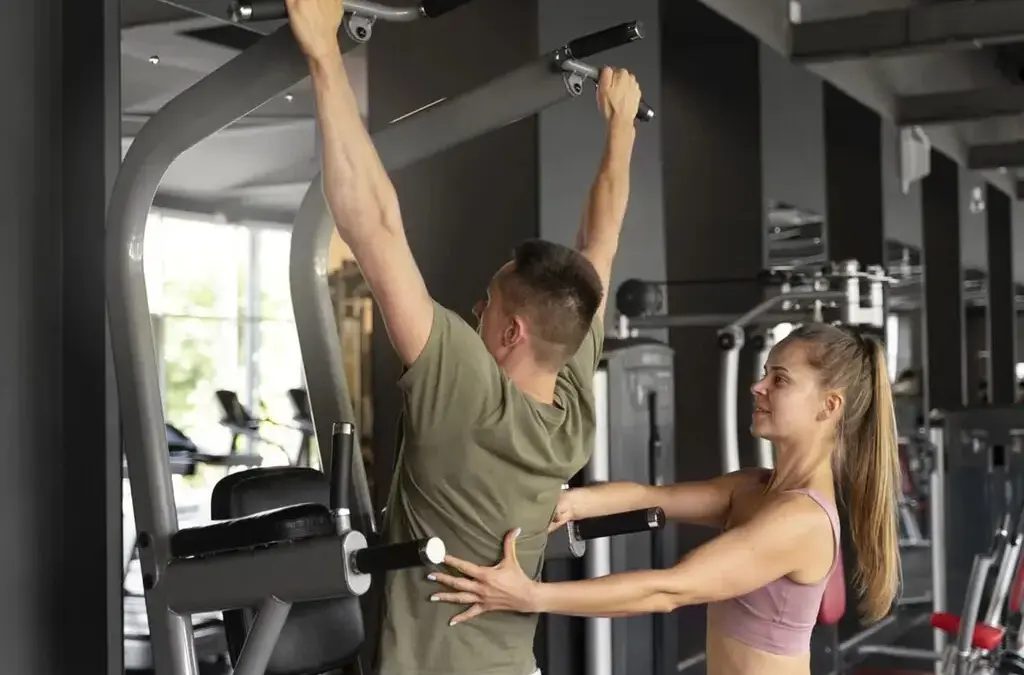
- Assisted Spotting: Having a training partner manually assist or apply pressure during the concentric phase, leaving the trainee to handle the eccentric load independently.
- Specialized Equipment: Utilizing drop-off weight release hooks for barbell movements (such as squats or bench presses) that shed weight automatically once the descent is completed, allowing the user to handle supramaximal loads safely.
- Dedicated Eccentric Movements: Incorporating bodyweight or specialized exercises like the Nordic Hamstring Curl or Reverse Nordic Curl, which leverage high-intensity eccentric loading to bulletproof joints, prevent athletic injuries, and maximize hamstring and quad development.
3. Accelerated Results for Time-Crunched Populations and Rehabilitation
For elite athletes navigating compressed pre-season schedules, actors needing rapid physique transformations for film roles, or patients recovering from muscular atrophy, the rapid initial adaptations provided by eccentric training offer a distinct timeline advantage. Rehabilitation specialists can leverage supramaximal eccentric loads to rebuild functional strength and structural integrity safely, bypassing the limitations of concentric strength deficiencies.
Ultimately, the science demands a cultural shift in the gym. By respecting the descent as much as the lift, trainees unlock the true mechanical potential of every repetition, bridging the gap between mediocre gains and maximum physiological transformation.
References
- da Silva, L. S. L., Gonçalves, L. D. S., Alves Campos, P. H., Benjamim, C. J. R., Tasinafo Júnior, M. F., de Lima, L. C. R., Bueno Júnior, C. R., & Alves, C. P. L. (2025). Comparison Between Eccentric vs. Concentric Muscle Actions On Hypertrophy: A Systematic Review and Meta-analysis. Journal of Strength and Conditioning Research, 39(1), 115–134. https://doi.org/10.1519/JSC.0000000000004981



Leave a Reply