

Main Facts
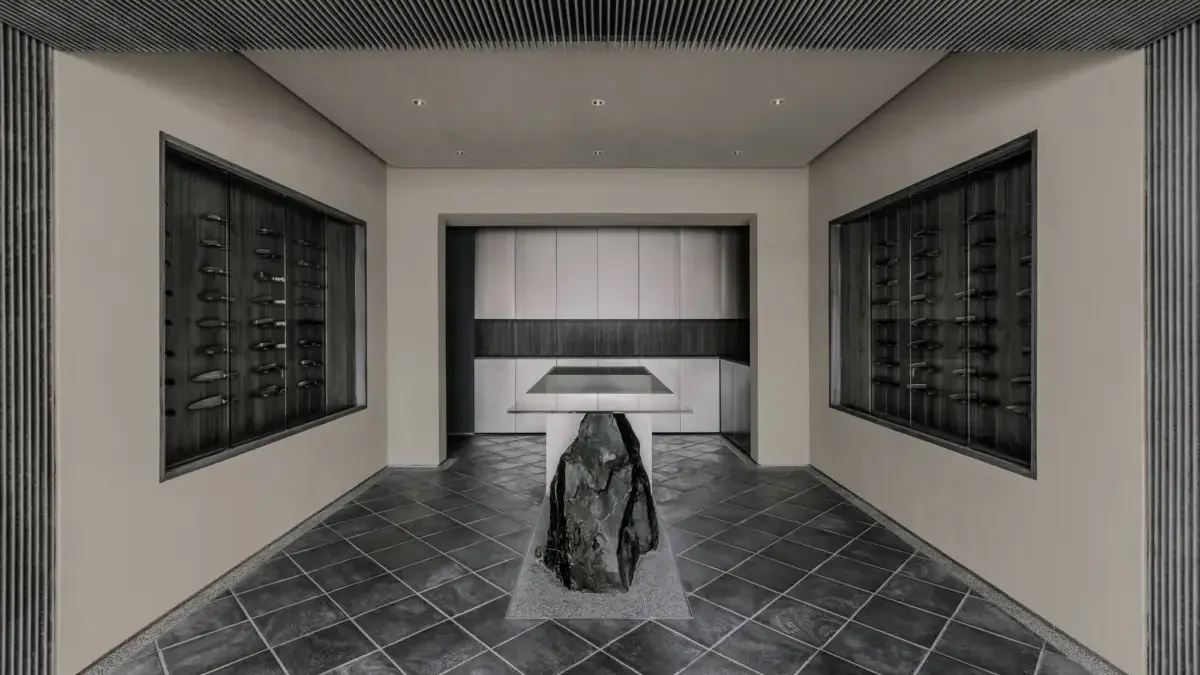
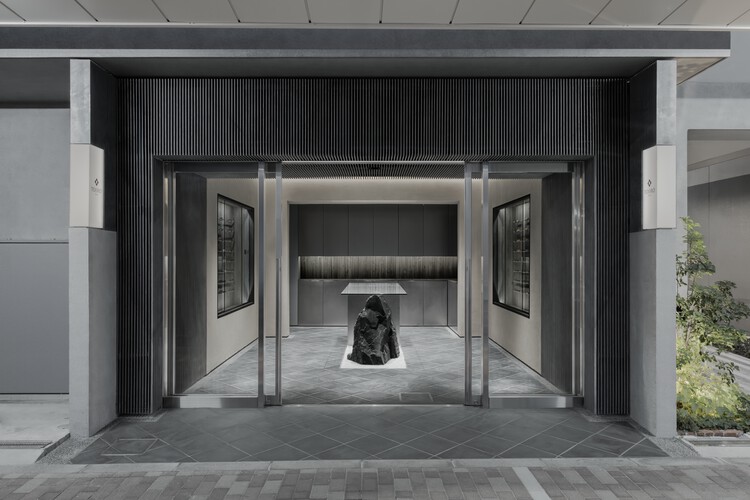
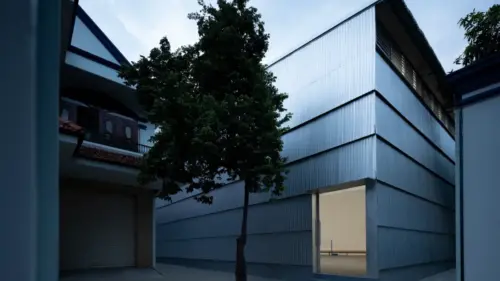
In the bustling urban fabric of Tokyo, where architectural trends often prioritize ephemeral flash over enduring presence, a new sanctuary dedicated to craftsmanship has taken root. Designed by the visionary studio L/O (Katata Yoshishito Design) and curated by Miwa Negoro, the Tojiro Knife Gallery Tokyo "Hanare" represents a profound departure from traditional retail environments.
Rather than functioning as a standard commercial showroom, the "Hanare"—a Japanese architectural term traditionally denoting a detached annex or secluded retreat—has been conceived as an intimate atelier. Its primary purpose is to house, display, and celebrate Tojiro’s most exclusive tier of offerings: bespoke blades, semi-custom creations, and one-of-a-kind handcrafted knives that require a deeply personal selection process.
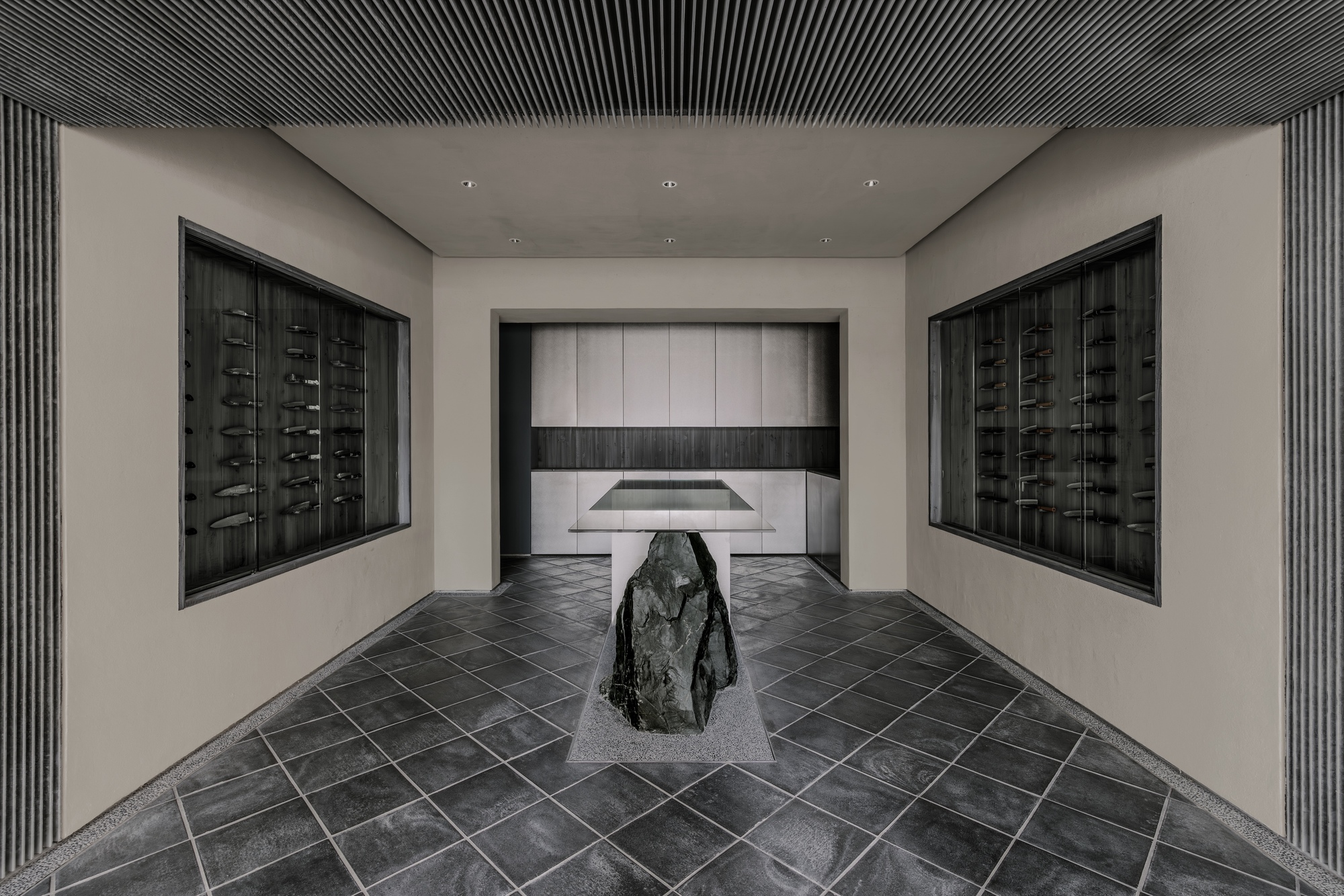
The project marries the rigorous heritage of Japanese cutlery manufacturing with contemporary architectural minimalism. Photographed extensively by Keishin Horikoshi of SS, the space utilizes muted palettes, tactile natural materials, and meticulous lighting to elevate the knife from a mere culinary utensil to an object of contemplation and enduring art. The gallery acknowledges that acquiring a high-end Japanese blade is not a transactional impulse buy, but a deliberate journey—one rooted in time, patience, and the philosophy of generational stewardship.
Chronology
While the official debut of the "Hanare" annex marks a contemporary milestone in Tojiro’s retail strategy, its existence is the latest chapter in a rich, multi-decade lineage of knife-making excellence and architectural evolution.
- The Foundation of Craft: Decades prior to the conception of the Hanare annex, Tojiro established itself as a premier blade manufacturer in Niigata Prefecture, blending traditional smithing techniques—such as multi-layer forge-welding—with modern metallurgical innovations.
- Expansion into the Capital: As the brand grew, Tojiro opened its flagship gallery in Tokyo to introduce the general public to its comprehensive lineup, establishing a hub for maintenance, sharpening demonstrations, and education on Japanese cutlery culture.
- The Need for Separation: Over time, the brand’s catalog evolved to include highly specialized, custom-ordered pieces. The bustling nature of the main flagship store proved counterproductive for clients seeking the quiet, undisturbed focus required to commission a bespoke blade.
- Conception and Design Phase: L/O (Katata Yoshishito Design), in collaboration with curator Miwa Negoro, was brought on to design the "Hanare." The brief called for an architectural envelope that could foster intimacy, slow down the visitor’s perception of time, and honor the artisanal weight of custom cutlery.
- Completion and Opening: The Tojiro Knife Gallery Tokyo "Hanare" officially opened its doors, welcoming master chefs, collectors, and culinary enthusiasts into a space tailor-made for personalized blade curation.
Supporting Data and Spatial Dynamics
To understand the architectural significance of the Tojiro Knife Gallery Tokyo "Hanare," one must examine how physical space influences human interaction with physical objects.
- Project Leadership: Architecture and spatial design by L/O (Katata Yoshishito Design); curation by Miwa Negoro.
- Visual Documentation: Photography captured by Keishin Horikoshi / SS.
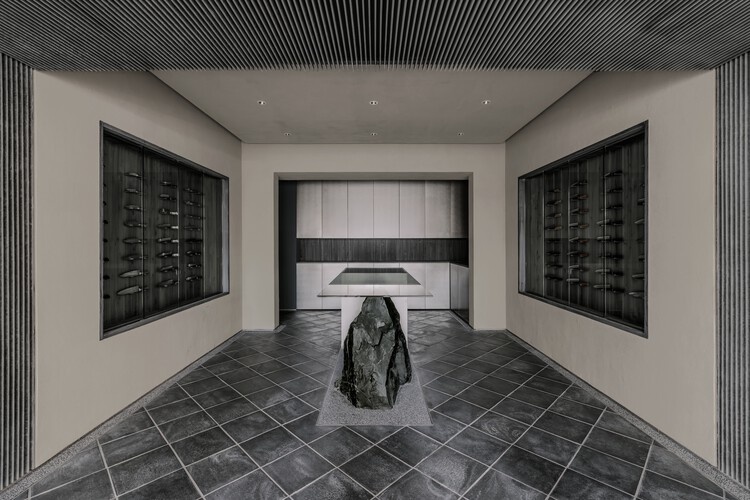
- Materiality: The interior design relies heavily on honest, raw materials—primarily natural woods, textured metals, and subtle stonework—which harmonize with the organic elements of steel, wood handles, and sharpened edges found in the knives themselves.
- Spatial Typology: By adopting the concept of the Hanare (detached annex), the designers successfully isolated the bespoke commissioning process from the high-traffic retail floor, creating a quiet acoustic and visual buffer.
- The Lifecycle Philosophy: Data shared by the brand highlights that a Tojiro knife is engineered for decades of daily use. The spatial layout intentionally includes zones dedicated to discussing maintenance, re-sharpening protocols, and long-term repair, reinforcing a zero-waste, anti-disposable consumer ethos.
Official Perspectives and Design Philosophy
The underlying ethos of the Tojiro Knife Gallery Tokyo "Hanare" is rooted in the philosophy that a knife is an extension of the human hand and a lifelong companion. In official statements regarding the project, the design and curatorial teams emphasized the psychological and emotional dimensions of choosing a blade.
"A Tojiro knife is not a simple product. It is a tool that is used during decades, is sharpened, is repaired, and grows alongside its proprietor," notes the project’s guiding design narrative.
This perspective fundamentally redefines the retail experience. In an era dominated by instantaneous digital purchases and algorithmic recommendations, the Hanare champions friction and deliberation.
"We consider that choosing a knife, therefore, is not an act of comparison, but of time: the time necessary to encontrar la hoja única con la que vas a convivir [to find the unique blade you will live with]."
L/O (Katata Yoshishito Design) sought to translate this temporal philosophy into spatial terms. By stripping away extraneous commercial distractions, the interior architecture acts as a silent frame. The walls, display cases, and lighting do not compete with the merchandise; rather, they stage an intimate dialogue between the artisan’s forged steel and the future owner’s hands. Miwa Negoro’s curation further enhances this narrative, ensuring that every object on display tells a story of provenance, material integrity, and generational craftsmanship.
Implications
The completion of the Tojiro Knife Gallery Tokyo "Hanare" carries significant implications across multiple disciplines, influencing retail design, architectural theory, and the broader artisanal economy.
1. The Evolution of Experiential Retail
As e-commerce absorbs standard transactional retail, physical stores must justify their existence through deeply immersive, sensory-driven experiences. The Hanare offers a masterclass in this paradigm shift. By carving out a specialized annex for bespoke, high-touch interactions, Tojiro proves that physical spaces can thrive by offering what the digital realm cannot: physical intimacy, expert tactile guidance, and an unhurried environment of trust.
2. Architecture as a Mediator of Time
In contemporary architectural discourse, speed and efficiency are often lauded. L/O (Katata Yoshishito Design) counters this by using architecture to slow time down. The layout, circulation, and material palette of the Hanare compel visitors to pause, reflect, and engage in mindful consumption. This design strategy has broader implications for spaces dedicated to high-end craftsmanship, furniture, and bespoke tailoring, where the environment must mirror the meticulous labor embedded in the products.
3. Sustainability Through Permanence
At a time when global consumer culture is reckoning with environmental degradation driven by fast fashion and disposable goods, the philosophy championed by Tojiro and materialized by L/O offers a compelling alternative. By centering an architectural gallery around the concept of a knife that lasts for decades—maintained through sharpening and repair—the project champions sustainability through extreme durability. It posits that true ecological consciousness begins with objects that command respect, care, and a lifelong commitment from their owners.
In sum, the Tojiro Knife Gallery Tokyo "Hanare" is much more than a showcase for sharp steel. It is a harmonious synthesis of architecture, curation, and ancient craft—a quiet sanctuary in the heart of a megacity that reminds us of the profound beauty found in things made to endure.


Leave a Reply