

Published: September 21, 2026
Author: Camilla Ghisleni (Translated by Romullo Baratto / Adapted for ArchDaily)
Main Facts
Contemporary higher education is undergoing a spatial revolution, and nowhere is this more evident than in Brazil. A new architectural movement across the country is moving decisively away from the traditional, siloed lecture hall. Instead, architects and academic institutions are championing fluid, continuous spatial typologies that integrate indoor and outdoor environments.
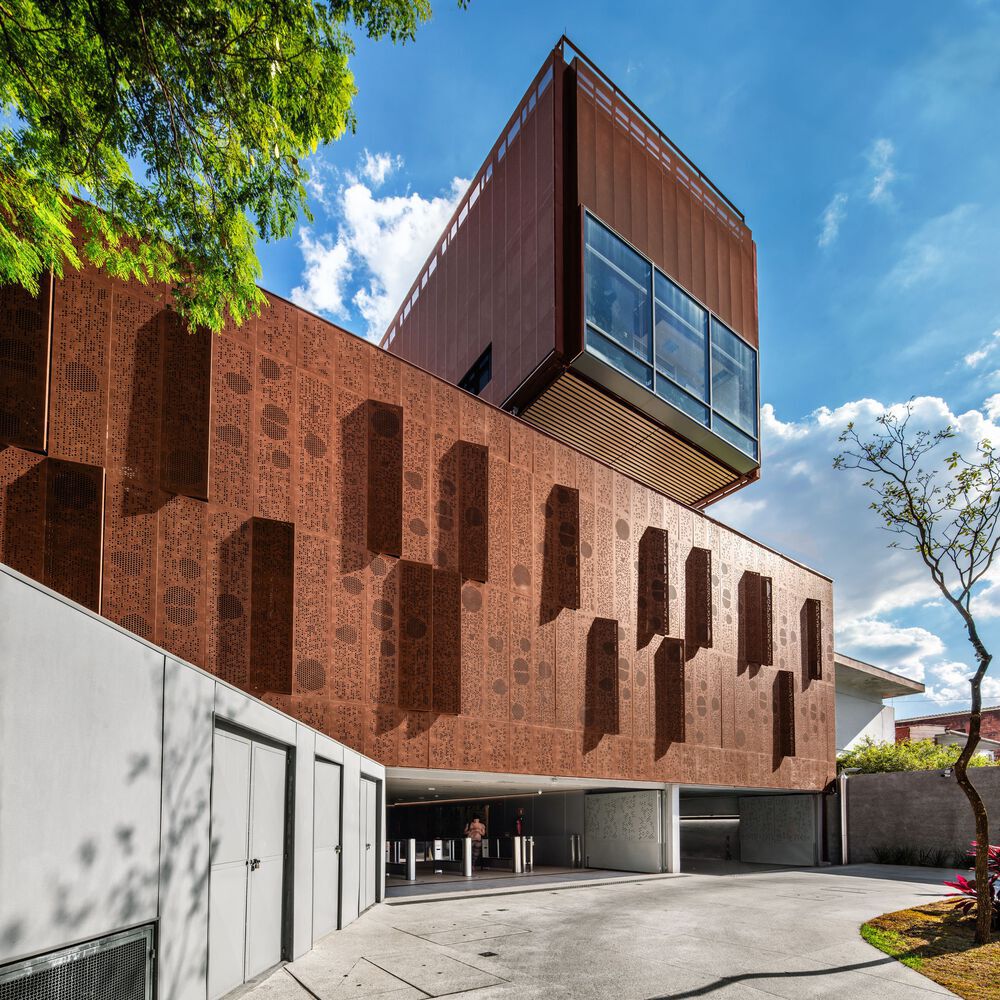
At the heart of this shift is a return to foundational modernist ideals pioneered more than six decades ago. By dissolving the rigid boundaries between classrooms, courtyards, ramps, and open-air voids, contemporary Brazilian university design transforms academic architecture into active public infrastructure. Rather than serving as mere containers for rote learning, today’s university buildings are designed to foster chance encounters, interdisciplinary collaboration, and civic integration. This approach is being tested and refined across a diverse spectrum of academic institutions—ranging from historic public universities to rapidly expanding private campuses.
Chronology: The Evolution of Brazilian Academic Architecture
To understand how Brazil arrived at this contemporary renaissance in educational design, it is necessary to trace the historical evolution of its university spaces across the 20th and 21st centuries.
- 1961 – The Paradigm Shift: Architects Vilanova Artigas and Carlos Cascaldi conceptualized the landmark Faculty of Architecture and Urbanism of the University of São Paulo (FAU-USP). Their design introduced a revolutionary concept: a singular, continuous concrete territory organized around a vast central patio, interconnected by gentle interior ramps and devoid of traditional walls. This building established a lasting architectural philosophy: the university as an extension of the public sphere.
- The Late 20th Century – Massification and Standardization: Following the design of FAU-USP, higher education demand began to surge. For decades, however, state and private investments largely prioritized quantitative expansion over spatial innovation. Campuses grew through repetitive, isolated building typologies, often replicating the standard, inward-looking American suburban campus model or dense, compartmentalized urban office blocks.
- The 2000s – Exponential Growth in Enrollments: Fueled by government expansion programs (such as REUNI) and the exponential growth of the private sector, Brazilian higher education experienced unprecedented massification. Universities absorbed a vastly larger, more diverse demographic, straining existing infrastructure and forcing institutions to rethink how students occupy academic space.
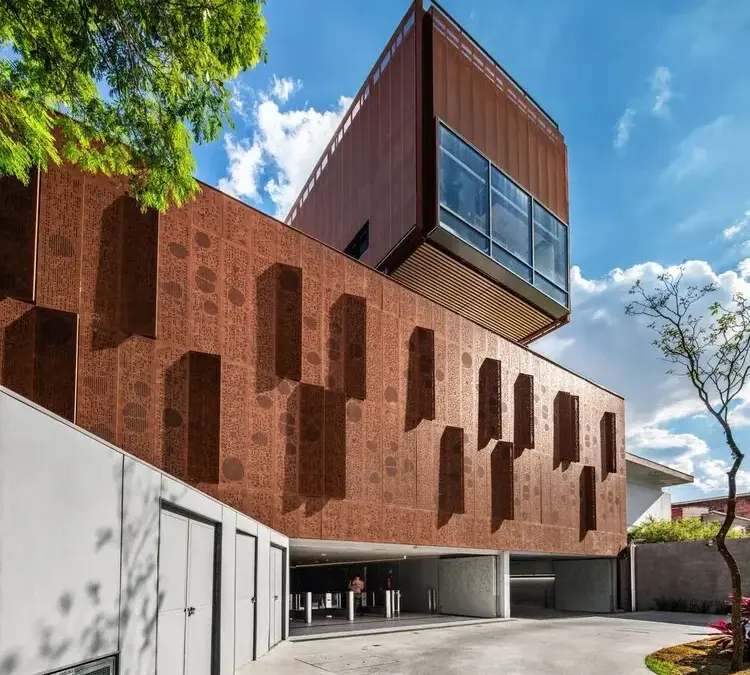
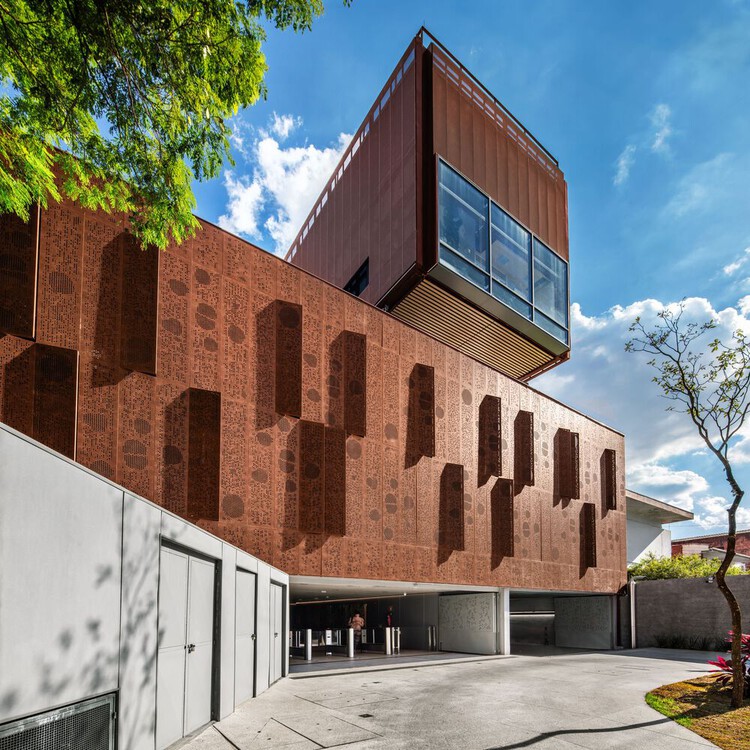
- 2020 to Present – The Contemporary Spatial Synthesis: A new generation of architectural practices—including Biselli Katchborian, UNA Arquitetos, Lins Arquitetos Associados, and CEPLAN + CoGa Arquitetura—began reinterpreting Artigas’s legacy. Rather than copying historical forms verbatim, these firms responded to modern pedagogical shifts (such as active learning, project-based work, and digital integration) by crafting hyper-porous, landscape-integrated academic pavilions that blur the distinction between interior study and exterior social life.
Supporting Data: The Scale of Transformation
The spatial reimagining of Brazilian campuses cannot be separated from the staggering demographic and institutional growth of the nation’s higher education system. The physical spaces of learning have had to expand and adapt to accommodate a vastly democratized student body.
- 226,218: The approximate number of registered undergraduate enrollments across Brazil in 1960, a period when higher education was restricted to a tiny elite.
- Nearly 10 Million: The total number of undergraduate enrollments recorded in 2023, representing a massive structural expansion that fundamentally altered the scale and operational demands of university infrastructure.
- A Dual-Sector Ecosystem: Modern Brazilian higher education is shaped by the dynamic interplay between an extensive network of federal and state public universities and a powerful, highly influential private sector. This dual model has generated a remarkably diverse array of architectural scales, regional typologies, and urban integration strategies—from sprawling green campuses in secondary cities to hyper-dense vertical integration projects in metropolitan centers like São Paulo.
Official Responses and Design Philosophy
Architects, urban planners, and academic administrators driving these projects emphasize that modern campus design is fundamentally a social strategy rather than a purely aesthetic one.
"The architecture of a university should not dictate a passive hierarchy where knowledge flows in only one direction," notes a leading voice within the contemporary Brazilian architectural scene. "When you open the floor plan, eliminate corridors in favor of communal plazas, and bring natural ventilation and vegetation into the core of the building, you democratize interaction. The courtyard becomes the primary classroom."
Institutional leaders across both public and private universities report that these architectural interventions have direct pedagogical benefits. By replacing dead circulation spaces with multi-use collaborative hubs, institutions have observed higher rates of cross-disciplinary student engagement and extended campus residency hours. Students no longer leave immediately after a lecture; instead, they remain on campus to study, socialize, and collaborate in shared, semi-open environments.
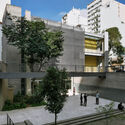
Furthermore, municipal authorities have praised the shift toward porous campus boundaries. By designing university buildings that act as civic thresholds rather than fortified enclaves, institutions are successfully mitigating the historical friction between gown and town, inviting local communities into public plazas, exhibition spaces, and landscaped grounds.
Implications: The Future of the Learning Landscape
The wave of campus redesigns across Brazil carries profound implications for global educational architecture. As universities worldwide grapple with post-pandemic learning modalities, hybrid instruction, and the necessity of human connection in an increasingly digital age, the Brazilian model offers a compelling blueprint.
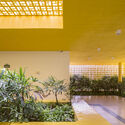
- The Death of the Static Classroom: The traditional, front-facing lecture hall is steadily losing its monopoly on higher education. Future-proof academic buildings demand spatial flexibility—zones that can effortlessly transition from quiet independent study to boisterous collaborative workshops.
- Infrastructure as Urban Catalyst: Universities can no longer afford to operate as isolated islands within the city. By embedding public pathways, open auditoriums, and landscaped courtyards into the academic fabric, institutions enrich urban life while simultaneously enhancing their own cultural and intellectual vitality.
- Sustainability and Biophilic Integration: The contemporary Brazilian approach—heavily reliant on natural cross-ventilation, shaded open-air voids, and seamless transitions to tropical landscaping—demonstrates how educational architecture can drastically reduce energy consumption while fostering psychological well-being.
Ultimately, the legacy established by Vilanova Artigas and reimagined by today’s vanguard of Brazilian architects proves that the most enduring spaces for learning are not those that isolate students from the world, but those that gently immerse them within it.

Leave a Reply