


SACRAMENTO, Calif. — Just ahead of the opening of New York Climate Week, the administration of California Governor Gavin Newsom released a landmark data report that challenges conventional economic and political orthodoxies regarding environmental regulation. According to the findings released by the California Air Resources Board (CARB), the Golden State has successfully driven down its greenhouse gas emissions while simultaneously experiencing robust economic growth.
For decades, critics of aggressive environmental policies—most notably championed by political figures such as former U.S. President Donald Trump—have argued that sweeping green mandates act as a financial anchor on state and national economies, destroying jobs, inflating energy costs, and burdening consumers. However, the latest state inventory paints a drastically different picture. California’s aggressive trajectory toward carbon neutrality demonstrates that strict climate policies can coexist with, and even accelerate, financial prosperity, job creation, and technological innovation.
Here is an in-depth look at the three core pillars of California’s recent success report, detailing how the state managed to decouple economic growth from carbon pollution.
1. The Transportation Revolution: Phasing Out Combustion Without Crashing the Market
Transportation has historically been the Achilles’ heel of California’s environmental framework. Long known for its sprawling urban geography, car-centric culture, and notoriously congested freeways, the state relied for decades on millions of internal combustion engine (ICE) vehicles that pumped massive amounts of pollutants into the atmosphere. This heavy reliance on fossil fuels created a localized public health crisis, particularly in urban centers like Los Angeles and the Central Valley, characterized by severe smog and high rates of childhood asthma.
Recognizing that meaningful climate action required tackling the transportation sector head-on, Governor Newsom’s administration rolled out an ambitious roadmap. Rather than relying solely on punitive measures, the state paired regulatory targets with targeted financial incentives, including vehicle rebates, trade-in grants, and infrastructure subsidies. These economic tools were explicitly designed to lower the barrier to entry for zero-emission vehicles (ZEVs), making electric and hydrogen alternatives more accessible to a broader demographic.
The strategy has yielded unprecedented dividends. Today, California boasts over 2.7 million zero-emission vehicles cruising its roadways. Crucially, this transition has not crippled the automotive or retail sectors; instead, it has catalyzed a massive buildout of supporting infrastructure. Official state data confirms that California is now home to more than 216,445 public and shared EV chargers, creating a dense network that alleviates "range anxiety" and encourages consumer adoption.
Economists point out that rather than suffering losses, local automotive supply chains and green-tech startups have pivoted to meet the surging demand, proving that phasing out fossil-fuel vehicles can be achieved through market stimulation rather than economic suppression.
2. Powering the Future: Expanding Electricity Generation While Smashing Emissions Caps
The energy sector presents one of the most delicate balancing acts for any modern government. Electricity generation is foundational to economic vitality—powering homes, hospitals, data centers, and manufacturing plants. Historically, however, it has also been one of the primary drivers of global carbon emissions. Curbing this sector too abruptly risks blackouts, skyrocketing utility bills, and industrial stagnation.
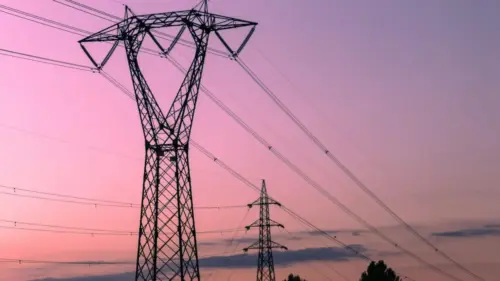
Yet, California’s administration navigated this tightrope by aggressively pivoting toward renewable energy sources and advanced grid-storage systems. By integrating massive amounts of wind, solar, and geothermal power alongside utility-scale battery storage, the state managed to meet a surging energy demand without compromising environmental integrity.
California has firmly established itself as a global leader in clean energy transition. Since 2019, the state has added more than 37,000 megavates (MW) of clean energy capacity to its grid. Simultaneously, battery storage capacity has skyrocketed, scaling to more than 21,000 MW. This dramatic expansion has fortified the grid against volatility and extreme weather events.
The results are historic. California has achieved unprecedented milestones in energy generation, recently recording 279 distinct days in which 100% of the state’s electricity demand was met entirely by renewable sources for at least a portion of the day. While fossil fuels and transitional energy sources still play a role during peak evening hours—meaning the state has not yet achieved 24/7 total renewable operation—the data reveals an undeniable trend line: clean power is scaling rapidly, efficiently, and cleanly.
3. Financial Dividends: Job Creation and Consumer Savings in the Green Economy
The most contentious debate surrounding climate policy has always centered on the wallet: Who pays for the transition, and what happens to the labor market? Critics have long asserted that green mandates kill blue-collar jobs and impose regressive taxes on working-class families. California’s latest report directly challenges this narrative, showing that the green transition has yielded profound macroeconomic and microeconomic benefits.
According to the state’s updated findings, the transition to renewable energy and low-carbon infrastructure has saved Californians an estimated $200 billion in health-related expenditures. By dramatically reducing air pollution, the state has cut rates of respiratory and cardiovascular illnesses, saving billions in medical bills, reducing emergency room visits, and cutting down on lost workplace productivity. Furthermore, consumer-facing clean energy programs have returned millions of dollars directly to citizens through energy bill savings and efficiency rebates.
On the employment front, the numbers are equally compelling. The green sector has become a premier economic engine for the state. According to the authoritative 2025 E2 Clean Jobs America report, California has generated hundreds of thousands of new jobs, with 554,300 specific positions tied directly to the clean energy sector.
To put this in perspective, California currently employs double the number of clean energy workers as Texas—the nation’s second-ranking state in green employment. These jobs span manufacturing, engineering, grid maintenance, installation, and software development, offering stable, high-paying career paths that cannot easily be outsourced.
Chronology of California’s Climate Policy Milestones
To understand how California achieved this delicate synthesis of economic growth and environmental stewardship, it is helpful to examine the historical timeline of policy decisions that laid the groundwork for the 2025 report:
- 2006 (AB 32): The passage of the Global Warming Solutions Act under Governor Arnold Schwarzenegger. This landmark legislation established the nation’s first comprehensive program to achieve a sharp reduction in greenhouse gas emissions to 1990 levels by 2020.
- 2016 (SB 32): Governor Jerry Brown signed Senate Bill 32, which raised the stakes by requiring the state to slash greenhouse gas emissions 40% below 1990 levels by 2030—one of the most ambitious climate targets in the Western Hemisphere.
- 2018 (Executive Order B-55-18): California committed to achieving carbon neutrality across its entire economy no later than 2045, alongside achieving net-negative greenhouse gas emissions thereafter.
- 2020 (The Executive Ban on ICE Vehicles): Governor Gavin Newsom signed an executive order directing the state to phase out the sale of new gasoline-powered passenger cars and trucks by 2035, accelerating the electric vehicle transition.
- 2022–2023 (Grid Resilience Investments): In response to climate-induced heatwaves and grid strain, California massively accelerated its battery storage deployment, crossing the critical 10,000 MW and later 21,000 MW thresholds.
- September 2024 (The CARB Report Release): Released on the eve of New York Climate Week, this comprehensive inventory proved that emissions had continued to drop while GDP and employment figures reached historic highs, cementing the viability of the state’s model.
Supporting Data: By the Numbers
A macro-level view of California’s environmental and economic indicators reveals the profound scale of this transition:
| Metric | Current Data / Milestone | Context / Comparison |
|---|---|---|
| Zero-Emission Vehicles (ZEVs) | 2.7 Million vehicles on the road | Leading the nation in passenger electrification. |
| Public & Shared EV Chargers | 216,445 chargers statewide | Creating a robust infrastructure network to support growth. |
| Clean Energy Capacity Added | Over 37,000 MW (since 2019) | Rapid scaling of wind, solar, and geothermal assets. |
| Battery Storage Capacity | Over 21,000 MW | Securing grid reliability and storing surplus renewable power. |
| 100% Renewable Generation Days | 279 distinct days (partial coverage) | Demonstrating intermittent grid capability of meeting total demand. |
| Healthcare Savings | ~$200 Billion | Saved via reduced air pollution and lower illness rates. |
| Clean Energy Employment | 554,300 jobs | Doubling the employment figures of the second-ranking state (Texas). |
Official Responses and Political Implications
The release of the CARB data has ignited fierce national debate, serving as a political touchstone ahead of broader federal policy discussions.
Proponents of aggressive climate action view the report as an unmitigated triumph. Environmental advocates and state officials argue that California has created a blueprint for the rest of the world, proving that climate policy does not require economic sacrifice.
"We are proving skeptics wrong every single day," state energy officials noted following the briefing. "For years, we were told we had to choose between a healthy economy and a livable planet. California’s data proves that false choice for what it is: a myth. We are growing our GDP, creating hundreds of thousands of family-sustaining jobs, clearing our air, and lowering healthcare costs all at once."
Conversely, the model remains a frequent target for conservative critics and fossil-fuel advocates. Prominent political figures, most notably Donald Trump, have repeatedly attacked California’s green agenda, characterizing the state’s strict mandates, electric vehicle transition goals, and emissions caps as regulatory overreach that creates undue economic burdens, drives up energy costs for working-class families, and penalizes traditional manufacturing industries. Critics argue that California’s economic gains persist despite its climate policies, fueled by the tech sector and venture capital, rather than because of them.
Despite these political crosswinds, the empirical data released by CARB provides state regulators with powerful ammunition. By demonstrating that environmental regulations can directly correlate with lower healthcare burdens, massive job growth, and technological leadership, California has shifted the terms of the national debate.
As the state heads further into the decade toward its 2030 and 2045 carbon neutrality deadlines, the eyes of the global economic and scientific communities remain fixed on the Golden State. Whether other states—and nations—will successfully replicate California’s blueprint remains to be seen, but the narrative that fighting climate change is inherently economically ruinous has been fundamentally challenged.


Leave a Reply