

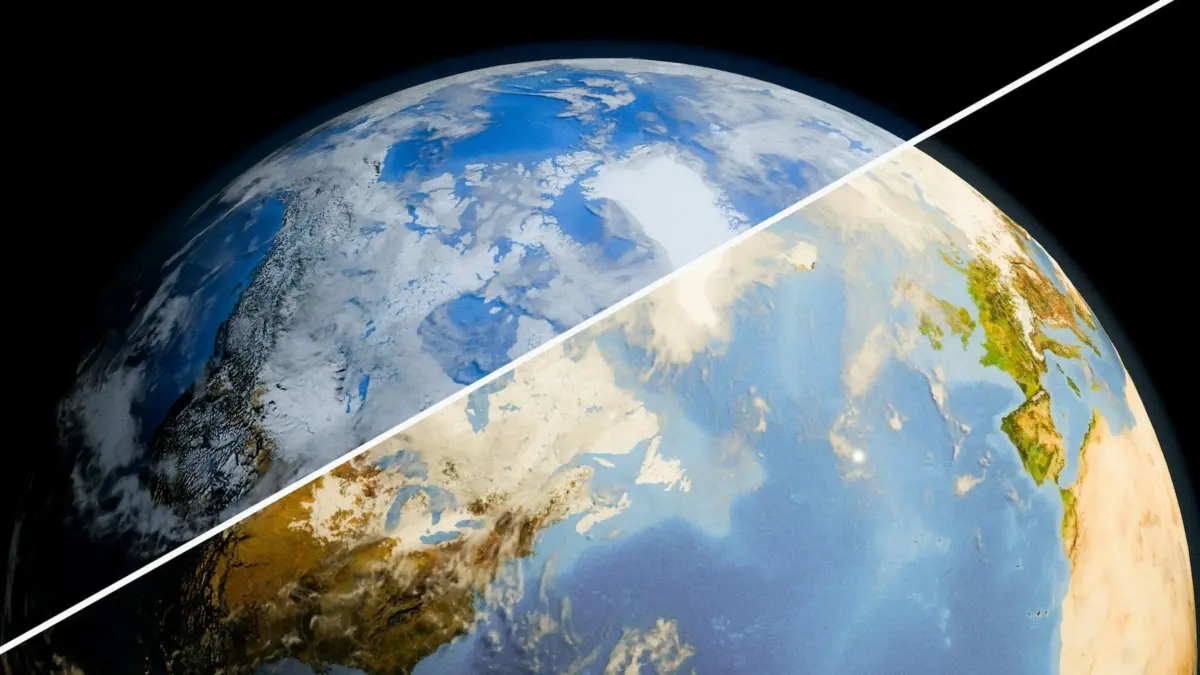
UNITED NATIONS HEADQUARTERS, NEW YORK — Against a backdrop of compounding ecological disasters—ranging from historic marine heatwaves and persistent mega-droughts to unprecedented alpine glacial melts—the United Nations has issued a stark, unequivocal warning: global warming has outpaced current political commitments. The window to secure a livable and sustainable future is narrowing by the day.
As world leaders, diplomats, and international civil society delegates convene for the high-level segments of the United Nations General Assembly (UNGA) and its accompanying General Debate, the climate crisis has justifiably usurped the center stage of global geopolitics. Secretary-General António Guterres and top UN climate agencies have intensified calls for an urgent overhaul of international environmental strategies. At the heart of this diplomatic push is a definitive framework: four fundamental pillars that must simultaneously dictate global policy, economic architecture, and infrastructural development if humanity is to successfully avert runaway climate breakdown.
Main Facts: The Current Crossroads of Global Climate Action
The scientific consensus, led by the Intergovernmental Panel on Climate Change (IPCC) and amplified by the UN, is unambiguous. Earth is rapidly approaching critical tipping points—thresholds beyond which climate change becomes self-sustaining and catastrophic. The ongoing General Assembly serves as a crucial staging ground to bridge the cavernous gap between current national climate pledges (Nationally Determined Contributions, or NDCs) and the profound emissions reductions required to cap global temperature rise at 1.5 degrees Celsius above pre-industrial levels.
The core diagnosis delivered by UN leadership is that incrementalism is no longer a viable policy option. The global community is not merely managing a transition; it is engaged in a race against time. To address this, the United Nations has structured its emergency appeal around four indispensable pillars: Velocity (Speed of Action), Financial Investment, Climate Adaptation, and International Cooperation.
+--------------------------------------------------------------------------+
|                       THE UN FOUR-PILLAR FRAMEWORK                       |
+--------------------------------------------------------------------------+
|  1. VELOCITY    --> Drastic acceleration of emissions cuts (10% by 2035)  |
|  2. INVESTMENT  --> Restructuring global finance and equitable funding   |
|  3. ADAPTATION  --> Fortifying infrastructure and vulnerable communities   |
|  4. COOPERATION --> Transnational solidarity and synchronized policies   |
+--------------------------------------------------------------------------+
Chronology of Crisis: How the Global Climate Agenda Reached This Pivotal Moment
To understand the urgency of the current UN General Assembly debates, one must trace the recent trajectory of international climate diplomacy and the accelerating physical realities on the ground.
- Late 2015 (COP21): The historic adoption of the Paris Agreement established a shared global commitment to hold the increase in the global average temperature to well below 2°C above pre-industrial levels, while pursuing efforts to limit the increase to 1.5°C.
- 2021–2022 (COP26 and COP27): Amid escalating extreme weather events worldwide, Glasgow and Sharm el-Sheikh summits underscored the yawning gap between rhetoric and reality. The concept of "loss and damage" gained formal recognition, yet substantive financial mechanisms remained politically gridlocked.
- Late 2023 (COP28 in Dubai): For the first time in the history of the UN climate summits, nations formally agreed to "transition away from fossil fuels" in energy systems, signaling the beginning of the end of the fossil fuel era. However, implementation timelines remained vague.
- Throughout 2024: Global temperatures shattered historical records month after month. Unprecedented oceanic heat anomalies, catastrophic flash floods across East Africa and South Asia, and devastating wildfire seasons in North and South America demonstrated that the climate crisis had arrived ahead of scientific projections.
- Current UNGA Session: As world leaders take the podium in New York, the focus has shifted entirely from target-setting to immediate, measurable implementation across the four structural pillars outlined by the United Nations.
Supporting Data: The Metrics of Urgency
The gravity of the UN’s call to action is anchored in hard empirical data and measurable benchmarks.
1. The Velocity Metric: Halting the Trajectory
According to recent UN analyses, if nations enact highly aggressive, coordinated interventions immediately, it is mathematically and technologically possible to drive down global greenhouse gas emissions by 10% by the year 2035 relative to current trajectories. While this falls short of the absolute halving needed by 2030 to securely hit 1.5°C, it represents a vital bending of the curve that prevents catastrophic feedback loops.
2. The Energy Transition Imperative
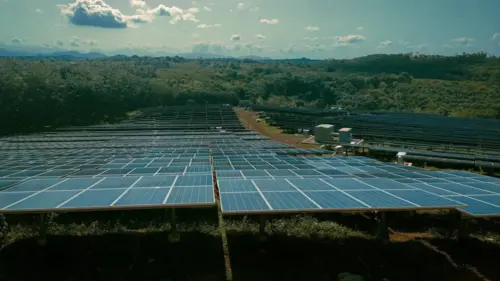
Closing the pollution gap requires an instantaneous halt to global net deforestation—the lungs of the planet—coupled with an exponential scaling of renewable energy generation. The infrastructure supporting this shift demands massive capital injections into:
- Modern, intelligent power grids capable of handling decentralized renewable inputs.
- Grid-scale battery storage facilities to manage intermittency.
- The rapid electrification of personal and commercial transport fleets.
- The widespread deployment of non-fossil-fuel heating and cooling systems in residential and industrial infrastructure.
3. The Financial Deficit in the Developing World
The economic divide remains the single greatest impediment to global climate action. Developing nations—which historically contributed the least to cumulative global emissions—frequently face borrowing costs up to eight times higher than developed economies when attempting to finance green infrastructure. Without sweeping financial restructuring, these nations face an impossible choice between servicing crippling sovereign debt and investing in climate resilience.
Official Responses and Institutional Perspectives
The discourse at the United Nations General Assembly has laid bare the political tensions, moral imperatives, and strategic alignments characterizing contemporary environmental diplomacy.
The United Nations Leadership
Secretary-General António Guterres has repeatedly reminded delegates that planet Earth cannot negotiate with physics. In his opening addresses, Guterres emphasized that the transition to renewable energy is unstoppable, but the current speed of that transition is dangerously inadequate.
"We are playing Russian roulette with our planet," Guterres declared. "We need exit ramps off the highway to climate hell. The global North must deliver on finance, and the global South must be equipped, not encumbered, in the transition."
Voices from the Global South
Representatives from Small Island Developing States (SIDS) and Least Developed Countries (LDCs) delivered blistering critiques of major economies. They highlighted that while wealthy nations debate the nuances of multi-lateral bank reform, low-lying coastal communities are already facing existential threats from rising sea levels and intensified tropical cyclones.
The Financial Sector and Multilateral Development Banks (MDBs)
In response to UN pressure, representatives from major Multilateral Development Banks (such as the World Bank and the Inter-American Development Bank) have signaled tentative willingness to expand their lending capacities. Proposals to leverage private capital through blended finance models—where public funds absorb initial risks to entice private investors—are taking center stage in financial committee rooms during the General Assembly.
Implications: What Happens If We Fail—and Succeed?
The implementation—or neglect—of the UN’s four-pillar framework carries profound, generational implications for human civilization.
The Cost of Inaction
Should the international community fail to accelerate velocity, mobilize investment, adapt proactively, and cooperate globally, the consequences will be systemic and irreversible:
- Economic Collapse: Agricultural systems will suffer widespread failure, triggering severe food insecurity, inflationary shocks, and supply chain disruptions. Extreme weather events will inflict trillions of dollars in structural damage annually, bankrupting municipal and national disaster-relief funds.
- Human Displacement: The UNHCR and climate security experts project that hundreds of millions of people could be displaced by mid-century, turning climate refugees into one of the defining geopolitical challenges of the modern era.
- Ecological Unraveling: Coral reef ecosystems, vital rainforests, and stable oceanic currents (such as the Atlantic Meridional Overturning Circulation) face irreversible collapse, destroying global biodiversity hot-spots.
The Dividend of Action
Conversely, successful execution of the UN’s blueprint offers a transformative horizon:
- Enhanced Energy Security: Accelerating the transition to renewables frees nations from the geopolitical volatility of fossil fuel markets, insulating economies from petrostate conflicts and supply shocks.
- Public Health Renaissance: Drastically reducing fossil fuel combustion will instantly curtail particulate air pollution, saving millions of lives annually from respiratory and cardiovascular diseases.
- Resilient Economies: Investing in robust infrastructure, early-warning meteorological systems, and climate-smart agriculture will protect vulnerable populations, fostering sustainable and equitable economic growth well into the 22nd century.
Detailed Breakdown of the Four Pillars
Pillar 1: Velocity – The Pace of Decarbonization
Time is the ultimate scarce resource in environmental governance. The first pillar dictates that emissions reductions must occur at a breakneck pace. This means dismantling bureaucratic inertia and fast-tracking permitting processes for wind, solar, and geothermal energy projects.
Furthermore, stopping deforestation is treated not merely as a conservation goal, but as an immediate emissions-mitigation tactic. Preserving primary forests in the Amazon, the Congo Basin, and Southeast Asia prevents the instantaneous release of gigatons of stored carbon back into the atmosphere.
Pillar 2: Investment – Rewiring Global Finance
You cannot build a green global economy with twentieth-century financial instruments. Pillar two calls for concessional loans—loans with below-market interest rates—and debt-for-climate swaps that relieve developing nations of crushing debt burdens while freeing domestic capital for ecological transition.
Reform of Bretton Woods institutions (the IMF and the World Bank) is positioned as an absolute prerequisite. By multiplying the lending capacity of MDBs and creating regulatory environments that incentivize private institutional investors to pour trillions into green technologies in the Global South, the international community can bridge the green investment gap.
Pillar 3: Adaptation – Fortifying Against the Unavoidable
Mitigation stops things from getting worse, but adaptation prepares us for the damage already locked into the climate system. Because centuries of historic emissions guarantee further warming, societies must radically adapt.
This pillar encompasses engineering climate-resilient civil infrastructure—such as elevated roadways, sea walls, and earthquake- and flood-resistant housing. It also involves agricultural transformation, pivoting toward drought-resistant crop varieties, precision water-management techniques, and the universal deployment of community-level early warning systems for extreme weather events. Adaptation is fundamentally about survival and maintaining socio-economic continuity in a disrupted world.
Pillar 4: Cooperation – The Geopolitics of Survival
Climate change is the ultimate borderless threat. A carbon molecule emitted in one hemisphere traps heat across the entire globe. Consequently, unilateral action is inherently insufficient.
Pillar four champions synchronized transnational policies, technology transfers, and open-source green innovation. When wealthier nations share advanced clean-tech manufacturing processes with emerging economies, the global transition accelerates exponentially. Cooperation transforms competitive geopolitical friction into a unified collective defense strategy for the human species.
Conclusion: A Defining Choice for Humanity
As the UN General Assembly draws its deliberations toward a close, the path forward is laid bare in stark relief. The warnings issued by the United Nations are neither alarmist hyperbole nor abstract academic theories; they are grounded in the observable reality of a stressed and warming planet.
The four pillars—Velocity, Investment, Adaptation, and Cooperation—provide the structural scaffolding necessary to navigate the storm. Whether world leaders possess the political courage, moral clarity, and fiscal generosity to translate these principles into binding legislative reality remains the defining question of our era. The world is watching, and as the United Nations has repeatedly cautioned, humanity can no longer afford the luxury of delay.


Leave a Reply