

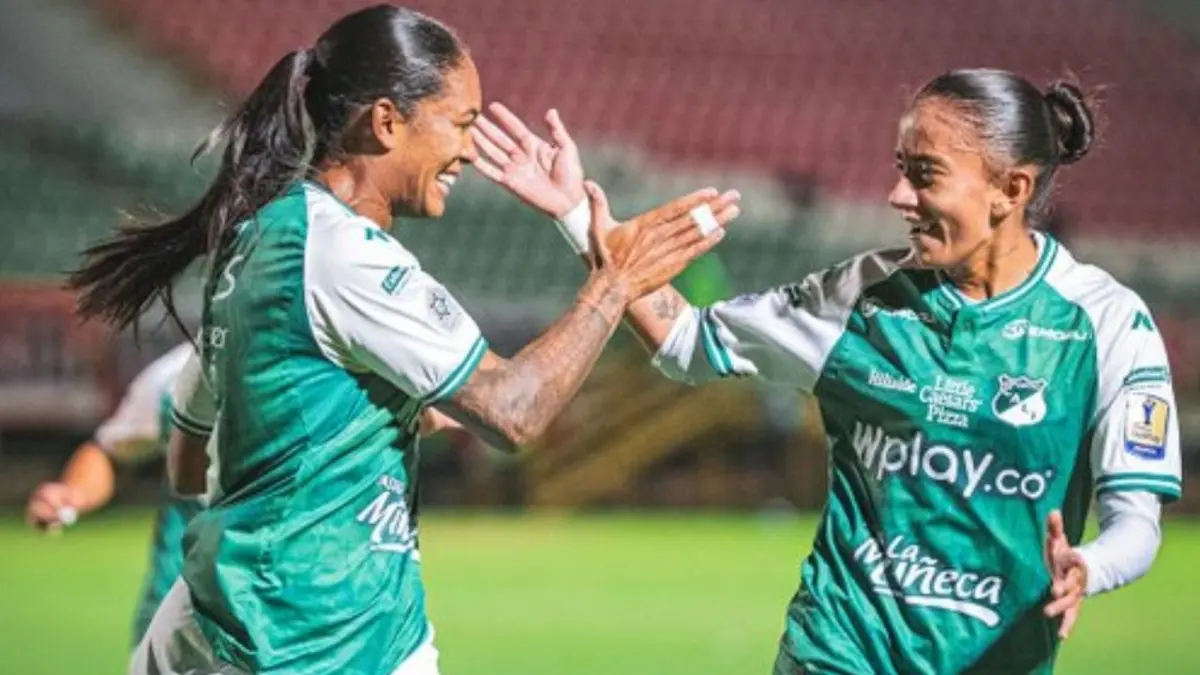
TUNJA, Colombia — In an electrifying display of offensive prowess and nervous defensive resilience, Deportivo Cali seized a crucial advantage in the first leg of the Liga Femenina final. Visiting Independiente Santa Fe at the Estadio de La Independencia in Tunja, the Azucareras dominated the opening half-hour to build a commanding three-goal cushion. However, a fierce tactical and emotional resurgence from the Leonas completely turned the tide before halftime, setting up a thrilling 3-2 scoreline that leaves the championship battle wide open ahead of the decisive return leg.
The clash lived up to the immense expectations surrounding the two most successful and storied institutions in modern Colombian women’s club football. With both sides tied on three league titles, the stakes at La Independencia were historic. For the first thirty minutes, it appeared Jhon Alber Ortiz’s tactical blueprint would run away with the series. Yet, Omar Ramírez’s adjustments and the indomitable spirit of the capital side ensured the trophy remains anyone’s to claim.
Main Facts and Match Overview
The opening leg of the 2026 Liga Femenina final offered a micro-cosmos of all the drama, tactical chess, and emotional swings that have defined the evolution of women’s football in Colombia. Deportivo Cali emerged victorious with a final score of 3-2, but the narrative of the match is starkly divided into two distinct halves.
- The Scoreline: Independiente Santa Fe 2 – 3 Deportivo Cali.
- Venue: Estadio de La Independencia, Tunja (acting as Santa Fe’s home ground).
- Date: September 24, 2026.
- Key Goalscorers (Cali): Jessica Bermeo (13’), Ingrid Guerra (17’), Melanie Aponzá (25’).
- Key Goalscorers (Santa Fe): Mariana Zamorano (33’ pen), Stefania Perlaza (45+’ own goal / credited pressure).
- The Aggregate State: Deportivo Cali leads by a single goal heading into the second leg in Palmaseca.
The match highlighted Cali’s lethal efficiency during transitional phases and set-pieces, while simultaneously exposing vulnerabilities in their backline under sustained pressure. For Santa Fe, the encounter served as a testament to their championship pedigree, proving that a three-goal deficit against elite opposition is not necessarily insurmountable when backed by tactical discipline and individual brilliance.
Chronology of a Tale of Two Halves
The Caleño Storm: A Disastrous Start for the Cardenales
From the opening whistle, Deportivo Cali asserted themselves on the damp, high-altitude pitch of Tunja. Manager Jhon Alber Ortiz deployed a high-pressing block that immediately suffocated Santa Fe’s buildup play. The Azucareras found the spaces they desired between Santa Fe’s midfield and defensive lines with alarming ease.
The breakthrough arrived in the 13th minute. A well-executed corner kick sailed into the heart of the penalty area. Jessica Bermeo read the trajectory perfectly, evading her marker to steer a precise, powerful header past the outstretched hands of the Santa Fe goalkeeper. The 1-0 scoreline was a fair reflection of Cali’s early dominance.
Rather than sitting on their lead, the visitors intensified their press. Just four minutes later, disaster struck for Santa Fe’s defense. A catastrophic error in deep-build distribution gifted possession directly to Ingrid Guerra. The lethal forward kept her composure, rounded the remaining cover, and slotted the ball home to double the advantage to 2-0 before the match had even settled into its rhythm.
Santa Fe looked shell-shocked. Omar Ramírez’s side struggled to string three consecutive passes together, constantly losing second balls in the center of the park. The flanks were being routinely exploited by Cali’s wide midfielders, who continuously targeted the space left behind by advancing fullbacks.
The third blow arrived in the 25th minute, seemingly putting the game, and perhaps the tie, out of reach. Following a dangerous free-kick awarded just outside the penalty arc, the resulting scramble saw the ball fall invitingly to Melanie Aponzá. Displaying incredible audacity and spatial awareness, Aponzá exploited a complete lack of defensive communication to lift a delicate, perfectly weighted globito (chip shot) over the scrambling goalkeeper, making it 3-0. At this juncture, the stadium was largely silenced, save for the traveling contingent of Caleño faithful.
The Cardenal Awakening: Turning the Tide Before the Break
Just when the match threatened to become a rout, a flicker of hope ignited the home side. In the 32nd minute, the game’s momentum shifted definitively through the intervention of the Video Assistant Referee (VAR).
Following a chaotic scramble inside the Deportivo Cali box, the referee was advised to review a potential foul on Marcano. After consulting the monitor at pitch-side, the official pointed directly to the penalty spot. Mariana Zamorano stepped up to assume the immense pressure of the spot-kick. With a firm, low drive into the corner, Zamorano converted, cutting the deficit to 3-1 and injecting a jolt of electricity back into the Cardenal veins.
The goal completely transformed Santa Fe’s body language. Suddenly winning individual duels and pressing with renewed vigor, they began to pin Cali deep into their own half. The tactical adjustments made by the technical staff began to bear fruit, forcing errors from a suddenly jittery Caleño defense.
As the first half bled into stoppage time, relentless pressure paid off again. Mariana Zamorano unleashed a fierce, speculative effort from outside the box. The ball took a wicked, decisive deflection off the boot of central defender Stefania Perlaza, completely wrong-footing the Deportivo Cali goalkeeper and nestling into the back of the net.
The 3-2 scoreline sent shockwaves through the stadium. What had looked like an insurmountable procession for the visitors transformed, in the span of fifteen minutes, into an intensely competitive, knife-edge final.
Tactical Stalemate in the Complementary Period
The second half unfolded with a drastically different tactical complexion. Recognizing the danger of a high-scoring, chaotic match, both managers opted for structural consolidation. Play bogged down primarily in the middle third of the pitch, characterized by aggressive midfield battles, tactical fouls, and a distinct lack of clean transitional play.
Deportivo Cali, having lost the overwhelming territorial dominance they enjoyed in the first half, sought to manage the tempo and protect their slender lead. Santa Fe, meanwhile, threw numbers forward in search of the equalizer. The capital side generated several promising approximations through sustained pressure and crosses from wide areas, but the final pass or clinical finish continually eluded them.
As the referee blew the final whistle, the scoreboard read 3-2. Deportivo Cali secured a historic, hard-fought away victory in a final leg, but left the pitch knowing the tie remains balanced on a razor’s edge.
Supporting Data and Tactical Analysis
Analyzing the tactical metrics of the match provides a clear picture of why the game fluctuated so wildly:
- Possession Share (First Half): Deportivo Cali 58% – 42% Santa Fe. This flipped in the second half, where Santa Fe controlled nearly 55% of the ball as they chased the game.
- Duels Won: Santa Fe improved dramatically after the 30th minute, winning 52% of total ground duels by the final whistle, heavily offsetting their sluggish start.
- Defensive Transitions: Cali’s goals came entirely from high-turnover regains or set-pieces, highlighting vulnerability in Santa Fe’s initial build-up phase under high pressure.
- Discipline and Interruptions: The physical nature of the second half saw an increase in referee interventions, breaking up the flow and preventing either side from building sustained offensive momentum.
The data underscores that while Cali’s attacking trio (Bermeo, Guerra, and Aponzá) possesses world-class lethality in moments of transition, their defensive block remains susceptible to sustained psychological pressure and physical directness—traits that Santa Fe capitalized on brilliantly through Zamorano’s leadership.
Official Responses and Post-Match Reactions
Speaking to the press after the grueling encounter, technical and player representatives offered measured assessments of a match that felt like two completely different games played within ninety minutes.
"We played an extraordinary first thirty minutes where we executed the game plan to absolute perfection. We found the spaces, we finished our chances, and we showed our character. However, football is a game of ninety minutes. We lost concentration momentarily, gave them life through avoidable errors, and at this level, elite teams like Santa Fe will punish you. We take the victory, but we must learn from how we managed the end of that first half."
— Jhon Alber Ortiz, Manager, Deportivo Cali.
On the other side of the tactical divide, Santa Fe’s camp emphasized the psychological resilience of the squad. Omar Ramírez praised his players for refusing to capitulate after falling behind by three goals:
"Conceding three goals early is a nightmare scenario in a national final, but this group has something special. The character shown by the players to reset, trust the tactical instructions, and claw our way back into the game speaks volumes about our identity. The series is alive. We are going to Palmaseca with our heads held high and a clear understanding of what we need to do to lift the trophy."
— Omar Ramírez, Manager, Independiente Santa Fe.
Social media channels for both clubs echoed these sentiments. Señal Deportes and the official Deportivo Cali Femenino accounts highlighted the historic nature of the encounter, emphasizing that the clash represented the absolute peak of competitive standards in the South American women’s game.
Implications and the Road to Palmaseca
The ramifications of this 3-2 result extend far beyond the immediate context of a single match. As the dust settles on the high-altitude clash in Tunja, all eyes now turn toward the grand finale.
When and Where is the Return Leg?
The ultimate showdown to crown the champion of the 2026 Liga Femenina will take place on Saturday, September 26, at 6:00 p.m. local time, at the Estadio Palmaseca in Palmira, Valle del Cauca. This stadium will serve as the crucible where the new queen of Colombian club football is crowned.
The Historical Context: The Battle for Supremacy
Beyond the prestige of the 2026 star, the stakes carry massive historical weight. Both Deportivo Cali and Independiente Santa Fe currently boast three league titles each in their illustrious histories.
Consequently, the winner of this two-legged aggregate series will not only claim the current season’s honors but will definitively establish themselves as the sole historical leader and maximum champion of the Liga Femenina, breaking the historic tie between the two dominant powerhouses of the nation.
How to Watch
For fans across the country unable to make the trip to Palmaseca, the match will be broadcast live and in high definition via Señal Colombia, providing comprehensive pre-match analysis, tactical breakdowns, and full coverage as history is written on Saturday evening.
As Deportivo Cali carries a fragile one-goal lead back to the sweltering heat of the Valle del Cauca, and Santa Fe arrives with the momentum of their furious Tunja comeback, the stage is set for an unforgettable chapter in the annals of Colombian sport.


Leave a Reply