

MEDELLÍN, COLOMBIA — What was intended to be a weekend of vibrant celebration, cutting-edge electronic beats, and global unity at the inaugural Electric Daisy Carnival (EDC) in Medellín has instead transformed into a profound international tragedy. Among the thousands of festival-goers reveling under the neon lights at the Unidad Deportiva Atanasio Girardot was Dr. Ajay Bhatnagar, a distinguished 51-year-old British-American oncologist and radiation therapist who had traveled halfway across the globe to attend the landmark event.
Within hours of arriving at the festival grounds, Dr. Bhatnagar’s night took a catastrophic turn. Found unresponsive near one of the primary stages, his subsequent medical emergency culminated in his tragic death on Monday evening, October 12. Preliminary toxicology reports have since detected the presence of cocaine, amphetamines, and alcohol in his system, launching a complex multi-agency investigation by Colombian authorities and casting a harsh spotlight on the safety, regulation, and underlying risks associated with massive destination music festivals.
Compounding the shock for local officials and the international community, Dr. Bhatnagar’s death marks the second fatality of a foreign national during the same festival weekend, raising urgent questions regarding emergency response protocols, crowd safety, and substance monitoring at large-scale entertainment events in Colombia’s second-largest city.
Main Facts: The Tragic Loss of a Medical Pioneer
Dr. Ajay Bhatnagar was not an ordinary festival attendee; he was an accomplished, internationally recognized medical professional whose life was dedicated to saving others from cancer. Born in England and of Indian descent, Dr. Bhatnagar built a stellar career in the United States, specializing in oncology and radiation therapy. In 2002, he co-founded the Arizona Prostate Cancer Center, establishing himself as a leader in comprehensive patient care. His academic foundation spanned bioengineering at the University of Pennsylvania and medicine at the University of Pittsburgh, complemented by advanced training in health services administration. In 2023, his contributions to medicine earned him a prestigious designation in a special edition of the Best Doctors in America registry.
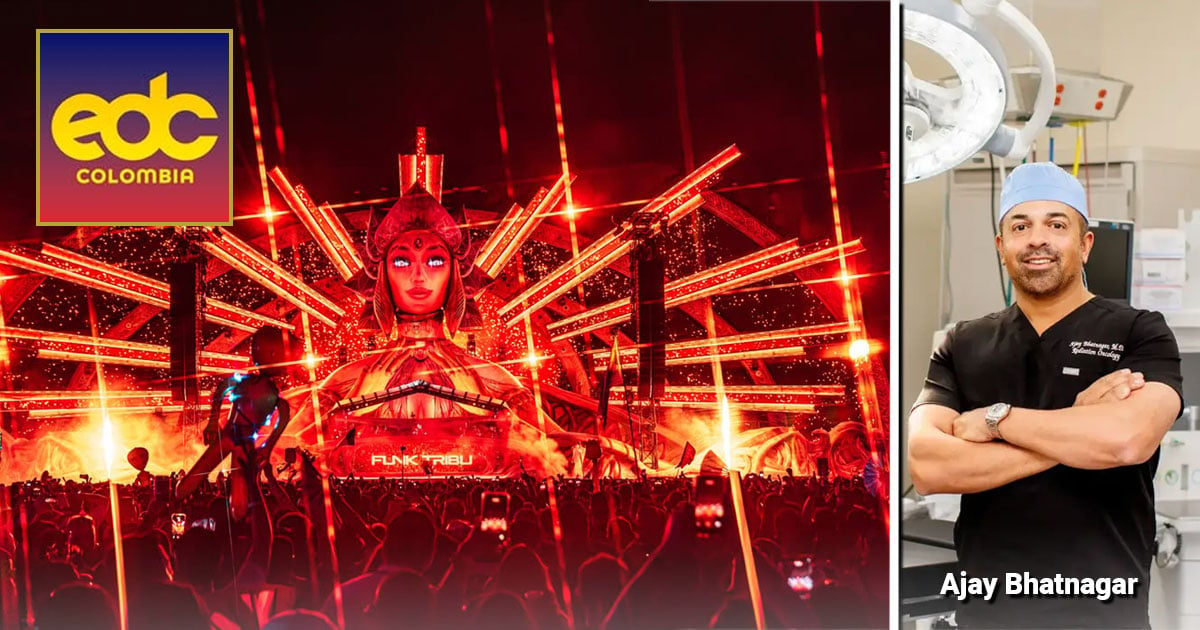
Residing in the United States with his wife, Dr. Bhatnagar had traveled to Medellín for the highly anticipated debut of EDC, staying at the stylish Hotel Haven in the city’s trendy Provenza district. EDC, a massive global electronic dance music festival created by the American production giant Insomniac and brought to Colombia in partnership with local powerhouse Páramo Presenta, drew tens of thousands of fans.
However, the festive atmosphere was abruptly shattered when Dr. Bhatnagar collapsed. Transported urgently by associates to the El Tesoro branch of Clínica El Rosario, medical professionals initially managed to stabilize his critical vital signs. Despite their best efforts, his condition deteriorated rapidly, and he was pronounced dead at approximately 5:00 p.m. on the holiday Monday.
Initial medical evaluations pointed immediately toward a potential drug-related emergency. Subsequent toxicology screenings confirmed the presence of cocaine, amphetamines, and alcohol. However, forensic experts and legal authorities emphasize that while these substances were detected, establishing the definitive cause of death requires a comprehensive legal-medical autopsy to determine the precise interaction between the substances, potential underlying medical conditions, and environmental factors.
Chronology of Events: From the Neon Lights to the Critical Care Unit
To fully comprehend the sequence of events that led to the fatal outcome, investigators have reconstructed a meticulous timeline of Dr. Bhatnagar’s final days in Medellín:

- Arrival and Lodging: Dr. Bhatnagar checks into the Hotel Haven in the vibrant Provenza sector of Medellín, having traveled from the United States specifically to attend the inaugural South American edition of EDC.
- The Festival Weekend Begins: The Electric Daisy Carnival kicks off over the weekend at the Unidad Deportiva Atanasio Girardot, featuring world-renowned electronic music acts, elaborate stage productions, and massive crowds.
- Saturday, October 10 (A Parallel Tragedy): While festival preparations and opening sets are underway, a separate medical emergency occurs involving 27-year-old Costa Rican tourist Ismael Gerardo Méndez Huertas. Méndez suffers a severe medical crisis, is rushed by ambulance to the Hospital Pablo Tobón Uribe, and tragically passes away during the early morning hours of Sunday.
- Sunday, October 11 (The Incident): Dr. Bhatnagar is immersed in the festival environment. Amid the flashing lights and pounding bass at the Unidad Deportiva Atanasio Girardot, he begins to experience acute physical distress. He is eventually discovered unconscious on the ground near one of the venue’s performance stages.
- Emergency Hospitalization: Relatives and companions swiftly intervene, bypassing standard venue transit times to rush him directly to Clínica El Rosario (El Tesoro branch). Emergency room physicians immediately initiate advanced life support protocols, successfully achieving a temporary stabilization of his unstable vital signs.
- Monday, October 12, 5:00 p.m. (The Fatal Turning Point): Despite intensive medical intervention through the night and into the following day, Dr. Bhatnagar’s condition suffers an irreversible decline. He is pronounced dead at 5:00 p.m. on the holiday Monday.
- Post-Mortem Investigations: Forensic pathologists conduct comprehensive post-mortem examinations and toxicology screenings. The initial results return positive for cocaine, amphetamines, and alcohol, triggering a broader investigation by Colombian judicial authorities.
Supporting Data: A Double Tragedy Raises Red Flags
The death of Dr. Bhatnagar cannot be viewed in isolation; it forms part of a deeply concerning weekend pattern that has alarmed public health advocates, tourism boards, and event organizers alike.
1. The Death of Ismael Gerardo Méndez Huertas
Just hours before Dr. Bhatnagar’s medical collapse, the festival was touched by tragedy when Ismael Gerardo Méndez Huertas, a 27-year-old citizen of Costa Rica, suffered a catastrophic medical emergency on Saturday, October 10. Méndez was urgently transferred from the festival environment to the Hospital Pablo Tobón Uribe, where he was pronounced dead in the early hours of Sunday morning. While local authorities have stressed that the two cases involve entirely distinct individuals with independent circumstances, the occurrence of two fatal medical emergencies involving foreign nationals during the exact same festival window has amplified scrutiny over event safety standards.
2. Toxicology Findings
The toxicology panel administered following Dr. Bhatnagar’s hospitalization revealed a mixture of substances:
- Cocaine: A potent central nervous system stimulant known to cause acute cardiovascular stress, tachycardia, and hypertensive crises.
- Amphetamines: Synthetic stimulants frequently associated with dehydration, hyperthermia, and dangerous spikes in heart rate, particularly in high-energy, crowded environments.
- Alcohol: A central nervous system depressant that, when combined with high-potency stimulants in warm, high-exertion settings like a music festival, exponentially increases the risk of cardiovascular collapse, electrolyte imbalance, and heatstroke.
Medical toxicologists emphasize, however, that the mere presence of these substances does not automatically equate to a direct overdose death. Investigators must determine whether underlying health conditions, environmental dehydration, adulterated substances, or delayed medical intervention played a primary or contributing role in his demise.
Official Responses and Stakeholder Reactions
In the wake of the twin tragedies, pressure has mounted on event promoters, municipal authorities, and health agencies to provide transparency and bolster protective measures for large-scale international gatherings.
- Event Organizers (Insomniac and Páramo Presenta): Both the American festival giant Insomniac and its local Colombian partner, Páramo Presenta, released statements expressing profound sorrow over the deaths of Dr. Bhatnagar and Mr. Méndez. Organizers highlighted their adherence to national safety regulations, deployment of professional medical response teams within the venue, and close cooperation with local law enforcement agencies to assist in the ongoing investigations.
- Local Authorities and Health Agencies: The Mayor’s Office of Medellín, alongside the National Police and the regional Attorney General’s Office (Fiscalía General de la Nación), launched separate judicial and epidemiological inquiries. Public health officials are reviewing the adequacy of on-site harm reduction stations, hydration access points, and emergency evacuation corridors within the Unidad Deportiva Atanasio Girardot.
- Consular Services: Diplomatic representations from both the United States and the United Kingdom have been in contact with local authorities to monitor the investigation, assist the grieving families with repatriation procedures, and ensure a transparent accounting of the events leading up to the medical emergencies.
Broader Implications: Tourism, Festival Safety, and the "Medellín Model"
Medellín has experienced a staggering tourism boom over the past decade, transforming from a city plagued by cartel violence into a global capital for digital nomads, cultural tourism, and destination electronic music festivals. Events like EDC, Afterlife, and R ritmo-driven gatherings attract tens of thousands of international visitors, injecting millions of dollars into the local economy.
However, these dual fatalities highlight the complex socio-economic and public health challenges accompanying this rapid internationalization:
1. The Challenge of Substance Regulation and Harm Reduction
Colombia’s progressive stance on drug policy often intersects uncomfortably with the realities of underground narcotics markets targeting tourists at massive entertainment events. Public health experts argue that punitive enforcement alone is insufficient; instead, there is an urgent call for expanded harm reduction initiatives—such as pill-testing services, widespread educational campaigns on substance interactions, and readily accessible, free hydration stations inside festival grounds—to prevent similar tragedies.

2. Emergency Medical Infrastructure at Mega-Events
The speed with which acute medical crises can escalate in high-density, high-temperature environments demands a reevaluation of triage protocols. While Dr. Bhatnagar’s companions acted quickly to transport him to Clínica El Rosario, critics and safety advocates are questioning whether on-site medical stabilization points were equipped to handle complex multi-substance toxicological emergencies swiftly enough to prevent irreversible organ damage.
3. Protecting the City’s International Image
For the local government and tourism sector, maintaining Medellín’s reputation as a safe, world-class destination is paramount. City officials face the delicate task of balancing the promotion of vibrant nightlife tourism with rigorous regulatory oversight, ensuring that international promoters meet the highest possible standards for crowd safety, medical readiness, and security.
Conclusion
The loss of Dr. Ajay Bhatnagar—a brilliant physician, co-founder of a premier cancer center, and a beloved husband—is an irreparable tragedy for his family, colleagues, and the global medical community. What was meant to be an unforgettable weekend of music and escapism in Medellín has instead exposed the fragile boundary between celebration and catastrophe.
As forensic experts finalize their investigations and authorities parse the complex toxicology and timeline of that fateful Sunday night, the legacy of Dr. Bhatnagar’s untimely passing must serve as a solemn catalyst. For Medellín, for international event promoters, and for the global festival community, the imperative moving forward is clear: a renewed, uncompromising commitment to safeguarding the lives of every attendee who steps onto the dance floor.