


Main Facts: The Tech Revolution at Nextech Medellín
The global fashion industry is undergoing a quiet but radical infrastructure overhaul. For decades, the public face of fashion innovation was confined to wearable technology, smart fabrics, or futuristic runway spectacles. Today, however, the real revolution is happening in the back offices, design studios, and logistics hubs. The central question driving fashion executives has shifted from creative indulgence to operational survival: Where in my business model am I losing time, money, or information, and what technology can solve it?
This strategic paradigm shift took center stage at Nextech, the premier technology trade show for the fashion ecosystem (Sistema Moda), held recently in Medellín, Colombia. The event served as a global showcase for cutting-edge solutions, bringing together pioneers in artificial intelligence (AI), e-commerce infrastructure, automated photography, data analytics, advanced machinery, and product lifecycle management (PLM) software.
Rather than focusing on science-fiction tropes of robots replacing human designers, Nextech highlighted how tools like 3D digital twins, automated 360-degree imaging, and AI-driven administrative engines are being integrated into every step of the fashion pipeline—from the initial sketch to the final e-commerce transaction. The goal is simple: enable brands to produce higher-quality products with fewer resources, significantly reducing time-to-market and environmental waste.
Chronology and Context: The Evolution of Fashion Tech
To understand the urgency behind Nextech, one must examine the rapid evolution of the fashion supply chain over the last decade. Historically, fashion operated on a rigid, seasonal calendar. Brands designed collections up to a year in advance, relying on physical sample production, overseas shipping, and manual administrative workflows.
However, the rise of ultra-fast fashion, hyper-personalized e-commerce, and global supply chain disruptions forced a reckoning. Consumers now demand immediate gratification, forcing brands to operate at unprecedented speeds. In this high-velocity environment, traditional manual processes have become existential liabilities. Doing everything alone and by hand is no longer a badge of artisanal honor; it is a bottleneck that stifles growth.
Consequently, a new class of technology partners has emerged to help fashion companies transition from traditional manufacturers to agile tech-enabled enterprises.
This transformation is particularly critical for Latin America, with Colombia—and specifically Medellín—acting as the regional epicenter. Long recognized as a textile manufacturing powerhouse, Colombia’s fashion sector is pivoting toward high-tech adoption to remain globally competitive against low-cost Asian manufacturing hubs. The integration of digital tools is no longer seen as an optional luxury, but as a mandatory upgrade to survive the modern retail landscape.
Supporting Data: Investment Trends and Case Studies
The appetite for digital transformation is backed by concrete data. A recent comprehensive survey conducted between March and April by Inexmoda—Colombia’s national institute for fashion and export promotion—polled approximately 200 domestic fashion and textile companies regarding their technology and machinery investment plans.
The findings paint a clear picture of an industry actively retooling itself:
- 40% of surveyed companies plan to invest heavily in advanced production technologies.
- 33% intend to allocate significant capital to digital marketing, e-commerce infrastructure, and online growth.
Inexmoda Tech Investment Intentions (March-April Survey)
┌───────────────────────────────────────┬─────────┐
│ Production & Manufacturing Technology │ 40%     │
├───────────────────────────────────────┼─────────┤
│ Digital Marketing & E-Commerce Growth │ 33%     │
└───────────────────────────────────────┴─────────┘
These investment priorities are manifesting in the rapid adoption of specialized platforms featured at Nextech, including ORB360, Browzwear, and Moda Lab.
Case Study 1: ORB360 and the Automation of Visual Assets
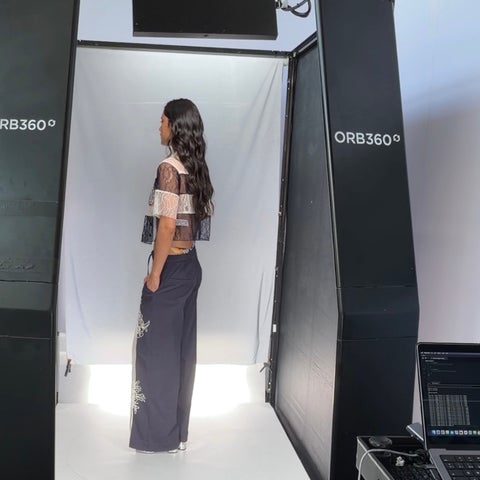
High-quality visual content is the lifeblood of modern e-commerce, yet traditional photo shoots are notoriously slow, expensive, and logistically complex. ORB360 has addressed this bottleneck by introducing a proprietary hardware-and-software system designed to automate and simplify commercial photography.
- How it works: The system uses automated turntables and synchronized cameras to capture a product from multiple angles.
- The output: In just 40 seconds, the system captures 72 individual high-resolution photographs to generate a seamless, interactive 360-degree spin, high-end e-commerce stills, and video.
- Market penetration: The technology is already utilized by some of the world’s most prestigious luxury and sportswear brands, including Victoria Beckham, Stella McCartney, Hermès, Gucci, Loewe, and Jimmy Choo.
- B2B Integration: Beyond consumer-facing e-commerce, ORB360 offers specialized integrations for wholesale platforms, enabling brands to present interactive digital showrooms to international buyers.
Case Study 2: Browzwear and the Elimination of Physical Waste
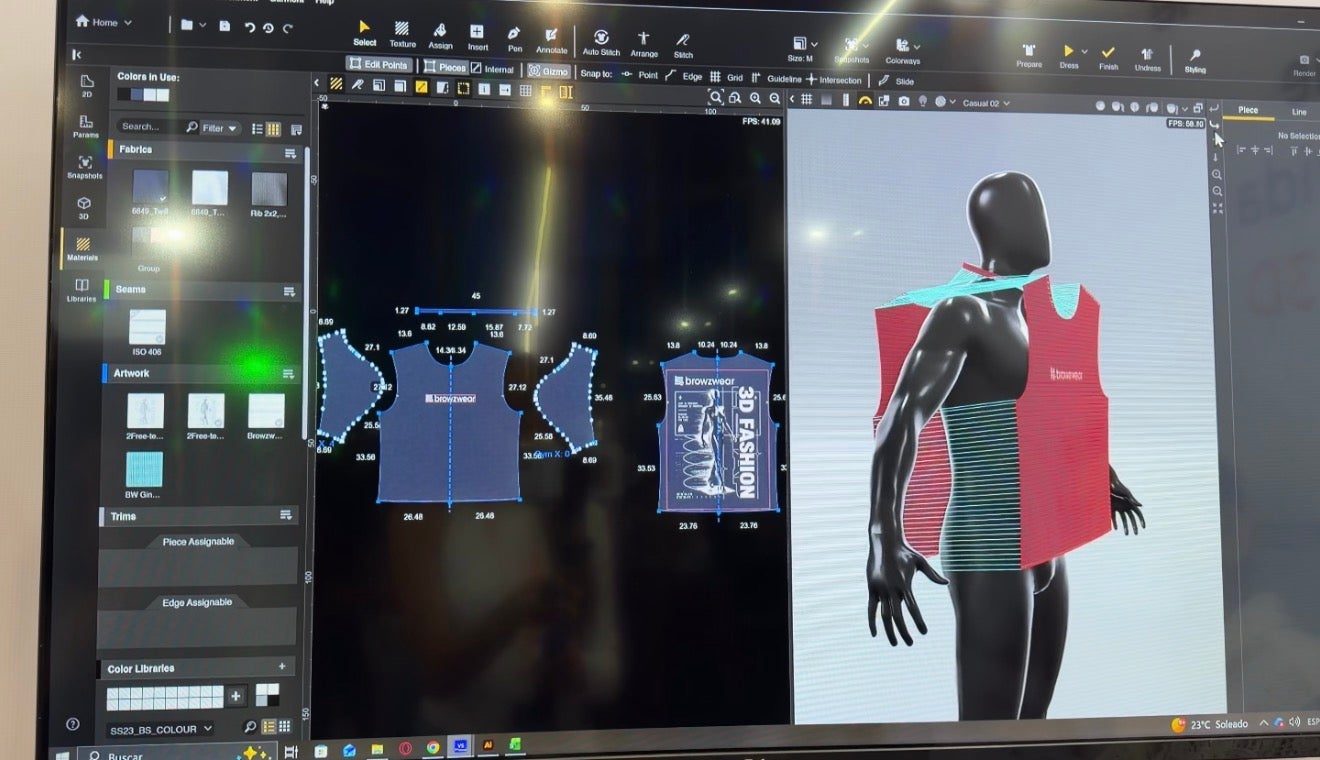
Developed in Singapore, Browzwear is a pioneer in 3D digital apparel design. The company helps brands transition from physical prototyping to fully digital product creation.
- How it works: Designers create "digital twins" of garments, simulating exact fabric drape, tension, and fit on virtual avatars.
- Environmental & Financial Impact: Browzwear reports that its platform reduces the need for physical sample production by 50% to 80%.
- Adoption Scale: More than 1,000 fashion companies worldwide—including industry giants like Nike, Lululemon, and Puma—use the platform, resulting in the creation of over 10 million digital garments to date.
- AR Integration: Once a garment is digitally designed, it can be projected via augmented reality (AR) glasses, allowing designers and merchandisers to evaluate how the fabric behaves on a human body in real-time without cutting a single yard of fabric.
Official Responses and Expert Perspectives
Industry leaders at Nextech emphasized that technology should not be feared as a job-killer, but embraced as a productivity multiplier. The conversation around AI in fashion is shifting from existential dread to practical utility.
José Aragón, CEO of ORB360
In an exclusive interview with La República, José Aragón detailed how automating the visual pipeline fundamentally alters a brand’s operational speed:
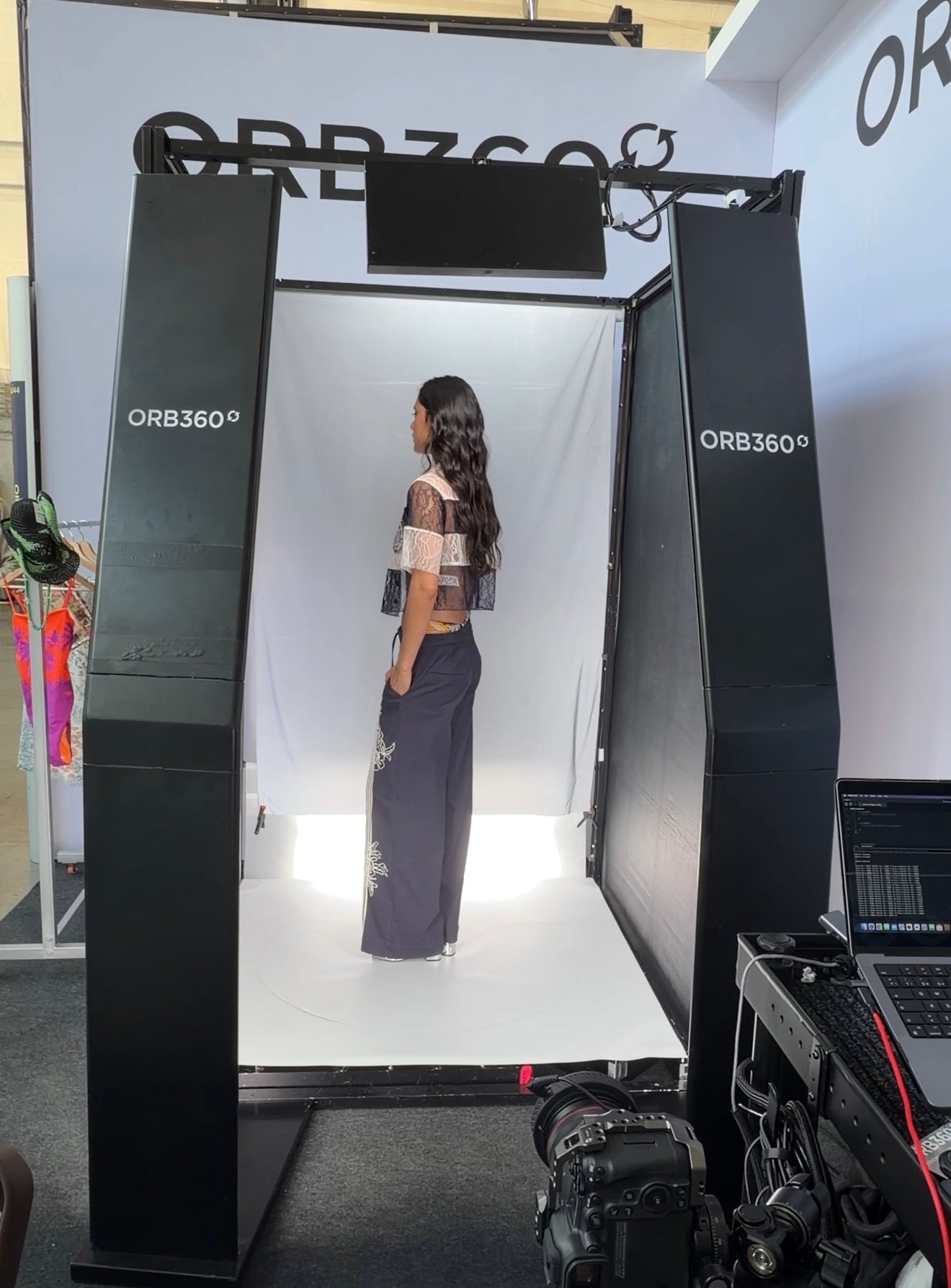
"We are changing something as everyday and essential for a brand as a photoshoot. By utilizing specialized hardware and software to capture products in 360 degrees in under a minute, we allow brands to upload their collections online almost instantly. This drastically reduces the time between a product leaving the factory floor and appearing on a customer’s screen."
Aragón emphasized that the efficiency gains allow creative teams to spend less time on repetitive technical setups and more time on high-value creative direction and brand storytelling.
Ana María Zúñiga, CEO of Moda Lab
While design and photography are highly visible, some of the most costly bottlenecks occur in the administrative and commercial preparation phases. This is where Colombian innovation company Moda Lab has positioned itself.
Speaking to La República at Nextech’s Innovation Hall, Zúñiga explained how her company uses AI to automate the tedious processes that occur before a product can be sold:
"Before a garment ever reaches a retail store or an e-commerce site, there is an invisible mountain of manual work. Cataloging, writing product descriptions, assigning prices, creating technical sheets, and preparing materials for wholesale buyers can consume hundreds of hours of manual labor."
Moda Lab’s AI-driven platform solves this by:
- Automatically generating product names, optimized SEO descriptions, and metadata tags.
- Preparing standardized files for e-commerce, wholesale platforms, digital lookbooks, and social media feeds.
- Processing up to 150 product references per collection sample simultaneously, cutting administrative preparation times from weeks to hours.
Implications and Future Outlook
The innovations presented at Nextech demonstrate that the digitalization of fashion is no longer a trend confined to tech-savvy outliers; it is the new baseline for global competitiveness. The implications of this shift stretch across three major pillars: sustainability, supply chain agility, and regional economic resilience.
1. A Leap Forward for Sustainability
The fashion industry has long faced intense scrutiny for its environmental footprint. By replacing physical sampling with 3D digital twins, companies can drastically curb textile waste. Fewer physical prototypes mean fewer raw materials consumed, less chemical dye runoff, and a significant reduction in the carbon emissions associated with shipping physical samples back and forth between design offices and overseas factories.
2. Democratizing the Supply Chain
Historically, advanced technology was the exclusive domain of luxury conglomerates with massive R&D budgets. Today, SaaS (Software-as-a-Service) models and local innovations like Moda Lab are democratizing access to these tools. Small and medium-sized enterprises (SMEs) in Colombia and Latin America can now access the same level of operational efficiency as global giants like Nike or Gucci, leveling the playing field.
3. The Mandate for Corporate Leadership
For fashion executives, the path forward requires a shift in mindset. Technology integration is not about deploying flashy, superficial gimmicks like virtual reality fashion shows or robot models. Instead, it is about identifying and fixing friction points in the backend.
The ultimate challenge for the Colombian and global Sistema Moda is educational and cultural. To fully capitalize on these advancements, companies must invest in upskilling their workforces, ensuring that designers, marketers, and logistics managers are equipped to work alongside AI and 3D modeling tools.
Ultimately, those who learn to view technology not as an adversary to human creativity, but as the ultimate operational partner, will lead the next era of global fashion. The question is no longer if brands should digitize, but how fast they can identify their inefficiencies and deploy the digital solutions to solve them.




Leave a Reply