

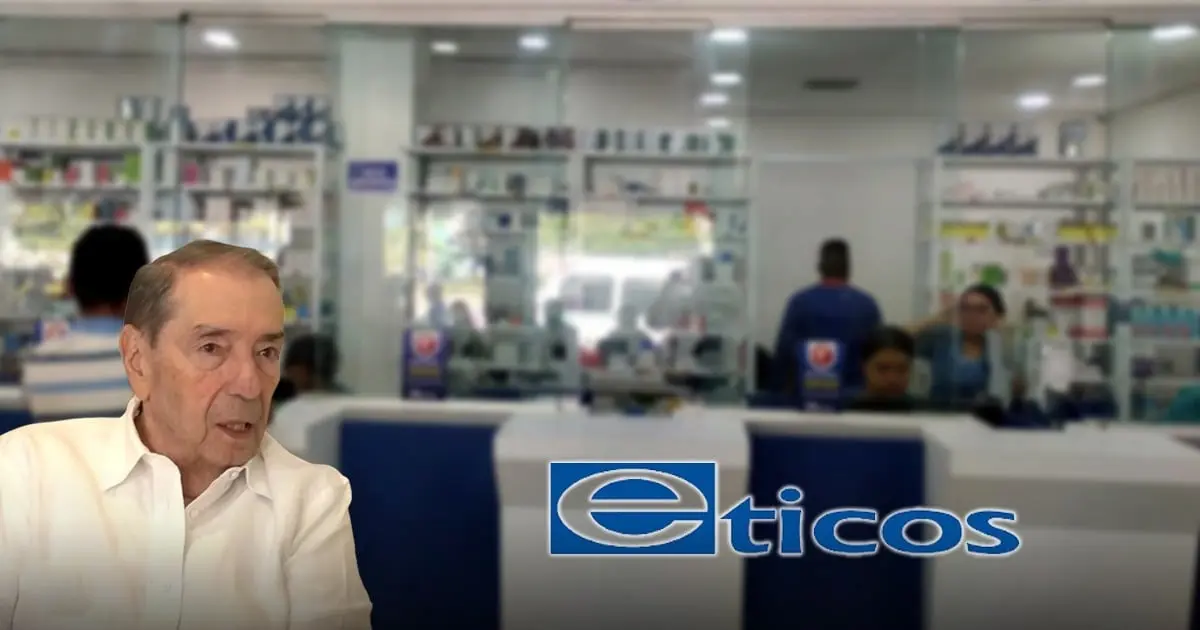
BARRANQUILLA, COLOMBIA — In the high-stakes world of Colombian public procurement, few conglomerates wield the commercial gravity of the Char family from Barranquilla. Best known for their retail empire anchored by Supertiendas Olímpica and their formidable political influence on the Caribbean coast, the family has steadily built one of the country’s most lucrative healthcare distribution networks.
Now, through their flagship pharmaceutical arm, Íticos Serranos Gómez, the clan is aggressively pursuing what could be the crown jewel of public health contracting: a monumental tender worth up to $1.4 trillion pesos to supply institutional medicines to the National Police of Colombia.
The final decision rests squarely on the desk of the Director of Sanity for the National Police, Colonel Juan Pablo Blanco, who oversees a process that has already drawn intense scrutiny from both industry competitors and the highest levels of the national government. With bids closing on October 7, 2026, the ongoing battle for this massive healthcare budget underscores the intersection of corporate dominance, state logistics, and high-stakes political oversight in Colombia.
Main Facts: The Anatomy of a Mega-Tender
At the core of this unfolding story is the logistics of state healthcare provisioning. The Directorate of Sanity for the National Police of Colombia (DISAN) manages a comprehensive operational budget—for 2026, its baseline operating budget stands at approximately $486.556 billion pesos. However, the broader procurement vehicle for institutional pharmaceutical supplies dwarfs this figure, scaling toward an estimated $1.4 trillion pesos.
For Íticos Serranos, capturing or retaining a dominant share of this contract is not merely another commercial win; it is a vital pillar of the corporate balance sheet. The company has a proven track record of securing major state awards. Last year alone, the firm successfully secured a police supply contract valued at roughly 217 billion pesos. Now, the conglomerate aims to repeat that success, positioning itself as the indispensable logistics backbone for the nation’s security forces.
However, the path to the contract is far from uncontested. The sheer scale of the tender has placed Íticos Serranos and its ultimate owners, the Char family, at the center of a national debate regarding market concentration, public transparency, and state procurement rules.
Chronology: From a Valledupar Pharmacy to a National Pharmaceutical Empire
To understand the weight of Íticos Serranos in contemporary Colombian commerce, it is necessary to trace its trajectory over nearly half a century.
- February 16, 1979: Íticos Serrano is officially founded as a modest regional pharmacy business in Valledupar, capital of the Cesar Department.
- Mid-1990s (1995): Recognizing the strategic value of pharmaceutical distribution, the Char family—acting through the Sociedad Colombiana de Inversiones Comerciales—assumes total control of the company. The corporate headquarters are relocated to Barranquilla to integrate seamlessly with the family’s growing retail footprint.
- 2005: The company initiates its formal commercial relationship with the public security sector, beginning its decades-long history as a pharmaceutical supplier for the National Police through various logistics operators and temporary unions.
- 2022: Íticos Serranos reports staggering annual revenues approaching one trillion pesos. This financial milestone elevates the company into the elite tier of Colombian business, cementing its position among the 30 largest enterprises in the Caribbean region and within the top 260 companies nationwide.
- Late 2022: In the final stretch of President Iván Duque’s administration, the public procurement agency Colombia Compra Eficiente selects Íticos Serrano—alongside other specialized operators—to supply medications to various state entities, including the Military Forces and the National Police, under a framework agreement slated to run through late 2025.
- 2023–2025: Despite generating multi-million-peso billing cycles with the police institution, the initial framework agreement faces temporary suspensions. In response to logistical bottlenecks, the Police Directorate of Sanity awards Íticos Serranos a high-value contract under the legal framework of urgencia manifiesta (manifest urgency), valued at over 207 billion pesos.
- October 2026: The current licensing window reaches its critical phase, with proposal submissions closing on October 7, 2026, as Colonel Juan Pablo Blanco and DISAN evaluate the multi-trillion-peso landscape.
Supporting Data: The Commercial Engine of the Char Conglomerate
The distribution of pharmaceuticals has quietly become one of the most resilient and profitable revenue streams for the Char family. While public attention often gravitates toward their supermarket chains or political maneuvers, the healthcare division operates on an industrial scale.

The family’s pharmaceutical ecosystem is vast:
- Íticos Serranos Gómez: Acts as the primary wholesale and institutional distribution engine.
- Supertiendas Olímpica: Serves as a massive retail anchor where healthcare and wellness products enjoy prime consumer placement.
- Droguerías La Economía: A widespread, highly recognizable pharmacy network across multiple regions of Colombia.
- Farmacias Torres: Acquired approximately two years ago, adding another 60 established retail points of sale to the family’s portfolio.
This vertical integration—from wholesale import and institutional distribution down to direct-to-consumer retail pharmacies—grants the group unmatched economies of scale. By controlling the entire supply chain, Íticos Serranos can absorb logistical shocks, secure competitive margins, and outmaneuver smaller regional competitors when bidding for complex state contracts that demand nationwide delivery capabilities.
Official Responses and Political Controversy: The Petro Administration’s Scrutiny
The immense market footprint of Íticos Serranos has not gone unnoticed by the executive branch. The company’s deep entrenchment in public provisioning has repeatedly drawn sharp criticism from President Gustavo Petro’s administration.
In previous public statements, President Petro openly questioned a broader 1.7-trillion-pesos procurement framework linking Íticos Serranos, the National Army, and the National Police. The leftist leader publicly alleged that the process involved a "simulated objective selection"—suggesting that corporate positioning allowed entities belonging to or closely aligned with the same commercial ecosystem to dominate competitive bidding without delivering genuine market rivalry.
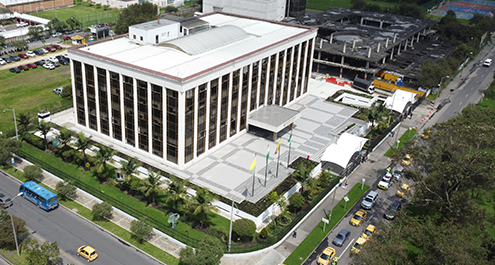
Despite these high-profile political reservations and repeated calls from the executive branch for thorough investigations into state contracts involving the firm, regulatory and judicial authorities have not uncovered or legally demonstrated formal irregularities in the bidding processes. The legal frameworks governing public procurement have consistently cleared the company to participate in open tenders.
For the Char family, political friction is secondary to corporate performance. The primary focus remains ensuring the continuity and health of their commercial contracts, which form an indispensable component of their conglomerate’s financial balance sheet.
Implications: What the $1.4 Trillion Tender Means for Colombian Healthcare
The ongoing procurement process overseen by Colonel Juan Pablo Blanco carries implications that extend far beyond the corporate ledgers of the Char family or the administrative offices of the National Police.
- Healthcare Continuity for Police Personnel: With thousands of active-duty officers, retired personnel, and their families relying on DISAN for their medical needs, the uninterrupted supply of maintenance drugs, complex therapies, and emergency medications is paramount. Any misstep in the transition or execution of a $1.4 trillion tender risks creating severe supply shortages within the police healthcare network.
- Market Concentration vs. Efficiency: Critics argue that contracts of this magnitude favor monopolistic or oligopolistic structures, crowding out medium-sized distributors and regional pharmacies. Conversely, proponents of large-scale institutional contracting argue that only corporate giants with sophisticated supply chains—such as Íticos Serranos—possess the technological and financial capacity to guarantee nationwide drug delivery across Colombia’s complex geography.
- The Test of Institutional Independence: For Colonel Juan Pablo Blanco and the Directorate of Sanity, managing this tender transparently serves as a critical test of institutional integrity. Given the intense political spotlight cast by the Casa de Nariño, every phase of the evaluation—from technical scoring to the final award—will be scrutinized for absolute adherence to public contracting law.
As the October deadline approaches, all eyes remain fixed on Barranquilla and Bogotá. Whether Íticos Serranos will successfully secure another monumental slice of state pharmaceutical spending remains to be seen, but the outcome will undeniably shape the landscape of Colombian public health logistics for years to come.



Leave a Reply