

Date: Friday, September 25, 2026
Compiled by: Global News Desk
Introduction
As September 2026 unfolds, the international community finds itself navigating a complex matrix of geopolitical diplomacy, urban cultural revitalization, technological recognition, and corporate restructuring. From high-level bilateral talks at the White House between the United States and China to artistic interventions in the neighborhoods of Bogotá, and from groundbreaking records in female leadership in Medellín to corporate accolades for Latin American fintech, the news cycle reflects a world in motion.
This comprehensive report synthesizes the primary developments of the day, offering deep contextual analysis, chronological overviews, supporting data, official statements, and the broader socioeconomic implications of each major headline.
Main Facts: Key Developments of the Day
The global news landscape on this Friday is dominated by several pivotal events across politics, culture, economics, and business:
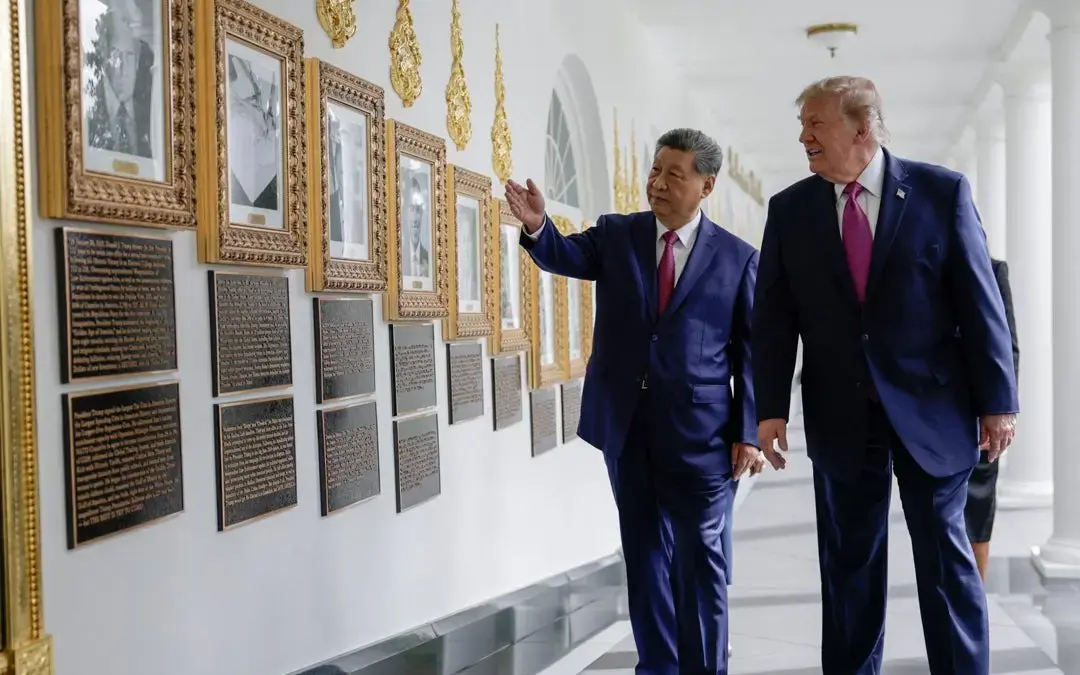
- Washington Summit on Global Security and Trade: U.S. President Donald Trump and Chinese President Xi Jinping met at the White House, walking the "Presidential Walk of Fame" before convening in the Oval Office. Discussions centered on Iran, Taiwan, and international trade, with Beijing signaling support for reviving the U.S.-Iran interim understanding regarding the Strait of Hormuz.
- Artistic Diplomacy in Bogotá: Renowned Spanish designer Ágatha Ruiz de la Prada unveiled and donated a large-scale mural in the Fontibón locality of Bogotá, Colombia. The project, part of the FontiWalls initiative, aims to bolster urban art and cultural tourism through vibrant geometric patterns.
- Record Female Leadership in Medellín: The Estímulos a los Talentos y Liderazgos de las Mujeres 2026 initiative—a joint program by the Mayor’s Office of Medellín and the Fundación Grupo EPM—reached its pitch phase, featuring 100 finalists chosen from a record-breaking 743 applicants.
- Addi’s Global Recognition: Colombian-founded fintech startup Addi secured a coveted spot on Fortune magazine’s prestigious "Change the World 2026" list, recognized in the Economic Empowerment category alongside global giants like Alibaba, Alphabet, and Walmart.
- Latin American Corporate Realignment: Grupo Imsa announced the complete divestment of its Brazilian subsidiary, Anderpol do Brasil Participações Ltda., signaling a strategic portfolio adjustment in the South American market.
Chronology of Events
Understanding the velocity of today’s news requires examining the timeline of announcements and diplomatic engagements that have shaped the global narrative:
- Early Morning (Washington, D.C. Time): Presidents Donald Trump and Xi Jinping make a public appearance along the White House colonnade’s "Presidential Walk of Fame," setting a collaborative tone ahead of closed-door bilateral negotiations in the Oval Office.
- Morning Hours (Bogotá, Colombia): The FontiWalls initiative officially opens its newest urban canvas, featuring the donated work of Spanish fashion and design icon Ágatha Ruiz de la Prada, facilitated by the Fundación Tejido Fashion Mart.
- Midday (Medellín, Colombia): The municipal administration and Fundación Grupo EPM commence the live pitch sessions for the 100 shortlisted candidates of the women’s leadership and talent initiative, marking the culmination of months of record-breaking registration data.
- Afternoon (Global Financial Markets): Fortune magazine releases its annual "Change the World" rankings, highlighting Addi’s integration of credit access and social impact. Simultaneously, corporate wire services publish Grupo Imsa’s divestment memorandum regarding its Brazilian plastics operations.
Supporting Data and Contextual Analysis
1. The U.S.-China Strategic Dialogue on Iran and Trade
The meeting between Donald Trump and Xi Jinping represents a critical juncture in bilateral relations. Central to their agenda was the stabilization of global trade routes and Middle Eastern geopolitics. Xi’s endorsement of the provisional understanding reached in June—aimed at de-escalating conflict with Iran and securing the reopening of the vital Strait of Hormuz—underscores Beijing’s vested interest in energy security and maritime commerce.
2. Urban Regeneration in Fontibón, Bogotá
The FontiWalls project utilizes placemaking strategies to transform neglected urban sectors into vibrant cultural hubs. Ágatha Ruiz de la Prada’s contribution introduces her signature post-modern, pop-art aesthetic characterized by vibrant primary colors, hearts, stars, and geometric harmony. By relying on donated materials and private-public synergy via the Fundación Tejido Fashion Mart, the project avoids heavy public expenditure while fostering civic pride.
3. Medellín’s Empowerment Metrics
The 2026 edition of the Estímulos a los Talentos y Liderazgos de las Mujeres program shattered previous benchmarks by drawing 743 applications. With 100 finalists advancing to the pitch stage across 12 categories and eight special mentions (spanning scientific research, technology, and social leadership), the program demonstrates a growing institutional framework for female-led innovation in Colombia’s second-largest city.
4. Fintech Inclusion: Addi’s Fortune Ranking
Joining a select cohort that includes global heavyweights such as Alibaba, Anthropic, Nu Holdings (Alphabet), and Walmart, Addi’s inclusion in Fortune’s "Change the World 2026" list validates the "Buy Now, Pay Later" (BNPL) and digital credit model as a vehicle for equitable financial integration in Latin America.
Official Responses and Stakeholder Statements
Leadership figures across sectors weighed in on the significance of today’s developments:
- On Corporate Social Impact:
"The recognition confirms that access to credit and sustainable growth must be part of the very same business strategy," stated Santiago Suárez (born 1985), CEO and Co-founder of Addi, highlighting the startup’s mission to democratize financial services in emerging markets.
- On Cultural Contributions in Bogotá:
Local cultural organizers behind FontiWalls emphasized that international artistic collaborations elevate marginalized neighborhoods into destinations for international cultural tourism, proving that public art serves as a catalyst for economic and social regeneration. - On Diplomatic Channels:
While formal transcripts of the Trump-Xi meeting remain guarded, diplomatic spokespersons noted that constructive dialogues regarding maritime chokepoints like the Strait of Hormuz are essential for subduing inflationary pressures tied to global energy logistics.
Implications and Outlook
The cascading effects of today’s events will reverberate across multiple industries and geographic regions in the coming months:
Geopolitical and Economic Stability
The tacit alignment between Washington and Beijing regarding the Middle East could pave the way for reduced volatility in global petroleum markets. Should the U.S.-Iran understanding be permanently solidified with Chinese diplomatic backing, shipping insurance rates and transit times through the Strait of Hormuz are expected to normalize, offering relief to global supply chains.
The Rise of Purpose-Driven Fintech in Latin America
Addi’s recognition by Fortune signals a broader transformation in how venture capital and global indexes evaluate emerging market tech companies. Financial inclusion is no longer viewed merely as a philanthropic endeavor, but as a robust, scalable economic engine that drives middle-class consumption and entrepreneurial resilience.
Corporate Consolidation in South America
Grupo Imsa’s divestment of Anderpol do Brasil Participações Ltda. and its indirect holdings in Novapol Plásticos Ltda. points to a strategic recalibration among regional conglomerates. Facing shifting currency dynamics and competitive pressures within the Brazilian manufacturing sector, traditional industrial players are streamlining operations to focus on core competencies.
Cultural Tourism and Urban Equity
As initiatives like FontiWalls in Bogotá and the women’s leadership grants in Medellín demonstrate, local governments are increasingly investing in soft power, grassroots culture, and human capital. By empowering female leaders and beautifying urban landscapes, Colombian cities are laying down the infrastructure for post-industrial, knowledge-based economies.
This report will continue to be updated as further developments unfold across international diplomacy, financial markets, and cultural sectors.

Leave a Reply