

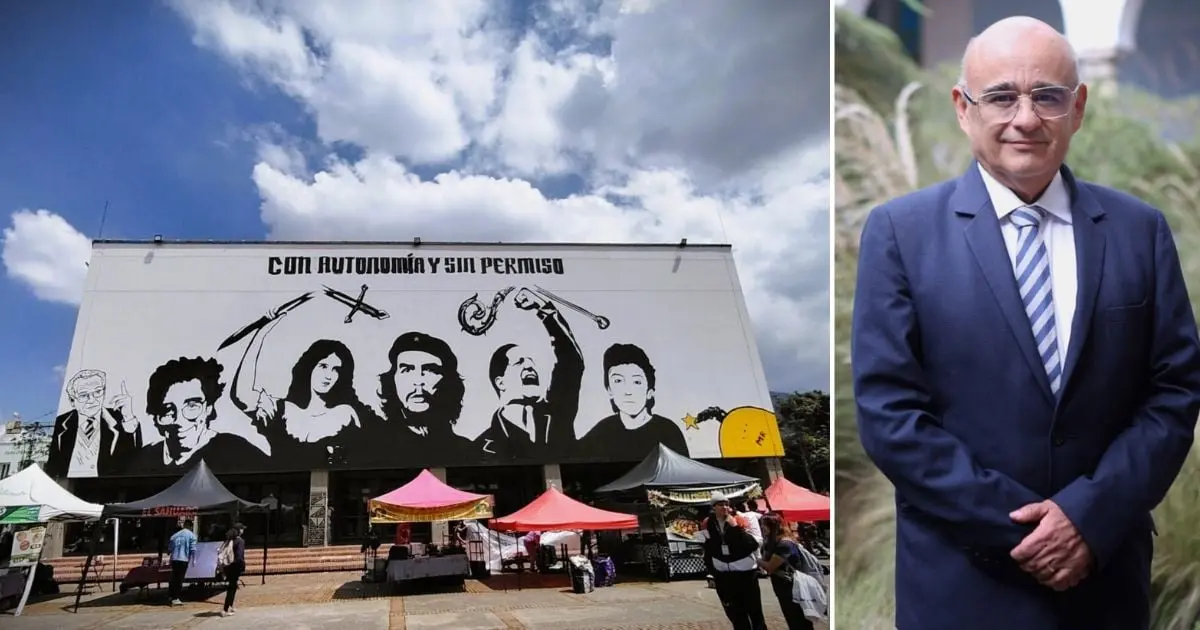
BOGOTÁ, COLOMBIA — In a development that has sent shockwaves through the highest echelons of Colombian academia and government, José Ismael Peña, the rector of the National University of Colombia (Universidad Nacional de Colombia), has initiated a high-stakes legal battle against the very institution he administers. While publicly managing a staggering financial deficit of COP $1.5 trillion within the university, Peña is quietly pursuing a multi-billion-peso lawsuit against the National University, the Presidency of the Republic, and the Ministry of Education.
The legal action, which demands nearly COP $2 billion in indemnifications and back pay, stems from the turbulent period during which his appointment was contested and ultimately overturned by the administration of President Gustavo Petro. The case has opened a Pandora’s box of institutional conflicts of interest, political friction, and questions regarding governance transparency at Colombia’s most prestigious higher education institution.
Main Facts: The Core of the Legal Battle
The controversy centers on a lawsuit filed before the Administrative Tribunal of Cundinamarca, through which Ismael Peña seeks a total compensation package of COP $1.971 billion. Peña argues that he suffered severe financial and reputational damages during the nearly two years he was prevented from effectively exercising his duties as rector following the government’s intervention in his appointment.
A breakdown of the financial demands reveals the multi-faceted nature of the suit:
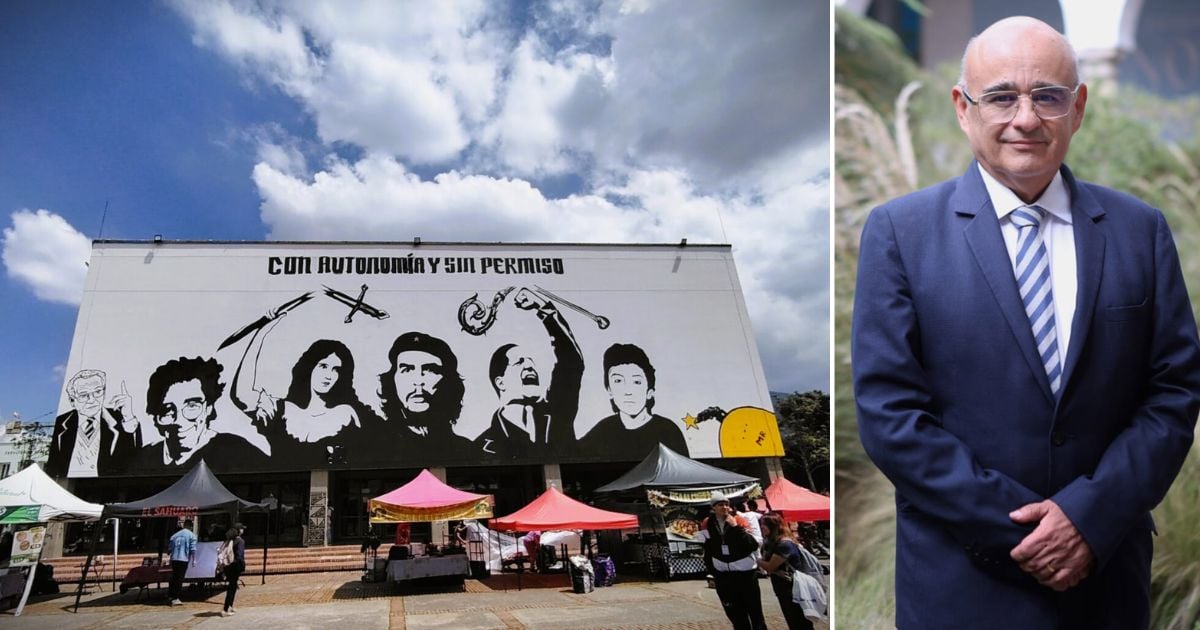
- Back Pay and Operational Costs: A substantial portion of the claim—approximately COP $1.096 billion—represents the monthly salaries and operational costs that the university’s treasury paid to alternative or interim rectors who occupied the office while Peña’s legal status remained in limbo. Peña argues that these funds should have rightfully gone to him as the legitimately appointed rector.
- Family Damages: In addition to professional compensation, Peña is demanding COP $175 million on behalf of his wife, Beatriz Helena Díaz Pinzón (a professor at the Faculty of Economic Sciences), and his two minor children. According to the legal filing, statements made by high-ranking government officials incited a wave of public hostility, severe criticism, and targeted harassment against his family, disrupting their daily lives and personal safety.
- Symbolic Reparations: Beyond financial compensation, the lawsuit demands non-monetary restitution. Peña is pushing for a formal public institutional apology and the complete sanitization—or erasure—of campus murals that feature negative depictions or critical references directed at him. This demand is aimed at dismantling the narrative of illegitimacy that took root within the university community during the height of the leadership crisis.
Chronology of a Disputed Rectorate
To understand the gravity of Peña’s current lawsuit, it is essential to trace the timeline of events that fractured the leadership of the National University and pitted the autonomous academic body against the executive branch of government.
Early 2024: The Controversial Election
The seeds of the crisis were planted in March 2024, when the Superior University Council (Consejo Superior Universitario – CSU) elected Ismael Peña as the rector of the National University. The election immediately sparked intense debate, with critics and student factions questioning the voting mechanism and alleging a lack of alignment with the academic community’s preference expressed in informal consultations.
Mid-2024: Government Intervention and Nullification
As protests erupted across the main campus in Bogotá and tensions mounted, the administration of President Gustavo Petro stepped in. High-ranking government officials, including the Minister of Education, publicly questioned the legitimacy of Peña’s election. Consequently, the government took steps to block his formal installation, leading to a prolonged power vacuum and the appointment of interim authorities to manage the institution. Peña was effectively sidelined from the office he had been chosen to lead, setting the stage for his eventual legal retaliation.
Late 2025 to Early 2026: Return and Silent Legal Maneuvers
Following complex legal maneuvers and shifting political dynamics, Peña eventually secured a pathway back to the rector’s office. However, investigative reporting by Revista Raya revealed that just two months after officially assuming control of the Rectorate in mid-2026, Peña had already filed his multi-billion-peso lawsuit against the university administration, the Presidency, and the Ministry of Education—all while publicly lamenting the university’s severe fiscal crisis.

July 17, 2026: The Failed Conciliation Hearing
A critical procedural milestone occurred on July 17, 2026, when a formal conciliation hearing was convened at the Office of the Procurator General (Procuraduría General de la Nación). The session was ultimately declared failed and fruitless because the legal representatives for all parties flatly refused to negotiate. With the conciliation stage exhausted, Peña gained a clear legal path to advance his lawsuit through the Administrative Tribunal of Cundinamarca for a binding judicial ruling.
Supporting Data: Fiscal Crisis and Institutional Strain
The timing of Peña’s legal action has exacerbated existing tensions within an institution already buckling under immense financial and operational pressure.
- The COP $1.5 Trillion Deficit: Publicly, Peña has spent much of his tenure sounding the alarm over a massive structural deficit of COP $1.5 billion (note: original source indicates $1.5 billones, which in Spanish translates to 1.5 trillion pesos) that threatens the operational viability of the National University’s various faculties, research centers, and regional campuses. Critics argue that pursuing a personal indemnification package worth nearly COP $2 billion against a cash-strapped institution demonstrates a profound conflict of interest.
- Interim Management Costs: The revelation that over COP $1 billion was spent on compensating interim rectors highlights the financial inefficiency caused by the institutional paralysis. While the state and the university incurred costs to maintain administrative continuity, Peña’s legal strategy seeks to recover these exact sums as personal losses.
- Internal Governance Vulnerabilities: The lawsuit has exposed deep divisions within the university’s legal defenses. Legal analysts point out that the institutional response was severely compromised from the outset by internal loyalties.
Official Responses and Procedural Irregularities
The refusal of the government’s lawyers to participate in the July conciliation hearing was not merely a tactical disagreement; it was grounded in a serious procedural controversy regarding the university’s internal defense mechanism.
Government attorneys raised sharp objections regarding the behavior of the National University’s Legal Conciliation Committee. This committee is composed of high-ranking administrative officials who are viewed as close allies and loyalists of Rector Ismael Peña. According to the government’s legal team, these officials deliberately maintained silence, failing to notify the Superior University Council (Consejo Superior Universitario) of the impending conflict.

By withholding this information, the committee avoided the appointment of an independent ad hoc committee that could have objectively assessed the lawsuit and mounted a neutral defense for the university. Instead, the institution found itself in the absurd position of being sued by its own chief executive, with its legal strategy ostensibly influenced by individuals answerable to that same executive.
The Ministry of Education and representatives of the Presidency have maintained a firm stance: any financial settlement or legal surrender would set a dangerous precedent, rewarding a contested official at the expense of public education funds.
Broader Implications for Colombian Higher Education
The legal confrontation between Ismael Peña and the National University of Colombia transcends a simple employment dispute or a disagreement over back pay. It carries profound implications for the governance, autonomy, and political stability of public universities in Colombia.
1. The Autonomy vs. State Intervention Debate
The case reignites the perennial debate concerning university autonomy versus executive oversight. Public universities in Colombia are constitutionally autonomous entities, yet they rely almost entirely on state funding provided through the national budget. When political friction arises between university governing bodies and the national government—as witnessed during the Petro administration—the governance structure can quickly collapse into paralysis. Peña’s lawsuit underscores the legal gray areas that exist when the state intervenes to check or overturn academic appointments.

2. Reputational Damage and Campus Morale
The demand for symbolic reparations—specifically the cleaning and removal of campus murals critical of the rector—highlights the deep ideological fractures within the student body and faculty. The National University has historically been a vibrant hub of political expression, dissent, and free speech. Attempting to sanitize campus artwork through a judicial mandate risks further alienating student movements and hardening opposition against Peña’s administration. Furthermore, the optics of a university rector suing his own institution for billions of pesos while simultaneously cutting budgets or pleading poverty creates an irreparable rift in institutional trust.
3. Precedents for Public Officials
If the Administrative Tribunal of Cundinamarca ultimately rules in favor of Ismael Peña, the financial repercussions will be borne jointly by the National Treasury and the National University. Such a ruling would establish a monumental legal precedent, enabling dismissed or contested public officials to claim massive indemnifications—including the salaries paid to their interim replacements—following political or administrative battles with the executive branch. Conversely, a ruling against Peña would close the door on similar claims, reinforcing the legal supremacy of executive interventions in public university appointments during constitutional crises.
As the case proceeds through the administrative justice system, the National University of Colombia remains trapped in a state of suspended animation—caught between its urgent financial rescue missions and the compounding legal maneuvers of its top administrator.




Leave a Reply