

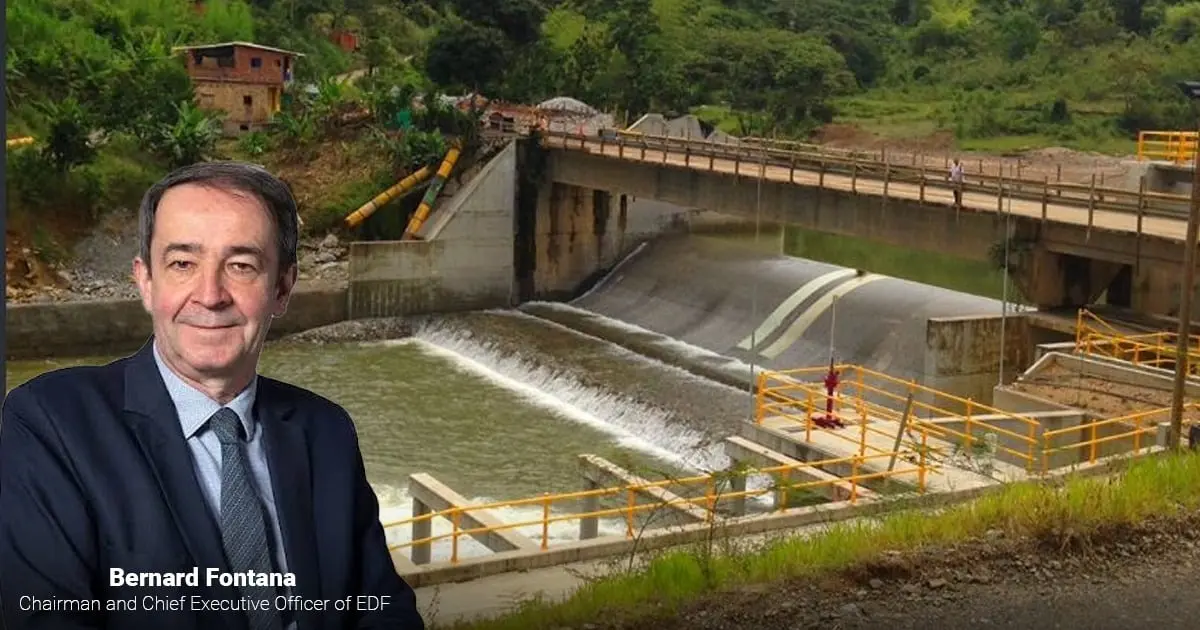
BOGOTÁ, COLOMBIA — In a landmark transaction signaling the accelerated consolidation of European and Latin American capital in Colombia’s energy transition, the French state-owned energy giant Électricité de France (EDF)—acting in a strategic joint venture with Brazilian investment powerhouse BTG Pactual Commodities—has officially acquired a vital portfolio of renewable energy assets from Isagen.
The acquired portfolio comprises four small-scale hydroelectric power plants (known locally as Pequeñas Centrales Hidroeléctricas – PCHs) situated in the Andean department of Antioquia, alongside five operational solar photovoltaic parks located in the eastern plains department of Meta.
Previously controlled by the Canadian global asset management firm Brookfield Asset Management through its Colombian energy subsidiary Isagen, these assets immediately anchor EDF and BTG Pactual more deeply into Colombia’s fast-evolving renewable infrastructure market. Led globally from Paris by Bernard Fontana—whose appointment is directly overseen by French President Emmanuel Macron—EDF is aggressively expanding its international footprint, focusing on high-potential renewable portfolios across Europe and Latin America.
1. Main Facts: The Transaction and Asset Breakdown
The multi-million-dollar acquisition brings a diverse mix of decentralized, clean-energy generation assets under the umbrella of the French-Brazilian alliance. The transaction underscores a broader corporate trend: major global utilities and institutional funds are actively acquiring early-to-mid-stage operational renewables to secure predictable cash flows and diversify geographically.
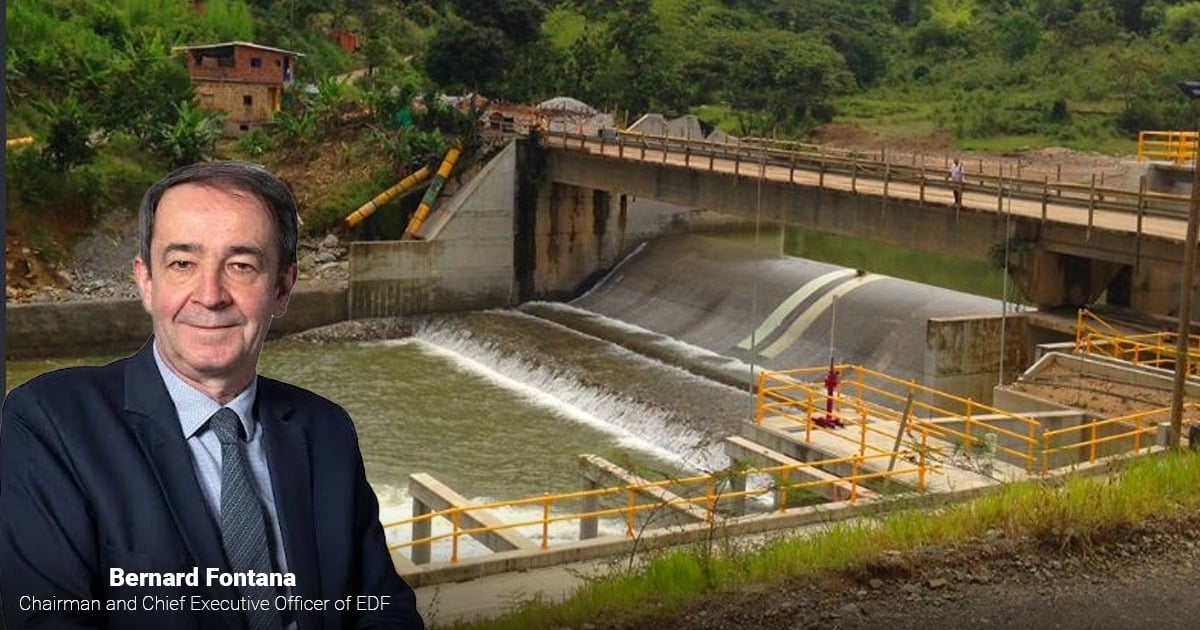
The Antioquia Hydroelectric Assets
The hydroelectric portion of the acquisition involves four run-of-the-river small-scale hydro plants strategically located primarily in Cocorná, within the mountainous Eastern subregion of Antioquia (Oriente antioqueño):
- El Popal PCH
- El Molino PCH
- San Miguel PCH
- San Matías PCH
These plants, while modest in individual generation capacity compared to major utility-scale reservoirs, provide critical baseload support and localized stability to the regional grid, capitalizing on Antioquia’s rich hydrological topography.
The Meta Solar Parks
In the Orinoquía region, the acquisition secures five operational photovoltaic generation assets located in the department of Meta. Collectively known as the Llanos portfolio, they comprise:
- Llanos I Solar Park
- Llanos II Solar Park
- Llanos III Solar Park
- Llanos IV Solar Park
- Llanos V Solar Park
These facilities capture the high solar irradiance profiles characteristic of Colombia’s eastern plains, feeding clean energy directly into local distribution networks and helping diversify the department’s energy matrix away from heavy fossil fuel reliance.

2. Chronology: EDF’s Expansion Strategy in Colombia
EDF’s entry into Colombia has not been sudden; rather, it has followed a methodical, multi-year playbook characterized by high-profile joint ventures, equity acquisitions, and greenfield developments.
- 2023–2024 (Establishing the Foothold): EDF Renewables began mapping out strategic entry vectors into Colombia’s non-conventional renewable energy (NCRE) sector. Recognizing regulatory complexities and the dominance of domestic incumbents, the French multinational opted for a localized partnership model, joining forces with regional financial heavyweights and local holding companies.
- Late 2025 (The Casanare Biomass Milestone): EDF solidified its presence in the Orinoquía and Caribbean basins by launching key industrial projects. Through its joint venture Brillo Renovables / Refoenergy—partnering with Refocosta, a subsidiary of the Grupo Valorem (the principal investment vehicle of the Santo Domingo family)—the 30 MW Villanueva biomass plant entered commercial operation. Utilizing eucalyptus wood waste as feedstock, the plant was projected to supply over 200 GWh annually to the national grid.
- Mid-2026 (The Industrial Solar Push in Cesar): EDF advanced its B2B renewable strategy by partnering with major industrial players like Drummond Ltd. The resulting Cañahuate Solar Park, built on reclaimed mining lands in El Paso and Chiriguaná (Cesar), was designed to feed clean energy into both the National Interconnected System (SIN) and Drummond’s heavy mining operations.
- Late 2026 (The Isagen Portfolio Acquisition): Culminating its regional expansion strategy, EDF joined hands with Brazil’s BTG Pactual Commodities to successfully close the acquisition of the four Antioquia PCHs and the five Meta solar parks from Brookfield’s Isagen. This transaction immediately elevates EDF’s operational footprint from localized industrial pilots to a diversified portfolio spanning hydro, solar, and biomass technologies across multiple departments.
3. Supporting Data and Technological Infrastructure
The success of EDF’s Colombian operations relies heavily on localized engineering partnerships, regional management under Latin American leadership, and technological adaptability.
Leadership and Regional Governance
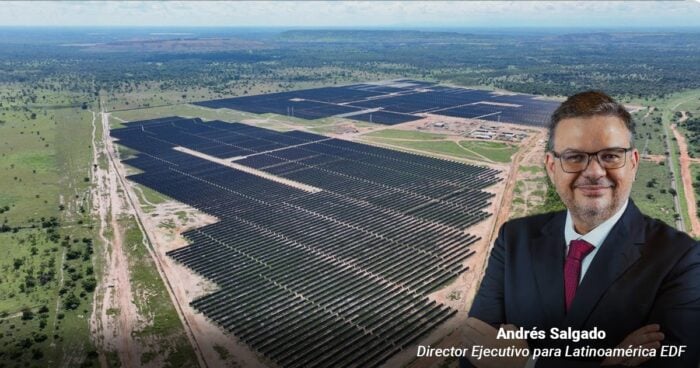
The entire portfolio of solar, hydro, and wind projects—along with commercial structuring across Colombia—is overseen by André Salgado. Serving as the Vice President for Latin America at EDF Renewables and CEO of the company’s Brazilian subsidiary, Salgado directs a decentralized operational model. This model pairs French engineering standards with deep knowledge of Latin American regulatory frameworks, permitting hurdles, and power purchase agreement (PPA) dynamics.
Diversified Technology Matrix in Colombia
EDF’s asset portfolio in the country extends far beyond the newly acquired Isagen assets:
- Biomass & Forestry Synergy: The Villanueva plant in Casanare demonstrates a circular economy model, utilizing sustainable forestry residues to generate reliable baseload power.
- Industrial B2B Solar: Projects like Las Bateas and Las Delicias (2 MW) in Cesar, alongside the larger Cañahuate facility, prove the viability of deploying photovoltaic infrastructure on post-mining industrial land, mitigating environmental liabilities while securing captive industrial off-takers.
- Offshore Wind Ambitions: Looking toward the future, EDF Renewables is actively participating in maritime space allocation rounds in the Gulf of Morrosquillo, regulated by the General Maritime Directorate (DIMAR) and the Ministry of Mines and Energy. Drawing on its global offshore wind experience—such as the Fécamp and Saint-Nazaire projects in France—EDF aims to pioneer marine wind energy generation along Colombia’s Caribbean coast.
- Northern Photovoltaic Prospects: The company maintains an active long-term pipeline of solar prospects designed to interconnect with the electrical transmission nodes of Sucre and Bolívar, capitalizing on high solar radiation indices in the Colombian Caribbean.
4. Official Responses and Industry Stakeholder Perspectives
While Brookfield Asset Management and Isagen have steadily optimized their asset portfolios—rebalancing capital toward massive utility-scale greenfields (such as recent partnerships with investment giants like BlackRock for large solar farms in Córdoba)—the entry of EDF and BTG Pactual has drawn widespread praise from energy sector analysts and business chambers.
A spokesperson for the Colombian Association of Electric Power Generators (Acolgen) noted that the entry of sovereign-backed European utilities like EDF, alongside sophisticated regional financial partners like BTG Pactual, injects vital liquidity and international engineering standards into the market at a critical juncture.
"The maturation of Colombia’s renewable matrix requires more than just local capital; it demands institutional heft, technological transfer, and long-term risk appetite. The arrival of French state-backed capital into regional hydro and solar assets demonstrates sustained international confidence in Colombia’s regulatory framework," noted an independent energy market analyst based in Bogotá.
From Paris, the administration of President Emmanuel Macron continues to view Latin America as a core pillar of its global climate diplomacy and economic expansion strategy, viewing partnerships with Brazilian banking giants like BTG Pactual as a pragmatic way to de-risk investments in emerging markets.

5. Strategic Implications for Colombia’s Energy Market
The acquisition of Isagen’s Antioquia hydro plants and Meta solar parks by EDF and BTG Pactual carries profound implications for the future configuration of Colombia’s power sector:
- Consolidation of Foreign State Capital: Unlike speculative venture capital funds, state-backed European utilities like EDF bring multi-decadal operational expertise, immense balance-sheet strength, and a strict adherence to international environmental, social, and governance (ESG) standards.
- Hybrid Portfolio Resiliency: By blending run-of-the-river hydroelectricity in Antioquia with photovoltaic generation in Meta, the EDF-BTG Pactual alliance achieves a natural generation hedge. Hydro assets help balance the intermittency of solar output, creating a robust, localized supply capability that can weather hydrological shocks induced by climate phenomena such as El Niño.
- Decentralization and Industrial Decarbonization: Through localized B2B agreements—such as those with Drummond in Cesar and Refocosta in Casanare—the French giant is proving that Colombia’s heavy industries can successfully transition to captive, localized renewable energy sources without placing undue strain on the main transmission grid.
- Catalyst for Future M&A Activity: Market observers anticipate that this transaction will trigger a secondary wave of mergers and acquisitions in Colombia’s renewable sector. As legacy asset holders like Brookfield reallocate capital, other international funds and European utilities are actively scanning the market for operational PCHs and solar farms to bolster their regional market share.
As André Salgado and the EDF Renewables team integrate the newly acquired Isagen assets into their expanding operational map, Colombia solidifies its status as the premier renewable energy hub in Andean South America—bridging European green ambitions, Brazilian financial muscle, and local natural wealth.


Leave a Reply