

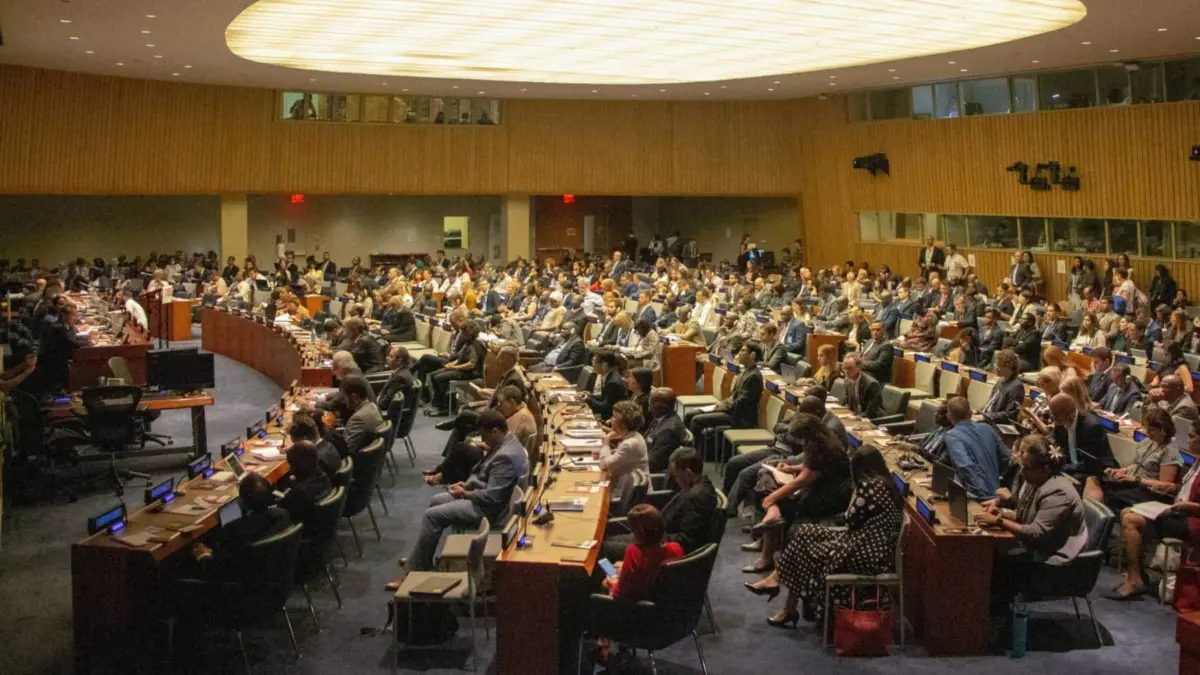
NEW YORK — As the international community navigates an era defined by compounding global disruptions, the United Nations General Assembly entered its pivotal fourth day of the General Debate. High-ranking officials, heads of state, and prime ministers from across the globe converged at the UN headquarters in New York to address what many are now calling the definitive tests of the twenty-first century: the accelerating climate catastrophe and the unregulated, high-stakes evolution of artificial intelligence (AI).
While geopolitics frequently dominates diplomatic discourse, this session was notable for its laser-like focus on planetary survival and technological governance. Representatives from nations as diverse as Papua New Guinea, the Bahamas, Kiribati, Lebanon, Malta, and Lesotho took to the podium not merely to air grievances, but to issue stark warnings about the trajectory of human development. Their messages coalesced around a central, sobering theme: unchecked economic growth and technological innovation, if divorced from ethical stewardship and ecological boundaries, threaten to dismantle the very foundations of human society.
1. Main Facts
The fourth day of the General Debate at the United Nations General Assembly crystallized two overarching anxieties shared by developing and developed nations alike:
- The Existential Threat of Climate Change: Island nations and developing economies delivered harrowing accounts of ecological degradation, rising sea levels, and devastating extreme weather events. Speakers underscored the profound injustice of a global economic system where nations bearing the least historical responsibility for greenhouse gas emissions are left to shoulder the catastrophic financial and human costs of recovery.
- The Governance and Inequality Risks of Artificial Intelligence: Leaders from the Middle East and Europe framed rapid technological advancement—specifically AI—as a double-edged sword. They warned that without immediate, cooperative international regulation, AI threatens to widen existing socioeconomic divides, creating a new technological underclass both within and between nations.
- The Transition to Renewable Energy as Survival: Several governments demonstrated that sustainability is no longer a peripheral environmental policy, but a core pillar of national security and economic viability. Innovative financing mechanisms, such as those introduced by Lesotho, showcased actionable pathways toward a decarbonized global economy.
2. Chronology of the Fourth Day
The sequence of addresses during the fourth day revealed a profound geographic and thematic synthesis. From the rainforests of the Pacific to the island chains of the Caribbean, the shores of Micronesia, the Levant, the Mediterranean, and the highlands of Southern Africa, the day unfolded as a synchronized cry for systemic reform.
Morning Session: The Ecological Imperative and Intergenerational Justice
The tone for the day was set early by James Marape, Prime Minister of Papua New Guinea. Speaking with moral clarity, Marape anchored his address in the framework of intergenerational justice. He directly challenged the prevailing paradigm that prioritizes short-term financial returns over ecological stability. Pointing to the irreversible loss of biodiversity and the destabilization of global weather systems, Marape posed a fundamental question to the assembly: “If the forest disappears, the oceans are contaminated, and the climate becomes increasingly unstable, what inheritance do we leave our children?”
Directing his remarks toward the technocrats, corporate titans, and financial magnates driving high-impact megaprojects, Marape issued a blunt reality check: “You may be powerful, but there is no other planet to which we can relocate the population.” He reminded delegates that humanity shares a single, fragile biosphere, urging global leaders to act as custodians rather than exploiters of the Earth.
The morning session quickly shifted from philosophical warnings to devastating empirical reality when Philip Edward Davis, Prime Minister of the Bahamas, took the stage. Davis brought the human cost of climate inaction into sharp focus by recounting the trauma inflicted by Hurricane Dorian in 2019. He articulated the deep structural inequity inherent in the current international climate architecture, wherein vulnerable island states are forced into impossible fiscal debt to rebuild after disasters they did not cause. “The cost of climate change has become unsustainable,” Davis declared, demanding immediate structural relief and genuine climate financing from major industrialized economies.
Continuing this maritime perspective, Taneti Maamau, President and Minister of Foreign Affairs and Immigration of Kiribati, emphasized that the climate crisis is an existential threat to his nation’s physical survival due to unrelenting sea-level rise. Maamau outlined aggressive national adaptation strategies, including investments in coastal protection, resilient infrastructure, and renewable energy grids. However, he cautioned that domestic efforts are continually undermined by global economic inequalities that leave developing nations uniquely exposed to external shocks.
Midday Session: The Digital Frontier and Technological Divides
As the debate progressed, the focus expanded to encompass the digital revolution, with particular emphasis on artificial intelligence.
Nawaf Salam, President of the Council of Ministers of Lebanon, delivered a compelling address regarding the double-edged nature of AI. While acknowledging its potential to drive human progress, Salam warned against the danger of a runaway technological arms race that could exacerbate global inequalities. “First and foremost, we must not allow a gap to emerge in artificial intelligence that deepens pre-existing inequalities,” he asserted. Salam called for inclusive global cooperation, arguing that technological advancements must be accompanied by robust regulatory frameworks, technology transfer, and equitable financing to ensure that developing nations are not left behind in the digital age.
Echoing these concerns, Robert Abela, representative of Malta, characterized the meteoric rise of AI as “the most pressing challenge of our epoch.” Abela stressed the inadequacy of unilateral national policies in the face of borderless technologies. In a striking assessment of modern sovereignty, he noted, “It is almost obvious that no State, no matter how powerful, has the ability to control the situation alone.” His remarks served as a direct appeal for multilateral governance structures to oversee the deployment and ethical boundaries of emerging technologies.
Afternoon Session: Actionable Solutions and Renewable Horizons
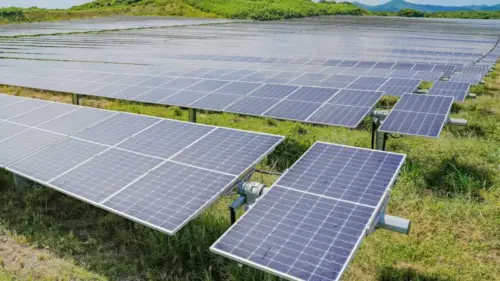
Shifting the narrative from crisis to constructive action, Samuel Ntsokoane Matekane, representative of Lesotho, demonstrated how developing nations are pioneering innovative responses to the energy and climate crises. Highlighting the launch of the King Letsie III Just Energy Transition fund, Matekane showcased his nation’s steadfast commitment to deep decarbonization. Lesotho is positioning itself not only as a domestic consumer of clean power, but as a regional exporter of renewable energy, proving that strategic investments in green infrastructure can simultaneously drive economic development and ecological preservation.
3. Supporting Data and Contextual Analysis
To fully understand the gravity of the statements made during the 81st UN General Assembly, it is necessary to examine the underlying metrics driving these policy positions:
- Small Island Developing States (SIDS) Vulnerability: According to reports by the United Nations Office for Disaster Risk Reduction (UNDRR), SIDS account for a disproportionate share of global disaster losses relative to their GDP. The economic damage from extreme weather events in the Caribbean and Pacific routinely wipes out entire national annual budgets, trapping these nations in cycles of perpetual debt.
- Sea-Level Rise Projections: The Intergovernmental Panel on Climate Change (IPCC) has projected that global mean sea levels will continue to rise throughout the 21st century. For low-lying atoll nations like Kiribati, even conservative projections threaten freshwater security, agricultural viability, and long-term habitability, making aggressive coastal defense and managed migration pressing policy concerns.
- The AI Divide: Research from international development agencies highlights a widening "AI readiness gap." While advanced economies pour hundreds of billions of dollars into generative AI and automated infrastructure, developing regions face acute deficits in digital literacy, reliable energy grids required to power data centers, and regulatory oversight, threatening to relegate the Global South to passive consumers rather than active architects of the digital future.
- Renewable Energy Potential in Southern Africa: The International Renewable Energy Agency (IRENA) notes that Southern Africa possesses some of the world’s highest potentials for solar, wind, and hydroelectric generation. Initiatives like Lesotho’s King Letsie III Just Energy Transition fund represent crucial models for mobilizing domestic and international capital to unlock this green potential, replacing fossil fuel dependency with sustainable, localized economic growth.
4. Official Responses and Diplomatic Reactions
The speeches delivered on the fourth day elicited varied responses from the broader diplomatic community, setting the stage for subsequent negotiations on climate finance and technological treaties:
- The Call for Loss and Damage Operationalization: Developing nations and climate advocacy groups praised the interventions by Papua New Guinea and the Bahamas, viewing them as vital pressure tactics ahead of upcoming global climate summits. The insistence on ethical accountability resonated strongly with representatives from the Global South, who continue to demand that historical emitters fulfill their financial pledges to the UN Loss and Damage Fund.
- Skepticism Over Tech Monopolies: Lebanon and Malta’s warnings regarding AI governance struck a chord with delegates concerned about the dominance of private tech conglomerates over public policy. Several European and Latin American delegations expressed support for establishing an international panel on artificial intelligence, mirroring the structure of the IPCC, to provide objective scientific and ethical guidance to governments.
- Praise for South-Led Innovations: Lesotho’s pragmatic approach to renewable energy transition drew admiration from multilateral financial institutions present at the assembly. Economic analysts noted that small-scale, targeted green transition funds offer a scalable blueprint that can be replicated in other landlocked and developing economies lacking massive fiscal reserves.
5. Implications for the Future of Global Governance
The convergence of climate and technological anxieties at the 81st UN General Assembly underscores a fundamental shift in international relations. Traditional metrics of national power—measured primarily in military might and gross domestic product—are increasingly proving inadequate in the face of transnational threats that recognize no borders.
- Redefining Security: National security is no longer solely about territorial defense; it is about ecological resilience, energy independence, and digital sovereignty. As leaders like James Marape and Philip Edward Davis emphasized, a state can maintain absolute military security while collapsing internally due to ecological exhaustion or economic ruin driven by climate shocks.
- The Imperative of Multilateralism: From Malta’s assertion that no single nation can manage AI alone, to Kiribati’s reliance on international cooperation for sea-level adaptation, the message of the fourth day was an unambiguous defense of multilateralism. In an era marked by rising geopolitical fragmentation, planetary crises demand unprecedented levels of scientific, financial, and regulatory collaboration.
- Ethical Economics: The philosophical challenge issued to corporate and political elites—reminding them of their intergenerational duty to children and future citizens—signals a growing push to reform global economic metrics. The integration of ecological health into macroeconomic planning is transitioning from an idealistic aspiration to an urgent operational requirement.
As the General Debate progresses, the blueprints articulated by Papua New Guinea, Bahamas, Kiribati, Lebanon, Malta, and Lesotho will serve as crucial touchstones. Whether the international community can summon the political will to translate these impassioned warnings into binding, equitable global policies remains the defining question of our time.


Leave a Reply