

By Environmental Science Desk
Published: November 2025
Main Facts: The Invisible Toll on Nocturnal Wildlife
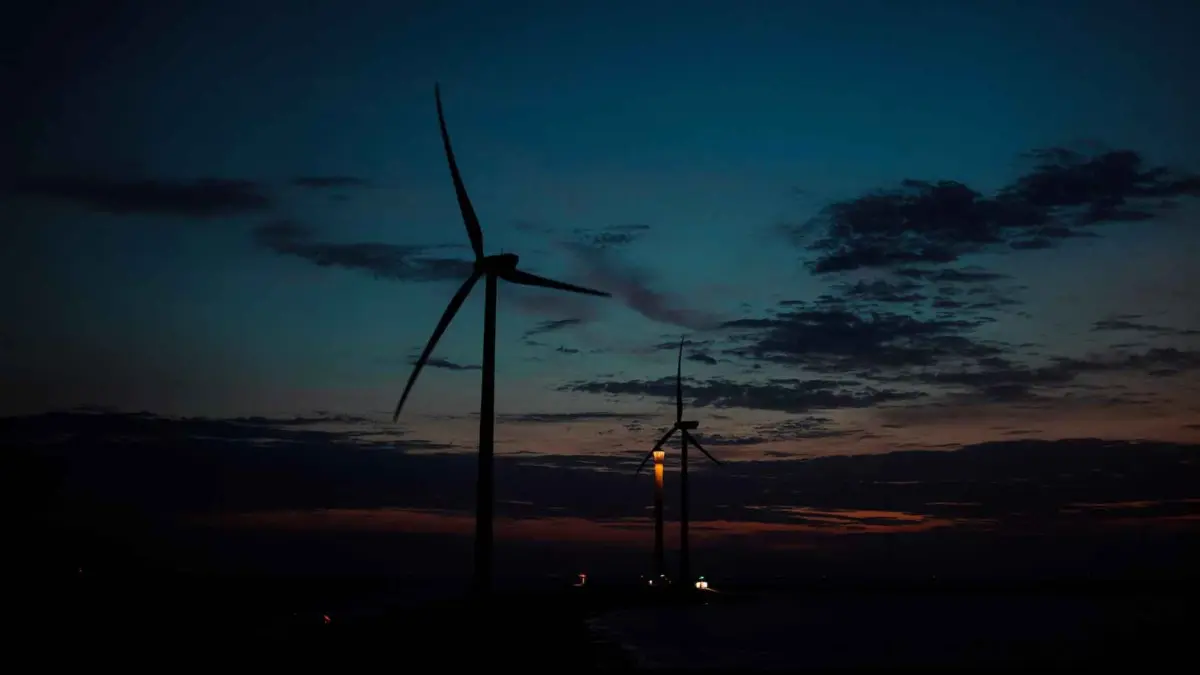
Every night across the globe, as human settlements wind down and slip into sleep, an invisible drama unfolds in the shadows of towering renewable energy installations. Sleek, high-efficiency wind turbine blades slice through the night air at breathtaking speeds, casting kinetic hazards into the flight paths of local wildlife. Among the most vulnerable victims of this green energy transition are bats.
While wind energy is a cornerstone of the global fight against climate change, it comes with a localized ecological price tag. Thousands of bats collide with turbine blades or suffer fatal barotrauma—internal hemorrhaging caused by rapid air pressure changes near spinning blades—each year.
Historically, quantifying this mortality rate has been a blunt, imprecise science. Conservationists and industry operators have relied primarily on manual ground searches. Human technicians and specially trained cadaver-seeking dogs comb the terrain beneath turbines at dawn, cataloging the fallen.
However, this traditional methodology leaves critical blind spots. Finding a bat carcass days after an impact yields frustratingly few answers:
- Exactly when did the fatal collision occur?
- What were the atmospheric conditions, wind speeds, and barometric pressures at that precise moment?
- What was the behavioral trajectory of the animal immediately prior to the incident?
Furthermore, terrestrial scavengers—such as foxes, raccoons, and raptors—often scavenge carcasses before researchers arrive, skewing mortality estimates.
To bridge this data gap, a team of researchers decided to test a radical technological pivot. Instead of searching for the dead hours or days later, they set out to catch the tragedy as it happens using thermal imaging cameras and artificial intelligence (AI). Their findings, published in the journal PLOS ONE (Weaver et al., 2025), offer a glimpse into a smarter, more data-driven future for wind energy ecology, even as they highlight the immense technical hurdles that remain.
Chronology of the Study: From Concept to Dark-Sky Monitoring
The journey to developing this automated detection framework represents a multi-year convergence of wildlife biology, computer vision, and renewable energy engineering.
Phase 1: Site Selection and Hardware Deployment
The experiment was deployed at the Sun Clock Wind Farm in the scrub-and-mesquite landscape of southern Texas—a region known for active migratory and resident bat populations navigating dense networks of commercial turbines.
Rather than aiming expensive, high-definition thermal cameras directly at the spinning rotor-swept zone high above—a logistical and financial nightmare given vibration, weather, and distance—the researchers opted for a clever positional strategy. They positioned four thermal imaging cameras primarily facing downward, clustered around the base of two large commercial aerogenerators.
The logic was simple yet profound: whether a bat is struck directly by a blade or succumbs to pressure differentials aloft, gravity dictates its final descent. If a fatality occurs, the animal must eventually plummet through the lower viewing cones covered by the ground-facing thermal cameras.
Phase 2: Data Harvesting and the AI Bottleneck
The cameras recorded continuously over several months, amassing an astronomical volume of data: more than 7,000 hours of thermal video footage.
Manual review of 7,000 hours of nighttime footage was practically impossible for a human research team. To solve this, the scientists turned to machine learning. They trained a custom artificial intelligence model designed specifically to recognize biological motion profiles in low-light infrared spectra.
The AI algorithm was tasked with mapping continuous flight trajectories and flagging anomalies—specifically, sudden downward vectors that mirrored the physics of a falling object rather than normal, erratic foraging or migratory flight patterns.
Phase 3: Validation and Ground-Truthing
Over the course of the monitoring period, the algorithm processed an astonishing 274,051 distinct flight trajectories. Out of these hundreds of thousands of movements, the AI flagged 189 specific events as potential fatalities.
To test the accuracy of the system, the research team cross-referenced the AI’s time-stamped detections with the empirical data gathered during traditional ground-search sweeps conducted by field personnel beneath the same turbines.
Supporting Data: Breakthroughs and False Alarms
The results of the Sun Clock Wind Farm trial present a fascinating paradox of modern machine learning applied to conservation biology.
On one hand, the thermal-AI hybrid system demonstrated a remarkable capacity to spot real-world events. When matched against confirmed ground-truthed fatalities, the system achieved a detection rate of 88.5%. In theory, this means the technology successfully captured the vast majority of actual falling events occurring within its monitored zones.
However, the raw efficiency numbers reveal a heavy operational tax: 87.8% of the system’s initial automated detections turned out to be false positives.
Understanding the False Positives
Why did the AI struggle with precision? Thermal cameras operating in open outdoor environments capture a massive amount of visual noise. The algorithm frequently confused actual fatalities with:
- Insects buzzing close to the camera lenses, magnified by infrared illumination.
- Falling leaves, debris, or wind-blown detritus dropping through the frame.
- Normal, erratic bat swoops and foraging dives that momentarily plunged downward before pulling up sharply into normal flight.
While an 87.8% false-positive rate sounds alarmingly high, researchers emphasize that this is a standard developmental milestone for first-generation ecological AI models. The system successfully prioritized sensitivity—ensuring it missed as few actual events as possible—at the expense of specificity, which can be refined through successive generations of machine learning training and algorithmic pruning.
Official Responses and Industry Implications
The integration of thermal imaging and AI into wind farm management has sparked cautious optimism among wind energy developers, environmental regulators, and wildlife conservationists alike.
Industry Perspectives
Wind energy operators have long sought non-lethal, highly accurate ways to mitigate wildlife impacts without unnecessarily sacrificing power generation. Traditional mitigation strategies often involve blanket curtailment—mandating that entire wind farms slow down or shut off their turbines during peak migration seasons or specific low-wind hours. While effective at saving bats, these blanket shutdowns result in substantial financial losses for energy producers.
"If we can move from broad, calendar-based curtailments to precision, real-time operational adjustments, everybody wins," notes a leading wind energy environmental compliance officer. "We protect the biodiversity that our industry fundamentally relies on preserving, and we optimize power output by only feathering turbines when ecological risks are demonstrably high."
Conservation and Regulatory Implications
From a regulatory standpoint, having precise temporal data transforms how environmental impact assessments are conducted. Knowing when fatalities happen changes everything.
If data reveals that 80% of bat collisions at a specific facility occur within a narrow two-hour window following midnight during specific temperature and wind thresholds, operators can implement targeted micro-curtailments lasting mere hours rather than entire nights.
Furthermore, this technology opens up entirely new frontiers for offshore wind energy. As nations rapidly expand their offshore wind infrastructure, terrestrial methods like human searchers and trained dogs become completely obsolete. You cannot deploy ground-search teams across the open ocean. Thermal cameras mounted directly on offshore substations or turbine towers, paired with edge-computing AI, may soon represent the only viable way to monitor avian and bat mortality in marine environments.
Future Horizons: Refining the Technology
Despite its clear promise, the technology tested in southern Texas is not yet ready to serve as a standalone replacement for traditional monitoring methods. It requires continuous human oversight, data verification, and iterative algorithmic fine-tuning to reduce its heavy burden of false alarms.
Yet, the core achievement of the study is undeniable: by peering through thousands of hours of absolute darkness, the system successfully isolated the exact trajectory of a falling mammal among a quarter-million flight paths.
As neural networks grow more sophisticated, hardware costs drop, and thermal resolution improves, the synergy between artificial intelligence and wildlife monitoring will only tighten. For bats flying through the spinning blades of the green energy transition, these digital sentinels in the dark may soon provide the critical data needed to keep the skies safe.
Reference Study
Weaver, S. P., Ritter, J. D., Commiskey, A. M., García, J. D., & Morton, B. P. (2025). Testing a bat fatality detection system at wind turbines. PLOS ONE, 20(11), e0334609. https://doi.org/10.1371/journal.pone.0334609


Leave a Reply