

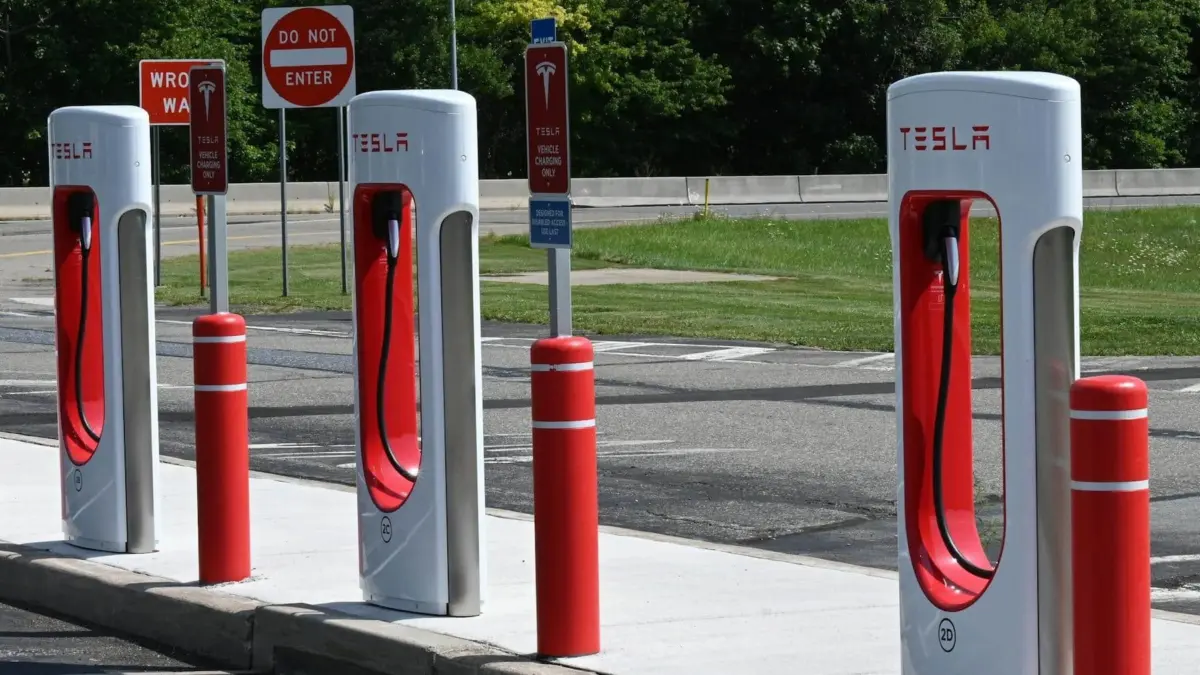
TEXAS — In a move that signals a profound transformation for the North American automotive and energy landscapes, Tesla is aggressively expanding its Supercharger network across the state of Texas. By deploying a wave of next-generation, ultra-fast charging stations strategically positioned across vast highway corridors, the company is directly addressing the soaring demand for sustainable mobility in one of the largest and most geographically challenging driving markets in the United States.
Crucially, this latest infrastructure rollout represents a definitive departure from Tesla’s historical exclusivity. The newly constructed stations are not reserved solely for Tesla owners; instead, they feature native compatibility and universal adapters designed to welcome electric vehicles (EVs) from virtually every major manufacturer. This strategic pivot aims to reshape long-distance travel, bolster regional power grid resilience, and redefine the commercial blueprint for EV charging infrastructure nationwide.
Main Facts
The expansion of Tesla’s Supercharger network in Texas is underpinned by several critical technical, strategic, and logistical pillars:
- Universal Interoperability: Breaking away from years of proprietary exclusivity, the new charging hubs in northern and eastern Texas are equipped with dual-acoupling universal adapters. This allows non-Tesla electric vehicles to plug in seamlessly without compromising charging speeds or safety protocols.
- Extreme-Weather Engineering: Designed to withstand the punishing Texan climate—where summer heatwaves frequently push local thermometers well past 105°F for weeks on end—the new hardware utilizes sophisticated liquid-cooling circuits. These closed-loop systems circulate coolant through the cables, preventing thermal degradation and allowing high-voltage electricity to flow safely into vehicle batteries at peak capacity.
- Grid Stabilization via Stationary Storage: To mitigate the massive strain that ultra-fast chargers place on local utilities, these new stations incorporate utility-scale battery energy storage systems (BESS). These massive battery banks absorb energy during off-peak hours and discharge rapidly during high-demand daytime surges.
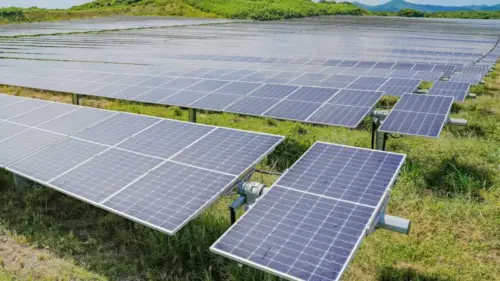
- Renewable Integration: Many of the newly minted charging complexes feature expansive overhead solar panel canopies. These structures provide much-needed shade for charging vehicles while simultaneously generating localized, clean renewable energy.
- Commercial Real Estate Optimization: By opening its charging plazas to competing automakers, Tesla maximizes the utilization of large commercial parking acreage—often leased near major highway retail and food-service hubs—thereby accelerating the financial amortization of its massive infrastructure investments.
Chronology of the Transformation
The journey toward an open, standardized, and resilient charging network in North America—and specifically within the strategic corridor of Texas—has evolved through distinct phases over the past decade.
Phase 1: The Closed Ecosystem (2012–2022)
For the first decade of its commercial life, Tesla’s Supercharger network operated as a strictly closed ecosystem. Designed exclusively for Model S, Model X, Model 3, and Model Y vehicles, the network served as a powerful competitive moat. Tesla owners enjoyed seamless, plug-and-charge convenience across the United States, while drivers of competing EVs from legacy automakers were left to navigate a fragmented landscape of slower, less reliable third-party networks. During this era, Texas’s vast stretches of highway—spanning hundreds of miles between major metropolitan hubs like Houston, Dallas, Austin, and San Antonio—relied heavily on scattered, early-generation charging infrastructure.
Phase 2: The Shift Toward Standardization (2022–2023)
Recognizing that mass adoption of electric vehicles required a unified charging standard, Tesla made the historic announcement that it would begin opening its proprietary North American Charging Standard (NACS) design to other automakers. This policy shift triggered a domino effect across the global automotive industry. Major legacy manufacturers, including Ford, General Motors, Rivian, Hyundai, and others, announced plans to adopt the NACS plug layout for their future vehicle lineups, setting the stage for structural interoperability.
Phase 3: The Texas Surge and Grid Integration (2023–Present)
Tesla turned its focus to operational execution, designating Texas—where the company maintains its corporate headquarters in Austin—as a primary testing ground for next-generation charging infrastructure. The current expansion phase goes beyond merely installing more plugs; it introduces robust liquid-cooled dispensers, heavy-duty industrial foundations, and localized microgrid solutions (such as Megapack storage and solar canopies). These new stations are engineered not just to fuel cars, but to interact intelligently with Texas’s independent and historically volatile power grid, the Electric Reliability Council of Texas (ERCOT).
Supporting Data and Technical Architecture
The engineering behind Tesla’s latest Texas Supercharger deployment involves heavy industrial hardware designed to operate under severe physical constraints.
Power Distribution and Substructure
A standard high-capacity Supercharger site is far more than a collection of parking posts. Each central distribution cabinet—responsible for conditioning and routing high-voltage direct current (DC) simultaneously to multiple individual stalls—weighs thousands of pounds. Consequently, their installation requires deep, reinforced concrete and steel foundations capable of supporting immense mechanical loads.
Thermal Management Systems
The ambient temperatures in Texas pose an existential threat to high-power electronics. When delivering hundreds of kilowatts of power to a vehicle battery, resistive heat buildup can quickly melt cable insulation or trigger thermal throttling, which drastically reduces charging speeds. To combat this, Tesla’s latest deployment utilizes advanced liquid-cooled charging cables. A specialized coolant solution circulates continuously through the cable sheath, absorbing heat and maintaining optimal operating temperatures even when ambient air temperatures soar above 105°F.
Energy Storage and Photovoltaic Integration
The integration of stationary battery storage at remote or high-traffic charging sites is a game-changer for grid management. A typical ultra-fast charging session can draw power equivalent to the instantaneous electricity demand of dozens of residential homes. Without local buffering, these spikes can destabilize local distribution transformers. By pairing chargers with commercial-scale battery packs, Tesla enables a "charge slow, discharge fast" operational model. The batteries trickle-charge from the grid overnight when electricity is cheap and abundant, then unleash stored energy during peak daytime hours. Furthermore, integrated solar canopies offset daytime baseloads, lowering the carbon footprint of every kilowatt-hour dispensed.
Official Responses and Industry Reactions
The strategic opening of Tesla’s charging ecosystem has elicited widespread commentary from industry analysts, utility operators, and competing automotive executives.
Automotive market analysts have universally praised the move as a masterclass in capital efficiency. By sharing its infrastructure with rival brands, Tesla transforms what was once a pure cost center—albeit a valuable marketing asset—into an independent revenue-generating business. Furthermore, high stall turnover rates reduce the time required to recoup the multi-million-dollar real estate and hardware expenditures associated with large-scale charging plazas.
Energy experts tracking the ERCOT grid have likewise welcomed the inclusion of local battery storage and solar generation at Supercharger sites. Representatives from regional utility cooperatives have noted that while the rapid proliferation of EVs introduces significant demand spikes, decentralized storage systems act as shock absorbers. Instead of forcing utilities to build costly new peaker power plants to handle transient loads, these smart charging hubs help balance supply and demand dynamically.
Competing automakers, meanwhile, continue to transition their manufacturing pipelines to incorporate native NACS ports, validating Tesla’s technical architecture as the de facto national standard. Executives from major legacy brands have emphasized that customer access to a reliable, ubiquitous, and fast-charging network is the single most important catalyst for overcoming consumer range anxiety.
Implications for the Future of Mobility and Energy
The ongoing expansion and technological upgrading of Tesla’s Supercharger network in Texas carries profound implications that extend far beyond state lines.
1. The Death of Range Anxiety
For decades, the sheer geographic expanse of Texas—spanning nearly 800 miles from El Paso to Beaumont and nearly 900 miles from Texline to Brownsville—presented a psychological barrier for EV adoption. By blanketing these corridors with ultra-fast, universally accessible charging hubs, Tesla is systematically dismantling range anxiety. Motorists can now plan long-distance road trips across the Lone Star State without needing to juggle multiple membership apps, incompatible payment systems, or unreliable third-party chargers.
2. A Blueprint for Grid Resilience
As the global transition toward electrification accelerates, electrical grids everywhere face unprecedented strain. The integration of localized energy storage and renewable generation at highway charging hubs demonstrates a scalable blueprint for sustainable infrastructure. By turning charging stations into localized microgrids, operators can buffer against grid failures, reduce peak-hour transmission losses, and stabilize regional energy markets.
3. A New Paradigm for Retail and Real Estate
The architectural design of these new charging plazas—often integrated near retail centers, restaurants, and grocery stores—signals a shift in how consumers spend their time while traveling. A 15-to-20-minute charging stop transforms the traditional gas station model into a lifestyle pause. As non-Tesla drivers increasingly frequent these locations, surrounding commercial real estate developers are rushing to adapt, creating a symbiotic economic ecosystem centered around sustainable mobility.
Ultimately, Tesla’s aggressive deployment in Texas is not merely about selling more cars or installing more plugs. It is a foundational proof-of-concept for how modern transportation and energy systems must converge to support a resilient, electrified future.


Leave a Reply