

Main Facts
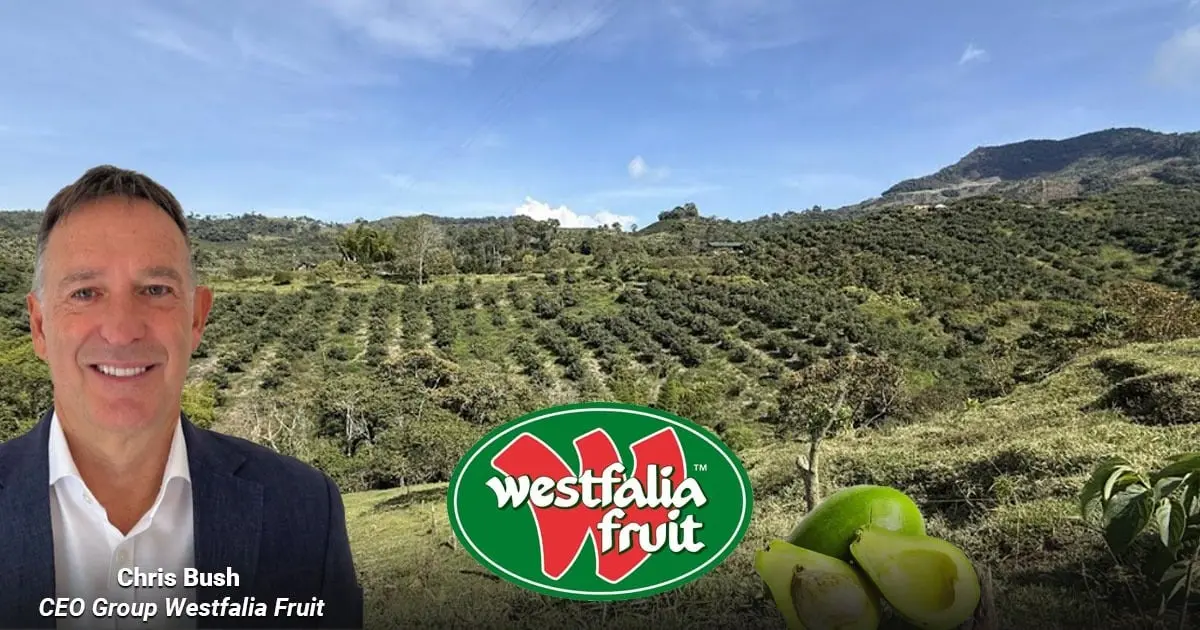
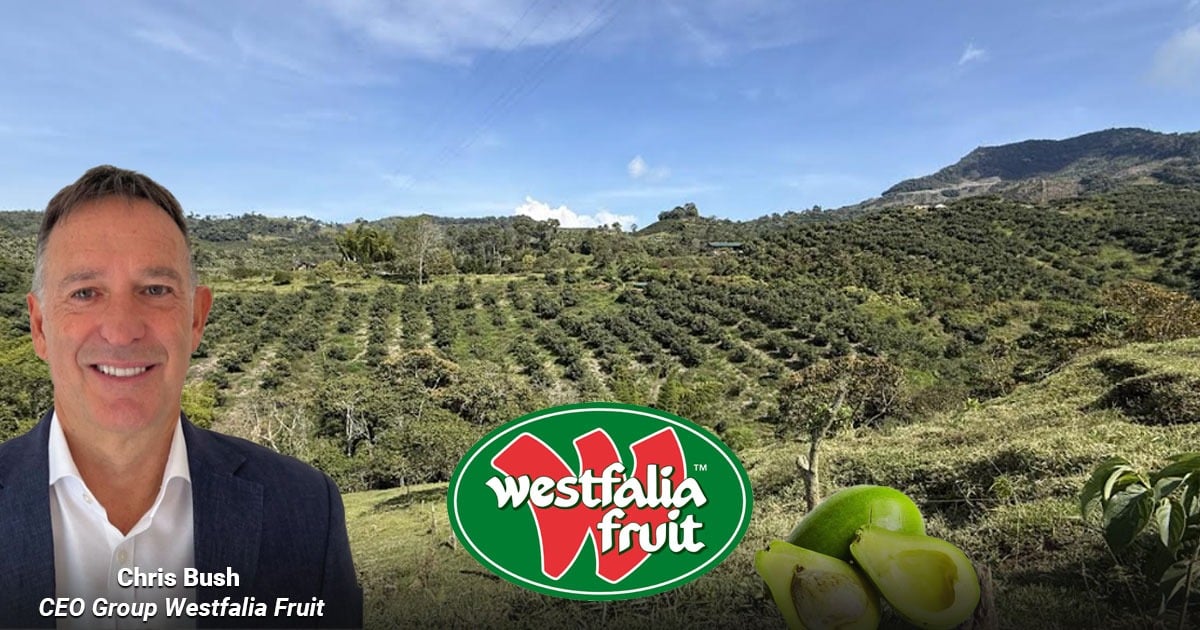
The global agricultural landscape has undergone a silent revolution over the past few decades, driven largely by shifting consumer habits, a heightened focus on health and wellness, and the unstoppable rise of the Hass avocado as a dietary staple. At the center of this culinary and economic phenomenon stands Westfalia Fruit International (WFI), a South African-origin conglomerate that holds the title of the world’s largest producer and cultivator of avocados.
In Colombia, a country that has rapidly ascended to become the second-largest producer of Hass avocados globally (second only to Mexico), Westfalia Fruit has planted deep roots. Operating primarily through its local subsidiaries, Westfalia Fruit Colombia S.A.S. and Westfalia Farms Colombia S.A.S., the multinational commands a formidable footprint in the department of Antioquia. Specifically, the company directly manages approximately 600 hectares of high-yield Hass avocado crops and operates two state-of-the-art processing plants in the subregion of Eastern Antioquia (Oriente Antioqueño), located in the municipalities of Sonsón and La Ceja.
From these technological hubs, Westfalia orchestrates a massive international supply chain, exporting fresh and processed avocado products to the most demanding markets across North America, Europe, Asia, and the Middle East. However, the company’s impact on the Colombian economy extends far beyond its direct land ownership. Through strategic outgrower schemes, technical associations, and commercial partnerships with small and medium-sized independent farmers, Westfalia integrates an additional 1,500 hectares of allied producer crops under its global export umbrella.
This vertically integrated business model—spanning clonal nurseries, direct cultivation, post-harvest selection, cold-chain logistics, and industrial value addition—has transformed Colombian agriculture from a fragmented, domestic-facing sector into a high-tech, highly competitive global export machine.
Chronology: From a Geological Pioneer to a Global Agribusiness Titan
The history of Westfalia Fruit is deeply intertwined with the life and legacy of its founder, Johannes (Hans) Merensky. Understanding the modern multinational requires a journey back through a century of scientific innovation, geological discovery, and agricultural pioneering.
The Era of the "Wizard Geologist" (1871–1952)
Born in 1871 in Botshabelo, South Africa, to a German missionary father, Hans Merensky moved to Berlin at the age of 11, where he pursued rigorous studies in geology and mining engineering. Returning to South Africa in 1904, Merensky embarked on a legendary career as a consulting geologist and mining engineer. His extraordinary discoveries of vast platinum deposits, gold, tin, phosphates, and diamond fields across Southern Africa earned him international renown and the affectionate moniker of the "Wizard Geologist."
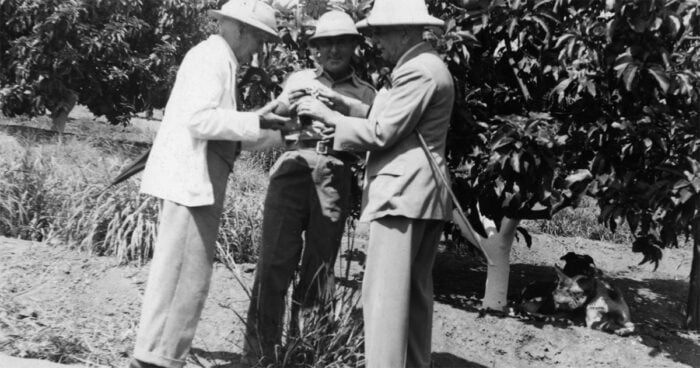
Unlike many industrialists of his era, Merensky’s vision extended far beneath the earth’s surface to the soil itself. Later in life, he directed his immense wealth and scientific curiosity toward agriculture. He acquired the Westfalia estate in South Africa, where he pioneered groundbreaking techniques in soil conservation, silviculture, and the cultivation of subtropical fruits, most notably citrus and avocados. The Westfalia farm ultimately became the crucible for modern global avocado science. When Merensky passed away unmarried in 1952, his entire fortune and business empire were placed under the stewardship of the Merensky Foundation, ensuring his philanthropic and scientific legacy would endure.
Global Expansion and Latin American Incursions (2010–2020)
While Westfalia spent decades consolidating its dominance in Africa and Europe, its strategic pivot to Latin America began in earnest in 2010 with its arrival in Peru. Recognizing the ideal coastal and highland growing conditions of the Andean nation, Westfalia established major packing and export hubs, utilizing the Port of Callao to dispatch fruit worldwide.

The company’s entry into Colombia occurred between 2012 and 2013, initially forged through a strategic alliance with Agricom, a prominent Chilean agricultural firm that provided vital local contacts, logistical know-how, and commercial networks. Following the formal incorporation of Westfalia Fruit Colombia, the company established its headquarters in Guarne, Antioquia.
A major corporate milestone occurred in early 2018, when the South African group acquired a 50% stake in Agricom, absorbing its expansive operations spanning Colombia, Chile, Peru, Mexico, and the United States. This consolidation culminated in September 2020, when Westfalia acquired 100% of Agricom’s shares, securing full operational control across Latin America. Prior to this, in late 2016, Westfalia had already acquired a 51% stake in Camet Trading, one of Peru’s largest agro-exporters of Hass avocados and mangoes, further cementing its regional hegemony.
Supporting Data: Infrastructure, Technology, and Corporate Structure
Westfalia’s competitive edge relies on cutting-edge technology, sophisticated processing capabilities, and a rock-solid corporate framework.
Industrial Infrastructure in Antioquia
To support its colossal export volume, Westfalia operates two advanced facilities in Eastern Antioquia through its subsidiary Avo-Pak:
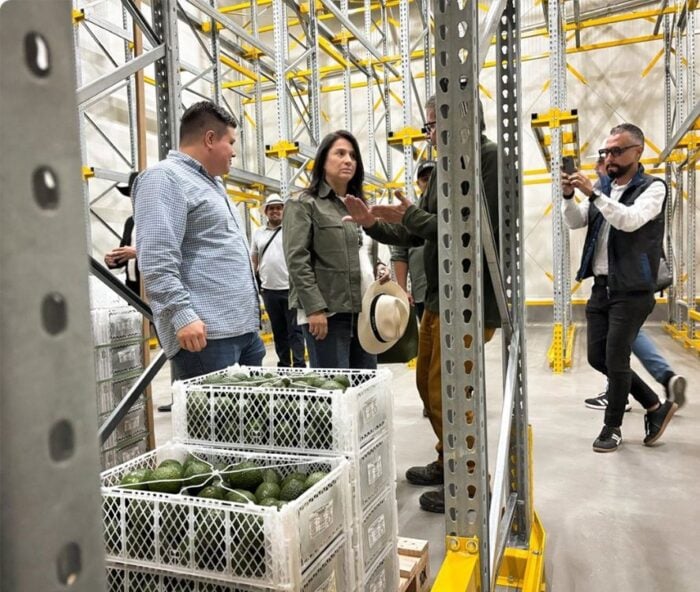
- The Sonsón Plant (Inaugurated 2019): This facility stands as the largest and most technologically advanced installation in Colombia for the classification, packing, and processing of fresh avocados. Outfitted with high-speed, last-generation optical sorting machinery from Compac (a division of TOMRA Food), the plant boasts the capacity to process more than 20 tons of fresh avocados per hour. Every piece of fruit is scanned for external blemishes, internal dry matter, and ripeness before being cleared for export to the United States, Europe, Asia, and the Middle East.
- The La Ceja Plant: While Sonsón handles fresh fruit, the La Ceja facility is dedicated to the industrial transformation of avocados into high-value-added consumer goods. Capitalizing on the global boom for healthy vegetable fats, this plant produces fresh guacamole, avocado pulp, culinary oils, cubes, slices, and halves. To extend shelf life without chemical preservatives, Avo-Pak deploys High-Pressure Processing (HPP) technology and rapid-freezing systems.
Corporate Ownership and Governance
Globally, Westfalia Fruit International Limited is headquartered in the United Kingdom, functioning as the operational core of the vertically integrated group. The ultimate parent company is Hans Merensky Holdings (HMH), a South African bio-resource and agribusiness holding.
The ownership structure of HMH reflects a unique blend of philanthropic stewardship, state development backing, and broad-based economic empowerment:
- The Merensky Foundation: Holds the controlling stake at 40.02%.
- Industrial Development Corporation of South Africa (IDC): Holds 29.7%.
- International Finance Corporation (IFC, World Bank Group): Holds 20%.
- Vuka Forestry Holdings: Holds 4.03%.
- Women Investment Portfolio Holdings: Holds 3.30%.
- HMH Employee Share Scheme: Holds the remaining 2.95%.
Regionally, Latin American operations are spearheaded by seasoned executive Hans Eben, who serves as the CEO of Westfalia Fruit Latin America, guiding the company’s aggressive growth strategy from his regional base.
Official Responses and Strategic Vision
Under the leadership of Global CEO Chris Bush, Westfalia Fruit’s long-term corporate strategy is anchored in three foundational pillars: genetic innovation, sustainable resource management, and value-added consumer products.
Speaking on the future of the multinational, executive leadership has repeatedly emphasized that agricultural expansion cannot rely solely on acquiring more land. Instead, the company is doubling down on precision agricultural science. Through Westfalia Farms Colombia S.A.S., the company operates high-tech clonal nurseries that bypass traditional seed propagation in favor of asexual techniques—such as stem cuttings, advanced grafting, and in vitro tissue culture. This ensures that every tree planted possesses verified disease resistance, high-yield genetics, and optimal climate adaptability.
Furthermore, the company is heavily investing in precision genetic improvement to execute exact, non-GMO-style DNA enhancements that maximize crop yield per square meter. This scientific rigor is complemented by a strict "zero-waste" corporate philosophy, which seeks the total commercial and industrial utilization of every part of the avocado tree, from the fruit and pit to the leaves and pruned branches.
Commercially, Westfalia is actively promoting its proprietary premium avocado variety, Gem, aiming to shift consumer perceptions from treating avocados as an occasional luxury to an everyday dietary essential through convenient, ready-to-eat formats.
Implications: Economic Transformation and Environmental Challenges
The deep institutional presence of a global titan like Westfalia Fruit in Colombia carries profound socio-economic and environmental implications for the nation.

Economic and Social Impact
On the positive side, Westfalia has injected vital capital into rural regions historically battered by poverty and social conflict, such as the Oriente Antioqueño. By integrating thousands of smallholder farmers into its export network, the company provides technical assistance, certifies farms under international food safety standards (such as GlobalG.A.P. and GRASP), and guarantees a stable international buyer. This has generated thousands of direct and indirect rural jobs, empowering local growers with stable incomes and integrating Colombian agriculture into elite global value chains. High-profile political interest—evidenced by institutional visits from high-ranking government officials to facilities like Avo-Pak in La Ceja—underscores the strategic importance of the avocado sector as a cornerstone of Colombia’s non-mining export diversification.
Environmental and Sustainability Concerns
However, the rapid scaling of avocado monoculture is not without controversy. Environmental scientists and local communities have raised legitimate concerns regarding the intense water footprint of Hass avocado cultivation, particularly in micro-watersheds within Andean cloud forests where water availability can fluctuate.
In response to these ecological pressures, Westfalia has positioned sustainability at the core of its corporate mandate. The company has publicly committed to achieving a net-zero carbon footprint, optimizing drip-irrigation efficiency, utilizing renewable energy sources in its packing plants, and preserving native forest corridors surrounding its agricultural estates.
Conclusion
Westfalia Fruit’s journey from Hans Merensky’s experimental South African farm to the rugged mountain slopes of Antioquia illustrates the power of combining scientific rigor with aggressive global vision. As Colombia consolidates its status as an agricultural superpower in the fruit sector, the challenge ahead for multinationals like Westfalia will be balancing unprecedented export growth with uncompromising environmental stewardship and equitable rural development.


Leave a Reply