

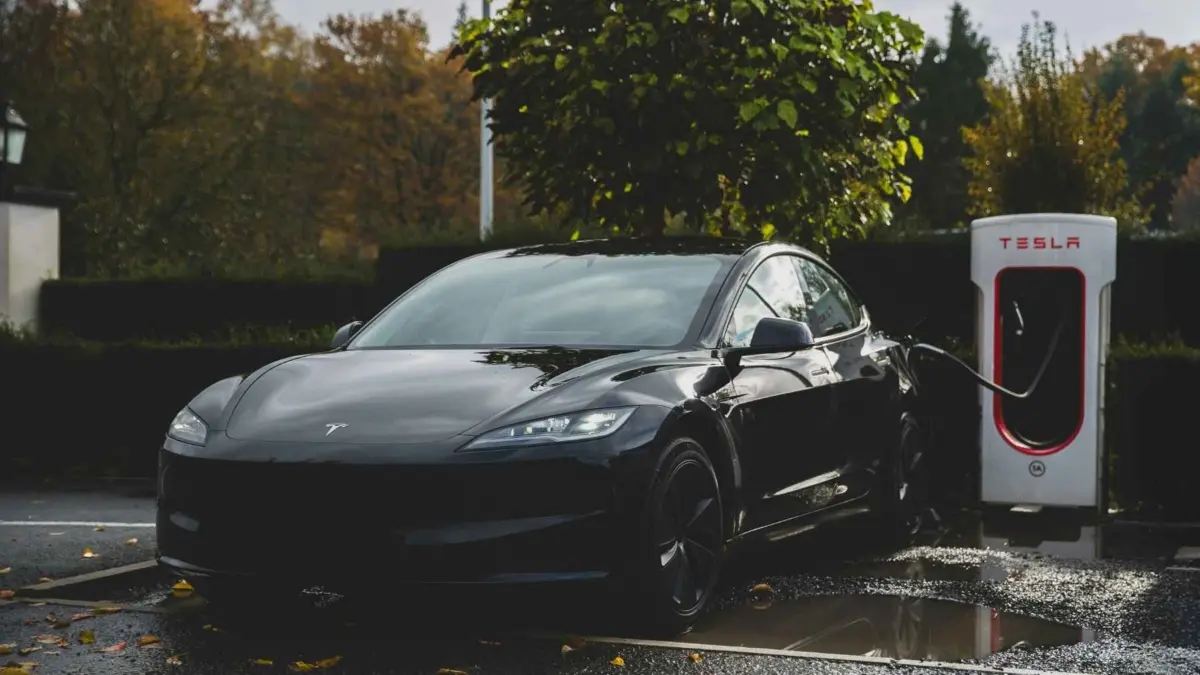
MARINA, California — In a major milestone for electric vehicle (EV) infrastructure on the West Coast, Tesla has officially inaugurated a state-of-the-art Supercharger station at Marina Town Plaza in Marina, California. Featuring 16 ultra-fast charging stalls and a staggering maximum output of up to 500 kW, the new facility represents the cutting edge of rapid-charging technology. Operating around the clock, 7 days a week, the station is poised to significantly alleviate congestion for local EV owners while setting a new benchmark for highway and urban charging capabilities.
The expansion comes at a pivotal time for the electric vehicle industry. As automotive markets transition away from internal combustion engines, robust and reliable charging infrastructure remains the cornerstone of widespread consumer adoption. By upgrading its network capabilities and opening its doors to non-Tesla vehicles through the North American Charging Standard (NACS), Tesla continues to cement its leadership in the global transition toward sustainable transportation.
Main Facts
The newly opened Marina Town Plaza Supercharger is strategically located at 33 Reservation Rd, Marina, CA 93933, serving as a vital nexus for drivers traversing California’s central coast.
Key technical and operational specifications of the new site include:
- Stall Capacity: 16 individual high-speed charging points.
- Maximum Output: Up to 500 kW per stall, providing exceptionally rapid energy replenishment.
- Availability: 24 hours a day, 7 days a week.
- Universal Access: Fully compatible with non-Tesla electric vehicles via the NACS adapter, welcoming drivers from major automakers who have adopted the standard.
- Customer Support: Direct technical assistance is available around the clock via dedicated support channels at (877) 798-3752.
The station’s arrival radically shifts the local charging landscape, more than doubling the power output of previously available infrastructure in the immediate area and offering drivers unprecedented speeds for mid-journey top-ups.
Chronology of the Expansion
The rollout of the Marina Town Plaza Supercharger is part of a calculated, accelerated infrastructure expansion strategy deployed by Tesla throughout the state of California.
- Early 2025 – Present: Tesla’s global and domestic charging footprint has experienced aggressive scaling, recording a roughly 20% network growth rate compared to the beginning of the year. This expansion is heavily fueled by favorable state-level environmental incentives and robust subsidies promoting zero-emission vehicle infrastructure.
- Mid-2025: Alongside the Marina Town Plaza project, Tesla brought online another high-profile urban station in San Francisco’s Marina district on Lombard Street, featuring 15 next-generation chargers capable of delivering up to 325 kW.
- September 26: Tesla officially announced the completion and immediate operation of the Marina Town Plaza station via its official corporate channels on the social media platform X, accompanied by visual verification of vehicles actively utilizing the new high-output stalls.
- Future Outlook: Looking ahead, urban planners and Tesla stakeholders have proposed even more ambitious projects in Marina, California, including a monumental station boasting over 400 individual charging points that could ultimately claim the title of the largest Supercharger station in the world.
Supporting Data: Power, Pricing, and Proximity
Understanding the financial and operational mechanics of the new Marina Town Plaza Supercharger requires a close look at comparative local infrastructure, pricing structures, and the broader global network.
Local Infrastructure Evolution
Prior to the inauguration of the 500 kW Marina Town Plaza site, the closest high-speed charging option for local motorists was located just minutes away at The Dunes On Monterey Bay (145 General Stilwell Drive, Marina). While that preceding location features 12 charging points operating at a respectable 250 kW, the new facility doubles the maximum power potential per vehicle and significantly increases throughput capacity to manage peak-hour traffic seamlessly.
Dynamic Pricing Structure
To manage grid demand and incentivize off-peak charging, Tesla has implemented a tiered pricing model at the Marina Town Plaza location. Tariffs vary depending on whether the user drives a Tesla or utilizes a non-Tesla EV with an NACS adapter:
- Midnight to 8:00 AM (Off-Peak):
- Tesla Owners: $0.29 per kWh
- Non-Tesla (NACS Adapter): $0.40 per kWh
- 8:00 AM to 8:00 PM (Peak Hours):
- Tesla Owners: $0.51 per kWh
- Non-Tesla (NACS Adapter): $0.70 per kWh
- 8:00 PM to Midnight (Evening Shoulder):
- Tesla Owners: $0.33 per kWh
- Non-Tesla (NACS Adapter): $0.45 per kWh
This dynamic framework encourages drivers to shift heavy charging loads to overnight hours, easing pressure on local municipal power grids while rewarding loyal brand customers with preferential pricing.
Global Network Scale
The Marina Town Plaza launch contributes to an unprecedented global footprint. Tesla currently operates more than 7,500 Supercharger stations worldwide, encompassing a massive network of over 70,000 individual connectors. This ecosystem remains the largest, most reliable fast-charging network on the planet, serving as a primary selling point for prospective EV buyers.
Official Responses and Industry Reception
While Tesla’s corporate announcements are typically delivered directly through digital channels—such as the recent platform X showcase on September 26—the broader automotive industry has responded with a unified chorus of alignment regarding the company’s hardware standards.
Industry analysts note that the widespread adoption of the North American Charging Standard (NACS) has transformed Tesla from a closed-ecosystem provider into the foundational utility backbone of the North American electric vehicle market. Competitors and legacy automakers alike have acknowledged that interoperability is essential for consumer confidence.
Furthermore, local government bodies and business parks—such as Marina Town Plaza—have actively courted EV charging installations. These partnerships are viewed mutually as economic drivers, drawing steady streams of affluent, tech-forward consumers to retail centers while retail outlets provide amenities, dining, and shopping options during charging sessions.
Implications for the Future of Electric Mobility
The opening of the Marina Town Plaza Supercharger carries profound implications for both regional development and the broader macroeconomic transition toward electrification.
1. The Death of Range Anxiety
As charging speeds approach the 500 kW threshold, the time required to recharge an electric vehicle begins to rival the time spent pumping gasoline at traditional service stations. By scaling up stations to include 16 or more stalls per location—with potential future hubs scaling toward 400+ stalls—range anxiety is systematically dismantled, making long-distance interstate travel via EV entirely frictionless.
2. Universal Standardization via NACS
The inclusion of non-Tesla vehicles through the NACS adapter marks a cultural shift within the automotive sector. Major global legacy manufacturers—including Ford, General Motors, Rivian, Hyundai, Kia, BMW, and Mercedes-Benz—have formally integrated or committed to integrating NACS ports into their upcoming vehicle architectures. This standardization ensures that charging stations are no longer segregated by brand loyalty, maximizing asset utilization and accelerating Return on Investment (ROI) for infrastructure developers.
3. Economic and Environmental Synergy in California
California continues to serve as a living laboratory for green policy success. Generous state-level tax credits, clean vehicle rebates, and aggressive municipal mandates have created an ecosystem where EV adoption is accelerating faster than infrastructure can sometimes keep up. Projects like the Marina Town Plaza station—and the proposed monster hubs on the horizon—demonstrate how private enterprise and public environmental goals can align to build a resilient, future-proof energy grid.
As electric vehicles transition from early-adopter novelties into the undisputed mainstream of global transit, the expansion of high-capacity hubs like the one in Marina, California, ensures that the road ahead is powered cleanly, efficiently, and without interruption.



Leave a Reply