

Main Facts
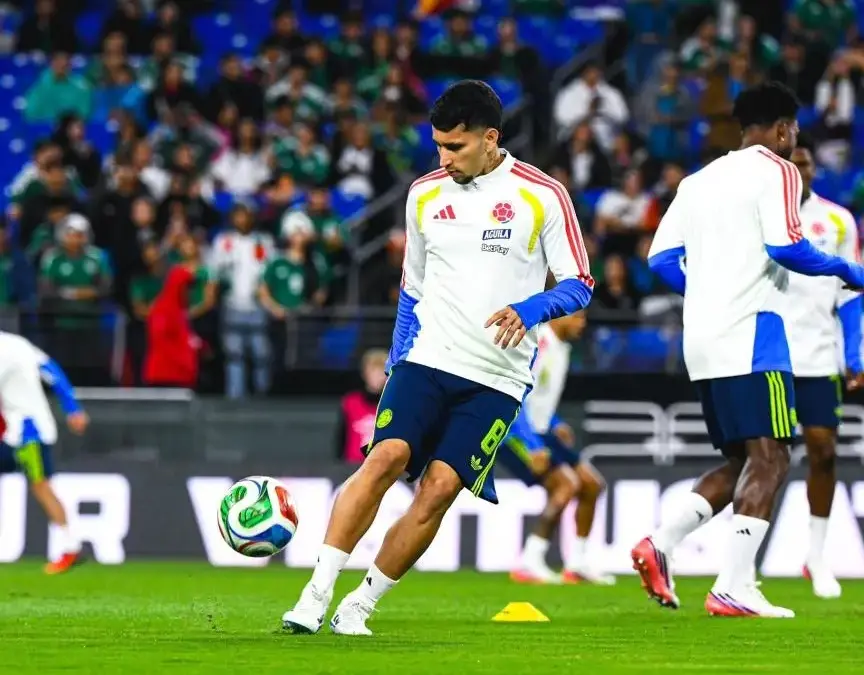
The Colombia Men’s National Football Team officially inaugurated its post-2026 FIFA World Cup era with a demanding international friendly against a familiar CONCACAF powerhouse, Mexico. Played under crisp autumn conditions at the iconic M&T Bank Stadium in Baltimore, Maryland, the encounter served as an essential laboratory for both technical staffs as they begin charting the long roadmap toward future continental and global competitions.
The match ended in a 1-1 stalemate, a fair reflection of a game characterized by two distinct tactical halves. Colombia, under the guidance of head coach Néstor Lorenzo, initially dazzled with a high-pressing, dynamic style that unsettled the Mexican backline early on. The breakthrough arrived in the 9th minute when forward Luis Javier Suárez capped off a brilliant transitional sequence by latching onto an incisive assist from midfielder Richard Ríos, slotting the ball past the Mexican goalkeeper to give the Tricolor an early advantage.
However, international football is a game of adjustments. As the match progressed, El Tri adapted to Colombia’s initial defensive block, shifted the momentum in the second half, and equalized through rising star Gilberto Mora in the 62nd minute. Despite tactical tweaks, substitutions, and a physical closing stretch from both sides, neither team could find a late winner.
For Colombia, the fixture was far more than a simple exhibition; it was a strategic exercise in squad management. Lorenzo opted to maintain a dependable tactical spine—relying on several veterans who carried the team through the rigorous 2026 World Cup qualifying campaign and tournament—while simultaneously integrating fresh tactical variables. Among these adjustments were the inclusion of Álvaro Angulo in the starting defensive scheme and valuable second-half minutes handed to holding midfielder Kevin Castaño.
With this result in the books, the South American side immediately turns its attention to the remainder of its North American autumn tour, where they are scheduled to face Paraguay and Peru in quick succession next month.
Chronology of the Match
Pre-Match Context and Tactical Setup
The atmosphere at the M&T Bank Stadium was electric, filled with passionate expatriate communities from both nations eager to witness the renewal of a historic footballing rivalry. Kick-off approached with high anticipation, as analysts dissected Lorenzo’s starting eleven. The Argentine tactician decided against a complete overhaul, recognizing the psychological value of continuity following the World Cup cycle. Instead, he blended established leaders with hungry fringe players.
Goalkeeper Álvaro Montero stood between the posts, shielded by a defensive line featuring the energetic Álvaro Angulo—earning a vital audition on the left flank—alongside central defensive anchors accustomed to high-pressure international environments. The midfield engine room featured Richard Ríos, whose physical prowess and progressive ball-carrying were expected to dictate the tempo, alongside the defensive cover of Kevin Castaño. In the attacking third, Luis Javier Suárez was given the responsibility of leading the line as the focal point of Colombia’s pressing scheme.
First Half: Early Dominance and Colombian Control
The opening whistle triggered an immediate surge from the South Americans. Eschewing a cautious start, Colombia deployed an aggressive, coordinated press high up the pitch, suffocating Mexico’s buildup play and forcing hurried clearances.
This proactive strategy paid dividends almost immediately. Just nine minutes into the contest, Colombia capitalized on a defensive lapse by El Tri in their own half. Richard Ríos demonstrated exceptional vision and composure under pressure, slipping a precise, defense-splitting pass into the path of Luis Javier Suárez. The striker timed his run to perfection, evaded the recovering center-backs, and calmly finished past the keeper to put Colombia ahead 1-0. The goal sent the massive Colombian contingent in Baltimore into wild celebrations.
Following the opener, the Cafeteros maintained the initiative. For the next twenty minutes, they dictated the tempo, controlling possession and utilizing the flanks to stretch the Mexican defense. Richard Ríos continued to dominate the central areas, while Suárez proved a constant menace with his intelligent movement off the ball.
As the half wound down, however, Mexico began to find a foothold. Recognizing the space left behind Colombia’s advancing fullbacks, El Tri started to stretch the pitch, advancing their lines and orchestrating dangerous passing sequences. Despite a few nervous moments for Álvaro Montero and his backline, Colombia successfully managed the game state to preserve their 1-0 lead heading into the halftime interval.
Second Half: The Mexican Resurgence and Tactical Adjustments
If the first half belonged to Colombia, the second half belonged undisputedly to Mexico. Whatever tactical adjustments were made in the Mexican locker room during the break took immediate effect. El Tri emerged with renewed intensity, pushing high up the pitch and forcing the South Americans deep into their own half.
Néstor Lorenzo’s side suddenly found themselves struggling to contain the rapid transitions and vertical passes into space that Mexico began generating. The Colombian midfield, which had enjoyed total hegemony in the opening 45 minutes, was overrun by quick combinations and relentless movement off the ball.
The mounting pressure finally cracked the Colombian resistance in the 62nd minute. After a sustained spell of Mexican dominance, young sensation Gilberto Mora found pockets of space inside the final third. Capitalizing on a disorganized defensive transition, Mora received the ball, maneuvered past his marker, and clinically dispatched a shot past Montero to equalize. The scoreline now read 1-1, completely shifting the psychological momentum of the match.
The Closing Stages: Physicality, Substitutions, and Stalemate
Conceding the equalizer forced Lorenzo into a flurry of tactical substitutions, introducing fresh legs to stem the Mexican tide and restore structural equilibrium. The changes had the desired effect: Colombia regained a measure of control, transforming the contest into an intense, end-to-end battle characterized by rapid transitions rather than sustained possession.
However, as fatigue set in across both squads, clear-cut scoring opportunities began to dry up. The final fifteen minutes devolved into a gritty, highly physical affair. Midfield duels intensified, tactical fouls disrupted the flow of the game, and the referee was forced to intervene frequently to keep tempers from boiling over.
Despite late surges from both sides, neither attack could conjure a decisive moment of magic in the final third. When the referee blew the final whistle, the 1-1 scoreline remained intact, bringing a competitive, educational, and grueling friendly to a close.
Supporting Data and Match Statistics
To truly understand the narrative of this 1-1 draw, one must analyze the underlying statistical performance and historical context of both teams as they embark on a new international cycle.
Tactical Metrics and Performance Breakdown
- Possession: Mexico edged the overall possession statistics slightly with approximately 52% to Colombia’s 48%, largely due to their dominant second-half performance where they pinned the Cafeteros back.
- Shots and Efficiency: Colombia registered fewer total shots throughout the 90 minutes (9) compared to Mexico (14), but displayed superior efficiency in the first half. Both teams managed 4 shots on target, highlighting the parity in defensive interventions from Montero and his Mexican counterpart.
- Discipline: The physical nature of the second half was reflected in the match statistics, with a combined total of 26 fouls committed (14 by Mexico, 12 by Colombia) and multiple yellow cards brandished in the frantic closing stages.
Roster Evolution: Blending Youth and Experience
Néstor Lorenzo’s squad selection for the Baltimore fixture underscores a calculated transition phase. While the core of the team—players who logged heavy minutes during the grueling South American Qualifiers and the 2026 World Cup—remains the foundation, the integration of new profiles is paramount.
- Álvaro Angulo: Provided vital defensive stability and tactical width on the left side, proving that he can handle the rigors of high-level international football when called upon.
- Kevin Castaño: Stepped into the engine room to relieve pressure, demonstrating composure under the intense, high-tempo pressing style that Mexican midfields traditionally employ.
- Luis Javier Suárez: Continued his impressive developmental trajectory, showcasing his clinical finishing ability and proving he can lead the line effectively in the absence of older talismanic figures.
Official Responses and Post-Match Reactions
In the mixed zone and post-match press conferences following the final whistle at M&T Bank Stadium, coaching staff and players alike offered candid assessments of the performance, acknowledging both the positive flashes and the glaring vulnerabilities exposed during the 90 minutes.
Néstor Lorenzo’s Tactical Assessment
Addressing the media, head coach Néstor Lorenzo emphasized the value of the exercise, noting that friendlies of this magnitude are specifically designed to expose flaws that training sessions cannot replicate.
"We played a very complete first half where we imposed our rhythm, found spaces, and executed our game plan with precision," Lorenzo stated. "However, international football demands consistency across all phases of the match. In the second half, we lost control of the central zones, allowed them too much transition space, and paid the price. These are the exact lessons we need to learn as we begin this new cycle. We saw great things from players getting their opportunities, but we also identified clear areas that require immediate correction."
Player Perspectives: Building for the Future
Goalscorer Luis Javier Suárez spoke to reporters about his early strike and the overall sentiment within the locker room regarding the team’s evolution.
"Scoring is always a confidence booster, and the team executed the tactical plan brilliantly in the first half thanks to the work of guys like Richard Ríos in the buildup," Suárez remarked. "We knew Mexico would react after the break—they are a proud team with great players. We suffered in the second half, yes, but this group showed resilience. A draw away from home against a rival like this gives us a solid foundation to build upon as we prepare for Paraguay and Peru."
Implications for the Future
As the dust settles on the M&T Bank Stadium pitch, the implications of this 1-1 draw stretch far beyond a single evening in Baltimore. For the Colombian national team, this fixture marks the official starting gun for a multi-year project aimed at sustaining elite-level competitiveness on the global stage.
Immediate Horizons: The October South American Tour
There is little time for rest or prolonged tactical evaluation. The Cafeteros must quickly pivot their focus to the upcoming October international window, which promises even stiffer tests against traditional continental rivals:
- vs. Paraguay: Scheduled for October 2 at 7:00 p.m. at a yet-to-be-confirmed venue in New Jersey, this match will test Colombia’s ability to break down a notoriously physical and defensively resolute South American block—a stylistic contrast to the more open, transitional play experienced against Mexico.
- vs. Peru: Just days later, on October 6 at 6:45 p.m., Colombia will travel to Miami, Florida, to face the Blanquirroja. This fixture carries immense regional rivalry and will serve as the final stress test of the autumn tour, allowing Lorenzo to fine-tune his tactical rotations before official competitive tournaments resume.
Long-Term Strategic Goals
Ultimately, the match against Mexico and the upcoming fixtures in New Jersey and Miami are pieces of a much larger strategic puzzle. Néstor Lorenzo and his technical staff are utilizing every available window to expand the team’s tactical repertoire, lower the average age of the squad through calculated integration, and build the tactical depth required to navigate the grueling years ahead.
While the second-half struggles in Baltimore highlighted that the Tricolor remains a work in progress, the dynamic flashes of brilliance in the opening forty-five minutes serve as a potent reminder of the immense ceiling this Colombian generation possesses. As the squad packs its bags for the next leg of the North American tour, the objective remains crystal clear: evolve, adapt, and build a winning culture for the challenges to come.




Leave a Reply