

By Simón Delgado Marulanda
Published via Las2Orillas (Adapted and Translated for Global Distribution)
Main Facts
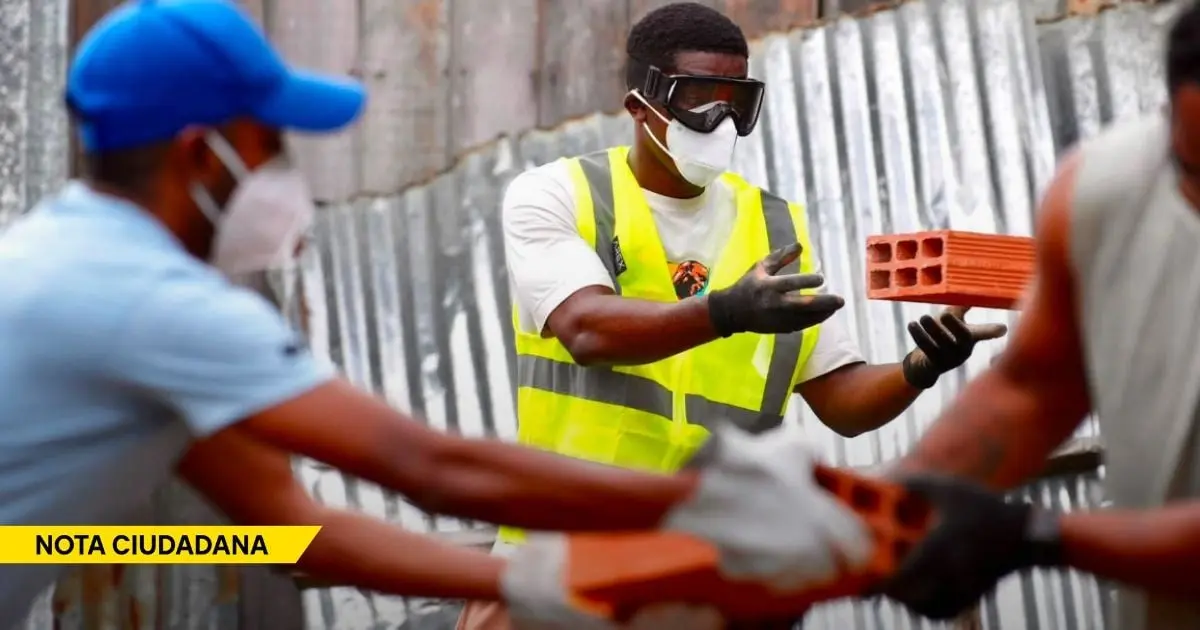
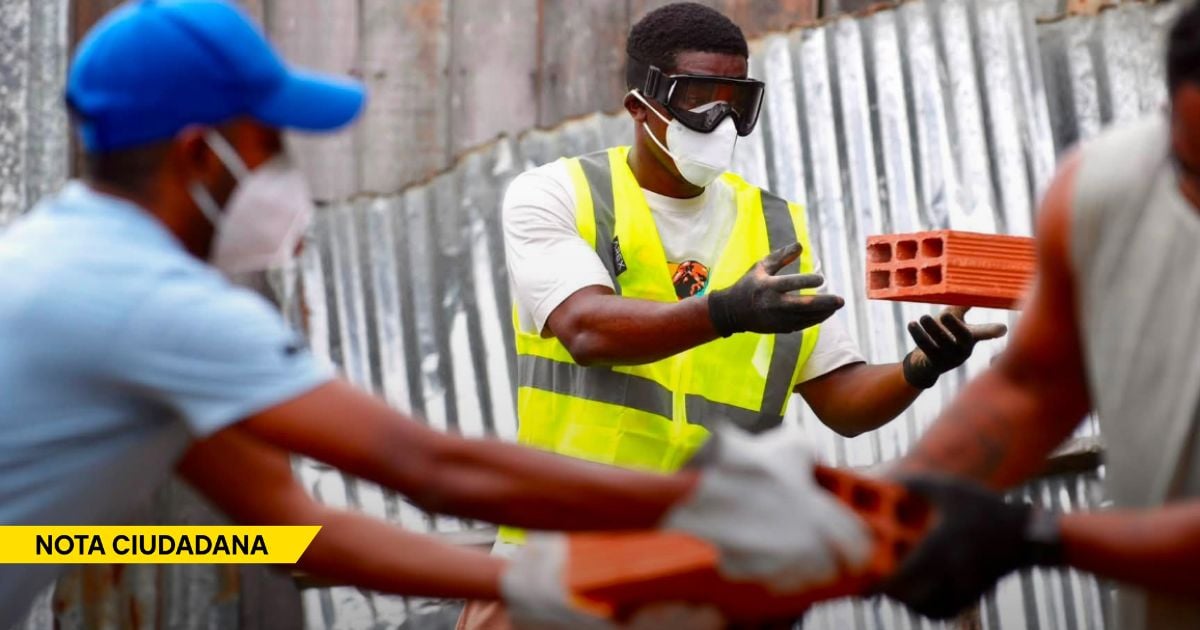
The landscape of post-disaster recovery in Colombia has undergone a profound structural shift. Following the devastating earthquake of August 10, 2026, the national government issued Legislative Decree 1389 of 2026, establishing a specialized modality within the well-known "Obras por Impuestos" (Works for Taxes) mechanism.
This historic regulatory milestone allows private enterprise to partner directly with territorial and national entities to fund the monumental task of rebuilding housing, community assets, and critical infrastructure in disaster-stricken municipalities.
Traditionally restricted to zones affected by armed conflict under the ZOMAC and PDET frameworks, the mechanism has now proven its adaptability beyond peacebuilding. Decree 1389 creates an extraordinary, streamlined avenue for corporations to allocate up to 50% of their income tax obligations directly into tangible public works. Crucially, the decree introduces three brand-new investment lines: Social Interest Housing (VIS) and Priority Interest Housing (VIP), sports infrastructure, and disaster risk management.
While the overarching fiscal cap—set at $1.14 trillion pesos for 2026 by the Superior Council of Fiscal Policy (CONFIS)—remains unchanged, the regulation guarantees that at least 35% of these specialized resources will be funneled directly into fifth- and sixth-category municipalities, which are historically the most vulnerable and financially fragile entities in the country.
Chronology of Events
To understand the urgency and institutional evolution behind Decree 1389, it is necessary to examine the timeline leading up to its implementation:
- August 10, 2026: A severe earthquake strikes the country, wreaking catastrophic havoc across multiple departments, including Antioquia, Caldas, Cauca, Chocó, Quindío, Cundinamarca, Risaralda, Huila, Valle del Cauca, Tolima, Norte de Santander, Bolívar, Nariño, Sucre, Santander, and Caquetá.
- Post-Disaster Phase (August–September 2026): According to the National Unit for Disaster Risk Management (UNGRD) Situation Report No. 72, the final tally of destruction reveals 36,326 destroyed homes, 202,002 damaged dwellings, 743 collapsed buildings, thousands of affected educational and health centers, and hundreds of broken roads and bridges, resulting in 331 fatalities and 4,505 injuries.
- Promulgation of Decree 1389 of 2026: Recognizing the fiscal impossibility of the state absorbing the entire cost of reconstruction single-handedly, the national government issues the legislative decree, creating the specialized works-for-taxes modality for natural disaster recovery.
- Immediate Next Steps (Late 2026): Territorial entities are tasked with rapidly formulating and securing the viability of infrastructure and housing projects to be submitted to the Agency for Territorial Renewal (ART) project bank, ahead of technical evaluations by the National Department of Planning (DNP).
Supporting Data
The structural weight of Decree 1389 rests on the solid track record of the traditional Obras por Impuestos mechanism, combined with the staggering metrics of the August 10 earthquake.
The Historical Track Record of Obras por Impuestos (2016–2026)
Since its inception via Law 1819 of 2016 and subsequent regulatory updates, the mechanism has achieved:
- 604 projects successfully materialised across the nation.
- More than $4.8 trillion pesos in executed resources.
- Participation from 322 corporate contributors.
- Presence in 298 municipalities.
The Scope of Destruction (UNGRD Report No. 72)
The specialized mechanism was born out of an unprecedented humanitarian and structural crisis, quantified as follows:
- Housing: 36,326 homes totally destroyed and 202,002 severely damaged.
- Infrastructure: 743 buildings collapsed and 6,005 structurally compromised.
- Social Facilities: 4,313 educational centers, 4,334 community centers, and 400 healthcare facilities impacted.
- Transportation & Utilities: 521 roads, 102 vehicular bridges, 13 pedestrian bridges, 141 aqueducts, and 5 airports damaged.
- Human Toll: 331 lives lost and 4,505 individuals injured.
- Fiscal Allocation: A minimum of 35% of the specialized budget is legally reserved for poverty-stricken fifth- and sixth-category municipalities.
Official Responses and Institutional Framework
The execution of Decree 1389 relies on a strict, collaborative inter-institutional architecture designed to guarantee transparency, efficiency, and technical rigor. The administrative responsibilities are distributed among several key state entities:

- The Agency for Territorial Renewal (ART): Continues to manage the overarching project banks for both the ordinary and specialized modalities.
- The National Department of Planning (DNP): Retains its critical role in evaluating and approving the definitive technical viability of submitted projects.
- Competent National Entities: Act as structural designers, technical endorsers, and supervisors of project auditing (interventoría).
- The National Directorate of Taxes and Customs (DIAN): Formally registers the extinction of the corporate tax obligation once the successful delivery and certification of the public work are verified.
- The Superior Council of Fiscal Policy (CONFIS): Exercises macro-fiscal control by determining the annual fiscal quota—which stood at $1.14 trillion pesos for 2026—and dividing it between ordinary peacebuilding projects and the new reconstruction modality.
Furthermore, the Comptroller General’s Office (Contraloría), backed by Constitutional Court jurisprudence (Sentence C-438 of 2022 and Concept 164 of 2022), views corporate contributors in these fiduciary schemes as fiscal managers. This classification enables early fiscal control from the moment of linkage, ensuring that public resources are tracked without administrative paralysis.
Implications and Future Outlook
The introduction of Decree 1389 is much more than a temporary fix; it signals a watershed moment in public policy, urban planning, and private sector engagement in Colombia.
1. A Paradigm Shift in Disaster Response
Legislative Decree 1389 establishes a powerful precedent. It begs the question of whether "Works for Taxes" should be permanently hardcoded into Colombian law as the automatic first line of action whenever a State of Economic, Social, and Ecological Emergency is declared. Bypassing the need for ad-hoc decrees during future calamities could drastically accelerate recovery times.
2. Solving the Urban "Ghost Lot" Crisis
One of the most innovative implications of the decree lies in the execution of the new Housing (VIS/VIP) investment line. In the wake of the earthquake, historic city centers face the grim prospect of hosting hundreds of abandoned, privately owned plots slated for demolition due to structural ruin. Left unchecked, these plots risk becoming blighted, unsafe urban islands.
A viable policy recommendation is to utilize funds deposited in fiduciary trusts under this specialized modality to purchase these destroyed private properties. By transferring ownership to territorial entities, municipalities can cleanly repurpose these lands for future public utility and social housing projects, equitably distributing sales value to families who lost everything, thereby avoiding sluggish and litigious expropriation processes.

3. Legal and Fiduciary Challenges Ahead
Despite its immense promise, certain grey areas remain. The decree does not explicitly resolve the deep legal nature of funds resting within fiduciary patrimonies. While the Contraloría applies a functional approach regarding fiscal responsibility, the dogmatic debate over exact asset ownership during the trust phase—vital for matters of corporate bankruptcy, asset attachment risks, or loss liability—remains legally ambiguous.
Conclusion
Legislative Decree 1389 of 2026 successfully bridges the gap between private capital and public welfare. By aligning corporate tax incentives with humanitarian duty, Colombia is not merely rebuilding shattered concrete and mortar; it is constructing a modern, highly resilient framework for national solidarity and territorial development.



Leave a Reply