

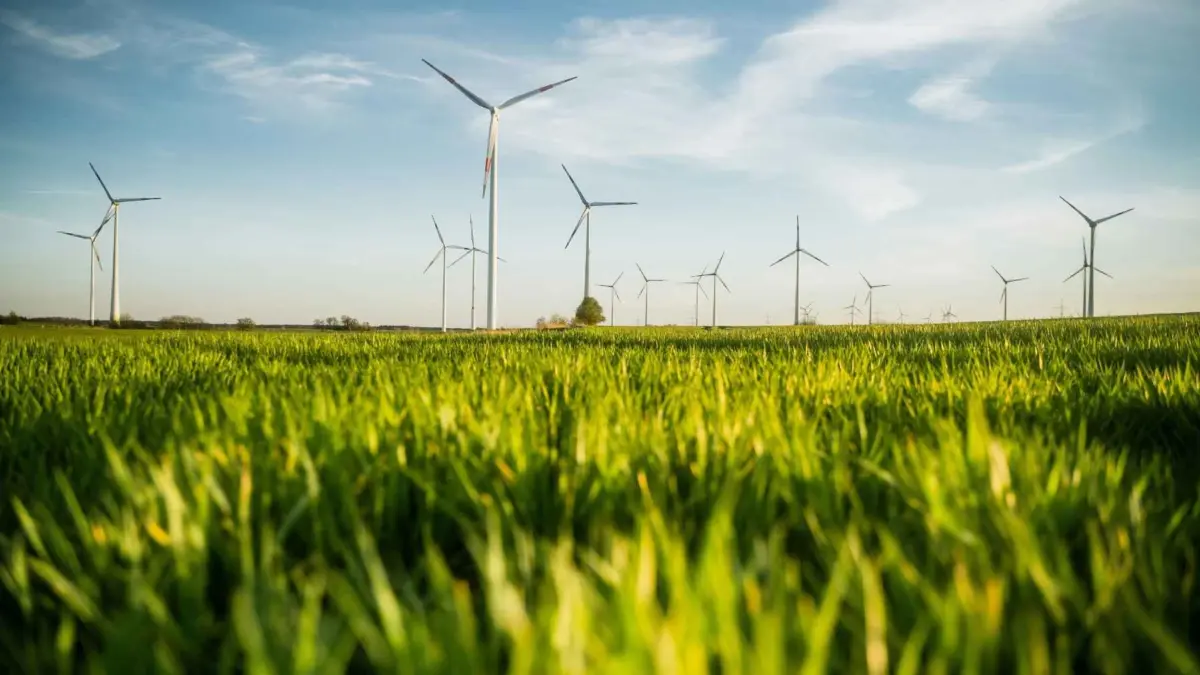
UNITED NATIONS — As the international community grapples with the accelerating impacts of global heating, the debate surrounding the global energy transition has reached a critical juncture. During high-level discussions leading into the final week of the United Nations General Assembly, UN Secretary-General António Guterres issued a passionate call to action, placing the needs, vulnerabilities, and immense potential of developing nations at the center of the climate discourse.
The core message from the UN leadership is unequivocal: the transition toward a net-zero emission global economy cannot succeed if it replicates—or worsens—historical inequalities. For regions across Africa, Asia, and the Caribbean, the climate crisis is no longer a distant theoretical threat or a projected future catastrophe. It is an immediate, daily reality ravaging local economies, undermining food security, and threatening vital water resources. Yet, these regions face a profound structural injustice: while bearing the lightest historical responsibility for the greenhouse gas emissions warming the planet, they are left to shoulder the devastating costs of climate-induced disasters with minimal financial and technical support.
Main Facts
The current geopolitical and environmental landscape surrounding the energy transition is defined by several stark realities:
- The Finance Gap: Developing countries possess a massive abundance of untapped renewable energy potential—ranging from vast solar expanses in Africa to geothermal and wind assets across the Caribbean and Asia. However, prohibitive financing costs, lack of infrastructure, and systemic underinvestment prevent these projects from moving forward.
- Asymmetry of Impact: Nations contributing the least to global carbon emissions are suffering the most severe consequences of climate change, enduring frequent droughts, catastrophic floods, and ecosystem collapses that derail national development.
- The Urgency of Reform: Secretary-General António Guterres has underscored that meeting the international climate targets set for 2030 requires immediate political will, deep regulatory reforms, and a massive mobilization of international climate finance.
- Energy Security via Renewables: Far from being merely an environmental aspiration, transitioning to zero-emission energy systems has become an absolute economic and geopolitical necessity to meet rising global energy demand and stabilize volatile markets.
Chronology of the Climate Claims
The friction between wealthy industrialized economies and the Global South has intensified over recent years, culminating in the sharp rhetoric witnessed at the latest United Nations General Assembly sessions.
Pre-Assembly Warnings (Early 2024)
Months prior to the opening of the UN General Assembly, international scientific panels and economic forums warned that climate finance flows to developing nations were falling drastically short of the estimated trillions required. Developing nations signaled that without debt relief and concessional financing, they would be forced to choose between servicing national debts and funding climate adaptation measures.
The General Assembly Debates (Mid-September)
As global leaders gathered in New York, representatives from the Alliance of Small Island States (AOSIS), African Group of Negotiators, and least developed countries (LDCs) took the podium to deliver unified, urgent warnings. They pointed out the stark contrast between the speed of climate disasters—which destroy infrastructure in minutes—and the sluggish, bureaucratic pace of international climate funds.
Guterres’s Intervention (The Sunday Address)
In a decisive intervention ahead of the assembly’s final ministerial and presidential week, António Guterres addressed the media and global delegates. He focused sharply on the energy sector in the Global South, highlighting that political stagnation and financial blockades were the primary obstacles holding back a green revolution. Shortly after, Guterres reinforced his stance via social media, declaring that developing nations must be the leaders and primary beneficiaries of the clean energy revolution, not mere spectators.
Supporting Data and Systemic Disparities
To understand the urgency behind the demands made at the UN, one must examine the economic architecture governing global climate action.
The Mismatch Between Disasters and Funding
According to economic analysts and environmental economists, climate finance currently trickles into developing nations through complex, highly bureaucratic channels. Representatives from vulnerable regions characterized this dynamic vividly during the UN sessions, demanding that investments and regulatory frameworks be streamlined so that financial aid arrives "just as fast as the floods and the droughts."
When a category-five hurricane wipes out an island nation’s entire GDP, or multi-year droughts devastate East African agricultural sectors, rebuilding efforts routinely plunge these nations deeper into unsustainable debt. International lenders often subject these countries to high interest rates, despite their climate-vulnerable status.
The Untapped Potential of the Global South
Paradoxically, the regions struggling the most to secure financing are often those best endowed with natural resources for renewable energy generation:
- Solar Power: High solar irradiance levels across the African continent offer the potential to generate vast amounts of clean electricity, not only for local consumption but potentially for export via advanced grids or green hydrogen production.
- Wind and Geothermal: Parts of Latin America, the Caribbean, and East Africa possess rich geothermal, wind, and hydroelectric capacities that remain underutilized due to a lack of foreign direct investment (FDI) and risk-mitigation guarantees from multilateral development banks.
Official Responses and Stakeholder Perspectives
The debate at the United Nations exposed deep divisions, but also forged a clearer consensus around what a "just transition" must entail.
The Voice of the Vulnerable Nations
Delegates from the Global South were unified in their critique of the current global financial architecture. They labeled the status quo morally untenable and economically counterproductive.
"It is fundamentally unjust that those who built their wealth on centuries of fossil-fuel combustion now expect us to finance our own survival against a crisis we did not create," noted one senior negotiator representing a coalition of developing economies.
These nations are calling for a shared global agenda that treats energy, food, and water security as an interconnected triad. Without a framework that simultaneously addresses agricultural resilience and water management alongside renewable energy grids, adaptation efforts will fail.
The UN Leadership Perspective
António Guterres has consistently used his platform to pressure the world’s largest economies—particularly the G20 nations, which account for the vast majority of global emissions—to step up their commitments. Guterres has argued that the transition away from fossil fuels is unstoppable, but warned that if left entirely to market forces, it will concentrate wealth and leave developing nations behind.
In his official statements, Guterres emphasized:
- Decentralization of Power: Financial resources, technological patents, and energy generation capabilities must be democratized. Currently, technological monopolies and financial power remain concentrated in the hands of a tiny minority of nations and multinational corporations.
- Redefining Security: Energy security is inextricably linked to the speed of decarbonization. Volatile fossil fuel markets have proven unreliable for vulnerable importing nations, making domestic renewable generation a matter of national sovereignty and economic stability.
Implications for the Future: Toward a Just Transition
As the international community looks ahead to upcoming climate summits (such as COP conferences), the demands articulated at the UN General Assembly carry profound implications for global policy, economics, and diplomacy.
1. Reforming Multilateral Development Banks (MDBs)
A primary takeaway from the recent dialogues is the urgent need to overhaul institutions like the World Bank and the International Monetary Fund (IMF). Experts argue these institutions must pivot away from austerity-driven models and instead provide large-scale, low-interest grants and concessional loans specifically earmarked for climate resilience and green infrastructure in the Global South.
2. Protecting Labor and Local Economies
A truly "just transition" cannot simply replace fossil fuels with renewables while ignoring the socioeconomic fabric of local communities. Policymakers must ensure that the creation of green jobs offsets any economic displacement caused by the phase-out of traditional energy sectors. This requires active labor retraining programs, community-led energy initiatives, and robust social safety nets.
3. Bridging the Technological Divide
Beyond financing, technology transfer is a critical bottleneck. Developing nations require open access to green technologies—ranging from battery storage systems and smart-grid architecture to advanced agricultural tech—without being encumbered by restrictive intellectual property regimes that price them out of the market.
Conclusion
The message delivered at the United Nations General Assembly serves as a stark warning and a roadmap. The climate crisis has evolved past the point of rhetorical targets and distant deadlines. For the nations of Africa, Asia, and the Caribbean, survival depends on the immediate, equitable redistribution of global resources. As António Guterres asserted, the renewable energy transition must be an engine for global equality rather than a mirror reflecting old disparities. Whether the world’s wealthiest nations will heed this call with the necessary speed and scale remains the defining question of our era.



Leave a Reply