

Main Facts
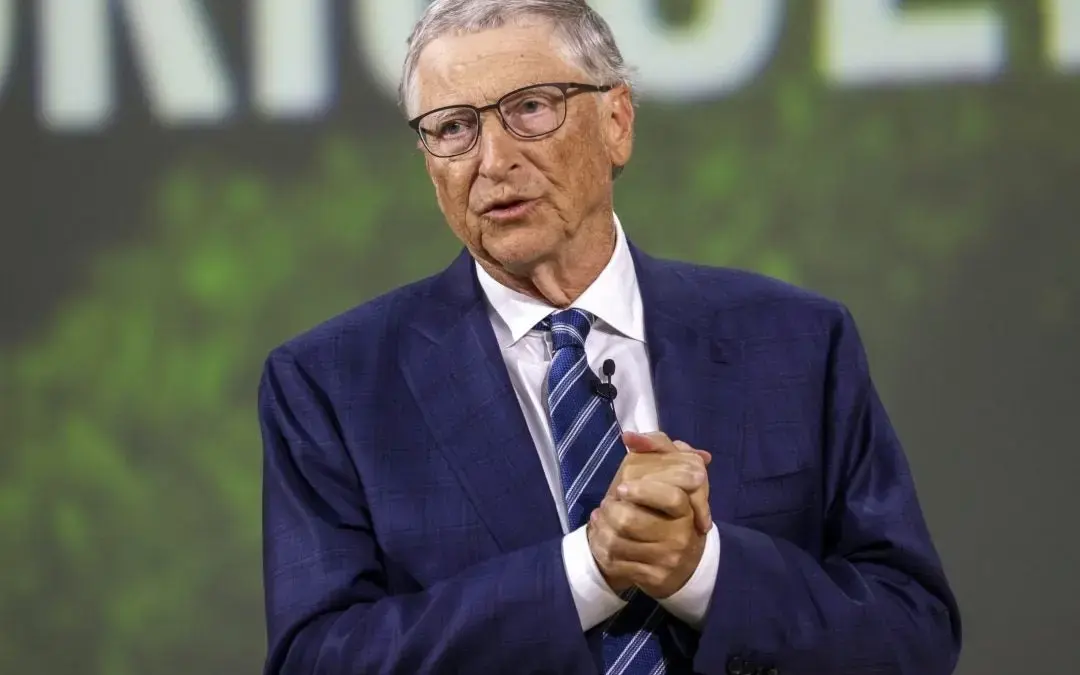
The debate over the future of artificial intelligence (AI) has shifted from Silicon Valley boardrooms to the highest echelons of global geopolitics. In a recent, high-profile interview on NBC’s Meet the Press, Microsoft co-founder Bill Gates directly challenged former U.S. President Donald Trump’s dismissive approach to AI safety regulations. Gates argued forcefully that government guardrails designed to mitigate potentially catastrophic risks associated with advanced AI systems will not impair the United States’ ability to compete against global rivals like China.
The core of Gates’ argument rests on a fundamental premise: that the existential and systemic dangers posed by rapid, unchecked advancements in artificial intelligence are universal threats that transcend national borders. Addressing Trump’s recent characterization of existential AI concerns as a "hoax" intended to stifle American innovation and benefit Beijing, Gates was unequivocal.
"It is no hoax," Gates stated during the interview, pushing back against the political narrative. He maintained that both the United States and China share a vested interest in establishing robust safety frameworks. According to Gates, the notion that China would unilaterally ignore safety measures to race ahead in the AI arms race is deeply flawed, primarily because an unconstrained, dangerous AI ecosystem poses just as great a threat to Beijing as it does to Washington.
Furthermore, Gates elaborated on the inadequacy of relying solely on reactive measures—such as a metaphorical "kill switch"—to control runaway models. Instead, he advocated for rigorous, proactive oversight throughout the entire lifecycle of sophisticated AI development. As artificial intelligence continues to integrate into critical infrastructure, financial institutions, healthcare systems, and government networks, Gates’ warnings underscore a critical global crossroads: balancing rapid technological innovation with the survival and security of human civilization.
Chronology of the Debate
To understand how the discourse surrounding artificial intelligence reached this volatile intersection of technology and partisan politics, it is necessary to examine the timeline of events, statements, and policy shifts that have shaped the debate over the past year.
Early 2023: The Generative AI Boom and Initial Warnings
The contemporary AI safety debate caught fire following the widespread public release of advanced generative models. As capabilities in natural language processing and computer vision skyrocketed, a faction of computer scientists, ethicists, and tech executives began warning of long-term existential threats, including the potential loss of human control over superintelligent systems.
August 2023: Bill Gates’ Foundational Essay
Solidifying his role as a vocal public intellectual on the matter, Bill Gates published a comprehensive essay outlining the dual-use nature of artificial intelligence. In this publication, Gates detailed how malicious actors and ciberdelincuentes could weaponize increasingly powerful AI tools. He warned of sophisticated cyberattacks, large-scale financial fraud, automated disinformation campaigns, and targeted disruptions against vulnerable sectors such as hospitals, power grids, and financial institutions.
Late 2023 to Mid-2024: Political Polarization of AI Policy
As political campaigns intensified, artificial intelligence policy became entangled in broader debates over national competitiveness, industrial policy, and government oversight. Proponents of deregulation argued that heavy-handed federal intervention would cede America’s technological dominance to international competitors, specifically China. This perspective gained traction among certain conservative figures seeking to appeal to industries wary of bureaucratic red tape.
Autumn 2024: Trump’s "Hoax" Rhetoric and Low Approval Struggles
Amid political headwinds and a tight congressional landscape, Donald Trump framed concerns over the existential risks of AI as an overblown narrative or a "hoax." This rhetoric aimed to position safety proponents as adversaries of American technological supremacy, arguing that such warnings inadvertently favored Chinese interests by threatening to shackle domestic innovation.
Recent Weeks: The NBC Meet the Press Clash
Entering the fray to counter this narrative, Bill Gates appeared in a multi-part interview with NBC News. Expanding on earlier remarks where he chillingly noted that AI is powerful enough to potentially "cause a billion deaths," Gates directly addressed Trump’s political framing. He argued that Trump’s perspective is based on a misunderstanding of how safety protocols intersect with global power dynamics, expressing optimism that the former president’s view could evolve through dialogue.
Supporting Data and Technical Context
The urgency behind Bill Gates’ warnings is underpinned by a growing body of technical research, historical precedent in technological governance, and specific threat vectors identified by cybersecurity experts.
The Dual-Use Dilemma
Artificial intelligence models are inherently dual-use technologies. The same computational capabilities that enable an AI to accelerate drug discovery, optimize supply chains, or diagnose rare diseases can also be repurposed to engineer novel biological toxins, write zero-day computer exploits at scale, or generate hyper-realistic deepfakes designed to destabilize democratic elections.
According to analyses cited by safety researchers and echoed in Gates’ essays, the democratization of these tools lowers the technical barrier to entry for malicious actors. Where sophisticated cyberattacks once required state-sponsored resources and teams of expert hackers, AI-driven automation allows bad actors to execute complex campaigns with minimal human intervention.
Vulnerability of Critical Infrastructure
Gates has repeatedly highlighted the physical and economic vulnerabilities tied to digital infrastructure. Modern societies rely heavily on interconnected systems:
- Financial Networks: Automated trading algorithms and banking infrastructure are prime targets for AI-augmented fraud and manipulation.
- Healthcare Systems: Hospitals and pharmaceutical research facilities face risks ranging from ransomware attacks to the compromise of patient data.
- Energy Grids: Smart grids and power distribution networks are increasingly digitized, making them susceptible to coordinated, AI-driven kinetic and cyber disruptions.
The Myth of the "Kill Switch"
A central technical point raised by Gates in his recent commentary is the fallacy of the "kill switch"—the belief that humanity can simply pull the plug on an advanced AI model if it begins to behave unpredictably or dangerously. Gates dismissed this as "not enough," explaining that advanced, decentralized systems running across vast cloud architectures cannot simply be turned off like a household appliance once they reach a certain threshold of autonomy and ubiquity.
Instead, Gates advocates for continuous auditing, rigorous model logging, and mandatory oversight during the developmental phases. This ensures transparency and traceability, allowing regulatory bodies and developers to monitor cognitive shifts, emergent capabilities, and unauthorized alignment drifts before models are deployed into high-stakes environments.
Official Responses and Political Reactions
The collision between Silicon Valley’s technocratic consensus and Washington’s partisan politics has elicited diverse reactions from lawmakers, industry leaders, and international observers.
The Pro-Regulation Perspective: Bridging the Divide
Gates and a coalition of technology leaders maintain that safety and competitiveness are not mutually exclusive. Their core argument is that establishing clear, enforceable standards provides legal certainty and fosters public trust—both of which are essential for the long-term, sustainable growth of the domestic tech sector.
Proponents of this view argue that an unregulated AI market risks producing catastrophic failures that could trigger a regulatory backlash far more draconian than proactive safety measures. By engaging internationally—specifically through diplomatic channels with Beijing—the United States can establish global norms that prevent a "race to the bottom" in safety standards.
The Deregulation and Innovation-First Camp
Conversely, critics of heavy regulation, aligned with figures like Donald Trump, argue that prescriptive mandates will entrench incumbent monopolies by imposing compliance costs that startups cannot afford. From this viewpoint, any government intervention that slows down the iteration cycle of large language models or autonomous systems gifts a strategic advantage to foreign competitors who may bypass such restrictions.
Trump’s framing of existential risk warnings as an impediment to American progress resonates with a segment of the electorate and industry stakeholders who fear that precautionary bureaucracy will cause the U.S. to lose the artificial intelligence race.
Gates’ Outreach to Political Leadership
Addressing the political deadlock, Gates expressed confidence that political figures are open to recalibrating their stances once presented with comprehensive data. Regarding Trump, Gates remarked:
"He could change his position after hearing from me and other people, including that this does not hurt us in what he considers the race for power."
This statement reflects an ongoing lobbying effort by tech elites to decouple AI safety from partisan wedge politics, framing it instead as a matter of national security and public survival.
Implications for the Future of Global AI Governance
The ideological clash between Bill Gates and Donald Trump over artificial intelligence safety highlights a defining challenge of the 21st century: how democratic societies govern technologies that evolve at exponential rates while operating within competitive geopolitical frameworks.
1. The Geopolitical Arms Race vs. Global Standards
The primary tension in global AI governance is the dichotomy between competition and cooperation. While the U.S. and China view each other as primary strategic rivals in technology, the borderless nature of digital networks and the unpredictable nature of artificial intelligence suggest that a localized safety failure could have global repercussions. Gates’ assertion that China will ultimately desire safety measures points toward the potential for tacit international agreements, akin to nuclear non-proliferation treaties or biosecurity frameworks, where mutual self-preservation overrides adversarial competition.
2. The Evolution of Domestic Policy
As the debate moves forward, U.S. lawmakers face the daunting task of drafting legislation that protects public welfare without stifling innovation. The polarization introduced by political campaigns complicates this process, turning a technical and safety-oriented issue into a political fault line. However, as incidents of AI-driven fraud, deepfake manipulation, and cybersecurity breaches multiply, the pressure for bipartisan legislative frameworks continues to mount.
3. Corporate Responsibility and Public Trust
For tech giants like Microsoft, Google, OpenAI, and Meta, navigating this political landscape requires balancing aggressive product development with proactive engagement with regulators. The public’s trust in AI technologies hinges on transparency, robust verification processes, and proof that industry leaders are prioritizing safety alongside profitability.
Conclusion
Bill Gates’ direct rebuttal of Donald Trump’s rhetoric serves as a stark reminder that the stakes surrounding artificial intelligence extend far beyond economic metrics or political talking points. As the technical capabilities of AI continue to expand into unprecedented territory, the imperative for rigorous, international, and bipartisan safety measures becomes ever more urgent. Whether political leadership can transcend short-term electoral positioning to meet this generational challenge will ultimately determine whether artificial intelligence fulfills its promise as a transformative tool for human progress or becomes the catalyst for catastrophic failure.


Leave a Reply