

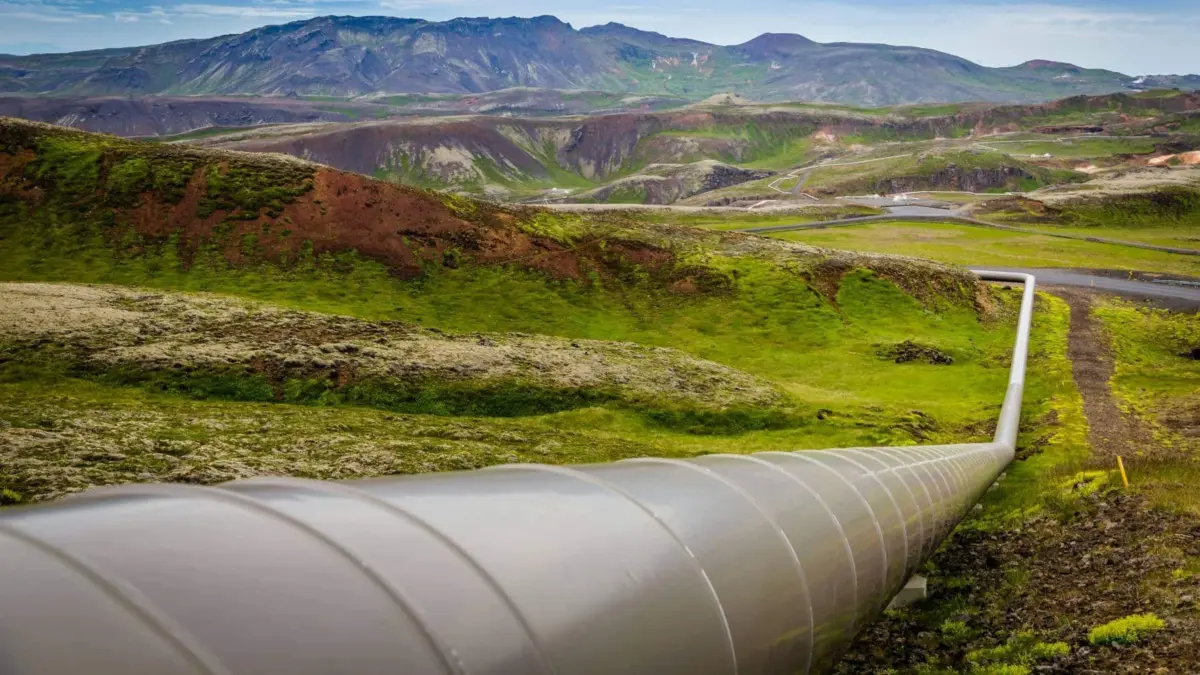
MICHIGAN — The decades-long debate over the future of North America’s energy infrastructure has entered a volatile new phase. At the center of the storm is the Line 5 pipeline, operated by Canadian energy giant Enbridge, and a controversial proposal to construct an underground tunnel beneath the Straits of Mackinac in Michigan.
Lee Zeldin, the newly appointed administrator of the U.S. Environmental Protection Agency (EPA), recently visited the state to champion the project, defending it as the safest and most efficient method to transport vital hydrocarbons without risking local ecosystems. However, Zeldin’s endorsement has laid bare the deep ideological and environmental fault lines dividing the administration, state officials, Indigenous tribes, and local conservationists.
Main Facts
The controversy centers on Line 5, a critical 1,000-kilometer (621-mile) pipeline system that transports up to 540,000 barrels per day of light crude oil and natural gas liquids from western Canada, across the state of Michigan, and back into Canadian markets through Ontario. While the vast majority of the pipeline operates safely underground, a critical 6.4-kilometer (4-mile) stretch currently runs along the bottom of the Straits of Mackinac—the waterway connecting Lake Michigan and Lake Huron—completely exposed to the open water currents.
To mitigate the catastrophic environmental risks posed by potential anchor strikes, structural corrosion, or leaks in this vulnerable underwater segment, Enbridge has proposed building a subterranean utility tunnel. Situated approximately 30 meters (100 feet) beneath the lakebed, the concrete-lined tunnel would encase the replacement pipeline, effectively isolating it from the waters of the Great Lakes.
Despite the engineering upgrade, the project has faced fierce opposition. Local environmental coalitions, shoreline communities, and Indigenous tribal nations argue that any continued reliance on a fossil fuel pipeline running through the heart of the Great Lakes poses an unacceptable ecological threat. They have long demanded the outright shutdown of Line 5.
However, the political landscape is shifting. Facing mounting energy demands and pressure from federal regulators, Michigan Governor Gretchen Whitmer’s administration has signaled that it is cautiously reconsidering its previously uncompromising stance, opening the door to possible permit approvals.
During a high-profile inspection tour of Enbridge’s Stockbridge terminal in Michigan—conducted alongside U.S. Representative Tom Barrett and other energy sector leaders—EPA Administrator Zeldin threw his full weight behind the infrastructure project. He asserted that modern engineering solutions can successfully reconcile economic necessity with rigorous environmental stewardship.
Chronology of the Line 5 Controversy
To understand how the Line 5 dispute reached this critical juncture, it is necessary to examine the timeline of events that have shaped the current regulatory battleground:
- 1953: Enbridge’s predecessor constructs the Line 5 pipeline under a 99-year easement granted by the State of Michigan, establishing it as a primary energy artery linking western Canadian oilfields to eastern Canadian refineries.
- 2018 (The Agreement): Following growing public concern over the visibility and vulnerability of the dual pipelines crossing the Straits of Mackinac, then-Governor Rick Snyder and Enbridge reach a formal agreement to construct a protective underground bedrock tunnel to house a replacement pipeline.
- 2019–2020 (Political Shifts): Newly elected Governor Gretchen Whitmer and Michigan Attorney General Dana Nessel take office, adopting a much more aggressive environmental stance. In late 2020, Governor Whitmer revokes the 1953 easement, ordering Enbridge to shut down Line 5 by May 2021 over fears of an ecological disaster in the Great Lakes.
- 2021–2023 (Legal Gridlock): Enbridge defies the shutdown order, arguing that interstate and international commerce regulations preempt state authority. The dispute enters a protracted series of state and federal court battles, stalling the tunnel permitting process and leaving the pipeline operating under legal limbo.
- Early 2024 (Shifting Standpoints): Regulatory reviews experience renewed motion as federal energy demands mount. Reports emerge that state environmental agencies are facing unprecedented pressure to re-evaluate the tunnel permits, balancing economic security against ongoing tribal and ecological objections.
- Recent Months (Federal Intervention): EPA Administrator Lee Zeldin visits Michigan, touring the Stockbridge terminal and publicly endorsing the Mackinac Straits tunnel project as a masterclass in modern, risk-mitigated infrastructure development under the Trump administration.
Supporting Data and Technical Context
The stakes surrounding Line 5 are underpinned by complex economic, logistical, and ecological data.
Energy Security vs. Great Lakes Vulnerability
Proponents of the pipeline emphasize its irreplaceable role in regional energy supply chains. According to industry figures, Line 5 supplies a significant percentage of the crude oil used by refineries in Michigan, Ohio, and Pennsylvania, as well as the propane utilized by a vast majority of homes in Michigan’s Upper Peninsula for heating during brutal winters. Economists warn that abruptly severing this supply line without a viable replacement would trigger severe fuel shortages, sky-rocketing energy prices, and widespread industrial disruptions across the Great Lakes region.
Conversely, environmental risk assessments highlight the terrifying proximity of the dual submerged pipelines to the Great Lakes—a freshwater basin that holds roughly 20% of the world’s surface freshwater and provides drinking water to tens of millions of people on both sides of the U.S.-Canada border. A major rupture in the Straits of Mackinac, driven by the area’s notoriously swift and shifting currents, could contaminate hundreds of miles of shoreline within hours, devastating regional fisheries, tourism, and aquatic ecosystems.
The Engineering Solution
Enbridge’s proposed Mackinac Straits Tunnel is designed to eliminate the threat of an open-water spill entirely. By boring through the stable bedrock beneath the lake floor, the company plans to install a steel pipeline inside a reinforced concrete tunnel. Geotechnical studies commissioned by the company argue that the subterranean placement protects the infrastructure from external trauma, such as commercial shipping anchor drags, while state-of-the-art leak detection systems would provide real-time monitoring capabilities.
Official Responses and Perspectives
The debate over the Line 5 tunnel has drawn sharp, polarized reactions from political figures, federal regulators, and environmental advocates.
The Federal Administration’s Stance
Speaking from the Stockbridge terminal, EPA Administrator Lee Zeldin framed the project as an absolute necessity for American and regional economic vitality. Aligning closely with the Trump administration’s pro-energy agenda, Zeldin emphasized that environmental protection and fossil fuel infrastructure development are not mutually exclusive.
"Energy powers every single part of the lives of the people of Michigan," Zeldin stated during his address. Defending the modernization project against its critics, he added, "Pipelines are the safest and most environmentally respectful way to perform these essential functions. It is vital for our economy and our energy security."
Zeldin maintained that the EPA under his leadership will rigorously review all permits to ensure that Enbridge’s engineering plans meet stringent conservation benchmarks, preventing any significant environmental degradation while ensuring the state’s energy needs are met.
The Environmentalist Backlash
The EPA chief’s remarks drew immediate, blistering condemnation from environmental organizations. Chief among them was Climate Power, whose Michigan director, Tom Lenard, pulled no punches in reacting to the administration’s policy shift.
Mocking the agency’s traditional mandate, Lenard delivered a scathing critique of the federal government’s alignment with fossil fuel interests:
"Thanks to the Trump administration, the EPA now stands for ‘Everybody Pollutes Again,’" Lenard declared.
He accused federal and state authorities of capitulating to an oil and gas industry that heavily funds political campaigns, arguing that greenlighting the tunnel represents a catastrophic, multi-decade regression in U.S. environmental policy. Activists maintain that investing in new fossil fuel infrastructure locks society into carbon-heavy energy trajectories precisely when global scientific consensus demands an aggressive transition toward renewable alternatives.
Furthermore, Indigenous tribal nations whose ancestral lands and fishing waters encompass the Straits of Mackinac have reiterated their staunch opposition. They argue that any project perpetuating the lifespan of Line 5 violates treaty rights and ignores the existential cultural and physical dependence these communities have on the purity of the Great Lakes.
Implications for the Future of Energy and Conservation
The unfolding battle over the Line 5 tunnel transcends a local zoning or engineering dispute; it serves as a bellwether for national environmental and energy policy in the years ahead.
- Precedent for Federal-State Jurisdictions: The resolution of the Line 5 conflict will establish critical legal precedents regarding the extent to which state governments—such as Michigan—can block interstate and international energy infrastructure projects approved or favored by federal authorities.
- The Energy Transition Dilemma: The project highlights the painful friction between immediate economic survival and long-term climate goals. While transition advocates argue that every dollar spent on fossil fuel infrastructure delays the adoption of clean energy, industrial stakeholders counter that reliable hydrocarbons remain the indispensable backbone of modern manufacturing and residential heating.
- The Fragility of Ecosystem Safeguards: As the permitting process moves forward under a more permissive regulatory framework, all eyes will remain fixed on the Michigan state government and Governor Whitmer’s administration. Whether regulators can successfully enforce strict environmental safeguards—or whether the courts ultimately intervene on behalf of tribal and conservationist plaintiffs—will determine the fate of the Mackinac Straits and set the tone for how modern environmental protection is enforced across the United States.



Leave a Reply