

By Global Environmental Desk
Published in partnership with environmental preservation initiatives
Main Facts: Turning the Tide on Environmental Degradation
Earth is currently facing an unprecedented biodiversity crisis. Out of an estimated eight million species inhabiting our planet, a staggering one million are threatened with extinction. Decades of unbridled industrialization, rampant deforestation, overfishing, and climate change have severely degraded terrestrial and marine habitats. From towering mountain ranges to delicate coastal mangroves, the degradation of ecosystems has triggered catastrophic consequences not only for wildlife, but for human survival and economic stability.
However, a massive global counteroffensive is underway. Under the banner of the UN Decade on Ecosystem Restoration—led by the United Nations Environment Programme (PNUMA)—governments, conservationists, and local communities are executing large-scale initiatives to rehabilitate destroyed habitats. This global movement seeks to prevent, halt, and reverse the degradation of ecosystems across every continent and ocean.
Recent data underscores the sheer scale of these interventions. Through targeted restoration projects worldwide, more than 11,000 hectares of degraded land and approximately 19,500 hectares of vital mangrove forests have been successfully revitalized. These recovered spaces are no longer just patches of green or blue; they are functioning as resilient, biodiverse homes that are actively rescuing emblematic and vulnerable species from the brink of oblivion.
Chronology of Crisis and Recovery: Milestones in Conservation
To understand the magnitude of today’s ecological victories, it is essential to trace the timeline of how humanity pushed nature to its limits—and how coordinated interventions began to pull it back.
The Era of Degradation (Late 20th Century)
- The 1980s: Mountain gorillas faced an existential crisis. Due to intense civil conflict, human encroachment, and rampant poaching in Central Africa, their population plummeted to near-extinction levels, alarming the international conservation community.
- 1997: In the United Kingdom, the iconic bittern—a secretive wetland bird known for its booming, foghorn-like call—reached its absolute lowest point. Reduced to a mere handful of booming males due to the systematic drainage and destruction of British wetlands, the species stood days away from vanishing entirely from the British Isles.
- The Turn of the Millennium: Across the Eurasian steppes, Central Asian grasslands, and the tropical forests of South America, mammals like the saiga antelope and the jaguar suffered precipitous population drops driven by agricultural expansion, infrastructure slicing through wildlife corridors, and illegal hunting.
The Awakening and Policy Shift (2010s)
- Global Recognition: Recognizing that species conservation cannot succeed without habitat protection, international bodies shifted paradigms. Protecting isolated animals became secondary to restoring entire ecological matrices—watersheds, forests, and grasslands.
- Launch of the UN Decade (2021–2030): The United Nations officially declared the Decade on Ecosystem Restoration, creating a unified global framework to mobilize funding, scientific research, and grassroots mobilization to heal damaged biomes on an unprecedented scale.
The Era of Rebound (Present Day)
- Recent Years: Monumental milestones are achieved. Saiga antelope populations in Kazakhstan, Russia, and Mongolia experience a dramatic demographic explosion following the protection of over 10 million hectares of steppe. Mountain gorilla numbers slowly climb past the 1,000 mark in the wild. Bitterns return to restored wetlands across England and Wales in numbers not seen in over a century.
Supporting Data: The Metrics of Hope
Statistics compiled by conservation organizations and international environmental agencies highlight the tangible, measurable success of habitat restoration.
Mammalian Comebacks
- The Saiga Antelope (Saiga tatarica): Once roaming in colossal herds alongside woolly mammoths from the edge of Western Europe to China, this prehistoric survivor was battered by poaching and disease outbreaks. Today, conservation efforts protecting more than 10 million hectares of semi-deserts, steppes, and wetlands have allowed the saiga to stage one of the most remarkable mammalian comebacks in modern history.
- The Mountain Gorilla (Gorilla beringei beringei): Confined to just two isolated pockets in the volcanic slopes of Central Africa, wild mountain gorilla numbers hovered near a dangerous threshold. Today, thanks to intensive, community-integrated park management and forest regeneration, the wild population has grown to over 1,000 individuals—proving that intensive, localized stewardship yields global rewards.
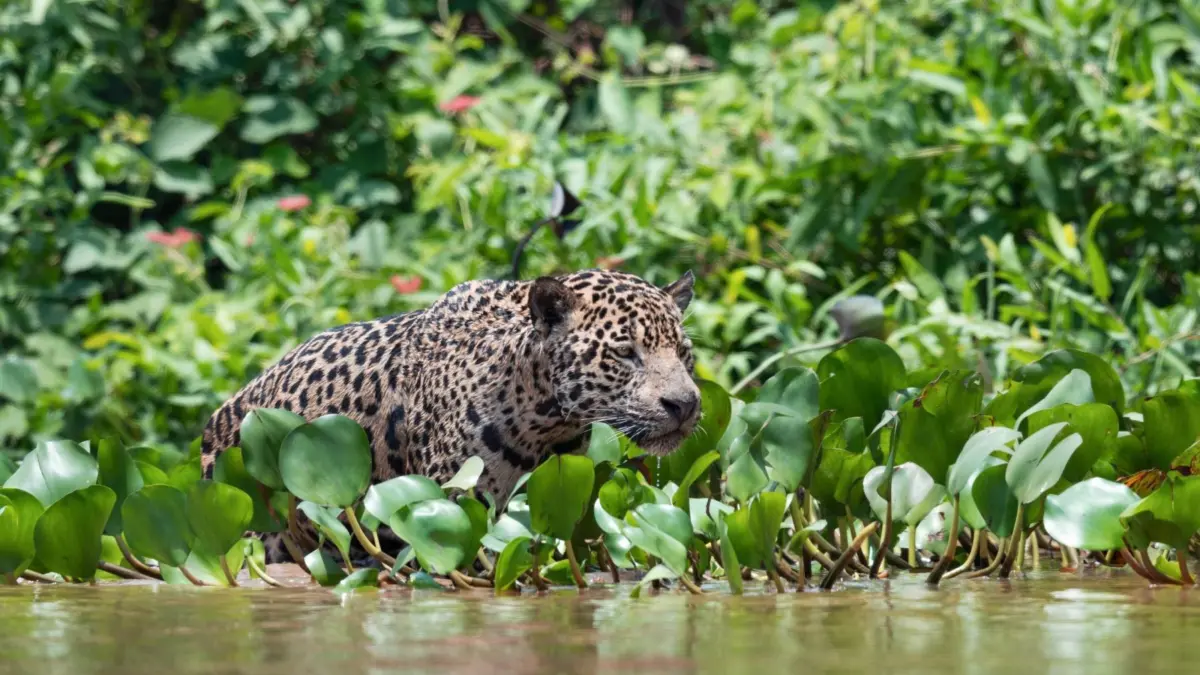
- The Jaguar (Panthera onca): In South America’s Alto Paraná region within the Atlantic Forest, centuries of logging fragmented the jungle. Recent large-scale reforestation initiatives linking fragmented green corridors have led to a documented resurgence in jaguar sightings, reflecting improved prey availability and territory connectivity across thousands of restored hectares.
Marine and Avian Victories
- The Dugong (Dugong dugon): Often called the "sea cow," this gentle marine mammal suffered drastic population contractions due to commercial hunting, accidental entanglement in industrial fishing gear, and the widespread destruction of seagrass meadows—their primary food source. Protecting and replanting underwater marine grasslands has become a central focus of coastal restoration protocols.
- The Antiguan Racer (Alsophis antiguae): Endemic to the Caribbean island nation of Antigua and Barbuda, this harmless reptile was once crowned the rarest snake on Earth, decimated by introduced mammalian predators like rats and mongooses. The eradication of these invasive species from multiple offshore islets allowed the native scrubland ecosystem to rebound, giving the racer breathing room to multiply.
- The Eurasian Bittern (Botaurus stellaris): Nearly extinct in the UK in 1997, the aggressive restoration of wetland networks, reedbeds, and shallow lakes has successfully brought the bittern back. Its booming calls now echo across English and Welsh nature reserves, serving as an auditory testament to successful habitat engineering.
Official Responses and Perspectives
Governments, scientific bodies, and international authorities have increasingly emphasized that ecological restoration is not merely an idealistic environmental goal, but an absolute economic and social necessity.
Dr. Inger Andersen, Executive Director of the UN Environment Programme (PNUMA), has repeatedly stressed the interconnected nature of planetary health:
"If ecosystems are healthy, the planet and its inhabitants will also be healthy. We have a narrow window of opportunity to prevent, halt, and reverse the degradation of ecosystems across all continents and oceans. Nature is resilient, but it requires our active partnership to heal."
Field biologists and conservation economists echo this sentiment, pointing out that investing in natural infrastructure—such as mangroves for storm protection, wetlands for water filtration, and forests for carbon sequestration—delivers vastly superior returns compared to engineered grey infrastructure.
Local indigenous communities and grassroots organizations have also stepped into leadership roles. In Kazakhstan, local rangers who once lacked resources are now equipped through international funding to monitor vast steppes, transforming local populations from passive observers into active guardians of the saiga antelope. Similarly, in the Mata Atlântica, private landowners and local NGOs are working hand-in-hand to connect isolated forest fragments, proving that ecological restoration thrives when anchored in community welfare.
Implications: Why Ecosystem Restoration Matters for Humanity’s Future
The implications of the global restoration movement extend far beyond the conservation of charismatic megafauna like jaguars and gorillas. Restoring the Earth’s fabric addresses three interconnected global crises: biodiversity loss, climate change, and human insecurity.
1. Climate Resilience and Carbon Capture
Healthy ecosystems act as the world’s most effective carbon sinks. Mangroves sequester carbon at rates up to four times higher than terrestrial tropical forests, while peatlands, wetlands, and old-growth forests lock away gigatons of greenhouse gases. Reversing degradation is therefore a critical climate mitigation strategy.
2. Water Security and Disaster Risk Reduction
Degraded watersheds lead to erratic flooding, severe droughts, and contaminated water supplies. By restoring sponge-like wetlands, riparian buffers, and upland forests, communities can naturally regulate water flows, purify drinking water, and buffer themselves against catastrophic weather events intensified by global warming.
3. Economic and Food Security
Billions of people rely directly on functional ecosystems for their livelihoods—from smallholder farmers whose crop yields depend on pollinator populations, to coastal fishers whose catches rely on healthy marine nurseries like seagrass beds and coral reefs. Restoring the natural world underpins sustainable agriculture, ecotourism, and global food chains.
Conclusion: A Legacy for Future Generations
The ongoing recovery of species like the saiga antelope, the mountain gorilla, and the bittern demonstrates that environmental decline is not an irreversible destiny. With continued political will, sustained financial investment, and global solidarity under frameworks like the UN Decade on Ecosystem Restoration, humanity possesses the tools required to heal the planet. By repairing the broken webs of life on land and in the oceans, we secure not only a future for endangered wildlife, but a thriving, habitable Earth for generations to come.



Leave a Reply