

Main Facts
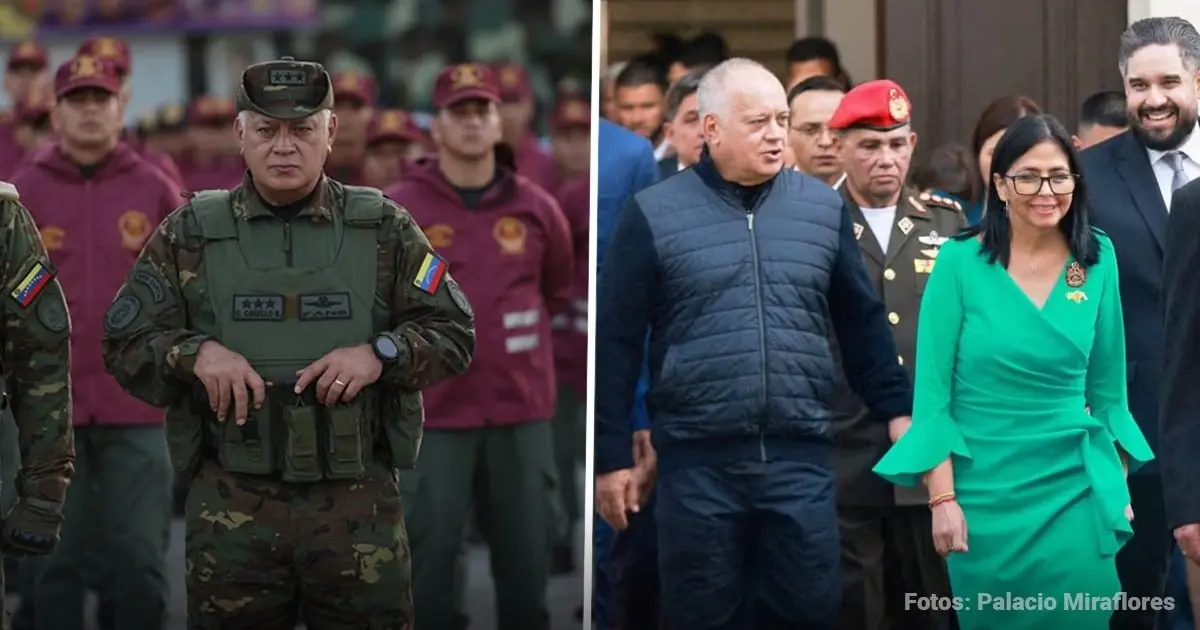
Once feared as the undisputed iron fist of the Venezuelan regime, Diosdado Cabello finds himself cornered, politically sidelined, and facing an increasingly bleak international reality. Long considered the "number two" of Chavismo—wielding immense influence through his control of the military, intelligence apparatus, and his vitriolic weekly television program, Con el Mazo Dando—Cabello’s absolute authority has dramatically collapsed.
Following the pivotal military and geopolitical interventions in Venezuela aimed at securing stability and energy resources, the internal power dynamics of the ruling elite shifted rapidly. Sidelined by the pragmatism of Delcy Rodríguez and the broader restructuring of the government, Cabello lost his protective shield under Nicolás Maduro. Today, he faces a staggering $25 million bounty offered by the United States Department of State—placing him on par with international high-value targets like Osama bin Laden and Joaquín "El Chapo" Guzmán—for his alleged leadership of the notorious Cartel de los Soles (Cartel of the Suns).
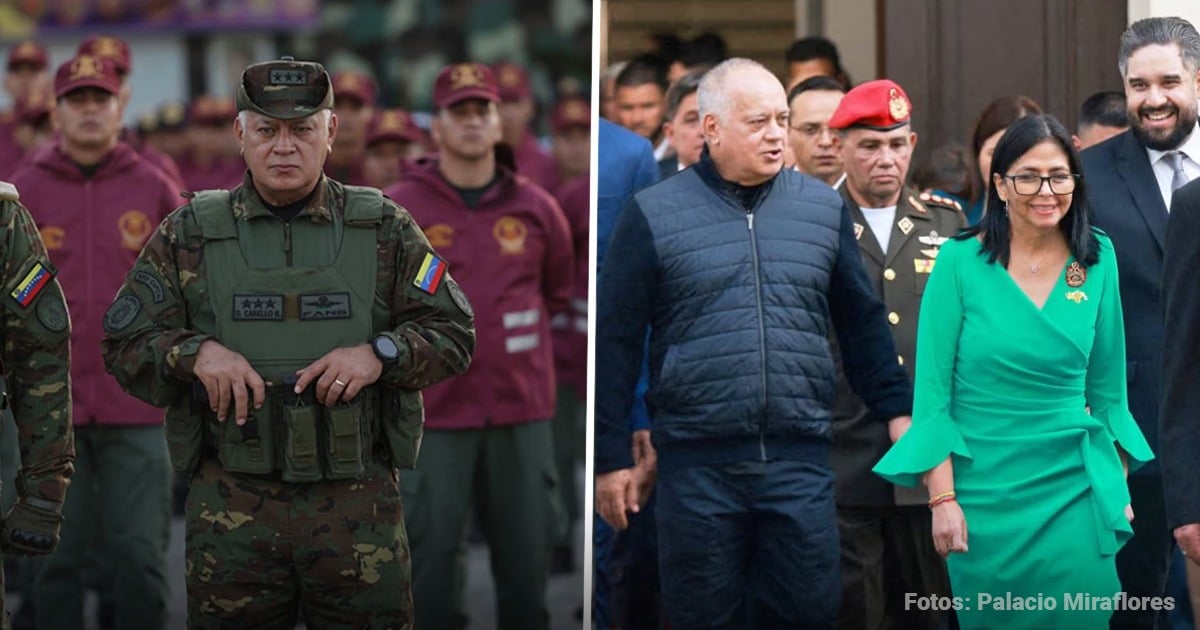
Compounding his geopolitical isolation, Cabello’s legal troubles have expanded beyond Washington. Investigators and international prosecutors have linked him to high-profile trans-national crimes, including potential extradition requests and prison threats in Santiago, Chile, connected to the politically motivated assassination of exiled Venezuelan dissident and former lieutenant Ronald Ojeda. Meanwhile, his once-impenetrable family empire has fractured: opulent estates like the Palacete de la Montaña stand in decay, high-profile family businesses have crumbled, and the luxury lifestyle once flaunted by his inner circle has become a symbol of systemic corruption and terminal political decline.
Chronology: From the Barracks to Total Isolation
To understand Diosdado Cabello’s sudden and steep descent, it is necessary to trace a political trajectory forged in military conspiracies and sustained through decades of state control.

1963–1992: Formative Years and the Military Crucible
Born in Monagas in 1963, Cabello pursued a career in the military, graduating as an officer in the Venezuelan Army. His destiny permanently intertwined with that of Hugo Chávez when he became a prominent member of "Los Montilleros"—the generation of military academy graduates from 1987 who formed the core of the MBR-200. On February 4, 1992, Cabello participated directly in the bloody, failed military coup d’état against President Carlos Andrés Pérez. The subsequent imprisonment of the coup leaders forged a brotherhood of ideological loyalty that would later form the backbone of the Bolivarian Revolution.
1999–2012: The Meteoric Rise under Chávez
Following Chávez’s electoral victory in 1999, Cabello ascended rapidly through the highest echelons of power. He served in a succession of critical posts: Vice President of the Republic, Minister of Infrastructure, Minister of Public Works, and Governor of Miranda State. As the organizational mastermind behind the United Socialist Party of Venezuela (PSUV), Cabello cultivated deep, unyielding loyalty within the National Bolivarian Armed Forces (FANB). He positioned himself not merely as an administrator, but as the indispensable structural enforcer of the revolution.
2013–2025: The Maduro Era and the Zenith of Authority
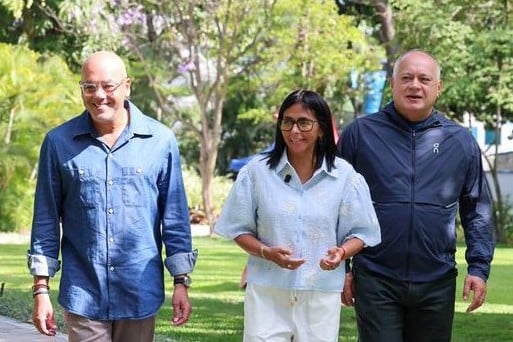
Upon Chávez’s death and the ascension of Nicolás Maduro, Cabello solidified his reputation as the radical hardliner of the regime. Through his weekly media megaphone, Con el Mazo Dando, he targeted dissidents, directed state crackdowns, and intimidated political rivals. By the late 2010s, United States federal indictments formally branded him a leader of the Cartel de los Soles, alleging systematic involvement in international drug trafficking. Despite escalating international sanctions, his domestic authority remained seemingly untouchable, sustained by his grip on intelligence services and armed pro-regime collectives.
2026: Geopolitical Shocks and Internal Ostracization
The geopolitical landscape shifted dramatically following strategic international interventions in Venezuela designed to manage the nation’s massive petroleum reserves. As Delcy Rodríguez and her brother Jorge Rodríguez assumed dominant administrative control with a more calculated political strategy, Cabello was deliberately sidelined. Stripped of his absolute protective bubble, rumors of clandestine flights, house arrest, and artificial intelligence-generated deepfakes swirling on social media signaled a man desperately fighting to project an illusion of control. His once-omnipotent media presence faded, culminating in his current status as an international fugitive cornered by foreign law enforcement and abandoned by his former allies.

Supporting Data: The Anatomy of an Ill-Gotten Empire
The rhetoric of socialist austerity championed by the Bolivarian Revolution starkly contrasted with the reality of the Cabello family’s lifestyle—a lifestyle that has now become central to global asset-recovery investigations.
- The $25 Million Bounty: Placed squarely on the radar of the U.S. Drug Enforcement Administration (DEA) and the Department of Justice, Cabello’s bounty matches those of history’s most notorious criminal kingpins. Washington accuses him of utilizing state infrastructure to coordinate massive shipments of cocaine destined for North America and Europe via the Cartel de los Soles.
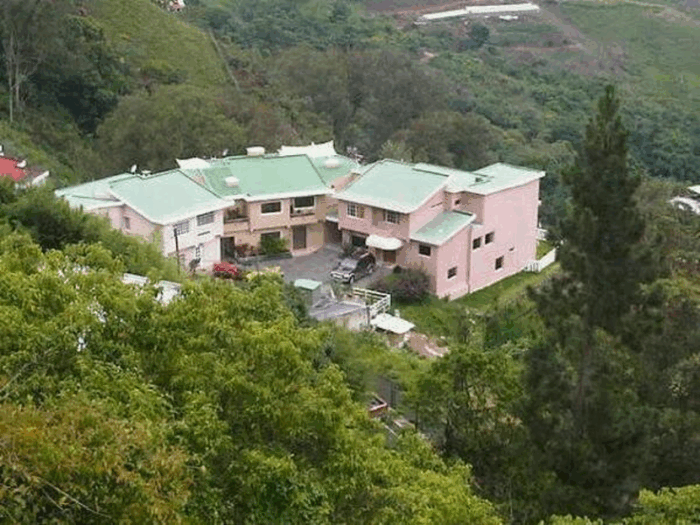
- The Palacete de la Montaña: Located near San Antonio de los Altos in Miranda State, this sprawling, heavily fortified estate became the physical embodiment of Cabello’s economic dominance. Once featuring extensive manicured gardens and private security details, the property now stands largely neglected and vandalized—a stark visual metaphor for his political ruin.
- International Real Estate and Luxury Assets: Financial investigations have tied Cabello and his proxies to luxury mansions in Punta Cana (Dominican Republic) and Florida (United States). Reports document a fleet of bulletproof luxury vehicles and private jets utilized for discreet regional transit.
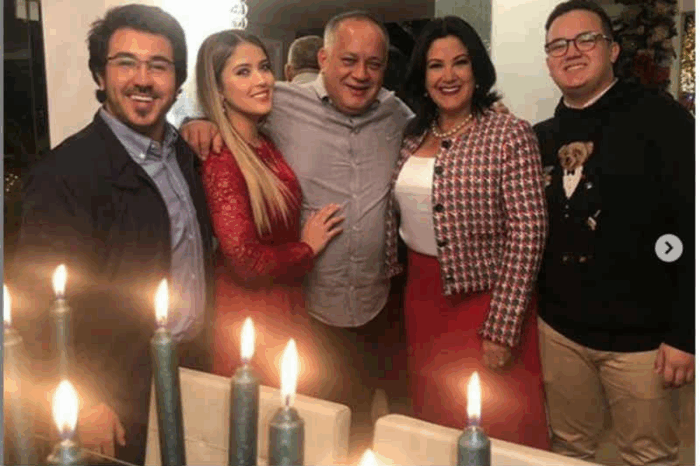
- Family Scandals and Splintered Alliances: Cabello’s immediate family has also faced intense public scrutiny. His wife, former Tourism Minister Marleny Contreras, saw her financial and political leverage evaporate, leading to a prolonged stay in Mexico. Their children—previously shielded by absolute impunity—have encountered severe disruptions: Daniella Cabello divorced singer Omar Acedo (who relocated his career to Colombia), and their son, David "El Mocho" Cabello, was ousted from key bureaucratic posts within the National Integrated Service of Customs and Tax Administration (SENIAT). Furthermore, leaked personal scandals regarding romantic entanglements have further degraded his public standing among regime loyalists.
Official Responses and Regime Posturing
The official narrative emanating from Caracas regarding Cabello’s current status has transitioned from aggressive defiance to calculated silence and obfuscation.
In the immediate wake of the geopolitical realignments led by the Rodríguez siblings, state media channels downplayed internal fractures, emphasizing a unified front for the preservation of the state. Figures like Jorge Rodríguez publicly praised the "perfect union" within the ruling coalition, meticulously avoiding any direct acknowledgment of Cabello’s marginalization.
For his part, Cabello initially attempted to counter allegations of his arrest, flight, or incapacitation by releasing heavily scrutinized video addresses. He routinely dismissed leaked reports and visual evidence of his downfall as sophisticated fabrications generated by artificial intelligence and orchestrated by foreign intelligence agencies. However, as international warrants—including inquiries spearheaded by Chilean prosecutors regarding the assassination of Lieutenant Ronald Ojeda—gain legal momentum, the regime’s defensive posture has noticeably softened. Officials have largely ceased invoking his name as a primary pillar of state security, signaling a quiet institutional disownment of a figure who has transformed from an invaluable asset into a costly geopolitical liability.
Implications: The Collapse of Absolute Impunity
The rapid degradation of Diosdado Cabello’s power carries profound structural implications for the future of Venezuela and international jurisprudence:
- The Fallibility of Authoritarian Strongmen: Cabello’s trajectory demonstrates that even within deeply entrenched autocratic regimes, absolute loyalty to a system does not guarantee permanent immunity. When macroeconomic survival and geopolitical pressures force a regime to pivot, former power-brokers can be discarded overnight by their own inner circles.
- Precedents for International Accountability: The multi-million-dollar bounties and transnational criminal investigations—spanning drug trafficking charges from Washington to murder probes in Santiago—signal a shifting global tolerance for impunity. The case establishes a vital legal precedent indicating that high-ranking state officials utilizing sovereign territory for transnational organized crime cannot easily evade long-term accountability, even if they successfully insulate themselves domestically for decades.
- A Symbolic Turning Point for the Venezuelan Populace: For ordinary citizens navigating chronic economic hardship, mass migration, and systemic poverty in Caracas, the simultaneous physical decay of the Palacete de la Montaña and the unraveling of the Cabello dynasty serve as a powerful psychological catharsis. It shatters the myth of untouchability, reinforcing the reality that no regime, regardless of how authoritarian or heavily militarized, remains entirely immune to the forces of internal decay and historical reckoning.



Leave a Reply