

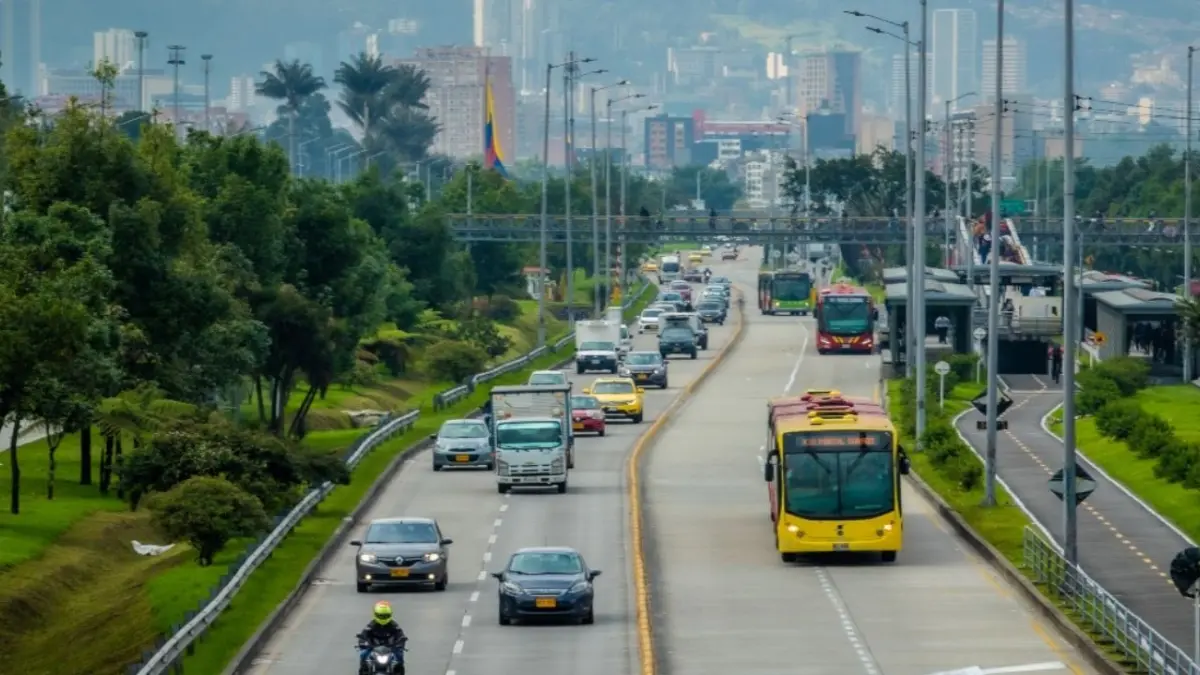
BOGOTÁ, COLOMBIA — As the bustling capital of Colombia continues to grapple with complex urban mobility dynamics, vehicular congestion management remains a cornerstone of municipal administration. The Secretaría Distrital de Movilidad (District Secretariat of Mobility) has officially released the comprehensive pico y placa (peak and plate) traffic restriction schedule for private automobiles covering the week of Monday, September 28, through Sunday, October 4, 2026.
Motorists navigating the sprawling urban grid of Bogotá must exercise heightened vigilance during this period. The city’s transit ecosystem relies heavily on this cyclical restriction model to mitigate environmental pollution, balance traffic volume across major arterial roads, and encourage the use of public transportation systems such as the TransMilenio and the upcoming Metro lines.
Beyond routine scheduling, municipal authorities have issued urgent security advisories regarding fraudulent digital platforms targeting drivers seeking exemptions through the Pico y Placa Solidario program. This report provides an exhaustive breakdown of the schedule, operational rules, institutional context, and critical cybersecurity warnings essential for every vehicle owner in the capital.
1. Main Facts: Core Mechanics of Bogotá’s Traffic Restriction System
The pico y placa regulatory framework is designed to restrict the circulation of private passenger vehicles based on the final numerical digit of their license plates. By halving the active fleet on any given weekday, the local government aims to curb greenhouse gas emissions and maintain baseline mobility speeds across critical corridors such as Avenida Caracas, Autopista Norte, Avenida Boyacá, and Calle 26.
General Parameters
- Applicable Period: Monday through Friday.
- Restricted Hours: 6:00 a.m. to 9:00 p.m. local time daily.
- Exemptions: Saturdays, Sundays, and official Colombian holidays are entirely exempt from the restriction for private vehicles.
- Core Rule Structure: The restriction alternates daily based on whether the calendar date is even or odd, pairing specific terminal plate numbers accordingly:
- Even-numbered days: Circulation is permitted exclusively for vehicles with license plates ending in 6, 7, 8, 9, and 0.
- Odd-numbered days: Circulation is permitted exclusively for vehicles with license plates ending in 1, 2, 3, 4, and 5.
Understanding this binary rotation is critical for daily commuters. Failing to track whether the calendar date corresponds to an even or odd numerical cycle can result in substantial monetary fines and the administrative immobilization of the vehicle via towing to official impound lots (patios).
2. Chronology: Daily Breakdown for September 28 – October 4, 2026
To prevent transit infractions and streamline weekly planning, the Secretaría Distrital de Movilidad has mapped out the precise daily rotation for the upcoming week. Drivers are strongly advised to cross-reference their license plate endings with the following chronological schedule:
Monday, September 28, 2026 (Even Calendar Date)
- Status: Operational restriction day.
- Permitted Plates: Vehicles ending in 6, 7, 8, 9, and 0 are authorized to circulate between 6:00 a.m. and 9:00 p.m.
- Restricted Plates: Vehicles ending in 1, 2, 3, 4, and 5 must remain parked during operational hours.
- Context: Monday morning rush hours traditionally experience the highest traffic volumes of the week as commuters re-enter the city. Transit enforcement agencies deploy mobile checkpoints across key highway entries to intercept non-compliant drivers.
Tuesday, September 29, 2026 (Odd Calendar Date)
- Status: Operational restriction day.
- Permitted Plates: Vehicles ending in 1, 2, 3, 4, and 5 are authorized to circulate.
- Restricted Plates: Vehicles ending in 6, 7, 8, 9, and 0 are restricted.
- Context: Mid-morning commercial transit peaks require strict adherence along commercial corridors like Zona Rosa, Chapinero, and downtown Bogotá.
Wednesday, September 30, 2026 (Even Calendar Date)
- Status: Operational restriction day.
- Permitted Plates: Vehicles ending in 6, 7, 8, 9, and 0 are authorized to circulate.
- Restricted Plates: Vehicles ending in 1, 2, 3, 4, and 5 are restricted.
- Context: Marking the midpoint of the work week, congestion levels tend to equalize. Traffic police focus heavily on arterial bottlenecks around educational institutions and office parks.
Thursday, October 1, 2026 (Odd Calendar Date)
- Status: Operational restriction day.
- Permitted Plates: Vehicles ending in 1, 2, 3, 4, and 5 are authorized to circulate.
- Restricted Plates: Vehicles ending in 6, 7, 8, 9, and 0 are restricted.
- Context: Entering the final stretch of the work week, delivery fleets and corporate traffic merge, heightening the need for strict compliance.
Friday, October 2, 2026 (Even Calendar Date)
- Status: Operational restriction day.
- Permitted Plates: Vehicles ending in 6, 7, 8, 9, and 0 are authorized to circulate.
- Restricted Plates: Vehicles ending in 1, 2, 3, 4, and 5 are restricted.
- Context: Friday afternoon departures for weekend getaways dramatically increase outbound traffic on the Autopista Sur, Autopista Norte, and Calle 80. Transit authorities maintain heightened surveillance to prevent unauthorized vehicles from slipping through.
Saturday, October 3, and Sunday, October 4, 2026 (Weekend)
- Status: Full Exemption.
- Permitted Plates: All private vehicles (regardless of terminal plate digits) are permitted to circulate freely without time restrictions.
- Context: Weekend traffic shifts away from commercial cores toward recreational zones, parks, and surrounding municipalities such as Chía, La Calera, and Fusagasugá.
3. Supporting Data: Urban Density, Fleet Statistics, and Mobility Metrics
Bogotá remains one of Latin America’s most densely populated and congested urban centers. According to recent municipal transit studies, the city’s vehicular fleet exceeds 2.3 million registered units, encompassing private automobiles, motorcycles, taxis, and public mass transit vehicles.
Key Urban Mobility Indicators
- Average Commute Times: Studies by urban mobility observatories indicate that Bogotá commuters spend an average of 132 hours per year stuck in traffic congestion—ranking among the highest commute penalties globally.
- Environmental Impact: Vehicular emissions account for over 70% of the city’s total air pollution. The pico y placa framework functions not merely as a traffic management tool, but as an essential environmental safeguard designed to keep particulate matter ($PM2.5$ and $PM10$) within legally mandated safety thresholds.
- Enforcement Reach: The Secretaría Distrital de Movilidad utilizes a vast network of automated traffic enforcement cameras (Foto-detección) alongside human transit police officers to monitor compliance. Fines for violating the pico y placa mandate typically involve a monetary penalty equivalent to 15 daily legal minimum wages (SMLDV), alongside the immediate towing and impounding of the offending vehicle.
4. Official Responses: The District Secretariat’s Directives and Social Media Channels
Municipal authorities continue to emphasize that predictability and clear public communication are vital to reducing infraction rates. Through its official communications arms, including the verified X (formerly Twitter) account @BogotaTransito, the Secretaría Distrital de Movilidad broadcasts real-time updates, route advisories, and scheduling confirmations.
In recent official releases, transport secretaries have reiterated that any modifications to the pico y placa system are communicated well in advance through institutional channels. Drivers are strongly discouraged from relying on unverified third-party messaging apps, rumors, or unofficial blogs that frequently misreport rotation cycles to generate web traffic.
Official municipal announcements emphasize:
"Compliance with the pico y placa is a shared civic responsibility. Every driver must verify their terminal plate number before initiating any journey within the urban perimeter to avoid sanctions and contribute to a more fluid, breathable Bogotá."
5. Implications: Cybersecurity Warnings and the Pico y Placa Solidario Threat
One of the most critical developments accompanying current traffic regulations is the proliferation of digital fraud targeting motorists seeking exemptions. The Pico y Placa Solidario program allows vehicle owners to pay a financial contribution to exempt their cars from the restriction for designated periods (daily, monthly, or semi-annually).
However, municipal authorities have issued sweeping warnings regarding fraudulent clone websites and phishing scams designed to siphon money and personal data from unsuspecting citizens.
Protecting Yourself Against Cyber Fraud
- Exclusive Official Portal: All applications, calculations, and financial transactions associated with the Pico y Placa Solidario must be conducted exclusively through the official digital domain of the Bogotá government: movilidadbogota.gov.co.
- Secure Payment Gateways: Official payments are processed strictly through authorized governmental payment portals integrated with PSE (Pagos Seguros en Línea). Citizens should never transfer funds via peer-to-peer mobile payment apps, cryptocurrency wallets, or direct bank wire transfers to individual accounts requested by unverified agents.
- Red Flags to Watch For:
- Promoters offering "discounted" exemption packages via WhatsApp, Facebook Marketplace, or unverified text messages.
- Websites utilizing deceptive domain names that mimic official municipal URLs (e.g., using extensions like
.co.co,.org, or misspelled suffixes). - Unsolicited communications claiming a driver has an urgent transit fine that must be paid immediately through an external link.
Broader Socio-Economic Implications
The strict enforcement of transit restrictions coupled with digital transformation initiatives highlights the dual challenge facing modern metropolitan administrations: balancing efficient physical mobility with robust digital security. As Bogotá modernizes its infrastructure—integrating smart traffic lights, automated enforcement cameras, and digital service portals—the risk matrix shifts toward cyber-enabled fraud.
For the average citizen, navigating the week of September 28 to October 4, 2026, requires a dual focus: carefully auditing the vehicle’s terminal license plate against the even/odd calendar rotation, and exercising rigorous digital hygiene when interacting with municipal online services. By adhering strictly to official schedules and utilizing verified government portals, motorists can ensure compliance, avoid costly penalties, and contribute to a safer, more organized urban environment in Colombia’s capital.




Leave a Reply