

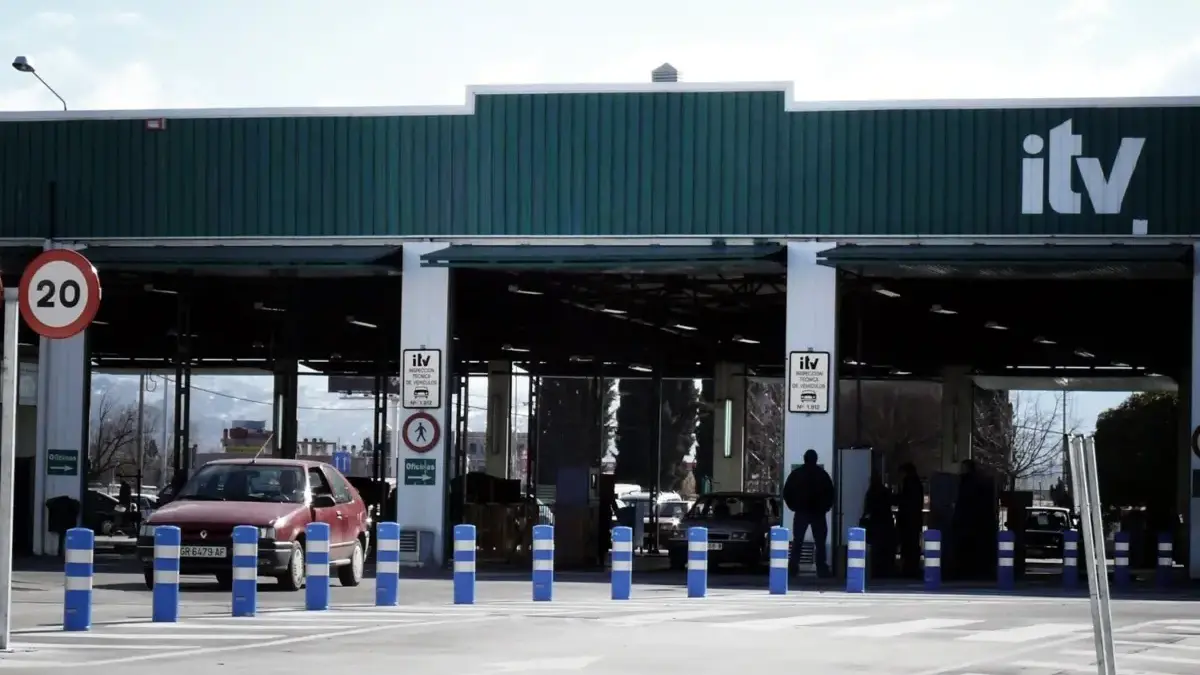
MADRID — For millions of vehicle owners across Spain, the mandatory Inspección Técnica de Vehículos (ITV)—the country’s equivalent to the MOT or periodic roadworthiness test—is a routine yet dreaded part of car ownership. Beyond the anxiety of whether a vehicle will pass emissions or brake tests, drivers now face a stark economic reality: where you live dictates how much you pay.
According to a comprehensive study released by consumer organization FACUA examining current tariffs for 2026, the cost of keeping a vehicle legally roadworthy varies wildly depending on the autonomous community. With differences soaring by up to 225% for passenger cars and nearly 300% for motorcycles, the Spanish ITV landscape resembles a fragmented patchwork quilt rather than a unified national service.
1. Main Facts: The Anatomy of a Fragmented Market
The core takeaway from the 2026 data is that geographical location is the single most significant factor determining the cost of a vehicle inspection. The national average sits at 39.18 euros for a petrol-powered passenger car and 46.09 euros for a diesel vehicle. However, averages offer little comfort when looking at the extremes.
- Petrol Cars: The most striking contrast lies between the Basque Country (Euskadi) and the Balearic Islands. In the Basque Country, passing the ITV for a petrol car costs a hefty 55.28 euros. Meanwhile, in Mallorca, the price plummets to just 17.01 euros—more than three times cheaper.
- Diesel Cars: Cantabria takes the crown for the most expensive diesel inspection at 57.80 euros, while public-run stations in Extremadura offer the most affordable option at 29.25 euros.
- Motorcycles: Two-wheeled vehicles experience some of the most disproportionate gaps. Inspections in Madrid reach 40.22 euros, whereas Mallorca drivers pay a mere 10.21 euros, representing a staggering 294% difference.
These figures do not even include the mandatory DGT traffic fee of 4.18 euros, a standard national levy added to every inspection to update the vehicle’s record in the official registry.
2. Chronology: How Spain Got Here
The current disparity in ITV pricing is not a recent phenomenon, but rather the culmination of decades of regulatory evolution and decentralization.
- Pre-1980s (The Centralized Era): Historically, vehicle inspections in Spain were centrally managed, uniform, and heavily restricted. The concept of localized pricing did not exist.
- The Decentralization Wave (1980s–1990s): As Spain transferred powers to its newly formed autonomous communities under the 1978 Constitution, the management of industrial safety and transport regulations—including ITVs—was handed over to regional governments.
- The Introduction of Concessions and Liberalization: Different regions chose vastly different economic paths. Some regions retained strict public control or established direct public companies (such as Extremadura’s public stations), while others opted for administrative concessions granted to private corporations. Crucially, regions like Madrid and Murcia chose a fully liberalized market model, allowing private operators to set their own prices based on supply and demand.
- Recent Years (2020–2026): In the wake of economic pressures, inflation, and pandemic recovery, regional adjustments have accelerated. While some autonomous communities chose to freeze rates to ease the burden on citizens, others greenlit substantial hikes, driving the gap between regions to historic highs.
3. Supporting Data: A Regional Breakdown of Tariffs and Trends
To understand the macro-economic landscape of the Spanish ITV system, one must examine how individual communities handle pricing, freezes, and hikes.
Price Restraint vs. Steep Hikes
While the majority of autonomous communities implemented price increases heading into 2026, a resilient group of regions decided to freeze tariffs. Andalusia, the Balearic Islands, Catalonia, the Valencian Community, La Rioja, Ceuta, and Extremadura’s public-run stations chose to hold their rates steady, providing temporary financial relief to motorists.
Conversely, regions that pushed through increases did so aggressively:
- Asturias recorded the most dramatic single-year spike, raising motorcycle inspection fees by 30.3%.
- Extremadura increased private station rates by 11.9% for motorcycles and 9.4% for passenger cars, bucking the trend of its own public-station freezes.
Management Models Explained
The root cause of these vast price differences lies in the regulatory model adopted by each territory:
- Publicly Managed / Direct Control: Regions where the government manages the service often balance social criteria, resulting in more stable or moderate pricing (though exceptions like the Basque Country exist due to high operational costs and wage structures).
- Administrative Concessions: Regional governments outsource the service to private companies under strict public oversight and capped tariffs.
- Liberalized Markets (Madrid and Murcia): Private firms operate freely and set their own prices. This model was originally envisioned to foster competition and lower prices; however, in practice, it has often resulted in higher baseline tariffs, though it occasionally opens the door to localized discounts and promotional campaigns.
4. Official Responses and Consumer Advocacy
The enduring price gap has sparked sharp criticism from consumer rights organizations and triggered debates among regional policymakers.
FACUA, which spearheaded the 2026 pricing study, has repeatedly denounced what it calls "unjustifiable territorial discrimination." The organization argues that a vehicle inspection is a mandatory administrative requirement tied to road safety and environmental compliance—not a luxury good. Consequently, consumer advocates argue that price variations exceeding 200% for the exact same safety check violate the principle of equity among Spanish citizens.
"It is unacceptable that a driver in Cantabria or the Basque Country pays nearly triple what a driver in Mallorca pays for the exact same mechanical examination," a FACUA spokesperson stated. "The government must establish a fairer regulatory framework or set national reference ceilings to prevent regional exploitation."
On the other side, regional administrations defend their autonomy. Representatives from autonomous communities with higher rates, such as the Basque Country and Cantabria, attribute the costs to higher labor standards, localized infrastructure investments, population dispersion, and strict environmental compliance protocols. Meanwhile, liberalized regions like Madrid maintain that market competition benefits consumers through better service availability, shorter wait times, and flexible scheduling, even if base prices remain elevated.
5. Implications for Spanish Drivers and the Road Ahead
The fragmented nature of Spain’s ITV network carries significant implications for motorists, the automotive sector, and public safety.
Financial Planning and "ITV Tourism"
For drivers living near regional borders—such as those between Madrid and Castilla-La Mancha, or Cantabria and Castile and León—the price disparity has given rise to a phenomenon akin to "ITV tourism." Savvy motorists are increasingly comparing prices across neighboring provincial lines, opting to book their appointments in cheaper regions if the travel cost is lower than the price difference of the inspection itself.
However, experts warn that this strategy is not always practical or cost-effective for the average commuter, meaning the vast majority of citizens simply absorb the local rates, regardless of how inflated they might be.
Impact on Fleet Age and Road Safety
There is a growing concern among road safety authorities that high ITV prices—coupled with the rising cost of living and vehicle maintenance—might discourage some drivers from keeping their appointments on time. Spain’s vehicle fleet is aging rapidly, with the average age of passenger cars now exceeding 14 years. Older cars are more likely to fail inspections or require costly pre-ITV repairs.
When high inspection fees are stacked on top of expensive mechanical repairs (such as replacing worn-out brakes, fixing emissions leaks, or swapping bald tires), cash-strapped drivers may be tempted to delay their inspections, driving illegally without a valid roadworthiness certificate. This poses a direct threat to overall traffic safety on Spanish highways.
Conclusion
As Spain moves deeper through 2026, the debate over the ITV pricing model shows no sign of cooling down. While regional autonomy allows local governments to tailor public services to their specific economic realities, the extreme discrepancies highlighted by consumer watchdogs suggest that reform may be necessary. Until a more harmonized system is introduced—or federal price caps are considered—Spanish motorists must remain vigilant, comparing regional tariffs carefully to avoid paying an unnecessary premium just to keep their vehicles legally on the road.

Leave a Reply