

By Global Environmental Desk
Published: October 2024
Main Facts: A Cryospheric Crisis in the Tropics
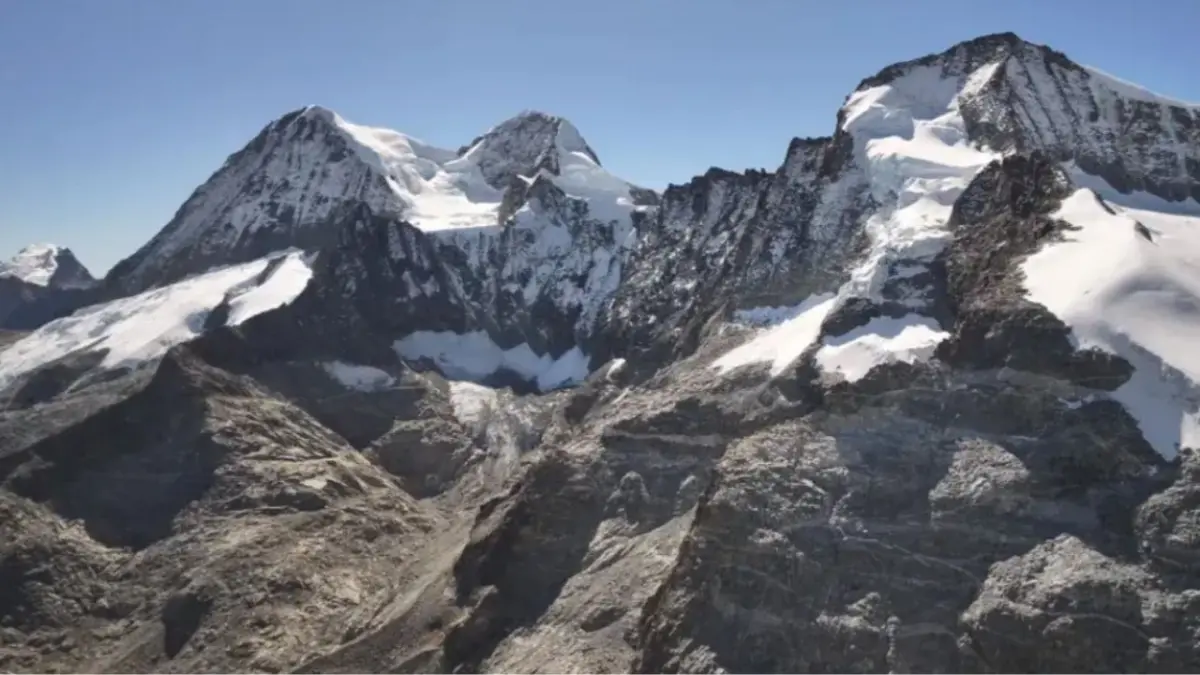
Colombia, a country renowned for its vibrant biodiversity, lush rainforests, and expansive savanna ecosystems, is also home to a fragile, shrinking frozen realm: its Andean glaciers. According to recent comprehensive data released by the Institute of Hydrology, Meteorology and Environmental Studies (IDEAM), these high-altitude white peaks are disappearing at an alarming, unprecedented rate.
The primary catalyst for this accelerated demise is the recurring climatic phenomenon known as El Niño. During these periods, elevated air temperatures and drastically reduced snowfall conspire to strip away the protective icy shields of Colombia’s remaining snow-capped mountains (nevados).
The statistics underscore a worsening environmental emergency. Between 2022 and 2024, Colombia’s total glacier surface area plummeted from 33.09 square kilometers to 30.8 square kilometers. This net loss of 2.26 square kilometers in just two years represents a contraction that vastly outpaces the historical degradation trends observed over the past four decades.
Worse still, international bodies are sounding alarms that place Colombia’s crisis in a global context. Data from the World Meteorological Organization (WMO) indicates that Colombia’s tropical glaciers are melting approximately 35% faster than the global average. Because tropical glaciers exist under unique climatic constraints—balancing high solar radiation with narrow temperature ranges—they serve as frontline indicators of planetary climate disruption. When they recede, they do so not merely as a symptom of global warming, but as harbingers of systemic ecological collapse in the high Andes.
Chronology of Retreat: The 2023–2024 El Niño Impact
To understand the severity of the recent thaw, one must examine the devastating timeline of the 2023–2024 El Niño cycle. While climate scientists have long monitored the slow recession of South America’s tropical ice, the intensity of the recent El Niño compressed decades of expected glacial loss into a harrowing 12-month window.
2022: The Baseline
Before the onset of the 2023–2024 El Niño, IDEAM mapped Colombia’s total glacial expanse at 33.09 square kilometers, distributed across a handful of isolated volcanic and tectonic massifs. Even then, scientists warned of a long-term trajectory toward extinction, but the systems still possessed enough mass to buffer minor climatic shocks.
Mid-2023: The Onset of Thermal Stress
As El Niño conditions officially took hold in the tropical Pacific, atmospheric temperatures across the Colombian Andes spiked. Rainfall patterns shifted dramatically, replacing critical snowfall events with warm, dry winds and direct solar radiation. The ice sheet surfaces, lacking fresh, reflective snow blankets (a high albedo state), began absorbing unprecedented amounts of solar energy.
January 2024: The Death of Conejeras and the Collapse of Santa Isabel
The toll became visually and statistically undeniable by the beginning of 2024. In the Nevado Santa Isabel—an ecosystem already designated as being in terminal decline—the glacial area cratered from 0.29 square kilometers down to 0.16 square kilometers. This single stroke wiped out nearly 45% of the remaining ice on the massif.
Most symbolic of this phase was the complete extinction of the Conejeras sector in January 2024. The total disappearance of this ice body forced local authorities to shutter all tourism activities in the area, cutting off mountain guides and eco-tourists from a landscape that had sustained generations of local lore and recreation.
Late 2024: Assessment of the Sierra Nevada del Cocuy
By the close of the 12-month peak heating cycle, IDEAM field researchers assessed the damage in the eastern ranges. In the Sierra Nevada El Cocuy or Güicán—specifically along the lower zones of the Ritacuba Blanco glacier—the ice margins retreated by up to 300 meters. Concurrently, the vertical thickness of the ice diminished by as much as seven meters. Glaciologists noted that under normal, non-El Niño baseline conditions, a reduction of this magnitude would typically require a minimum of two to three years. Instead, it transpired in a single year.
Supporting Data: Numbers That Paint a Bleak Picture
Raw numbers often fail to capture the majesty of a melting glacier, yet they provide the undeniable bedrock for scientific consensus and policy formulation. The data compiled by IDEAM and corroborating international agencies detail a stark reality:
- 2.4 Times Faster: During active El Niño phases, Colombian glaciers shed ice up to 2.4 times faster than they do under neutral climatic conditions.
- The 300-Meter Retreat: Iconic glacier boundaries, such as those at Ritacuba Blanco, retreated by 300 horizontal meters in just one year.
- Vertical Thinning: Ice thickness reductions reached up to 7 meters in localized high-altitude pockets between 2023 and 2024.
- Surface Area Freefall: Total national glacier coverage dropped from 33.09 km² (2022) to 30.8 km² (2024), a loss of 2.26 km².
- The Santa Isabel Bleed: The Santa Isabel massif lost 45% of its remaining surface area in less than 24 months, shrinking from 0.29 km² to 0.16 km².
- The 35% Margin: Colombia’s glacial retreat outpaces the global average melting rate by approximately 35%, highlighting the extreme vulnerability of equatorial high-mountain cryospheres.
Official Responses and Scientific Diagnostics: Why El Niño Accelerates the Deshielo
In response to these catastrophic metrics, IDEAM has intensified its monitoring programs, deploying glaciologists and climate modelers to high-altitude outposts to unpack the exact mechanics behind the accelerated thaw.
According to official institutional diagnostics, the heightened melting during El Niño events is driven primarily by a two-pronged atmospheric assault:
- Sustained Air Temperature Increases: Higher ambient temperatures lower the freezing isotherm, ensuring that heat penetrates deeper into the ice pack and prevents overnight refreezing cycles.
- Precipitation Deficits and Albedo Collapse: The reduction in precipitation falling as snow robs the glaciers of their primary protective layer.
IDEAM researchers emphasize the critical role of the albedo effect—the measure of diffuse reflection of solar radiation out of the total solar radiation received by an astronomical body. Fresh snow has a high albedo, bouncing sunlight safely back into the atmosphere. When fresh snow is absent due to El Niño droughts, the underlying older ice and dark volcanic rock are exposed. These darker surfaces absorb massive amounts of solar radiation, transforming the glaciers into solar heat traps that rapidly liquefy from the top down.
Furthermore, this cyclical feedback loop means that every square meter of ice lost permanently decreases the mountain’s capacity to reflect heat, ensuring that future climatic shocks will inflict disproportionately greater damage.
Future Implications: Projections for 2026–2027 and Beyond
If the past is an alarming prologue, the future holds even graver warnings. Mathematical projections generated by IDEAM and partner climate research centers indicate that the next anticipated El Niño cycle—projected to manifest between 2026 and 2027—could deal a near-fatal blow to the country’s remaining ice fields.
The 2026–2027 Outlook
According to these predictive models, an upcoming El Niño event could strip away an additional 1.5 square kilometers of glacial area. This equates to roughly 5% of the nation’s total remaining surface ice. Should these projections materialize, Colombia’s aggregate glacier cover will plummet to between 27 and 28 square kilometers by late 2026 or early 2027.
The most vulnerable victims of this upcoming phase will be the smaller, lower-altitude glaciers. Because they lack the mass and elevation required to maintain sub-zero microclimates, these smaller ice bodies are effectively living on borrowed time. Once they cross their respective tipping points, their total extinction will become irreversible within a matter of years.
Hydrological Upheaval in the High Paramos
Beyond the profound cultural and ecological loss of the ice itself, the rapid melting triggers complex hydrological consequences. In the short term, the accelerated runoff produces temporary spikes in water contributions to the surrounding páramos—high-altitude moorland ecosystems that act as natural water factories for millions of Colombians.
However, hydrologists warn that this is a dangerous illusion of abundance. As the glaciers shrink toward total disappearance, these temporary surges will give way to permanent droughts. When the ice is entirely gone, the regulated, year-round trickle of meltwater that sustains downstream rivers during dry seasons will vanish, threatening agricultural irrigation, hydroelectric power generation, and urban water security across Andean watersheds.
Conclusion
The retreat of Colombia’s glaciers is no longer a distant theoretical construct debated in academic halls; it is an unfolding national emergency. As El Niño events grow more frequent and intense under the pressure of global climate change, the countdown for the nation’s remaining nevados has accelerated. Without aggressive global emissions reductions and localized adaptation strategies, Colombia’s iconic white peaks—once immortalized in poetry and literature as eternal sentinels of the Andes—will soon exist only in memory, photographs, and historical archives.




Leave a Reply