

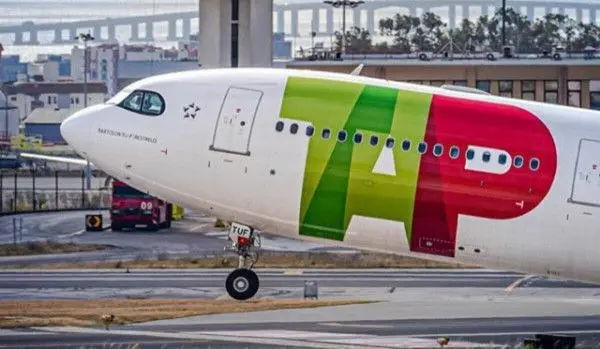
LISBON — The high-stakes privatization of TAP Air Portugal has entered its final and most decisive phase. Air France-KLM and the Lufthansa Group have officially submitted their enhanced, binding offers to the Portuguese government, setting the stage for a landmark decision that will reshape European aviation and the strategic landscape of transatlantic travel.
The partial privatization framework allows the chosen strategic investor to acquire up to 49.9% of the national carrier’s equity. With Parpública—the state-owned holding company managing the divestment—having formally received the revised proposals, Lisbon is poised to make a definitive choice by mid-October. The winning bid will be selected based on a rigorous matrix combining financial valuation, corporate solvency, and far-reaching industrial commitments designed to protect Portugal’s economic and logistical interests.
Main Facts: The Anatomy of the TAP Privatization
The structural parameters of the deal have been meticulously defined by the Portuguese government to safeguard national sovereignty while injecting necessary private capital and global scale into the airline.
- The Equity Stake: The strategic package on the table represents 44.9% of TAP’s total capital. An additional 5% is strictly reserved for company employees. Any portion of the employee share allocation that remains unpurchased during this phase can be absorbed by the selected strategic investor, capping their absolute stake at 49.9%. The Portuguese State will retain a majority or controlling ownership position during the transitional stages.
- The Contenders: The two remaining titans vying for TAP are the Franco-Dutch conglomerate Air France-KLM (bolstered by backing from U.S. partner Delta Air Lines) and the German aviation giant Lufthansa Group.
- The Timeline: The process is hurtling toward a climax. Parpública will evaluate the enhanced proposals, compile a comprehensive comparative report, and submit it directly to the Ministry of Finance and the Ministry of Infrastructure. Following this, the decision requires final clearance from the Council of Ministers and relevant regulatory and competition authorities.
- Core Requirements: The binding terms dictate that the winning bidder must execute a comprehensive strategic plan backed by robust financial resources. This plan must guarantee the preservation of TAP’s brand, its headquarters, its primary establishment, and its distinct Portuguese identity, while significantly expanding its operational footprint.
Chronology of a Resurgence: From Pandemic Rescue to Global Bidding
To understand the magnitude of the current privatization race, one must look back at the tumultuous journey of TAP Air Portugal over the past half-decade.
1. The Pandemic and State Nationalization (2020–2021)
When the global COVID-19 pandemic paralyzed international travel, TAP was brought to the brink of collapse. To prevent liquidation, the Portuguese government stepped in, dramatically increasing its stake to rescue the airline and regain complete state control.
2. European Commission Restructuring Approval (2021)
In December 2021, the European Commission formally approved a massive state restructuring package for TAP worth €2.55 billion, alongside an additional €107 million in pandemic-related compensation. This lifeline came with strict operational, structural, and financial targets that the airline was legally required to meet.
3. Fulfillment of EU Mandates (2025)
TAP successfully navigated the stringent conditions imposed by Brussels. By the beginning of 2025, the airline officially certified the fulfillment of all operational and financial milestones outlined in the restructuring plan, clearing the regulatory runway for a return to private-sector partnership.
4. The First Binding Round (July 29, 2025)
The government initiated the formal sale process earlier this year, culminating in the submission of initial binding offers on July 29. Although both groups presented distinct structural visions, their initial economic and strategic valuations were remarkably close, prompting Lisbon to open a final, highly competitive negotiation window at the beginning of September.
5. Final Enhanced Bids and the October Verdict (October 2025)
Following weeks of intense dialogue, both Air France-KLM and Lufthansa submitted their final, sweetened proposals. Infrastructure Minister Miguel Pinto Luz confirmed that the Council of Ministers will deliver its historic verdict by mid-October.
Supporting Data and Evaluation Criteria
The Portuguese government has established a rigorous, multifaceted scoring rubric to evaluate the proposals. Beyond the headline purchase price, Parpública and the Ministry of Infrastructure are weighing several non-financial performance indicators:
- Fleet and Network Development: Bidders must present detailed roadmaps for expanding TAP’s modern fleet and optimizing its route network, specifically focusing on connecting mainland airports with the autonomous archipelagos of Azores and Madeira.
- The Lusophone Connection: Preserving and expanding direct links to Portuguese-speaking countries (such as Brazil, Angola, Mozambique, and Cape Verde) is a non-negotiable priority.
- Maintenance and Engineering (TAP M&E): The proposals are heavily scrutinized regarding their plans for heavy maintenance, engineering capabilities, and investments in sustainable aviation fuels (SAFs).
- Labor and Public Service Obligations: The chosen investor must strictly respect existing collective bargaining agreements, labor rights, and public service continuity obligations.
Official Responses and Strategic Visions
The two contending airline groups have staked their reputations on vastly different geographic visions for TAP, each promising to elevate Lisbon into a premier global hub.
Air France-KLM: The Transatlantic Pivot via Lisbon
Led by CEO Benjamin Smith, Air France-KLM has positioned its bid around the concept of making Lisbon its definitive southern European mega-hub.
"Our interest in this operation is stronger than ever," declared Benjamin Smith, emphasizing that the group aims to position Lisbon as a primary gateway bridging Europe, Africa, and the Americas.
Crucially, Air France-KLM’s proposal enjoys the formal industrial and strategic backing of Delta Air Lines, a key joint-venture partner alongside Virgin Atlantic. Smith highlighted that integrating TAP into this ecosystem would grant the Portuguese carrier instant access to a vast network spanning over 375 global destinations.
Air France-KLM has pledged to ramp up passenger and cargo operations, invest heavily in local maintenance facilities, and collaborate deeply with TAP Maintenance & Engineering, all while ensuring that TAP retains its corporate name, headquarters, and cultural autonomy.
Lufthansa Group: The Atlantic Powerhouse in Star Alliance
Lufthansa, meanwhile, has doubled down on its proven multi-brand integration strategy, pointing to its successful past absorption of Swiss, Austrian Airlines, Brussels Airlines, and most recently, ITA Airways.
Lufthansa’s revised offer highlights the deep existing synergies between TAP and the German group, noting that TAP is already a member of Star Alliance, whereas Air France-KLM anchors the rival SkyTeam alliance.
The German group has emphasized its already substantial footprint in Portugal, where its various airlines operate more than 350 weekly flights and directly employ over 500 people. Lufthansa’s industrial plan projects that its investments will scale its Portuguese workforce past 1,000 employees by 2030.
A central pillar of Lufthansa’s proposal involves expanding Lufthansa Technik’s footprint in Santa Maria da Feira (near Porto), specializing in the repair of advanced aircraft engine parts and high-tech components. Lufthansa promises to position Lisbon as a premier "Atlantic strategic center," balancing traffic flows across Europe, North America, and Latin America.
Implications for the Future of European Aviation
The outcome of the October decision will trigger profound ripple effects across the global aviation ecosystem.
For Portugal, the privatization marks the final chapter of a costly state intervention, transferring operational risk and capital-intensive fleet modernization back to the private sector while guaranteeing that Lisbon remains a dominant decision-making center rather than a secondary spoke.
For the winning bidder, capturing TAP means securing the ultimate gateway to South America—particularly Brazil—a highly lucrative market where TAP has historically enjoyed unmatched historical and cultural dominance.
As the calendar ticks down to mid-October, the Portuguese government holds all the cards. Whether Lisbon chooses the Franco-Dutch-American axis of Air France-KLM and Delta, or the deeply entrenched Star Alliance network of Lufthansa, the decision will permanently define Europe’s aviation geography for decades to come.


Leave a Reply